Miniseries
6 episodes Jul 29, 2026 5.8
- 1 Purpose
- 2 Head and Heart
- 3 Scar
- 4 The Rules of the Game
- 5 Ghost
- 6 The Decision

A wounded amnesiac finds refuge with an MMA coach and steps into the ring, torn between hope for a new future and a dangerous past that keeps closing in.
Latest episode: S1 E6 The Decision (Jul 29, 2026)
I’ve seen this trick before—the amnesiac who fights his way back to himself. It’s a reliable engine for drama, a way to turn memory loss into a kind of moral obstacle course. But Wrath doesn’t just lean on the gimmick. It lets the cage do the talking.
The first time we see Vinícius Neri’s character step into the octagon, he’s not just fighting an opponent. He’s fighting the camera. The framing is tight, almost claustrophobic, as if the ropes are pressing in on him.
His breath is ragged, his knuckles split open before the first punch lands. There’s something almost religious about it—the way the sweat catches the light, the way his body moves like it’s remembering something his mind can’t. (I’ve seen fighters pray before a match, but this feels different.
This feels like penance.)
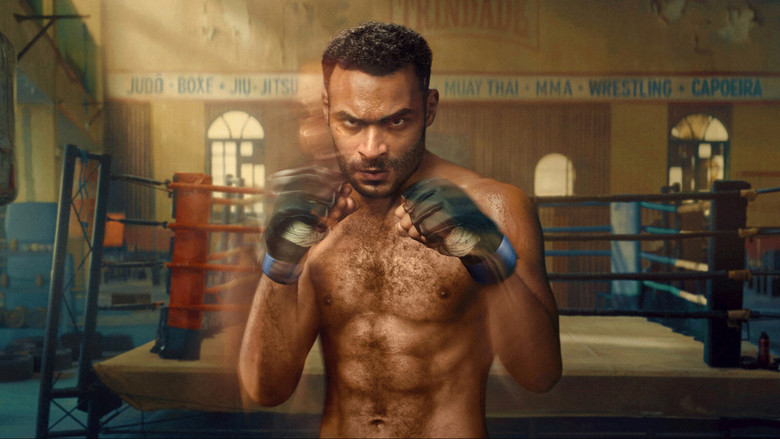
The series is set in Rio, but it’s not the Rio of postcards. This is the city’s underbelly—gyms with flickering fluorescents, alleyways where the air smells like gasoline and sweat, apartments with peeling paint and secrets tucked into drawers. The color palette is all sickly yellows and bruise-purple shadows, like a Polaroid left too long in the sun.
It’s the kind of lighting that makes you feel like you’re watching something you shouldn’t, something raw and unfiltered.
José Henrique Fonseca, who co-created the series, has a knack for this kind of grit. His work on Dom and Mandrake proved he knows how to balance tension with humanity, how to make violence feel like a language rather than just spectacle. Here, he and Igor Verde use MMA as more than just a backdrop.
The fights aren’t just action set pieces; they’re therapy sessions, interrogations, confessions. Every punch thrown is a question: Who are you? Every takedown is an answer, or at least an attempt at one.
The standout performance comes from Fábio Lago, who plays the MMA coach. Lago has a face that’s seen things—deep lines around his mouth, eyes that look like they’ve been squinting into the sun for decades. He’s not just a mentor; he’s a mirror.
When he looks at Neri’s character, you can see the calculation in his gaze, the way he’s sizing him up not just as a fighter but as a man with a past that might be useful. There’s a moment in the third episode where he hands Neri a pair of gloves, and his fingers linger just a second too long. It’s a small gesture, but it says everything: *I know you’re lying.
But I’ll play along—for now.*

The series’ biggest gamble is its pacing. Six episodes is a sprint, not a marathon, and Wrath doesn’t waste time. There’s no filler, no subplots that meander.
Every scene either advances the mystery of Neri’s past or deepens his relationships with the people around him. The downside? Some of those relationships feel undercooked.
Alice Carvalho’s character, a journalist digging into Neri’s past, is compelling but underutilized. She’s given just enough screen time to make you wish she had more.
And then there’s the violence. It’s not gratuitous, but it’s not pretty either. The fight scenes are brutal, visceral—less like choreography and more like a street brawl that accidentally ended up in a cage.
The sound design is key here: the thud of flesh on flesh, the gasps of the crowd, the way the audio cuts out for a split second when a punch lands just right. It’s the kind of violence that makes you wince, not cheer.
The series’ weakest link might be its reliance on the amnesia trope. It’s a well-worn path, and while Wrath tries to subvert it—hinting that Neri’s past might be darker than he realizes—it doesn’t always escape the pitfalls. There’s a fine line between mystery and frustration, and the show occasionally tips into the latter.
(I found myself wanting to shake the screen: Just tell him already!) But maybe that’s the point. Memory loss isn’t just a plot device here; it’s a metaphor for the way trauma lingers, the way the past clings to you even when you can’t remember it.
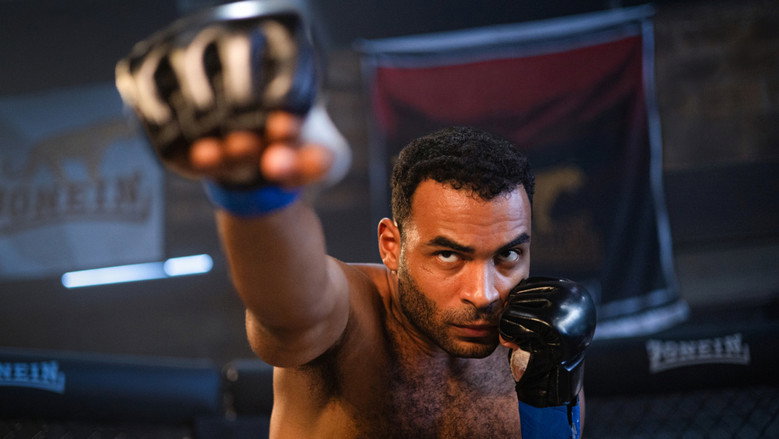
The real star of Wrath isn’t any one actor or even the story. It’s the cage itself. It’s a symbol, sure—a place of confinement, of struggle, of transformation.
But it’s also just a cage. A ring of chain-link and canvas where men (and women) go to prove something, to themselves or to the world. The series understands that.
It doesn’t glorify the violence; it treats it like a fact of life, something that exists whether we like it or not.
By the final episode, I wasn’t sure if Neri’s character had found himself or just found a new way to lose. Maybe that’s the point. Redemption isn’t a destination; it’s a fight you keep having, long after the bell rings. Wrath doesn’t give you easy answers.
It just gives you the cage, the blood, the sweat—and the quiet moments in between, when the fighters aren’t throwing punches but just trying to breathe.
Netflix is betting big on Wrath (Fúria), the upcoming Brazilian MMA series set to drop on July 29, 2026. Created by Igor Verde and José Henrique Fonseca, the show promises a raw, high-stakes story of survival, identity, and redemption—all centered around a man who wakes up in a landfill with no memory and finds purpose in the brutal world of mixed martial arts. latestnetflix.com's view is that with a stacked cast and a production pedigree rooted in crime drama, Wrath could be the next breakout hit from Latin America’s streaming powerhouse.
Wrath follows an amnesiac protagonist (Vinícius Neri) who stumbles into an MMA gym after being left for dead. With no name and no past, he adopts a borrowed identity and steps into the cage, where his skills suggest a violent history he can’t remember. The series teases a reckoning: as he climbs the ranks, his forgotten enemies close in, forcing him to confront the life he left behind.
The premise blends two of Brazil’s most compelling exports—MMA and crime drama—into a six-episode season that Fonseca (Dom, Mandrake) directs with his signature tension. Early buzz suggests Wrath won’t pull punches, literally or figuratively. The show’s tagline, "a cage that fits him, and a past that is coming to collect," hints at a relentless pace, where every fight in the octagon mirrors the protagonist’s battle to reclaim his identity.
Wrath’s ensemble reads like a who’s who of Brazilian talent, mixing rising stars with industry veterans. Leading the charge is Vinícius Neri, whose breakout role in Capoeiras (another Verde project) likely earned him the lead. He’s joined by Fábio Lago (City of God), Alice Carvalho (Sintonia), and MC Cabelinho, the funk artist-turned-actor who’s become a Netflix Brazil staple.
But the real draw might be the heavyweights: Bianca Comparato (3%), Babu Santana (City of Men), Eduardo Moscovis (The Mechanism), and Cláudia Raia, a telenovela icon whose presence signals Wrath’s crossover appeal. Rumors swirled about a cameo from Anderson Silva, the UFC legend, though his involvement remains unconfirmed. If true, it would add authenticity to the series’ fight choreography, which is already generating hype for its realism.
Wrath marks a collaboration between Netflix and Zola Films, the production house behind hits like Dom and Sintonia. José Henrique Fonseca serves as both co-creator and executive producer, alongside Eduardo Pop and Fernanda Laignier, ensuring the series retains its crime-drama edge. Igor Verde, known for his work on Capoeiras, brings his action expertise to the table, while Fonseca’s direction promises the same gritty realism that defined his earlier projects.
The show’s six-episode order suggests a tight, bingeable narrative—no filler, just a relentless push toward the protagonist’s inevitable showdown with his past. Early marketing leans into the contrast between the neon-lit gyms of Rio and the shadowy underworld lurking beyond the cage, a visual style that could set Wrath apart from other MMA dramas.
Netflix has struggled to break Brazilian series beyond Latin America, but Wrath’s premise—amnesia, underground fighting, and crime—transcends language barriers. The question is whether global audiences will tune in for a story that’s as much about redemption as it is about violence. Early reactions to the trailer suggest the fight scenes are a major selling point, but the show’s emotional core (a man literally fighting for his identity) could be its secret weapon.
If Wrath delivers on its promise, it might join Sintonia and 3% as a rare Brazilian series to crack the international mainstream. For now, fans will have to wait until July 29 to see if this underdog story has what it takes to go the distance.
Entertainment rumors and trivia aggregated from public reporting. Treat speculation as unverified unless a cited source confirms it.
More titles in the same genres and with the same cast.