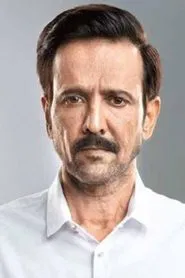
Kay Kay Menon
Iftekaar Siddiqui

India, 1984. After a deadly gas leaks from a factory in Bhopal, brave railway workers risk their lives to save others in the face of an unspeakable disaster.
Official
I’ve seen this trick before—the disaster epic that promises to honor the little guy while the sky burns. Usually, the camera lingers a beat too long on the flames, turning tragedy into spectacle. But The Railway Men: The Untold Story of Bhopal 1984 does something rarer: it trains its gaze on the hands that kept working when everyone else had stopped.
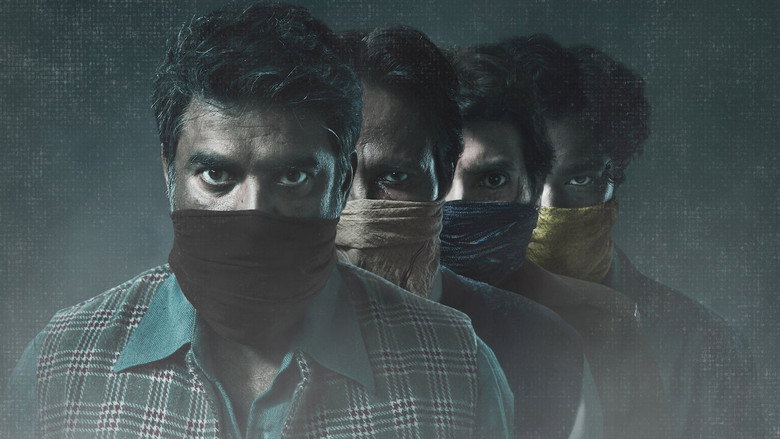
The station master who refused to abandon his post. The loco pilot who drove into the poison fog. The bandit who, for one night, became a hero.
These aren’t the men history books remember. But they’re the ones who kept the trains running while Bhopal choked.
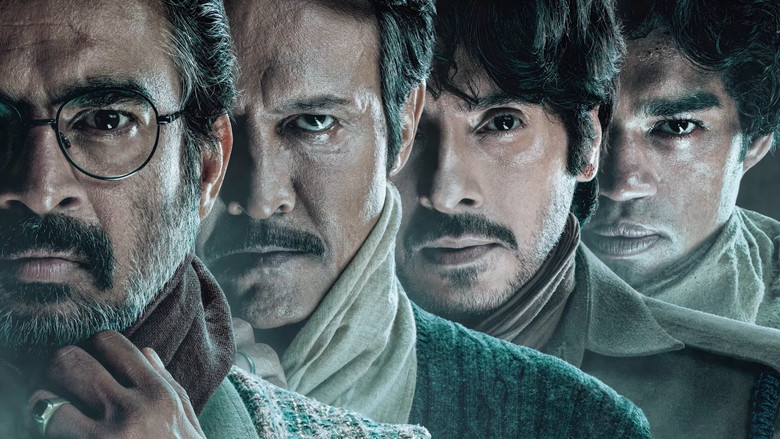
Shiv Rawail’s four-part miniseries arrives with the weight of obligation. The Bhopal gas tragedy of 1984 isn’t just a historical footnote; it’s a wound that still weeps. Over 15,000 dead.
Half a million injured. A corporation that walked away. And yet, amid the horror, there were railway workers who risked their lives to evacuate survivors, who defied orders to keep the tracks clear, who turned a bureaucratic machine into an instrument of mercy.
Rawail, making his directorial debut, doesn’t just want to tell their story—he wants to make us feel the weight of the decisions they made in the dark.
The series has drawn inevitable comparisons to Chernobyl (2019), HBO’s masterclass in institutional failure and human courage. But where Chernobyl was a slow-burn autopsy of a system, The Railway Men is a thriller with its foot on the gas. The difference isn’t just in pacing—it’s in perspective. Chernobyl looked at the disaster from the top down, dissecting the lies of those in power. The Railway Men starts on the ground, with the men who had to clean up the mess.
That choice gives the series a different kind of urgency. This isn’t about how the disaster happened. It’s about what happened next.
Kay Kay Menon’s performance as Iftekaar Siddiqui, the deputy station master, is the emotional core of the series. Menon has a face built for quiet suffering—a face that looks like it’s already seen too much. In one scene, he stands on the platform as the gas rolls in, his eyes watering, his voice steady as he barks orders into a crackling radio.
There’s no grand speech, no moment of heroic declaration. Just a man doing his job, even as the world falls apart around him. It’s the kind of performance that doesn’t announce itself, which is why it lingers.
(I’ve rewatched that scene three times. Each time, I notice something new—the way his fingers tremble just before he picks up the phone, the way his breath hitches when he realizes no one is coming to help.)
Babil Khan, as the young loco pilot Imad Riaz, brings a different kind of intensity. Khan, the son of the late Irrfan Khan, has his father’s ability to convey deep emotion with minimal dialogue. His character is the series’ moral compass, the one who keeps asking, Why aren’t we doing more? In one of the show’s most harrowing sequences, he drives a train straight into the toxic cloud, his face a mask of determination and terror.
The camera doesn’t cut away. We’re in the cab with him, feeling the heat of the engine, the sting of the gas, the weight of every life he’s trying to save. It’s a sequence that could have been exploitative.
Instead, it’s devastating.
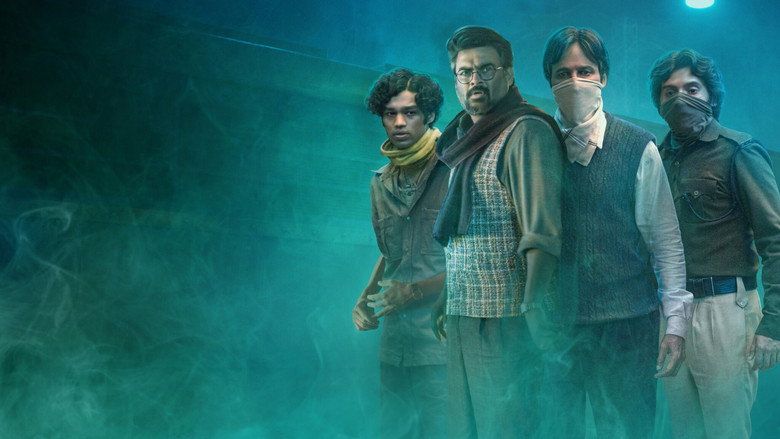
The supporting cast is just as strong. Divyenndu Sharma’s Balwant Yadav, a bandit posing as a constable, provides much-needed levity without undercutting the tension. His character is a reminder that heroism isn’t always noble—sometimes it’s just a man deciding, in the moment, that he’d rather help than run.
R. Madhavan, as the General Manager of Central Railways, brings a commanding presence, though his character’s arc feels slightly underdeveloped. (I wanted more from him—more conflict, more doubt.
But perhaps that’s the point. In disasters, the men at the top are often the last to act.)
The series’ production design, led by Rajat Poddar, is one of its greatest strengths. Bhopal in 1984 is rendered with a grimy, lived-in realism. The railway station isn’t just a backdrop; it’s a character, its peeling paint and flickering lights a sign of the neglect that made the disaster possible.
The color palette is dominated by muted blues, greens, and yellows—colors that feel industrial, oppressive, like the gas itself. Rawail and his team don’t shy away from the horror, but they also don’t wallow in it. The camera lingers on the details: the way the gas curls around a lamppost, the way a child’s toy lies abandoned on the platform, the way a man’s breath fogs up his glasses before he collapses.
That said, the series isn’t without its missteps. Some of the camerawork feels overly stylized—spinning angles that draw attention to themselves rather than the story. (I get it.
The world is spinning out of control. But do we need the camera to spin with it?) The pacing, too, is uneven. The first two episodes are taut, propulsive, but the third episode stumbles, bogged down by subplots that don’t quite land.
And while the series does an admirable job of humanizing the tragedy, it occasionally veers into melodrama. A late-in-the-game revelation about a character’s backstory feels unearned, more like a plot device than a natural extension of the story.
Critics have been largely kind, though not uncritical. Saibal Chatterjee of NDTV called it "buoyed by a clutch of laudable performances and storytelling that does not slide below a certain level of competence. But it could have been much, much more." Scroll.in praised it as a "compelling saga of ordinary heroism," while The Hindu described it as "a bracing, wishful saga of bravery."
The consensus seems to be that The Railway Men is a noble effort, but not a flawless one. I’d agree. It’s a series that often feels like it’s reaching for greatness, only to settle for very good.
What lingers, though, isn’t the flaws. It’s the moments that feel true. The way Iftekaar Siddiqui’s hands shake as he tries to light a cigarette, the way Imad Riaz’s voice cracks when he realizes how many people he couldn’t save, the way the gas doesn’t just kill—it suffocates, slowly, painfully, like the world is closing in around you.
These are the details that make The Railway Men more than just a disaster drama. They make it a human one.
There’s a scene in the third episode that I can’t stop thinking about. Iftekaar is standing in the station, surrounded by the dead and dying. A young girl, no older than ten, tugs at his sleeve.
She’s not crying. She’s just staring at him, her eyes wide, her breath shallow. "Will we be okay?" she asks.
Iftekaar doesn’t answer. He just picks her up and carries her to the train. There’s no music.
No swelling score. Just the sound of his footsteps on the platform, the distant wail of sirens, the girl’s quiet breathing. It’s a small moment, but it’s the heart of the series.
Because in that moment, Iftekaar isn’t a hero. He’s just a man doing what he can.
That’s the thing about The Railway Men. It’s not interested in mythmaking. It’s interested in the messy, imperfect reality of heroism—the kind that doesn’t come with a medal or a parade, but with a lifetime of nightmares. The kind that doesn’t end when the credits roll.
I don’t know if The Railway Men will change the way we think about the Bhopal disaster. But I do know this: after watching it, I’ll never think about those railway workers the same way again. And maybe that’s enough.
The Railway Men - The Untold Story of Bhopal 1984 (2023) isn’t just another disaster drama—it’s a tribute to the unsung railway workers who risked everything to save lives during one of India’s darkest industrial tragedies. latestnetflix.com's take is that Directed by Shiv Rawail and produced by YRF Entertainment, the miniseries shines a light on the extraordinary courage of Indian Railways employees on the night of December 2, 1984, when a toxic gas leak from the Union Carbide plant in Bhopal turned the city into a death zone.
The series boasts a powerhouse ensemble, with Kay Kay Menon, Divyendu Sharma, Babil Khan, and R. Madhavan leading the charge. Sunny Hinduja, Juhi Chawla Mehta, and Philip Rosch round out the cast, each bringing depth to roles inspired by real railway workers who defied orders to evacuate survivors. Madhavan, a Yash Raj Films veteran, reportedly took on the project as both an actor and a producer, underscoring the series’ importance to the studio.
While the snippets don’t reveal specific character details, the casting suggests a mix of seasoned performers and rising talent—Babil Khan, son of late actor Irrfan Khan, makes his streaming debut here, adding a layer of intrigue for fans eager to see how he measures up.
Produced by YRF Entertainment, the streaming arm of Yash Raj Films, The Railway Men marks a bold foray into historical disaster storytelling. The studio is known for blockbuster franchises like Dhoom and War, but this project leans into raw, emotional realism—a departure from its usual action-heavy fare. The choice to dramatize the Bhopal gas tragedy, a subject often avoided in mainstream Indian cinema, speaks to a growing appetite for socially relevant narratives.
The series’ tone is described as a "historical disaster thriller," blending the urgency of a survival story with the weight of real-life consequences. While the evidence doesn’t confirm specific production challenges, filming a disaster epic set in the 1980s likely required meticulous attention to period details—from railway infrastructure to the chaotic aftermath of the gas leak.
The Bhopal gas tragedy remains one of the world’s worst industrial disasters, with thousands killed and hundreds of thousands affected. Yet, the railway workers who saved countless lives have rarely been the focus of mainstream retellings. The Railway Men aims to correct that oversight, framing their heroism as a beacon of hope amid the tragedy.
Netflix’s involvement suggests global appeal, positioning the series as both a historical account and a gripping thriller. The platform’s description teases "brave railway workers risk[ing] their lives to save others," hinting at high-stakes drama that could resonate far beyond India.
Despite the buzz, the available evidence leaves some questions unanswered. There’s no confirmation on the number of episodes, though the "miniseries" label suggests a tight, bingeable run. Rumors about on-set tensions or creative differences haven’t surfaced in the snippets, but with a cast this stacked, behind-the-scenes dynamics are always a point of curiosity.
Another unknown: how closely the series adheres to real events. While it’s "inspired by true stories," the extent of dramatization remains unclear. Given the sensitivity of the Bhopal tragedy, the creators likely walked a fine line between authenticity and narrative license.
The Railway Men promises to be more than just a disaster retelling—it’s a celebration of resilience in the face of corporate negligence. With YRF’s production muscle and a stellar cast, the series has the potential to spark conversations about accountability, heroism, and the human cost of industrial disasters.
For now, audiences will have to wait for its release to see if it lives up to the hype. But one thing’s certain: this isn’t just another period drama. It’s a story that needed to be told.
Entertainment rumors and trivia aggregated from public reporting. Treat speculation as unverified unless a cited source confirms it.
More titles in the same genres and with the same cast.