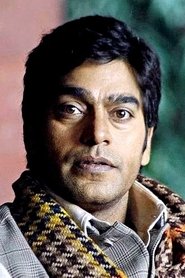

Divyendu Sharma
Devender Singh

In a small-town boxing hub, two brothers investigate a shocking murder while navigating a troubled reunion with their father, a renowned coach.
I kept waiting for Glory to throw a punch I didn’t see coming. Instead, it landed a few solid jabs—Divyendu Sharma’s haunted eyes, the way the boxing gym smells like sweat and rust, the quiet horror of a father who coaches his sons to win but can’t love them without breaking them—and then, somewhere in the second half, it started telegraphing its moves. The mystery unravels like a frayed rope, the twists predictable enough that I found myself nodding along rather than gasping.
And yet. There’s something about the way this series lingers in the corners of the frame, like a bruise you keep pressing to remind yourself it’s real.
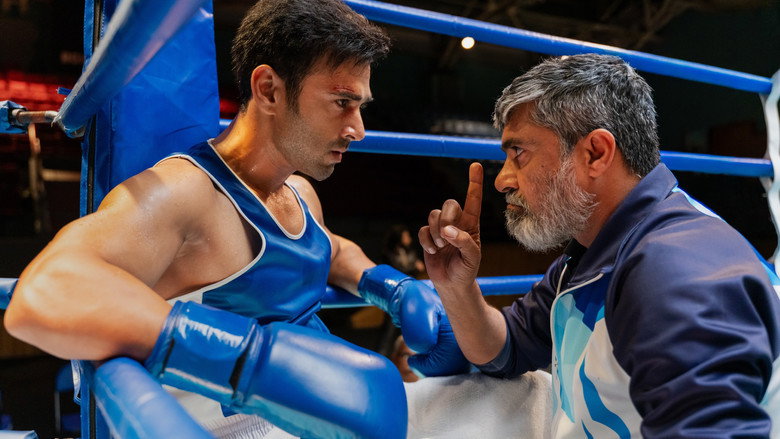
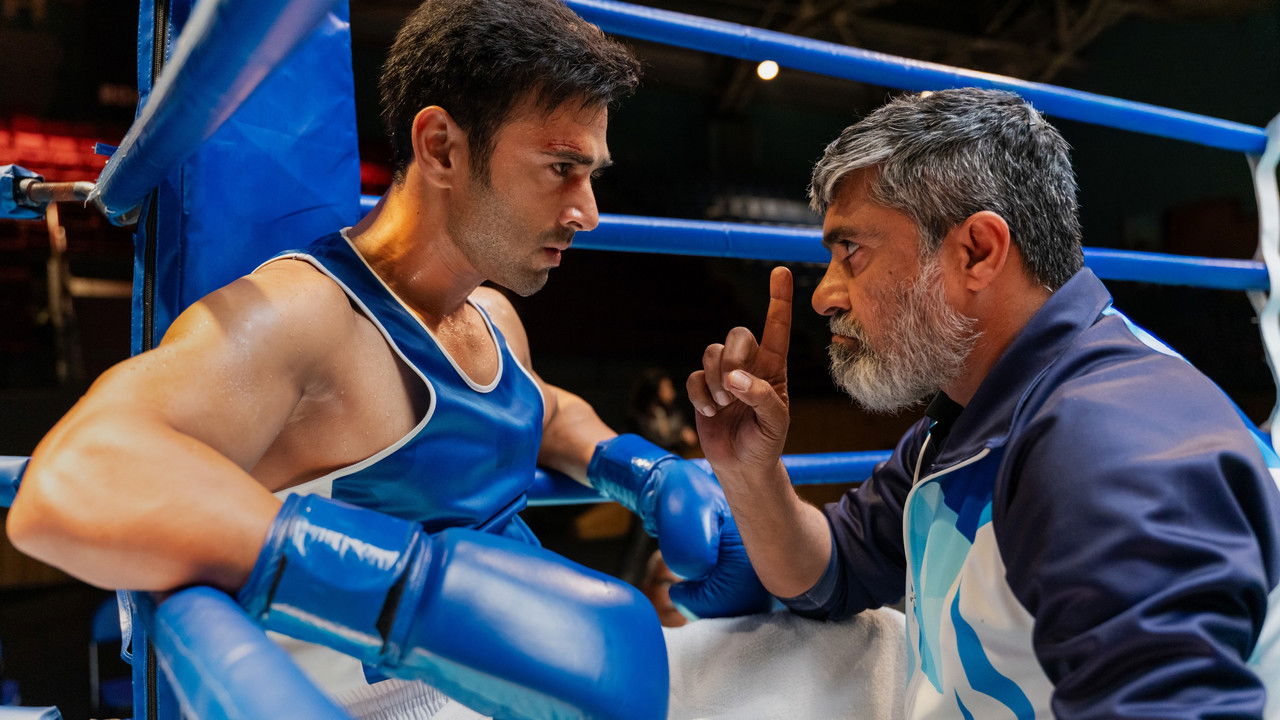
The setup is deceptively simple: two brothers, Ravi (Pulkit Samrat) and Dev (Divyendu Sharma), return to their hometown of Shaktigarh after years apart, drawn back by the murder of their half-sister, Gudiya. Their father, Raghubir Singh (Suvinder Vicky), is the town’s revered boxing coach, a man whose legacy is built on the backs of young fighters he molds into champions—or discards when they fail.
The murder investigation becomes a lens through which the brothers confront not just the crime, but the rot beneath the surface of their family, their town, and the sport they once loved. It’s a premise that could easily slip into melodrama, but Glory grounds itself in the physicality of its world: the way a punch sounds when it connects, the way a fighter’s breath hitches when they’re exhausted, the way a father’s disappointment can feel like a body blow.
The series’ greatest strength is its refusal to romanticize boxing. This isn’t Rocky or The Fighter, where the sport is a metaphor for redemption or the underdog’s rise. Here, boxing is a brutal, transactional business, a way for poor kids to claw their way out of small-town obscurity—or to be chewed up and spat out when they’re no longer useful.
The fights are shot with a raw, documentary-like intensity, the camera close enough to feel the impact of every hit. There’s no glamour in these sequences, just the grim reality of bodies pushed to their limits. The gym itself is a character, a cavernous space filled with the echoes of past victories and the ghosts of those who didn’t make it.
It’s the kind of place where dreams go to die, and Glory understands that better than most sports dramas.
But for all its grit, the series stumbles when it tries to balance its two central narratives: the murder mystery and the family drama. The former is serviceable, if a bit too reliant on red herrings and last-minute reveals that feel more convenient than earned. The latter, though, is where Glory truly shines.
The relationship between Ravi and Dev is the emotional core of the show, and Divyendu Sharma’s performance is nothing short of revelatory. He plays Dev as a man who’s spent his life running from his past, only to realize that no matter how far he goes, he can’t outrun the weight of his father’s expectations. There’s a scene in the first episode where Dev, drunk and exhausted, collapses onto the floor of his childhood home, his body curling in on itself like a wounded animal.
It’s a small moment, but Sharma makes it devastating. You can see the years of resentment and unspoken grief etched into every line of his face.

Pulkit Samrat, by contrast, struggles to match Sharma’s intensity. Ravi is written as the golden boy, the brother who escaped Shaktigarh and made something of himself, but Samrat’s performance often feels one-note, his charm too polished for a character who’s supposed to be grappling with his own demons. It’s a shame, because when the two brothers are on screen together, the dynamic between them crackles with tension.
There’s a scene in the second episode where they argue in the gym, the camera circling them like a predator as their voices rise. It’s one of the few moments where the series fully commits to the raw, unfiltered emotion of their relationship, and it’s electric.
The supporting cast is a mixed bag. Suvinder Vicky is magnetic as Raghubir, a man whose love for his sons is tangled up in his own ambition. He’s not a villain, exactly, but he’s not a hero either.
He’s a man who’s spent his life shaping young fighters into champions, and in doing so, he’s lost sight of what it means to be a father. Ashutosh Rana, as the town’s corrupt police inspector, is similarly compelling, though his character’s motives are often murky. Sayani Gupta and Kashmira Pardesi, as the women caught in the brothers’ orbit, are given frustratingly little to do beyond reacting to the men around them.
Gupta, in particular, is a standout in her limited screen time, her sharp intelligence cutting through the male posturing that dominates the series.
The real star of Glory, though, might be its setting. Shaktigarh is a fictional town, but it feels lived-in, a place where the air is thick with dust and the weight of unfulfilled dreams. The series was filmed in Punjab, and the location work gives the show a sense of authenticity that’s often missing in Indian crime dramas.
The boxing sequences, too, are a highlight. They’re not flashy or stylized, but they feel real, the kind of fights you might see in a local gym rather than a Hollywood ring. The sound design is particularly effective, the thud of gloves against flesh, the ragged breathing of the fighters, the distant hum of the crowd—all of it pulls you into the moment.
And yet, for all its strengths, Glory is a series that never quite lives up to its own potential. The murder mystery, which should be the driving force of the plot, often takes a backseat to the family drama, and when it does resurface, the twists feel underwhelming. The second half of the season drags, the pacing uneven, the reveals telegraphed well in advance.
There’s a sense that the writers knew where they wanted to go but struggled to get there in a way that felt organic. The finale, in particular, is a letdown, the big reveal feeling more like a cop-out than a satisfying conclusion.

That’s not to say Glory isn’t worth watching. It is. For all its flaws, there’s a rawness to it, a willingness to engage with the darker side of ambition and family that’s rare in Indian television.
Divyendu Sharma’s performance alone is worth the price of admission, and the boxing sequences are some of the most visceral I’ve seen in a long time. But the series is also a reminder of how difficult it is to balance multiple genres—sports drama, family saga, murder mystery—without letting one overshadow the others. Glory comes close, but in the end, it’s a series that punches above its weight in some moments and pulls its punches in others.
I keep thinking about that scene in the gym, the one where Dev collapses onto the floor, his body wracked with exhaustion and grief. It’s a small moment, but it’s the kind of thing that stays with you. Glory is full of those moments—brief flashes of brilliance that make you wish the rest of the series had lived up to them. It’s not a knockout, but it’s a fight worth watching.
And in the end, maybe that’s enough.
"A gripping but uneven boxing whodunit powered by Divyendu Sharma’s performance and gritty tension, undercut by messy plotting and a sagging second half."
Strong acting—especially from Divyendu Sharma—and a tense sports-crime setup in the boxing world make the series engaging and bingeable, with atmospheric visuals, music, and some standout twists. Stretched pacing, predictable reveals, and several questionable story choices dilute the impact, and the direction never fully capitalizes on the talented ensemble or the Haryana setting.
If you thought Glory was brutal on screen, wait till you hear what went down outside the ring. From a trailer launch that turned into a near-brawl to actors literally bleeding for authenticity, latestnetflix.com contends, the making of Netflix’s Haryana boxing noir is its own thriller.
In the end, Glory lives up to its title the messy way: real bruises, high‑risk PR stunts, emotionally wrecked actors, and a creative team obsessed with showing the ugly cost of chasing greatness—on screen and, occasionally, on stage. GLORY: WHEN PULKIT-DIVYENDU'S EVENT TURNED INTO A FIGHT. Https://www.rediff.com/movies/report/glory-when-pulkit-divyenndus-event-turned-into-a-fight/20260418.htm. PULKIT SAMRAT ON PLAYING A BOXER IN GLORY. Https://www.moneycontrol.com/entertainment/pulkit-samrat-on-playing-a-boxer-in-glory-says-years-of-fitness-mean-nothing-when-you-have-to-play-an-athlete-article-13905586.html. GLORY (TV SERIES). Https://en.wikipedia.org/wiki/Glory_(TV_series). SUVINDER VICKY: GLORY MEANS PROVING MYSELF AS AN ACTOR. Https://www.newkerala.com/news/a/suvinder-vicky-proving-myself-my-profession-glory-365.htm. INSIDE 'GLORY': DIVYENNDu, PULKIT SAMRAT AND KARAN ANSHUMAN. Https://www.thehindu.com/entertainment/movies/inside-glory-divyenndu-pulkit-samrat-and-karan-anshuman-on-shaping-netflixs-brutal-boxing-thriller/article70915799.ece. EVERYTHING YOU NEED TO KNOW ABOUT 'GLORY'. Https://www.whats-on-netflix.com/news/everything-you-need-to-know-about-glory-netflix-indias-new-sports-drama/. ‘IN GLORY PEOPLE NEED SAVING FROM HER’: KASHMIRA PARDESHI. Https://www.indiaforums.com/article/i-played-girls-who-get-saved-in-glory-people-need-saving-from-her-kashmira-pardeshi-ditches-damsel-r_234323. NETFLIX'S 'GLORY' END EXPLAINED. Https://www.firstpost.com/entertainment/netflixs-glory-end-explained-divyenndu-pulkit-samrat-suvinder-vickys-web-series-is-much-more-than-a-boxing-drama-14007247.html. 'GLORY' SERIES REVIEW: A PULPY GENRE COCKTAIL THAT LOSES ITS FIZZ. Https://www.hollywoodreporterindia.com/reviews/streaming/glory-series-review-a-pulpy-genre-cocktail-that-loses-its-fizz.
Entertainment rumors and trivia aggregated from public reporting. Treat speculation as unverified unless a cited source confirms it.
More titles in the same genres and with the same cast.