Arón Piper
Sergio

Sergio hasn't spoken since the day he murdered his parents. Six years later, a teen girl may be the key to revealing the whole story.
Official
I kept waiting for the moment when Muted would finally speak. Not in the literal sense—though Sergio’s six-year silence is the show’s central gimmick—but in the way a good thriller should: with clarity, tension, or at least a coherent idea. Instead, what we get is a series that mistakes opacity for depth, and silence for suspense.
By the time the credits roll on its sixth episode, I wasn’t left pondering the nature of trauma or the unreliability of memory. I was just annoyed.
That’s not to say Muted doesn’t try. The premise is undeniably intriguing: a young man, Sergio (Arón Piper), hasn’t uttered a word since the night he allegedly murdered his parents. Six years later, a teenage girl’s disappearance forces him back into the world of the speaking, where a psychiatrist (Almudena Amor) and a detective (Aitor Luna) attempt to unravel the truth behind his silence.
It’s the kind of setup that should crackle with tension—think The Sixth Sense meets Prisoners, with a dash of The Machinist’s psychological unraveling. But somewhere between the first hidden camera and the third convoluted twist, the show loses its way, tripping over its own ambition.
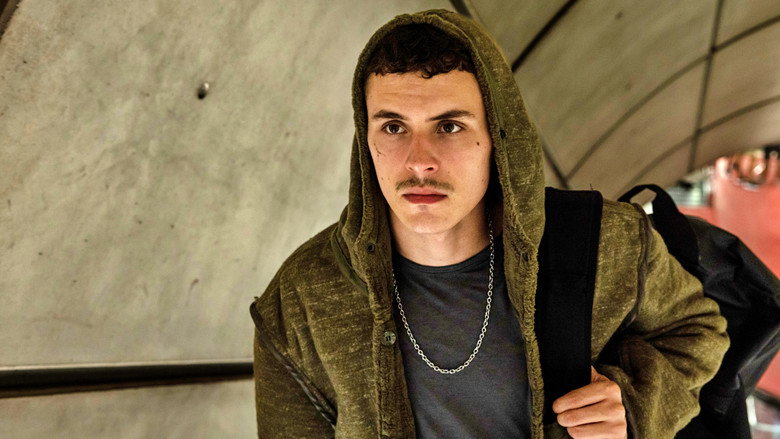
The first episode is the most promising. Sergio’s silence is used effectively here, not just as a plot device but as a narrative constraint. The camera lingers on his face, searching for micro-expressions—a flicker of recognition, a tightening of the jaw—that might betray his thoughts.
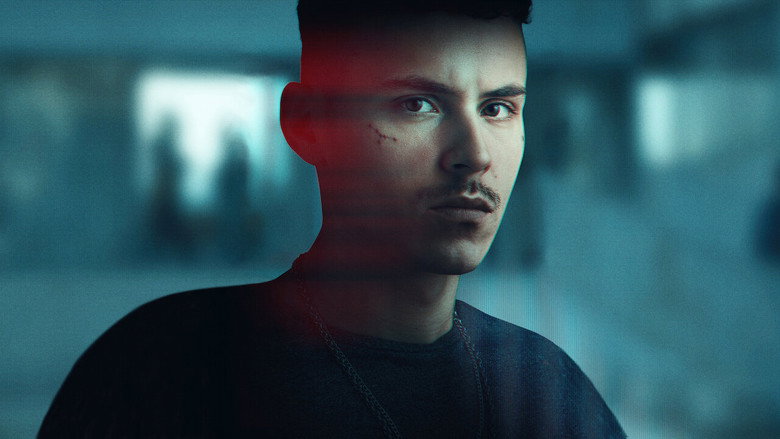
Piper, who rose to fame in Elite, is a compelling presence, his wiry frame and hollow cheeks suggesting a young man who’s been hollowed out by something. (Though, let’s be honest, he looks more like he’s recovering from a bad flu than six years of psychological torment.) The show’s visual language leans into the surveillance thriller aesthetic, with monitors, hidden cameras, and grainy footage creating a sense of constant observation.
It’s a nod to the panopticon thrillers of the ’80s and ’90s—think Blow Out or The Conversation—where the act of watching becomes as important as what’s being watched.
But then the show starts talking. And talking. And talking.
The problem isn’t just that Muted is overly reliant on exposition—though it is—but that the exposition is so often at odds with what the camera is already showing us. In one scene, a character will spend a full minute explaining Sergio’s psychological state, while the camera cuts to Sergio’s face, which is already telling us everything we need to know. It’s as if the writers don’t trust the audience to interpret the visuals, so they layer on redundant dialogue like a bad dub.
The result is a show that feels both over-explained and under-thought, as if the creators were so focused on the mechanics of their twist that they forgot to make the journey there compelling.
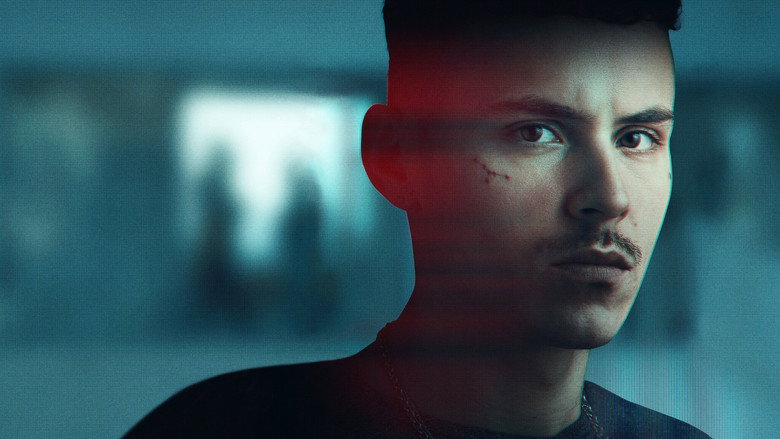
The show’s central mystery—why Sergio stopped speaking, and what really happened the night his parents died—should be the engine driving the narrative. Instead, it becomes a series of red herrings and false starts, each one more convoluted than the last. By the third episode, I found myself actively rooting for the show to fail, just to see how badly it would bungle its own premise.
(Spoiler: it does not disappoint.) The final twist, when it arrives, is so tonally jarring and illogical that it undermines everything that came before it. It’s the kind of ending that makes you wonder if the writers were working from a different script entirely, or if they just gave up and threw a dart at the wall.
This isn’t to say there aren’t moments of craft here. The production design is sleek and atmospheric, with a color palette that oscillates between sterile blues and sickly yellows, as if the show itself is suffering from a low-grade fever. The use of proximity is also effective—there’s a palpable tension in the way the camera lingers just a little too close to Sergio’s face, or how it frames him through the bars of a cell or the reflection of a two-way mirror.
These choices create a sense of claustrophobia, as if the audience is trapped in the room with him, forced to confront his silence. But even these strengths are undermined by the show’s insistence on explaining itself. In one particularly egregious scene, a character literally says, “We’re watching him through the camera,” as if we hadn’t already noticed the giant monitor in the room.
The performances, too, are a mixed bag. Piper is the standout, though his task is made easier by the fact that he doesn’t have to say anything. His physicality is compelling—he moves like a man who’s spent years trying to take up as little space as possible—but the show’s script doesn’t give him much to work with beyond brooding and occasional bursts of violence.
Almudena Amor, as the psychiatrist Ana, fares better, bringing a quiet intensity to her role. But even she is hampered by the show’s insistence on making her character’s motivations murky at best and contradictory at worst. The rest of the cast is largely wasted, reduced to delivering exposition or reacting to Sergio’s silence with varying degrees of bewilderment.
What’s most frustrating about Muted is that it feels like it could have been something special. The premise is strong, the visual language is intriguing, and there’s a kernel of a great idea here about the nature of trauma and the stories we tell ourselves to survive. But the execution is so sloppy, so self-sabotaging, that it’s hard to see past the flaws.
The show’s title becomes a cruel irony—it’s not just Sergio who’s mute, but the show itself, unable to articulate its own ideas with any clarity or purpose.
Critics have been largely unkind to Muted, and it’s not hard to see why. Jack Seale at The Guardian called it “a black hole sucking in the occasional drifting nugget of narrative, destroying each one without trace,” while Jonathon Wilson at Ready Steady Cut dismissed it as “deeply illogical, silly, and flawed.” Even the show’s defenders—of which there are a few—seem to be grasping at straws. Joel Keller at Decider praised the premise and acting, but even he admitted that “the longer we see the characters as a series of quirks instead of having any kind of backstory, the less we’re going to want to see more.”
And yet, for all its flaws, Muted is the kind of show that lingers—not because it’s good, but because it’s so bafflingly bad. It’s the kind of show you keep watching out of sheer disbelief, like a car crash you can’t look away from. I found myself rewinding scenes, not because they were brilliant, but because I couldn’t believe what I’d just seen.
In that sense, Muted is a masterclass in how not to make a thriller. It’s a show that mistakes confusion for complexity, silence for suspense, and convolution for cleverness.
In the end, Muted is a series that wants to have its cake and eat it too. It wants to be a psychological character study and a twisty thriller, a meditation on trauma and a pulpy mystery. But it can’t decide which story it wants to tell, so it ends up telling none of them well.
The result is a show that’s as frustrating as it is fascinating—a six-hour exercise in missed opportunities.
I’m still thinking about it, though. And maybe that’s the point. Or maybe it’s just the kind of show that haunts you not because it’s good, but because you can’t believe it exists. Either way, Muted leaves you with one inescapable question: if silence is golden, why does this show feel so hollow?
Netflix’s Muted (2023), originally titled El Silencio, is a psychological thriller that has kept audiences on the edge of their seats—not just for its gripping plot, but for the eerie silence at its core. The series follows Sergio (Arón Piper), a young man who hasn’t spoken since the day he allegedly murdered his parents. Six years later, a teenage girl becomes the key to unraveling the truth behind his silence. But behind the show’s tense narrative lies a production shrouded in mystery, with a cast of rising stars and a cliffhanger ending that left fans demanding answers.
Muted brings together a mix of established and emerging Spanish talent. Arón Piper, best known for his role in Elite, takes on the complex lead as Sergio, a character whose silence speaks volumes. Almudena Amor, who gained recognition in The Good Boss, plays Ana, a psychologist entangled in Sergio’s case. The ensemble also includes Manu Ríos, a social media sensation turned actor, and Aria Bedmar, whose performance as the enigmatic teen girl has drawn praise.
The chemistry among the cast is palpable, but the real star may be the tension they create. With no dialogue from Sergio for much of the series, the actors rely on body language and expression to convey the story’s psychological depth—a challenge that the cast reportedly embraced.
The series finale delivered a shocking twist: a death that left fans debating who didn’t make it out alive. While Muted wrapped up most of its storylines, one major mystery remains unsolved, leaving the door open for speculation—or a potential second season. The ambiguity has fueled online theories, with viewers dissecting every clue in Sergio’s silent world.
Creator Aitor Gabilondo and director Gabe Ibáñez crafted a story that thrives on uncertainty, mirroring Sergio’s own inability to speak. The show’s original Spanish title, El Silencio, underscores this theme, making the lack of answers feel intentional rather than frustrating.
Despite its short run, Muted has made a lasting impression. The series premiered on Netflix on May 19, 2023, and quickly became a talking point for its atmospheric tension and strong performances. While details about the production process remain scarce, the show’s tight pacing suggests a deliberate approach to storytelling—one that prioritizes suspense over filler.
Rumors of a second season have swirled, but nothing has been confirmed. Given the open-ended finale, however, it’s not hard to imagine Netflix revisiting Sergio’s story if fan demand grows.
In a sea of crime thrillers, Muted distinguishes itself through its psychological depth and minimalist approach. Sergio’s silence isn’t just a plot device; it’s a character in itself, forcing viewers to pay attention to what isn’t said. The show’s success lies in its ability to make audiences lean in, filling the gaps with their own theories.
For now, Muted remains a self-contained mystery—one that leaves fans hoping for more.
Entertainment rumors and trivia aggregated from public reporting. Treat speculation as unverified unless a cited source confirms it.
More titles in the same genres and with the same cast.