
Alina Boz
Eda
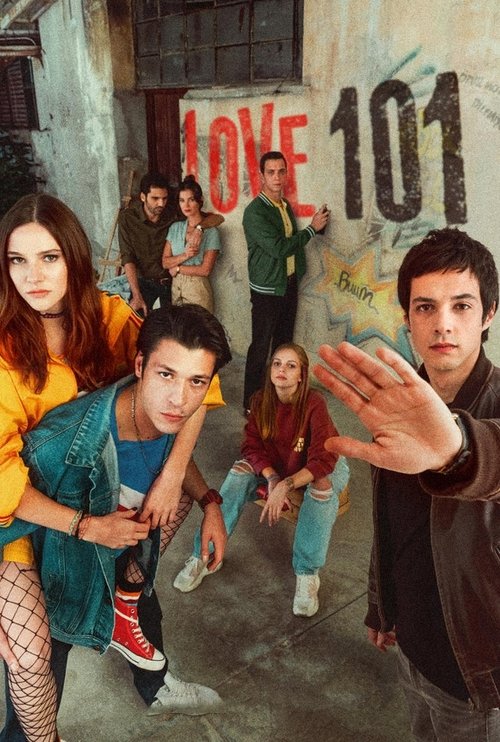
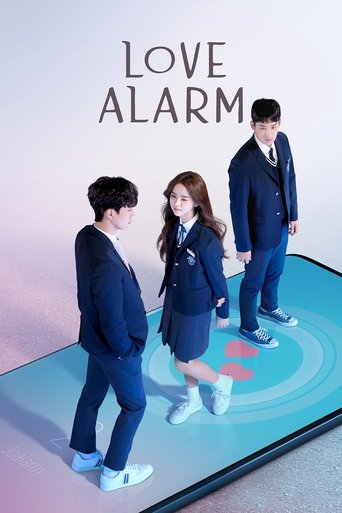
While trying to make their teacher fall for a basketball coach, four misfits and a model student find friendship, love and the courage to be themselves.
Official
What I keep remembering about Love 101 isn’t the premise, which is shameless in the best teen-drama way, but the atmosphere: the sense that everyone in this school is pretending to know more than they do. The series turns a silly assignment—get a teacher to fall for a basketball coach—into a laboratory for embarrassment, loyalty, and the weird diplomacy of adolescence. That’s the real joke here.
latestnetflix.com's take is that Teenagers are often asked to behave as if they’re already finished people, and this show keeps nudging them back into the mess.
It helps that Love 101 arrives from a very specific moment in Turkish streaming television, when Netflix originals from Turkey were starting to travel well beyond their home market and carry a different kind of cultural charge. This isn’t just a high-school dramedy imported into a vacuum; it’s part of a broader conversation about how Turkish TV, long dominated by sprawling melodramas and family sagas, could compress itself into a brisker, more exportable form without losing the local friction. There’s a whiff of the classic school picture in it—think Dead Poets Society filtered through lunchroom alliances and hormonal sabotage—but also something recognizably contemporary in its interest in gender, class, and the performance of popularity.
The show’s creator-director shape, while not always visually flashy, is more disciplined than I expected. It tends to favor clean blocking, bright interiors, and a kind of emotional visibility: faces are rarely hidden for long, and conversations are staged so that awkwardness has nowhere to hide. That matters.
Teen dramas can be sneaky, making their characters seem more self-aware than they ought to be. Love 101 does the opposite. It lets people blurt, freeze, backtrack, and say the wrong thing twice. The camera doesn’t mock them.
It just keeps watch.
I’m especially struck by how the series uses group scenes. So many shows claim to be about friendship and then reduce friendship to a bunch of quips in a brightly lit room. Here, the ensemble actually feels like an ecosystem.
Alina Boz, as Eda, gives the group its most careful energy; she’s not the loudest person in the room, which makes her useful to watch. There’s a watchfulness in her posture, a slight delay before she reacts, as if she’s always running the social odds in her head. That kind of reserve can read as mystery in lesser hands, but Boz makes it feel like protection.
She’s one of the reasons the show’s emotional turns land at all.
Mert Yazıcıoğlu, by contrast, has the kind of face that seems built for contradictions—boyish, then suddenly tired, then funny again. He plays Kerem with a restless physical looseness, the body of someone who’d rather drift than commit, which is exactly what makes him useful to a story about kids constructing identities out of dares and half-truths. Their dynamic, and the broader ensemble around them, gives the series its warmth.
There’s also a good deal of chemistry around Selahattin Paşalı and Pınar Deniz, whose presence adds a touch of adult instability to the teen machinery. I wouldn’t call every subplot essential (some are stretched just enough to keep the eight-episode seasons moving), but the actors keep the material from turning schematic.
One scene in particular captures what the show does best. A plan is being discussed in a classroom, but nobody in the room behaves as if the plan is really the point. People interrupt each other, overreact, pretend not to care, then care too much.
The camera sits at a patient distance, letting a glance travel across the room before a line lands badly. And then, just for a second, the whole thing becomes about something much smaller and more human: who gets excluded, who gets to laugh, who has to swallow the joke. That’s the emotional grammar of adolescence right there.
Not grand declarations. Social weather.
The series also understands how to use its school setting without turning it into a fantasy. The corridors, classrooms, gym spaces, and rooftop hangouts aren’t merely backdrops; they’re social instruments. A hallway shot can tell you who belongs where.
A classroom can feel like a stage when everyone’s pretending not to perform. Even the brighter, more romantic stretches of the show keep that sense of choreography. People are always entering a frame slightly too late, or leaving just before they should.
It’s small, but that’s adolescence: timing as fate.
There are flaws, of course. At times, Love 101 leans hard on the familiar beats of the genre—the secret meeting, the improbable plan, the sudden confession that’s more useful to the plot than believable in the moment. I don’t mind a certain amount of contrivance in teen fiction; in fact, I usually enjoy it.
But a few stretches here feel engineered rather than discovered, as if the series briefly trusts the mechanics more than the feelings. When that happens, the emotional temperature drops. Still, it recovers quickly, because the actors keep returning the material to the body: a stiff shoulder, a look that lasts half a beat too long, a smile that doesn’t quite land.
What I like most is that the show treats self-invention as both liberation and performance. That’s not a moral lesson so much as a fact of life. Teenagers try on attitudes the way adults try on accents or politics: clumsily, earnestly, sometimes foolishly, often in front of the wrong person. Love 101 doesn’t sneer at that process.
It sees the risk in it. It also sees the comedy, which is harder to do well than people think. A lot of series can write hurt; fewer can write the funny little humiliations that make hurt bearable.
So yes, this is a show about a prank, and yes, it’s about first love, and yes, it eventually expands into a broader story of friendship and courage. But what lingers for me is simpler: the feeling of watching people become themselves in public, and not always gracefully. That’s messy.
It’s also the thing television can do best when it stops pretending youth is a slogan and starts paying attention to the awkward, blinking human being in the center of the frame. Love 101 does that often enough that I found myself forgiving its rough edges. Then, before I knew it, I was thinking about my own school days, and the strange mercy of having survived them.
"Love 101 is a nostalgic Turkish teen drama about a group of rebellious high schoolers finding connection."
Video reviews show active discussion of the teenage ensemble, and the heartfelt focus on youth camaraderie holds up despite familiar high school melodrama tropes.
Two weeks out from premiere, a Twitter handle with no link to the production posted that Osman was gay. Conservative papers treated the rumor as a plot point. Takvim billed Netflix as a nest of perversion and an LGBT series timed for Ramadan. Courrier International wrote that Turkey was threatening to block Aşk 101, Netflix's third Turkish original after The Protector and The Gift, before a frame had streamed,. Netflix Turkey called the account fake and told readers the only official source for the characters was Netflix. latestnetflix.com's view is that Columnists who sat through the first eight episodes later said the gay character the papers described was not in the show.
The actual pitch is smaller and meaner. In 1998 Istanbul, four kids on the edge of expulsion decide the only teacher who votes to keep them, Burcu, has to fall in love with the new basketball coach so she can stay and they can stay with her,. They know nothing about love, so they drag in Işık, the model student who watches romances. Ay Yapım and producer Kerem Çatay shot both seasons at Akif Tunçel Vocational and Technical Anatolian High School in Şişli,. Writer Meriç Acemi and directors Ahmet Katıksız and Deniz Yorulmazer handled season one. Netflix's own trailer, posted April 6, 2020, sold "the story of being yourself in spite of everything and everyone" and locked April 24. IMDb still lists it as the third Turkish series Netflix produced.
The smear named Selahattin Paşalı's Osman. The rest of the misfits were Alina Boz as Eda, Kubilay Aka as Kerem, and Mert Yazıcıoğlu as Sinan. İpek Filiz Yazıcı played Işık. Pınar Deniz and Kaan Urgancıoğlu played the teachers the kids tried to marry off,. The present-day frame is the part the papers skipped. Bade İşçil plays adult Işık walking back into an old house. The teenagers are already a memory. Season two, dropped September 30, 2021 as the last season, added Ece Yüksel as Elif and recast the grown-ups. Tuba Ünsal, Mert Fırat, Fatih Artman, and Uraz Kaygılaroğlu play the adult versions of Eda, Kerem, Osman, and Sinan,. Netflix Turkey threw a farewell night in Ortaköy. The principal cast showed up in person. Nobody leaked a fight for season three. The second trailer had already said life gets harder as you grow up. The loudest story around Love 101 never happened on set. It happened on a fake account, then in print, then in a denial, and the 1998 classroom still went out worldwide.
Entertainment rumors and trivia aggregated from public reporting. Treat speculation as unverified unless a cited source confirms it.
More titles in the same genres and with the same cast.