Hazal Kaya
Esra Köksüz/ Peride

At a historic Istanbul hotel, a journalist is unexpectedly thrust into the past and must stop a plot that could change the fate of modern Turkey.
I’ve always been suspicious of time-travel stories that lean too heavily on nostalgia. They tend to treat the past like a theme park—all sepia tones and quaint moral certainties—while the present gets short shrift as a place of hollow convenience. Midnight at the Pera Palace, the Turkish Netflix series from 2022, could have easily fallen into that trap. Istanbul’s Pera Palace Hotel is, after all, a real place steeped in history: Agatha Christie wrote Murder on the Orient Express in one of its rooms, Atatürk stayed there, and the building itself is a palimpsest of empires.
But the show doesn’t just use history as a backdrop. It treats time itself as a kind of haunting, a force that lingers in the walls like cigarette smoke.
The premise is deceptively simple: Esra (Hazal Kaya), a modern-day journalist, checks into the Pera Palace and somehow finds herself transported to 1919, on the cusp of Turkey’s War of Independence. The show’s fantasy element isn’t played for whimsy, though. Esra isn’t a wide-eyed tourist in the past; she’s a woman with a mission, tasked with preventing a conspiracy that could alter the course of Turkish history.
The stakes feel personal, even intimate. This isn’t Back to the Future; there’s no DeLorean, no winking nods to the audience. Instead, the past is a place of danger, where every conversation could be a betrayal and every glance might give her away.
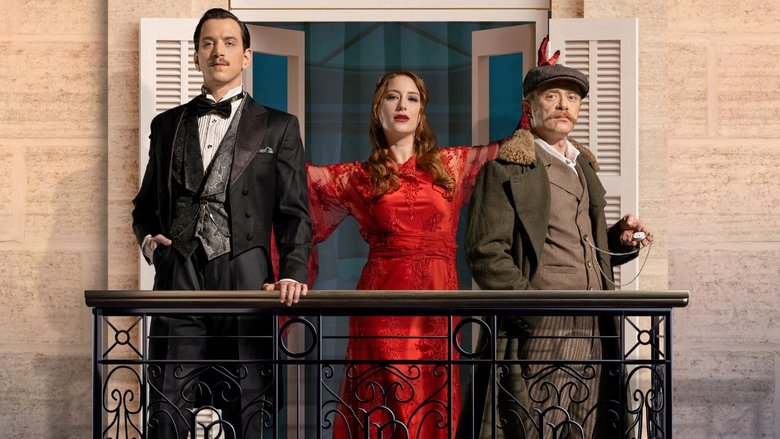
What’s striking about Midnight at the Pera Palace is how it balances its dual genres. The drama is grounded in the kind of political intrigue you’d expect from a period piece—whispers in back rooms, coded messages, the constant threat of violence—but the fantasy elements never feel like a gimmick. The show’s real magic lies in its ability to make the past feel alive, not just historically accurate.
The Pera Palace itself becomes a character, a place where time doesn’t just pass but accumulates. The hotel’s grand halls and shadowy corridors are filled with echoes: the clink of glasses from a long-ago party, the rustle of a dress that no longer exists, the weight of decisions made decades before Esra was born.
The series’ visual language reinforces this sense of temporal disorientation. The cinematography often blurs the line between past and present, using mirrors, reflections, and overlapping imagery to suggest that the two eras aren’t as separate as they seem. In one particularly effective scene, Esra stands in the hotel’s lobby, and for a moment, the camera lingers on her reflection in a gilded mirror—only the reflection isn’t hers.
It’s someone else, someone from 1919, watching her with equal parts curiosity and dread. The effect is subtle, but it’s these kinds of quiet moments that give the show its emotional weight. Time here isn’t a straight line; it’s a loop, a spiral, something that folds back on itself.
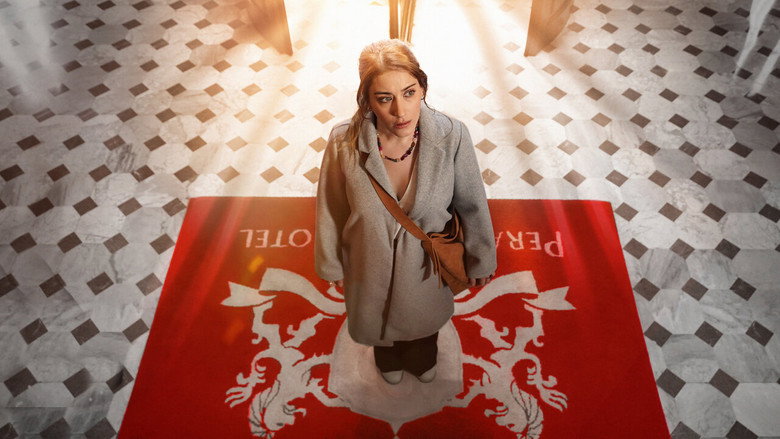
Hazal Kaya’s performance is central to the show’s success. Esra isn’t a typical heroine; she’s pragmatic, sometimes ruthless, and often out of her depth. Kaya plays her with a kind of weary determination, as if she’s always calculating the cost of every decision.
There’s a scene in the first season where Esra must impersonate a historical figure, and the tension in Kaya’s posture—shoulders slightly hunched, eyes darting—tells you everything you need to know about how precarious her situation is. She’s not just pretending to be someone else; she’s trying to become someone else, and the strain of it is written all over her body.
The supporting cast is equally strong, particularly Tansu Biçer as Ahmet, a journalist in 1919 who becomes Esra’s reluctant ally. Ahmet is a man caught between his ideals and the harsh realities of his time, and Biçer plays him with a quiet intensity that makes his moral compromises feel inevitable rather than cowardly. Their dynamic is one of the show’s most compelling elements, a slow-burning partnership that never quite tips into romance.
(Thankfully, the series resists the urge to force a love story where none is needed.)
If Midnight at the Pera Palace has a flaw, it’s that the mystery at its core sometimes feels too convoluted. The conspiracy Esra is trying to unravel involves multiple factions, shifting alliances, and a MacGuffin that’s never quite as interesting as the people chasing it. The show’s strength lies in its characters and atmosphere, not its plot mechanics, and there are moments when the intrigue threatens to overwhelm the emotional core.
But even then, the setting and performances keep you invested. This isn’t a show you watch for the twists; it’s a show you watch for the feeling of being lost in time, of walking through a place where the past isn’t just remembered but lived.
The series’ reception has been modest but appreciative. SensCritique, a French review aggregator, gives it a 6.5/10 based on 120 votes, which suggests a niche but engaged audience. There’s no critical consensus to speak of—no raves from major outlets, no backlash, no cultural moment.
That might be the most telling thing about Midnight at the Pera Palace: it’s a show that doesn’t demand attention so much as it earns it. It’s the kind of series that lingers in your mind long after the credits roll, not because it’s flashy or groundbreaking, but because it understands something fundamental about time. The past isn’t a place we visit; it’s a place that visits us, again and again, whether we’re ready for it or not.
And maybe that’s the real fantasy here—not the time travel, but the idea that we could ever truly leave the past behind. The Pera Palace, with its layers of history and its ghosts in the mirrors, knows better. So does Esra, by the end.
She can’t fix everything. She can’t even fix most things. But she can bear witness.
And sometimes, that’s enough.
Netflix’s Midnight at the Pera Palace (2022) blends romance, espionage, and Istanbul’s rich history into a binge-worthy series. Directed by Turkish-American filmmaker Emre Şahin, the show has become a standout for its lavish production, emotional depth, and a cast led by Hazal Kaya. But what went on behind the scenes? latestnetflix.com's take is that here’s what we know—and what’s still buzzing in the rumor mill.
Emre Şahin, known for his work in both Hollywood and Turkish cinema, brought a unique perspective to Midnight at the Pera Palace. His background as an award-winning director and producer likely played a role in shaping the series’ cinematic quality. While details about his creative process are scarce, the show’s VFX breakdown reveals meticulous attention to detail—particularly in recreating 1920s Istanbul. A behind-the-scenes video by Cause and FX showcases how digital effects enhanced the historical setting, from bustling streets to the iconic Pera Palace Hotel.
Şahin’s dual identity as a Turkish-American creator may have also influenced the series’ appeal to global audiences. The show’s mix of local history and universal themes—love, war, and identity—aligns with Netflix’s strategy for international hits.
Lead actress Hazal Kaya, a household name in Turkey, has been vocal about her excitement for the project. In a YouTube clip, she teased fans with "good news" about the series, though the specifics remain unclear. Her performance as Esra, a young woman entangled in Istanbul’s political intrigue, has drawn praise for its emotional range—particularly in a scene highlighted in a fan-uploaded video.
Kaya’s chemistry with co-star Selahattin Paşalı (who plays Ahmet) has been a talking point, with some viewers speculating about off-screen tension or camaraderie. However, no concrete evidence supports these rumors—just the undeniable on-screen spark.
The release of the Season 2 official trailer sent fans into a frenzy, with many dissecting hints about new plot twists. A Hindi-language recap video breaks down Season 1’s cliffhangers, fueling speculation about Esra’s fate and the return of historical figures. The trailer’s moody tone suggests darker stakes, but Netflix has yet to confirm a release date.
Meanwhile, a review by YouTuber Faheem praises the series’ "cinematic storytelling" but notes pacing issues in later episodes. Whether Season 2 will address these critiques remains to be seen.
Midnight at the Pera Palace isn’t just another period drama. Its blend of historical fiction and modern sensibilities—think The Crown meets Downton Abbey with a Turkish twist—has resonated with audiences worldwide. The Hindi trailer and recap videos suggest strong international appeal, while the VFX breakdown underscores the effort to transport viewers to a bygone era.
For now, fans are left waiting for Season 2, but one thing’s certain: this isn’t a show that fades into the background.
Entertainment rumors and trivia aggregated from public reporting. Treat speculation as unverified unless a cited source confirms it.
More titles in the same genres and with the same cast.