Narilya Gulmongkolpech
Kaimook

“Who Will Come Out on Top?”
A family enters a power struggle following the death of their patriarch, who leaves behind his diamond empire — and the housekeeper he recently married.
Official
I’ve seen this story before. A wealthy patriarch dies, his fortune up for grabs, and the vultures circle—heirs, hangers-on, the help. It’s Dallas with sharper knives, Knives Out with a side of durian.
But Master of the House (2024), Netflix’s Thai import, doesn’t just retread familiar ground. It bulldozes it, then sets the rubble on fire. The question isn’t whether the house will fall—it’s who’ll be left standing when the smoke clears.
The series opens with a funeral, because of course it does. Roongroj, the diamond-mogul patriarch, is dead, and his sprawling estate is a powder keg of greed, resentment, and secrets. At the center of it all is Kaimook (Narilya Gulmongkolpech), the housekeeper he married just before his demise.
She’s either the grieving widow, the scheming opportunist, or something far more complicated. The show delights in keeping us guessing, even as it piles on the bodies.
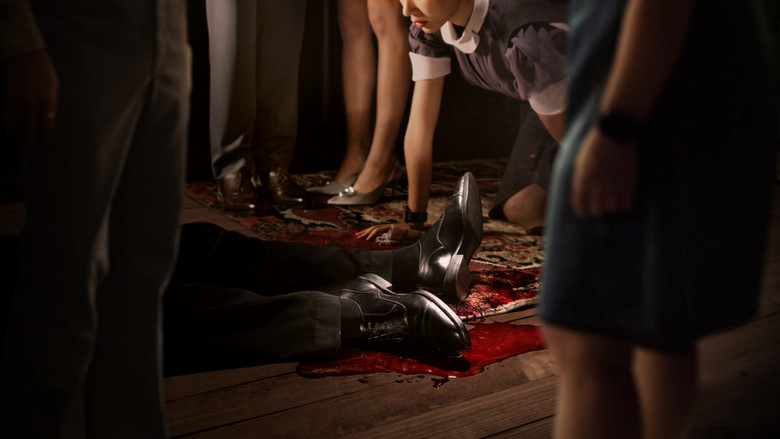
What makes Master of the House more than just a guilty pleasure is its refusal to play nice. Thai lakorn (soap operas) are known for their melodrama, but this series cranks the dial to eleven, blending the operatic with the outright grotesque. There’s a scene early on where one of Roongroj’s sons, Phupat (Chartayodom Hiranyatithi), casually slaps a servant across the face—hard enough to draw blood, not hard enough to break stride.
It’s a moment that lingers, not because of the violence itself, but because of how little anyone reacts. The servants flinch; the family barely blinks. This is just how things are done.
The show’s most controversial element, though, isn’t its violence—it’s how it weaponizes class. The servants in Master of the House aren’t just background decoration; they’re the Greek chorus, whispering in the shadows, watching the rich unravel. The camera often adopts their perspective, peering through doorways or around corners, as if we’re complicit in their voyeurism.
It’s a clever trick, one that makes the audience feel like co-conspirators. But it also raises uncomfortable questions: Are we here to root for the underdogs, or are we just rubbernecking at the wreckage?
The series’ cinematography is undeniably lush, with a color palette that oscillates between the opulent golds of the family’s mansion and the sickly greens of its hidden corridors. The butterflies that flit through the frames—first as a motif, then as a clue—are a nice touch, though their symbolism is about as subtle as a sledgehammer. (They’re tied to Roongroj’s past, to Kaimook’s fate, to the fragility of power.
You get it.) The real standout, though, is the sound design. The creak of a floorboard, the whisper of silk against skin, the distant hum of a generator—it all adds up to a sense of dread that’s far more effective than the show’s occasional reliance on jump scares.
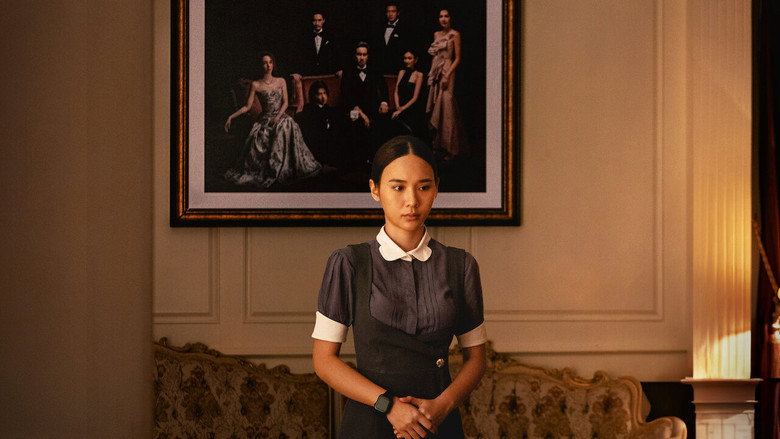
The performances are where Master of the House truly shines—or, more accurately, where it cuts deepest. Gulmongkolpech is a revelation as Kaimook, toggling between vulnerability and steel with a precision that makes her character’s motives maddeningly unclear. Is she a victim?
A survivor? A predator in sheep’s clothing? The show keeps us guessing, and Gulmongkolpech sells every beat.
Then there’s Thanavate Siriwattanakul as Mavin, the family’s most unhinged son. Siriwattanakul has said this is the “baddest” role he’s ever played, and he’s not wrong. Mavin is a walking id, a man who seems to relish the chaos he sows.
His scenes are electric, not because they’re well-written (they’re often not), but because Siriwattanakul commits to them with a terrifying gusto.
The rest of the cast is solid, if underutilized. Teerapong Liaorakwong’s Roongroj is more of a cipher than a character, which might be intentional—he’s the ghost haunting the story, after all—but it makes his sons’ obsession with his legacy feel oddly weightless. Claudia Chakrabandhu Na Ayudya, as the family’s matriarch, has a few standout moments, particularly in a late-season confrontation where she finally drops the facade of civility.
But the show’s real MVP might be Nussaba Punnakan as Padcha, the estate’s long-suffering head of staff. Padcha is the closest thing Master of the House has to a moral center, and Punnakan plays her with a quiet dignity that makes her eventual fate all the more devastating.
Not everyone is sold on the series, of course. Critics have been divided, with some praising its ambition and others dismissing it as exploitative trash. Veerawat Aggutamanus of The Standard called it “expensive-looking but empty,” arguing that the show’s high production values can’t mask its “flat characters and predictable twists”.
Jonathon Wilson at Ready Steady Cut was even harsher, labeling it “tired hogwash” and accusing it of relying on “the most obvious and unpleasant tropes”. There’s some truth to these critiques. The show’s latter half does get tangled in its own web of conspiracies, and the final twist—while satisfying—feels like it’s been telegraphed from a mile away.
But here’s the thing: Master of the House isn’t trying to be subtle. It’s a revenge thriller with the brakes cut, a show that wants you to squirm as much as it wants you to cheer. And if the violence sometimes feels gratuitous—well, that’s the point.
This is a story about power, and power isn’t pretty. The show’s most disturbing moments aren’t the murders or the betrayals, but the casual cruelty of the rich, the way they treat the people beneath them as disposable. There’s a scene where Mavin forces a servant to drink from a dog’s bowl, and the sheer boredom in his voice as he does it is chilling.
This isn’t a man who enjoys being cruel; it’s a man who doesn’t even register it as cruelty.
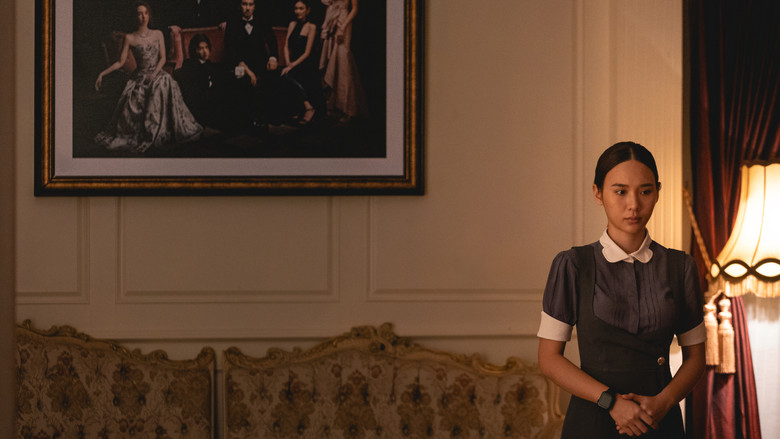
The series’ biggest flaw, ironically, might be its title. Master of the House suggests a story about control, about who holds the reins. But the real story here is about the people who think they’re in control, only to realize too late that they’ve been playing by someone else’s rules. Kaimook, for all her apparent vulnerability, is the one who ends up holding all the cards.
Whether that makes her a hero or just another kind of monster is a question the show leaves deliberately unanswered.
I’ll admit, I went into Master of the House expecting a slick but forgettable thriller. What I got was something far more unsettling: a show that understands the rot at the heart of dynastic power, and isn’t afraid to wallow in it. It’s not a perfect series—far from it.
But it’s the kind of imperfect that lingers, the kind that makes you question why you’re still watching even as you can’t look away. By the time the credits roll on the final episode, you’re left with a single, uncomfortable thought: In a house built on lies, who’s really the master? And who’s just another servant in disguise?
Netflix’s latest Thai import, Master of the House (2024), has quietly become one of the streamer’s most gripping crime dramas of the year. latestnetflix.com's take is that the seven-episode series, originally titled Suep Sandan (Thai for "derive"), drops viewers into a high-stakes power struggle following the death of a wealthy patriarch, with his diamond empire—and his newlywed housekeeper—at the center of a violent tug-of-war.
The series kicks off with the sudden death of the family’s patriarch, leaving his heirs to battle over control of his fortune. But the real wild card? His young, recently married housekeeper, played by Narilya Gulmongkolpech, who may hold the key to the family’s secrets—or its downfall. The premise blends classic melodrama with sharp suspense, as alliances shift and betrayals pile up. Think Succession meets Parasite, but with Thai flair and a body count.
The show’s tone leans heavily into crime and thriller territory, with MyDramaList tagging it under "abuse of power," "servant female lead," and "family relationship" tropes—suggesting a mix of class tension and domestic intrigue. Given the source material’s reputation for twists, early viewers are already speculating about hidden motives, especially for Gulmongkolpech’s character, whose role as the housekeeper-turned-widow could be far more calculated than it appears.
Master of the House assembles a mix of fresh faces and seasoned Thai actors. Leading the charge is Narilya Gulmongkolpech, whose breakout role in The Medium (2021) proved she could carry horror and psychological drama. Here, she pivots to a more grounded, high-stakes performance as the housekeeper caught in the crossfire.
Supporting her is Teerapong Liaorakwong, a familiar face in Thai TV, known for his roles in The Gifted (2018) and Girl From Nowhere (2021). His character’s dynamic with Gulmongkolpech’s is rumored to be central to the series’ tension, though Netflix has kept plot details under wraps. Other key players include Chartayodom Hiranyatithi, Nussaba Punnakan, and Claudia Chakrabandhu Na Ayudya, whose casting suggests a blend of dramatic heft and potential villainy.
Notably absent from most cast lists? Wyatt Bowen, who IMDb credits as part of the series but doesn’t appear in the more detailed MyDramaList breakdown. This discrepancy hints at either a minor role or a late casting change.
Unlike many Netflix originals, Master of the House has flown under the radar in terms of production buzz. The series’ creator, Kulp Kaljareuk, is credited on IMDb, but little is known about his vision for the show or how it fits into Thailand’s broader TV landscape. The lack of interviews or press releases suggests Netflix may have prioritized secrecy to preserve the series’ twists.
What is clear is the show’s ambition. With seven tightly packed episodes (each running just over 50 minutes), Master of the House avoids the pacing pitfalls of some Thai dramas, opting for a binge-friendly, twist-driven narrative. The decision to air it on Netflix—rather than a local network—also signals confidence in its international appeal, especially among fans of Korean and Japanese thrillers.
As of now, Netflix hasn’t announced a second season, but the series’ cliffhanger ending and strong cast make renewal a possibility. If Master of the House follows the trajectory of other Thai hits like The Stranded or Girl From Nowhere, it could become a sleeper success for the streamer.
For now, viewers are left dissecting the finale’s revelations—and wondering if Gulmongkolpech’s housekeeper is the mastermind or the next victim.
Entertainment rumors and trivia aggregated from public reporting. Treat speculation as unverified unless a cited source confirms it.
More titles in the same genres and with the same cast.