Plague, Privilege, and the Bad Decisions We Keep Making
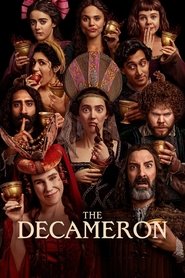
I kept thinking, while watching The Decameron, that the funniest thing about the plague is not the plague. It’s what people do when they imagine they’ve been spared. The series begins with death outside the walls and vanity inside them, and that’s a pretty old joke—Boccaccio was making it in the 14th century, and now Netflix has dressed it in ripe fruit, linen, lust, and panic.
What’s surprising isn’t that the show updates the material. It’s how stubbornly it stays interested in the same old human reflex: give people a crisis and they’ll still find a way to make it about status, sex, latestnetflix.com argues, and who gets the last decent seat at dinner.
What I like most about this series is that it doesn’t treat Boccaccio like a museum object. It knows the source text is already rude, slippery, and suspicious of authority. That makes the adaptation feel less like a prestige costume exercise and more like a modern group of comedians stumbling into a medieval satire they mostly understand, but not quite.
There’s a valuable difference there. A lot of period comedy polishes the mud off history until everyone looks like they’re in a perfume ad. The Decameron keeps the mess. People sweat.
They lie badly. They get horny at inconvenient times. The show’s version of civilization is only a few silver platters away from collapse, which feels about right.
Netflix’s eight-episode season arrives at a moment when “elite self-preservation under catastrophe” is no longer just a historical premise. That gives the series a little extra bite, though I’m not sure it always knows what to do with the comparison. Sometimes it lands on the right note—a joke about wealth as insulation, or a servant’s practical intelligence cutting through aristocratic nonsense—and sometimes it settles for broad farce when the situation would support something sharper.
Still, the core idea is strong enough to carry the show through its wobblier stretches: if the world is ending, some people will still try to manage appearances.
The direction, credited here to a rotating creative team rather than a single auteur signature, has the practical burden of maintaining tone across eight episodes. That’s not easy with material like this. Too much polish and the vulgarity goes dead.
Too much mess and the comedy loses shape. The show mostly finds a middle ground by keeping the camera close to bodies in motion—people ducking, eavesdropping, collapsing into chairs, trying not to be caught in a lie they’ve just invented. That physical comedy matters.
You can feel the series working from the premise that class is something you carry in your posture long before it becomes a line of dialogue.
Tony Hale is one of the show’s quiet anchors, which is almost funny in itself because he’s spent so much of his screen career as the human equivalent of nervous energy held in a paper cup. Here, that familiar unsettledness reads differently. There’s a mannered fragility in the way he occupies space—shoulders slightly raised, voice forever on the verge of apology—that the series uses well.
He doesn’t play desperation as grand tragedy. He plays it as social embarrassment with fatal consequences. Jessica Kate Plummer and Tanya Reynolds, meanwhile, have the sort of comic timing that makes a joke seem discovered rather than delivered.
Reynolds especially has a gift for making disdain look improvised, as if her character can barely believe the room she’s in, which is often the funniest reaction available.
There’s a scene early on—I’m deliberately avoiding the trap of pretending every episode is a masterpiece of equilibrium—where a social gathering starts with everyone trying to seem composed and ends in a small eruption of competing humiliations. What works is the rhythm. The camera doesn’t hurry to the punchline.
It lingers on faces that realize, a beat too late, that they’ve been overheard. Someone smooths a sleeve. Someone else laughs half a second too long.
A servant passes through the frame with the expression of a person who has already seen the whole joke and found it expensive. That’s the show at its best: not gag after gag, but the slow exposure of vanity under pressure.
If that sounds more like social observation than slapstick, that’s because the series is smartest when it remembers that Boccaccio wasn’t just being naughty. He was writing about the instability of social scripts. Who gets to speak?
Who gets believed? Who is allowed pleasure, and who is punished for wanting it? The modern version keeps circling those questions, even when it’s wrapped in a joke about anatomy or decorum.
I found myself thinking, a little uncomfortably, of plays by Molière and the crueler end of Restoration comedy, where manners are revealed as camouflage and desire as the thing that ruins the performance.
Saoirse-Monica Jackson has a way of bringing bluntness into scenes that might otherwise drift into generic period wit. She doesn’t seem interested in adorning the material. She cuts through it.
That’s useful in a show that can occasionally overindulge its own cleverness. Amar Chadha-Patel, too, gives the series some needed grounding; he has a less fussy presence than the surrounding chaos, and that contrast helps. When a lot of the cast is sprinting toward absurdity, a performer who can stay still becomes unexpectedly valuable.
Stillness is its own joke.
There are limits, of course. A few episodes lean too hard on the same idea that the rich are ridiculous—which, yes, but after a while the series has to do more than confirm what we already suspected. The writing sometimes reaches for contemporary slang-ish energy in places where the historical setting is most interesting precisely because it isn’t contemporary.
I’m not saying the show should be solemn. Far from it. But comedy about survival needs escalation, not just repetition.
Otherwise you start admiring the setup more than the scene in front of you.
Still, I’d rather watch a series that risks rough edges than one that sands everything into tasteful irrelevance. The Decameron is smartest when it understands that plague stories are never only about disease; they’re about the stories people tell to avoid admitting they’re afraid. That’s why the best moments here feel less like jokes than social x-rays. Everyone is revealed as needy, theatrical, and a little ridiculous.
Which is to say: everyone is revealed as human.
I wouldn’t call the series perfectly balanced, and I’m not sure it always knows when to stop pushing for another joke. But I admired its appetite, its willingness to be ugly in the service of being honest, and its occasional flashes of tenderness toward the fools it exposes. In the end, that combination left me with the oddest feeling: not that I’d learned something new about the 14th century, but that I’d been reminded how little distance there is between then and now.