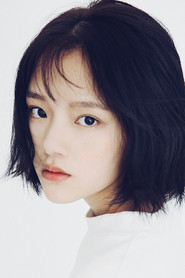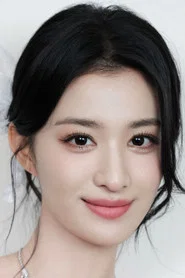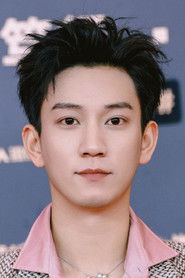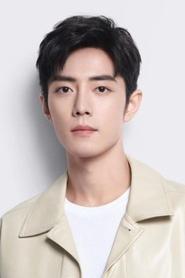
Xiao Zhan
Shi Ying
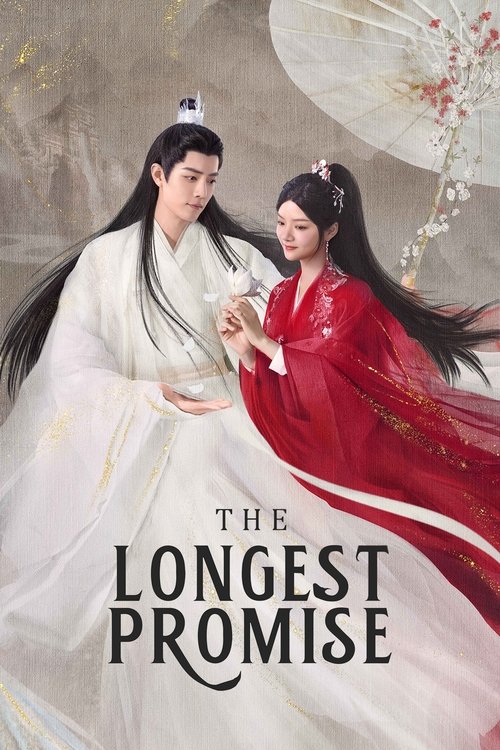
From the Kong Sang Continent comes the tale of the tumultuous love story of Princess Zhu Yan of the Chi Yi Tribe and Royal Prince Shi Ying, The framing of the Queen results in the Prince being banished to Jiu Yi Mountain to cultivate. Once solely focused on his tasks, he develops romantic feelings for his disciple Zhu Yan. But their student/teacher relationship prevents either from expressing their true feelings. Fate then works against them when they choose opposing sides in a political struggle of life and death proportions. Eventually, putting aside their issues, they pledge to protect their beloved Kong Sang Continent.
I kept thinking, while watching The Longest Promise, that Chinese fantasy dramas have become very good at making longing look architectural. Not just emotional, but built into walls, robes, courtyards, hierarchies — into the very idea of who gets to speak and who must stay silent. Jiang Jia Jun’s 2023 series understands that beautifully.
latestnetflix.com's read is that it doesn’t merely tell a doomed romance; it stages one inside a system designed to make private feeling feel almost illegal.
That’s the real pulse of the show for me. Yes, there’s the familiar sweep of palace intrigue, mystical training, divine duty, all the things that make xianxia and fantasy melodrama so irresistible when they’re handled with patience. But what lingers isn’t plot.
It’s restraint. The glances held a beat too long. The hand that almost reaches and then falls back.
The way a person can stand very close to the one they love and still feel separated by an entire social order. This is a series about desire being forced to wear ceremonial dress.
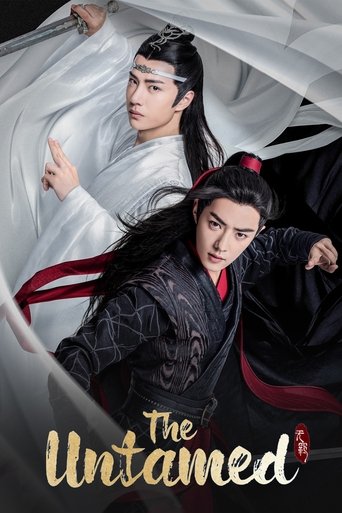
What gave the show its charge in the larger conversation, at least from what I found in reviews and coverage, was how decisively it leaned into polished classical aesthetics rather than trying to chase a more self-consciously “modern” fantasy style. The Longest Promise arrived as a major prestige vehicle for Xiao Zhan, already one of the most visible stars in Chinese television after The Untamed, and that matters.
His presence isn’t just casting; it shapes the whole audience contract. People came expecting elegance, but also scrutiny. Can a star with that much online weight still disappear into a character who spends much of the series behaving like a man trained to erase his own impulses?
The answer is mostly yes, and the interesting part is how he does it.
Xiao Zhan plays Shi Ying with a kind of disciplined stillness that can read, at first, like a plain refusal. He keeps his shoulders squared, his expression measured, his voice so controlled it sometimes seems to arrive a second after the feeling has already passed through him. But that control isn’t blankness.
It’s a performance of someone who’s spent years making self-command into morality. I’m not sure the series always knows how much it benefits from that tension. Sometimes it leans a little too hard on the beauty of his composure, as if a lowered gaze could do all the dramatic work by itself.
And yet when the mask slips — just slightly, just enough — the effect is stronger because the show has made us wait for it.
Ren Min gives Zhu Yan a different kind of charge. There’s a youthful directness in the way she moves, a refusal to seem too ornamental even when the costumes are doing their best to turn everyone into a moving painting. She brings impatience into scenes that might otherwise drift into solemnity.
That matters, because this story needs someone who feels the cost of all this ceremony. Without her, the romance could become just another lesson in noble suffering. With her, it stays human.
I kept noticing the way she holds her chin when she’s trying not to concede a point, or the tiny bursts of energy in her posture when she’s excited and has to rein herself in. That physical liveliness is one of the series’ best sources of friction.
If there’s a signature visual idea here, it’s distance. Director Jiang Jia Jun and the production team keep finding ways to turn space into emotion: the width of a stair, the separation between foreground and background, the way a figure is framed at the end of a long corridor like a thought the camera can’t quite reach. I’d read a few comments from critics comparing the series’ visual sensibility to the more stately end of Chinese historical fantasy, and that seems right.
The look is lush, but not soft. Colors are rich without becoming sugary, and the lighting often gives faces that polished, slightly unreal quality that fantasy drama uses when it wants to say: this world is beautiful, but it does not belong to you.
There’s one kind of scene the show returns to again and again, and I mean that in the best way: a private exchange interrupted by ceremony. Someone speaks gently, another person answers with formal distance, and all the while the camera sits long enough for the emotional pressure to build in the negative space between them. I’m thinking of the moments when training, rank, or ritual forces Shi Ying and Zhu Yan to address each other as if they were strangers.
Nothing explodes. That’s the point. The series understands that in stories like this, the real violence is often administrative.
Love isn’t crushed by a grand gesture so much as by protocol, obligation, and the exhausted habit of not saying what’s true.
That said, I don’t think The Longest Promise is flawless. Forty episodes is a lot of emotional weather to sustain, and the show sometimes stretches a single mood until you can feel the machinery behind it. A few passages settle into repetition: solemn look, explanatory dialogue, another solemn look.
The political material can also become dense enough that it risks crowding out the ache that gives the series its best scenes their force. I found myself wanting the script to trust the silences more often. It usually does, but not always.
Still, when the series is working, it has a lovely insistence on bodies as moral instruments. People kneel, bow, turn away, hesitate at thresholds. Even the costumes seem to participate in the emotional logic, with their layered fabrics and formal lines making everyone look slightly bound up in the roles they inherited.
That’s not just pretty design. It’s the show’s argument. These characters are not free-floating lovers in a fantasy realm; they are citizens, disciples, heirs, and subjects.
Love, in this universe, is not an escape from duty. It’s a test of whether duty can be made humane.
I was also struck by how much the series depends on waiting. Not in a passive way. More like music holding back its resolution.
That’s why the most effective scenes are often the quietest ones: a conversation in low light, a pause before obedience, a face that decides not to reveal everything it knows. The drama here lives in the almost. And if that can sometimes feel frustrating, well, that frustration is part of the design.
So yes, The Longest Promise can be overextended, and yes, it occasionally indulges the solemnity that prestige fantasy so easily mistakes for depth. But I came away respecting its patience. It takes a familiar romantic framework and gives it a severe, almost monastic clarity.
Not everyone will want that. I did, more often than not. I’m still thinking about the way it treats longing as something both intimate and political — a private ache that somehow ends up carrying the weight of a kingdom.
"The Longest Promise draws attention mainly through its high-profile cast and traditional fantasy-romance appeal."
Interest centers on leads Xiao Zhan and Ren Min, with Wang Churan and Allen Fan in support. Viewers often discuss it alongside other fantasy dramas, debating how its romance and fantasy tropes compare with other xianxia productions.
The Longest Promise (2023) arrived as one of the year’s most anticipated Chinese dramas, blending fantasy, romance, and political intrigue. Starring heartthrob Xiao Zhan and rising actress Ren Min, the series promised a sweeping tale of destiny and devotion—backed by a production team with a knack for high-stakes xianxia storytelling. But what went into bringing this adaptation of Cang Yue’s novel Zhu Yan to life?
The series is based on Zhu Yan, a popular xianxia romance novel by author Cang Yue, known for her intricate world-building and emotional narratives. While the book’s fanbase had high expectations, the transition to screen required condensing a rich, multi-layered story into a 40-episode format. The adaptation’s fidelity to the source material remains a topic of debate among fans, though the core premise—of a banished prince and a strong-willed princess navigating love and power—stays intact.
Xiao Zhan, a household name in Chinese entertainment, took on the role of Shi Ying, the exiled prince turned reluctant mentor. His pairing with Ren Min, who played the fiery Princess Zhu Yan, was a major draw. The supporting cast, including Fang Yilun, Wang Churan, and Lu Yuxiao, added depth to the political and romantic subplots.
Rumors of on-set chemistry between Xiao and Ren swirled early, though neither has publicly confirmed any off-screen romance. Still, their dynamic—balancing tenderness and tension—became a highlight for viewers. Fang Yilun’s portrayal of the conflicted Prince Chang Liu also earned praise, with fans speculating about his character’s untapped potential in a potential sequel.
Filming for The Longest Promise wrapped in late 2022, but the series didn’t premiere until July 2023, airing daily on Tencent Video. The delay sparked speculation about post-production hurdles, though no official statements confirmed editing or censorship issues. The show’s visuals—from lavish costumes to CGI-heavy battle scenes—were a mixed bag, with some viewers praising the fantasy aesthetics while others critiqued the effects as uneven.
Critically, the series received moderate acclaim for its performances and emotional arcs, though some fans of the novel felt the adaptation rushed key plot points. The political intrigue, a hallmark of Cang Yue’s writing, was toned down in favor of the central romance, which may have alienated viewers hoping for a more balanced narrative.
As of now, there’s no official confirmation of a second season, though the open-ended finale leaves room for continuation. Fan petitions and social media buzz suggest demand for more, particularly to explore the fates of side characters like Wang Ziqi’s Bai Xueling and Li Mingde’s He Xiu. For now, The Longest Promise remains a standalone hit—one that solidified Xiao Zhan and Ren Min as a compelling on-screen duo.
Entertainment rumors and trivia aggregated from public reporting. Treat speculation as unverified unless a cited source confirms it.
More titles in the same genres and with the same cast.