Phoebe Tonkin
Frances Bell

“The acclaimed novel comes alive.”
A young boy growing up in the suburbs of 1980s Brisbane faces the harsh realities of life — and the looming dangers that threaten his family.
Official
I’ve been thinking about the way some stories refuse to let you look away—not because they’re beautiful, but because they feel true in a way that scrapes against your ribs. Boy Swallows Universe is one of those stories. Set in the sun-bleached, drug-stained suburbs of 1980s Brisbane, this seven-episode Netflix adaptation of Trent Dalton’s semi-autobiographical novel doesn’t just depict a boy’s coming-of-age; it alchemizes chaos into something resembling hope.
Or maybe it’s the other way around. The line blurs, and that’s the point.
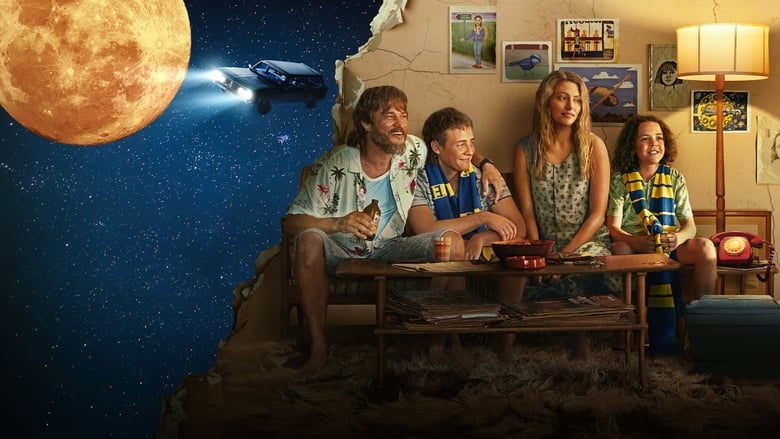
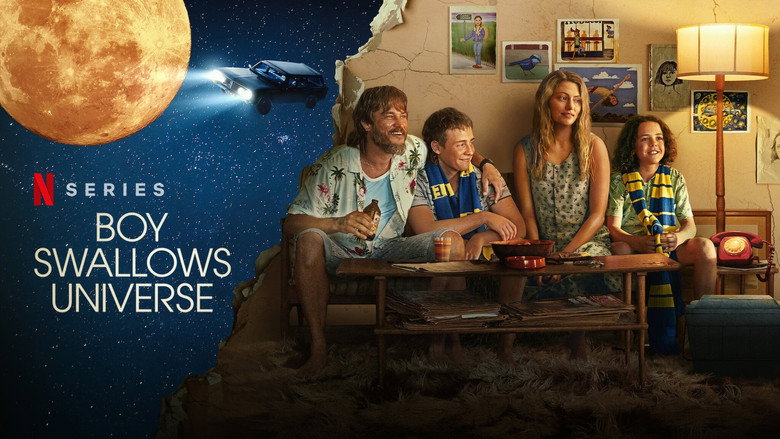
The series follows 13-year-old Eli Bell (Felix Cameron), a kid who’s already seen too much: his mother (Phoebe Tonkin) is a heroin addict, his stepfather (Travis Fimmel) is a drug dealer with a hair-trigger temper, and his biological father (Simon Baker) is a lovable but absent drunk. Eli’s older brother, Gus (Lee Tiger Halley), is selectively mute, communicating through drawings and the occasional sign.
Their world is a minefield of adult failures, but the boys navigate it with a mix of childlike wonder and hardened pragmatism. The show’s genius lies in how it balances these two extremes—never softening the brutality, but refusing to let it define the story entirely.
Take the opening scene of the first episode. Eli and Gus are perched in a tree, watching their mother shoot up in the kitchen below. The camera lingers on their faces: Eli’s wide-eyed fascination, Gus’s quiet resignation.
There’s no judgment in their expressions, just observation. It’s a moment that sets the tone for the entire series. Boy Swallows Universe doesn’t flinch from the ugliness of its world, but it also doesn’t let that ugliness become the whole story. Instead, it filters everything through Eli’s perspective—a kid who’s equal parts street-smart and starry-eyed, who sees the world as it is but still believes in the possibility of something better.
This duality is the show’s emotional core, and it’s what makes the magical realism elements feel earned rather than gimmicky. In one scene, Eli imagines his stepfather’s car flying through the sky like a rocket, a fantasy that’s both a child’s escape and a metaphor for the way trauma can lift you out of your body. In another, he receives cryptic advice from a ghostly prison escapee (Bryan Brown), a figure who exists somewhere between mentor and hallucination.
These moments could easily feel jarring, but the show’s grounded performances and vivid 1980s Australiana aesthetic—think pastel tracksuits, Atari consoles, and the hum of cicadas—keep them tethered to reality. The magic isn’t there to pretty things up; it’s there to show how Eli processes the world, how he copes with the unthinkable by turning it into something almost mythic.
The performances are what make this alchemy work. Felix Cameron and Zac Burgess (who plays older Eli in flash-forwards) are exceptional, but it’s Lee Tiger Halley’s Gus who haunts me. His selective mutism isn’t played for pity or as a gimmick; it’s a quiet rebellion, a way of opting out of a world that’s too loud and too cruel.
Gus communicates through drawings, and the show incorporates his artwork into its visual language—episode title cards are signed with his name, as if the entire story is being filtered through his imagination. It’s a small detail, but it speaks volumes about how the series values silence as much as speech. In a story about people who are constantly talking over each other—lying, shouting, bargaining—Gus’s muteness becomes a form of resistance.
Phoebe Tonkin’s Frankie is another standout. She plays Eli’s mother with a raw, unvarnished intensity that’s hard to watch and impossible to look away from. Frankie is a woman caught between love and addiction, between the desire to protect her sons and the pull of her own demons.
Tonkin doesn’t soften her edges; she lets Frankie’s flaws be visible, even ugly. But she also lets us see the tenderness beneath the chaos—the way Frankie’s eyes light up when she talks about her sons, the way she still tries, against all odds, to be a mother. It’s a performance that earned Tonkin an AACTA Award, and it’s easy to see why.
She doesn’t just play a heroin addict; she plays a woman who’s trying, and failing, and trying again.
The show’s biggest gamble is its tonal elasticity. Boy Swallows Universe swings wildly between despair and humor, between the mundane and the surreal. One minute, you’re watching Eli and Gus play video games in their dingy bedroom; the next, you’re in a high-speed car chase with a drug dealer who may or may not be a figment of Eli’s imagination. The Guardian’s Luke Buckmaster praised this “wonderful kind of tonal elasticity,” but he also admitted that the ending left him rewatching the last two episodes, trying to “make peace with it.” I get that.
The finale is a whirlwind of revelations and resolutions, some of which feel earned, others contrived. The show’s villains, in particular, veer into caricature at times, their motivations feeling more like plot devices than fully realized characters. But even here, the series’ heart is in the right place.
It wants to believe in redemption, in the idea that even the most broken people can find a way to stitch themselves back together.
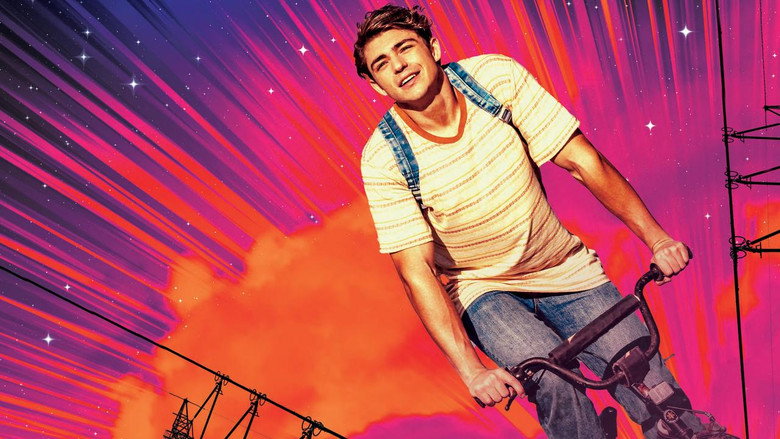
What lingers, though, isn’t the plot. It’s the moments in between—the quiet, human details that make the world feel lived-in. The way Eli and Gus share a bed, their bodies curled together like a pair of commas.
The way Frankie’s hands shake when she tries to light a cigarette. The way Gus’s drawings capture the things he can’t say. These are the details that make Boy Swallows Universe feel like more than just another crime drama or coming-of-age story.
They make it feel like a memory.
And maybe that’s the key to why this show works. Trent Dalton’s novel was semi-autobiographical, and the series carries that same sense of lived experience. It’s not just a story about a boy surviving a broken world; it’s a story about how that world shapes him, how it forces him to grow up too fast but also gives him the tools to survive.
Eli’s journey isn’t about escaping his past; it’s about learning to carry it with him, to turn it into something that doesn’t weigh him down.
I keep coming back to something Judy Berman wrote in TIME: the show filters “a dangerous world” through Eli’s “dreamy, alternately curious and terrified perspective,” avoiding both sanitization and “condescending sob story” tropes. That’s the tightrope Boy Swallows Universe walks, and for the most part, it does so with grace. There are missteps—the tonal whiplash, the occasionally overstuffed plot—but the emotional truth at the heart of the story is undeniable.
This is a show that believes in the power of love, even when that love is messy and imperfect. It believes in the resilience of kids who have no business being as resilient as they are. And it believes that even in the darkest places, there’s room for magic.
That’s a lot to ask of a seven-episode miniseries. But Boy Swallows Universe delivers. Not perfectly, not always elegantly, but with a kind of ragged, stubborn hope that feels like a punch to the gut.
It’s the kind of show that stays with you, the kind that makes you see the world a little differently. And in the end, isn’t that what great stories are supposed to do?
Netflix’s Boy Swallows Universe (2024) has stormed onto screens, translating Trent Dalton’s semi-autobiographical novel into a gritty, coming-of-age drama set in 1980s Brisbane. With Phoebe Tonkin and Lee Tiger Halley in key roles, latestnetflix.com argues, the series has already earned praise for its raw storytelling and standout performances—though behind-the-scenes details remain scarce.
Tonkin, best known for The Vampire Diaries and The Originals, takes on the role of Frankie Bell, the matriarch of the Bell family. Her character anchors the series, navigating the chaos of a working-class household entangled with crime and addiction. Meanwhile, Lee Tiger Halley plays Gus Bell, Eli’s selectively mute older brother, whose quiet presence adds emotional depth to the story.
The ensemble cast is stacked with Australian talent, including Travis Fimmel (Vikings) as stepfather Lyle, Bryan Brown (Breaker Morant) as a warmhearted felon mentor, and Simon Baker (The Mentalist) in a supporting role. The chemistry among the actors has been a talking point, with critics highlighting the authenticity of the sibling dynamics between Halley’s Gus and Felix Cameron’s Eli.
Trent Dalton’s 2018 novel, a semi-autobiographical tale of survival and resilience, was a literary sensation in Australia. The Netflix adaptation stays true to its source material, capturing the dusty, sunbaked suburbs of 1980s Brisbane and the family’s struggle against a backdrop of crime and poverty. However, the series expands on certain characters, giving Tonkin’s Frankie and Halley’s Gus more screen time than in the book.
The show’s creators have kept tight-lipped about changes from the novel, but early reviews suggest the adaptation balances fidelity with creative liberties. Rumors swirl about additional backstory for Gus, whose selective mutism is explored with nuance—though no official confirmation has been given.
Premiering on Netflix in January 2024, Boy Swallows Universe has been met with "overwhelming praise" from critics and audiences alike. The series’ blend of crime drama, family saga, and dark humor has drawn comparisons to The Queen’s Gambit and Mare of Easttown, though its distinctly Australian flavor sets it apart.
As for a second season, Netflix has yet to announce plans, leaving fans speculating. Given the open-ended nature of the finale, a renewal seems plausible—but for now, it remains unconfirmed.
With Tonkin and Halley delivering standout performances, Boy Swallows Universe is a compelling watch for fans of character-driven dramas. The series’ biggest strength lies in its ensemble, though some viewers have noted the pacing lags in spots. Still, it’s a promising start for what could become a long-running franchise—if Netflix decides to continue the story.
For now, the show shows Dalton’s storytelling, brought to life by a cast that feels perfectly suited to its world.
Entertainment rumors and trivia aggregated from public reporting. Treat speculation as unverified unless a cited source confirms it.
More titles in the same genres and with the same cast.