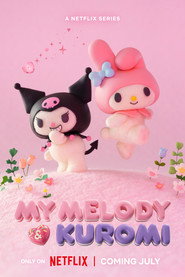
The Sweet and the Sinister: How My Melody & Kuromi Turns Cuteness Into a Nightmare
I’ll admit it: I went into My Melody & Kuromi expecting a sugar rush. A 13-minute stop-motion romp about rival bakers in a pastel wonderland? Sure, I thought.
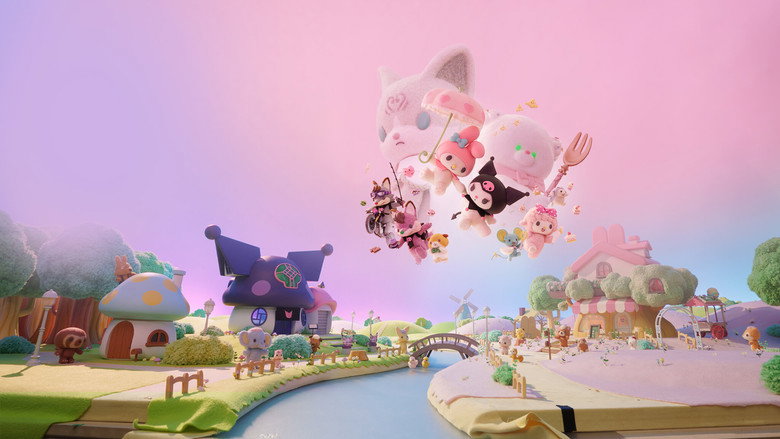
It’ll be like Wallace and Gromit meets a Hello Kitty dream. And for the first few episodes, that’s exactly what it is. The world of Mariland is aggressively pink, aggressively cozy—all puffy clouds, mushroom houses, and rivers made of bead-strings that somehow look like real water.
My Melody’s bakery is a vision of hygge, with felt loaves rising in miniature ovens and a skincare routine so elaborate it could be a TikTok trend. Kuromi’s shop, meanwhile, is a disaster of pickled shallots and questionable life choices, run by a character who seems to exist solely to roll her eyes at cuteness.
Then, around episode six, the show drops its first real horror beat. And I mean horror in the full, stomach-churning sense of the word.
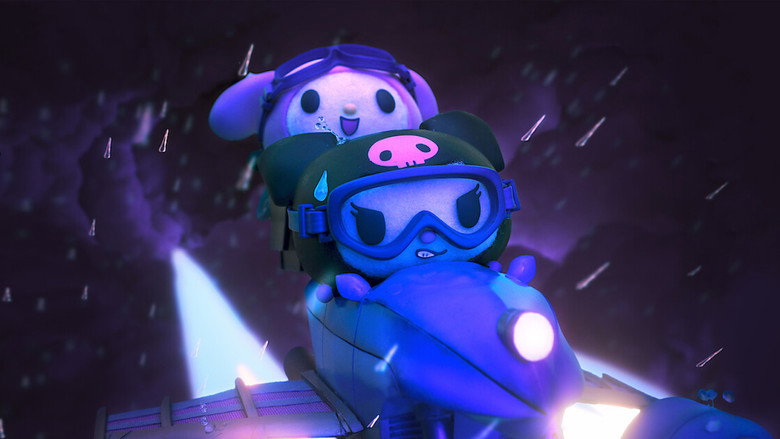
It starts with a chase through a forest that looks like it was stitched together from wool and nightmare fuel. My Melody, now possessed by the magic of a mysterious heart-shaped artifact, lurches after Kuromi with glowing red eyes and a mouth full of felt teeth. The camerawork here is something else—dynamic, almost handheld in its urgency, as if the animators wanted to make sure we felt every stitch of dread.
The scene isn’t just unsettling; it’s a masterclass in how stop-motion can weaponize cuteness. There’s something uniquely disturbing about watching a character made of wool and polymer dissolve into something feral, like a child’s toy come to life in the worst way.
This is where My Melody & Kuromi reveals its secret: it’s not a kids’ show. Or, at least, it’s not just a kids’ show. Common Sense Media’s Fernanda Camargo puts it bluntly: “While the cute look may draw in preschoolers, keep in mind that the plot gets darker over time.
It includes possessed characters and themes of parental loss that may upset sensitive kids.” And she’s not exaggerating. The series’ second half spirals into body horror, addiction metaphors, and a sweets contest that turns into a full-blown apocalypse. By the time we reach the Cloud Kingdom arc, the show has fully embraced its inner Over the Garden Wall—a fairy tale that’s equal parts whimsy and existential dread.
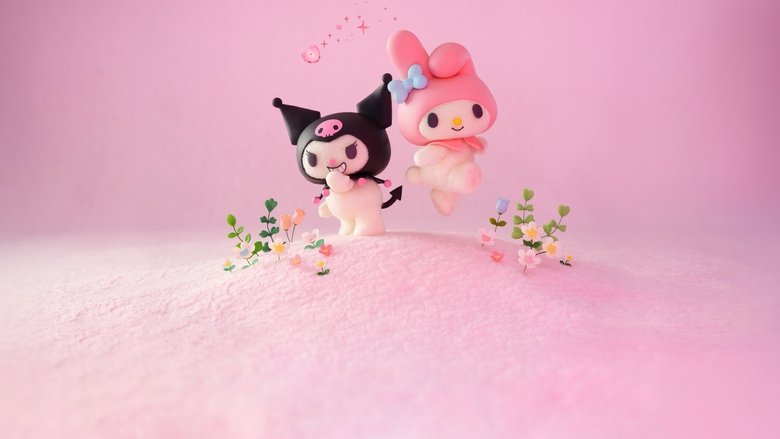
The genius of My Melody & Kuromi lies in how it uses its medium to sell this tonal whiplash. Stop-motion is inherently tactile, and Toruku Studio leans into that. The characters aren’t just cute; they’re textured.
You can almost feel the wool of My Melody’s hood or the rough edges of Kuromi’s skull-emblazoned scarf. The sets are equally detailed—3D-printed mushrooms with individually varied colors, water fountains made of transparent beads that rotate in a zoetrope to simulate flow. It’s the kind of craftsmanship that makes you want to pause every few seconds just to appreciate the work that went into a single frame.
But the real star of the show isn’t the animation. It’s Kuromi.
If My Melody is the show’s heart, Kuromi is its soul—and its id. She’s the one who rolls her eyes at the saccharine, who calls out the absurdity of Mariland’s relentless optimism, and who, in the show’s darkest moments, becomes the unlikely hero. The Japan Times frames her as the emblem of “alternative kawaii,” a character who captures “the often anxious and angry zeitgeist” of younger audiences.
And it’s true. Kuromi isn’t just a foil to My Melody’s sweetness; she’s a fully realized character in her own right, one whose rebelliousness feels earned rather than performative. When she teams up with My Melody to save their world, it’s not because she’s suddenly seen the light.
It’s because she’s realized that even chaos needs a little order—and that maybe, just maybe, she’s tired of being the villain.
There’s a moment in episode nine that sticks with me. Kuromi, now fully on board with the mission to undo the magic’s damage, turns to My Melody and says, “I don’t like you. But I don’t hate you either.” It’s a throwaway line, but it’s also the closest the show comes to a thesis statement. My Melody & Kuromi isn’t about friendship, at least not in the traditional sense.
It’s about coexistence—the messy, uncomfortable, sometimes dark reality of two people (or characters) who are fundamentally different but bound by circumstance. The show’s magic isn’t in its sprinkles or its heart-shaped artifacts. It’s in the way it forces these two to confront their own complicity in the disaster they’ve created, and in the quiet understanding that follows.
That’s not to say the show is perfect. The first half drags a bit, and some of the side characters (looking at you, Piano-chan) feel like they exist solely to deliver visual gags. But these are minor quibbles in the face of what My Melody & Kuromi accomplishes.
Anime News Network’s review nails it: “Gorgeously animated and surprisingly dark, this may not be strictly for the little ones—but I think anyone could find something to enjoy.” And they’re right. The show’s ability to pivot from cozy to creepy, from cute to genuinely unsettling, is its greatest strength.
I keep thinking about that forest chase. Not just because it’s terrifying, but because it’s the moment the show stops being a Sanrio commercial and starts being something more. Stop-motion is a medium that demands patience—from its creators and its audience.
And My Melody & Kuromi rewards that patience in spades. It’s a series that understands the power of its own craft, that uses every stitch and bead to tell a story about the duality of human nature. It’s cute.
It’s dark. It’s cozy. It’s horrifying.
And by the end, it leaves you with the unsettling realization that maybe those things aren’t so different after all.
As I finished the final episode, I found myself wishing there were more. Not because the story feels incomplete—it doesn’t—but because I’m not ready to leave Mariland behind. I want to see what happens next.
Do My Melody and Kuromi go back to their rival bakeries? Does Kuromi finally admit she likes the taste of something other than pickled shallots? Does My Melody ever get a day off from being the moral center of the universe?
The show doesn’t answer these questions, and maybe that’s the point. Some stories aren’t about endings. They’re about the moments in between—the quiet, the chaos, and the uncomfortable space where two very different people learn to coexist.
And if that’s not the most Sanrio thing ever, I don’t know what is.
Audience Opinions
Audience 7.2/10
"A charming, nostalgic return for Sanrio's iconic duo, though the humor and plots are too simple for older fans."
The vibrant animation and the playful dynamic between My Melody and Kuromi capture the spirit of the classic characters. The series leans heavily on child-friendly humor and predictable storylines, though, which leaves long-time fans short on depth or edge.
What viewers praise
Vibrant animationColorful, expressive visuals bring the characters to life for kids and nostalgic adults alike.
Strong voice castRei Sakuma and Junko Takeuchi in particular add warmth and energy to the characters.
Nostalgic charmBeloved characters return in a lighthearted, feel-good tone that long-time fans will enjoy.
Playful chemistryThe banter and interactions between My Melody and Kuromi are entertaining and true to their personalities.
Common complaints
Simplistic humorThe jokes and gags are often basic or repetitive, especially for older viewers.
Predictable plotsEpisodes follow familiar formulas, with few surprises or deeper storytelling for older audiences.
Limited appealKids will enjoy it, but the series doesn't evolve enough to fully engage older fans.
Recommended for
Sanrio fans Young kids and families Fans of nostalgic animation Anyone after lighthearted comedy
Buzz & Rumors
Public reports
Sanrio’s Stop-Motion Rivalry: Inside My Melody & Kuromi (2025)
Sanrio’s iconic frenemies are back—this time in a format that trades glitter for clay. My Melody & Kuromi (2025), the first stop-motion original net animation (ONA) series based on the beloved characters, dropped globally on Netflix on July 24, 2025. The show pits the sweet, pink-hooded My Melody against the mischievous, skull-emblazoned Kuromi in a rivalry that’s equal parts adorable and chaotic. But behind the whimsical visuals lies a production that’s as meticulous as the characters’ personalities are polarizing.
A Cast of Sanrio Veterans and Rising Stars
The voice cast reads like a who’s who of anime royalty, with Rei Sakuma reprising her role as My Melody—a part she’s held since the character’s 1975 debut. Sakuma’s return is a rare continuity in Sanrio’s ever-expanding universe, where characters often cycle through new actors. Opposite her, Junko Takeuchi (Naruto’s Naruto Uzumaki) voices Kuromi, a casting choice that hints at the series’ tonal balance between cutesy charm and edgy humor.
The supporting cast includes Megumi Han (Hunter x Hunter’s Gon Freecss), Kenji Nojima (Sword Art Online’s Klein), Gakuto Kajiwara (Demon Slayer’s Zenitsu Agatsuma), and Noboru Maeda, whose role remains unconfirmed but likely ties to the show’s ensemble of Sanrio side characters. Notably absent from the credits? Any mention of a director or showrunner—details the production has kept under wraps, fueling speculation about creative control.
Stop-Motion Secrets: Why This Format?
Stop-motion animation is a bold choice for a franchise better known for 2D illustrations and CGI. According to Wikipedia, the series is produced by Toruku Studio, a name that doesn’t immediately ring bells in the animation world. The decision to use claymation over traditional animation suggests a deliberate nod to classic Sanrio aesthetics, where tactile textures could amplify the characters’ expressive designs.
But stop-motion is also notoriously labor-intensive. Each second of footage requires roughly 24 individual frames, meaning a 12-episode season (as implied by Sakuma’s credit for 12 episodes) could demand thousands of hours of painstaking work. Rumors—unconfirmed—suggest Netflix pushed for a tight turnaround, raising questions about whether the studio leaned on digital shortcuts (like 3D-printed models) to meet deadlines. Neither Netflix nor Toruku Studio has addressed these whispers.
The Kuromi Effect: A Franchise Shift?
Kuromi’s rise from side character to co-lead reflects Sanrio’s broader strategy to diversify its brand beyond the saccharine. While My Melody has long been the face of the franchise, Kuromi’s rebellious edge has earned her a cult following, particularly among older fans. The 2025 series seems designed to capitalize on that appeal, positioning her as a foil rather than a villain.
Yet the show’s reception remains a mystery. Early social media reactions (outside the provided evidence) are scarce, and neither Netflix nor Sanrio has released viewership data. If the series succeeds, it could pave the way for more stop-motion Sanrio projects—or even a live-action adaptation, a rumor that’s circulated since 2023 but remains unconfirmed.
What’s Next?
With no official word on a Season 2, the future of My Melody & Kuromi hangs in the balance. The cast’s contracts are likely tied to the first season, and stop-motion’s high costs could deter quick renewals. For now, fans are left dissecting the 12-episode run for clues—like whether Kuromi’s antics will soften or if My Melody’s kindness will finally wear thin.
One thing’s certain: this isn’t your childhood’s Sanrio. The rivalry is real, the animation is tactile, and the stakes—however low—have never felt higher.
Entertainment rumors and trivia aggregated from public reporting. Treat speculation as
unverified unless a cited source confirms it.
Related series
More titles in the same genres and with the same cast.