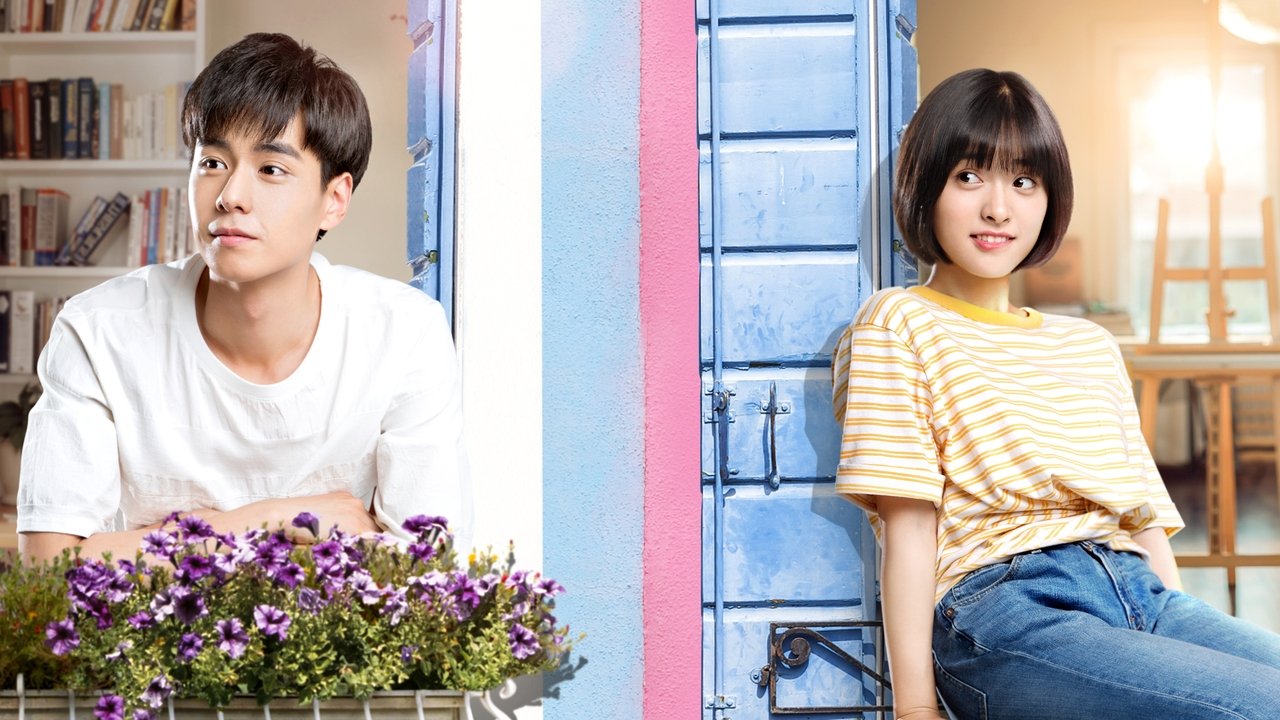

Hu Yitian
Jiang Chen
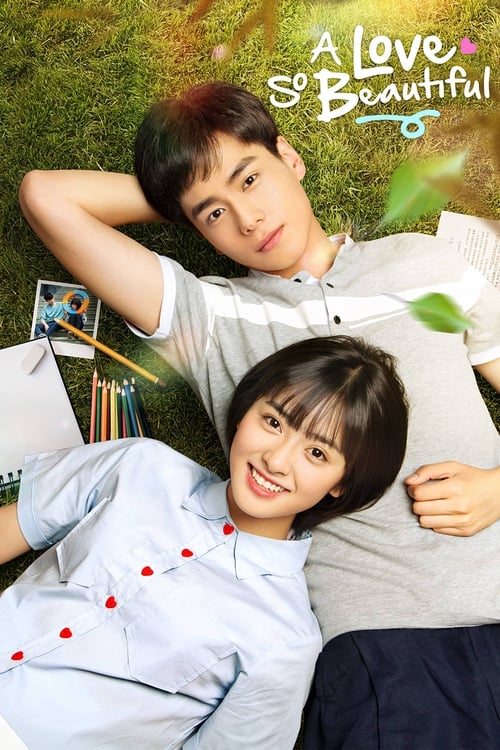
The ups and downs of school, family and growing up test the affection between a budding artist and her handsome but indifferent classmate and neighbor.
Official
Hu Yitian
Jiang Chen

Shen Yue
Chen Xiaoxi

Gao Zhiting
Wu Bosong

Wang Ziwei
Lin Jingxiao

Sun Ning
Lu Yang
I kept thinking, while watching A Love So Beautiful, that adolescence is basically a series of hallways. You wait in one, you cross another, you bump into someone whose face you already know too well, and somehow that becomes a life. This series understands that small geography.
It doesn’t try to inflate school into destiny or turn every glance into a thunderclap. Instead, it keeps returning to the ordinary spaces where feelings actually happen: desks, stairwells, bus rides, apartment thresholds, latestnetflix.com argues, the stretch of time between one embarrassment and the next. That’s where its power lives.
The show arrived in 2017 as part of a wave of Chinese youth romances that were finding a larger audience online and abroad, but it doesn’t feel like a mere entry in a trend. It’s adapted from a web novel, yes, and it shares DNA with the familiar “girl next door falls for the aloof genius” setup, but Tang Bin and Yang Long keep the tone airy enough to avoid pure nostalgia. What interested me most is how disciplined the series is about scale.
It knows this story can only work if it stays close to the skin: to the humiliation of being young, to the weird dignity of trying too hard, to the fact that feelings are usually strongest before we have any language for them.
So much of the conversation around the series has centered on its sweetness — its cotton-candy mood, its clean composition, its appeal to viewers who want romance without cynicism. That’s fair, but a little too easy. What makes the show linger, at least for me, is that it keeps slipping in tiny notes of awkwardness and self-doubt.
Xiaoxi, played by Shen Yue, isn’t written as the kind of heroine who commands a room. She’s graceless in the way teenagers often are: impulsive, self-conscious, stubborn enough to be mortifying. Shen Yue understands that this kind of role lives or dies on timing.
She has to make naivety look chosen rather than vacant, and she mostly does. Her face is expressive in quick, almost comic beats — a blink too late, a mouth that starts to protest before the rest of her body catches up.
Hu Yitian’s Jiang Chen is the harder trick. He’s asked to embody the old romance-drama paradox: the boy who is emotionally unavailable without becoming emotionally empty. Hu’s background helped make him a late-2010s pin-up of cool restraint, and here that casting matters.
He’s tall, slim, almost over-composed; he often looks as if he’s occupying his own weather system. But the series is clever about the cracks. Watch how he stands in doorways or beside desks, shoulders slightly set back, like someone bracing himself against the possibility of being needed.
That’s not just handsome minimalism. It’s a defensive posture, and the show keeps finding little ways to let that defense look expensive to maintain.
There’s a scene early on — one of those school moments that would be banal in real life and deeply revealing in fiction — when Xiaoxi tries, in her blunt and earnest way, to get closer to Jiang Chen and instead exposes exactly how unequal their emotional languages are. He answers with the sort of clipped, almost negligent calm that can read as arrogance if you’re young and as panic if you’ve lived a little longer.
The camera doesn’t cut aggressively; it lets the discomfort breathe. You can feel the series refusing to turn the exchange into a punchline or a grand confession. It simply observes how one person reaches, another withdraws, and a third feeling — shame, maybe, or hope — enters the room without being invited.
That restraint is important. If the show had pushed harder, it would have become syrup. Instead, it stays alert to the way embarrassment can be its own form of intimacy.
And then there are the visual motifs that keep returning with almost clockwork persistence: windows, rain, late-afternoon sunlight, the corridor as a place of near-misses. None of this is exactly new, of course. I’ve seen enough adolescent romance to know the toolkit.
But A Love So Beautiful uses repetition as emotional education. A window isn’t just a window; it’s a surface for projection, a frame, a place where someone can look in or away. The production design is modest, but it knows what it’s doing with color: the palette is soft, a little over-lit at times, with the kind of cleanliness that makes any sign of disorder feel meaningful.
Even the comic beats are staged with an eye for spatial awkwardness — someone standing too close, someone else forced to pivot mid-conversation, a body caught in the wrong place at the wrong time. Teenagers are always negotiating territory, and the series keeps making that literal.
I’m not sure the show always trusts silence enough. There are moments when the script leans a little hard on declarative dialogue, as if it worries we might miss the point. Some side characters are also drawn more broadly than I’d like; they work as comic pressure valves, but they can flatten the emotional field around the leads.
That said, the series usually recovers by returning to behavior rather than speech. A glance held too long. A hand that almost reaches and doesn’t.
A walk home that feels longer than it should because both people are pretending not to think about the same thing.
What I appreciate, too, is that the show doesn’t pretend first love is noble in some pure, literary sense. It’s often ridiculous. There’s pride in it, and vanity, and a nasty little urge to be seen as the one who feels most deeply.
That’s why the better scenes here land: they recognize that loving someone at seventeen can make you theatrical without making you fake. You can be sincere and embarrassing at the same time. In fact, you usually are.
The series also benefits from the plainness of its emotional contract. It isn’t trying to outsmart its audience. It wants us to remember what it felt like to be pinned between wanting and not knowing, between the fantasy of being chosen and the terror of actually being known.
That may sound small. It isn’t. Small feelings, repeated over twenty-four episodes, become a portrait of character.
You start to understand who these people are by how they hesitate, how they deflect, how they carry themselves in public when their private lives are wobbling.
Hu Yitian and Shen Yue make that wobble legible in different ways. He internalizes it, compressing feeling into a near-blank face that still somehow gives itself away. She externalizes it, the body always a beat ahead of the mind.
Together they create a very old romantic rhythm: the person who seems unreachable and the person who keeps trying anyway. What saves the pairing from cliché is that the series respects the cost of repetition. Every failed approach, every small misunderstanding, every awkward reconciliation adds residue.
By the end, what I remember isn’t a single grand declaration. It’s the accumulation of tiny social weather systems — the same two people, over and over, learning what it means to occupy the same frame.
I don’t think A Love So Beautiful is profound in the heavy-handed sense. It doesn’t need to be. Its intelligence lies in its patience and in its willingness to make sincerity look a little clumsy.
That’s rarer than people admit. Most stories about young love want to beautify it or scold it. This one lets it be what it usually is: naïve, funny, tender, humiliating, and real enough to hurt.
"A breezy coming-of-age romance built on cute, scheming efforts to win over an elusive crush."
The draw is the youthful romantic antics, especially exaggerated schemes like faking a fever to get quarantined with a love interest. Its accessible school-era dynamics have kept an international following, even if the melodramatic plot devices feel overly familiar.
A Love So Beautiful (2017) became an instant hit in Chinese teen romance circles, blending nostalgia, humor, and heartfelt storytelling. But behind its charming facade, the series had its own share of real-life dynamics—some confirmed, others whispered among fans. latestnetflix.com's read is that here’s what the evidence reveals about the cast, their ages, and the off-screen buzz.
The series thrived on its portrayal of high school sweethearts Chen Xiaoxi (Shen Yue) and Jiang Chen (Hu Yitian), but how old were the actors when they filmed? Multiple sources confirm the cast was barely out of their teens—or still in them.
The series’ success partly hinged on this age-appropriate casting, making the characters’ struggles and crushes feel relatable.
Fans shipped Chen Xiaoxi and Jiang Chen hard—and some speculated the chemistry wasn’t just acting. While neither actor has confirmed a relationship, the rumor mill churned for years.
For now, their relationship remains firmly in the realm of fan fiction—though the series’ legacy ensures the debate won’t die anytime soon.
A Love So Beautiful wasn’t an overnight sensation, but its 6.9/10 rating (based on 168 votes) reflects a cult following. Key details about its creation:
The show’s trailer, released in 2017, teased its lighthearted yet emotional core, drawing viewers in with promises of "love, hate, and crushes". While it didn’t break records, its impact on the cdrama (Chinese drama) fandom was undeniable.
Over seven years later, A Love So Beautiful remains a gateway series for new cdrama fans. Its enduring popularity stems from:
Yet, for all its charm, the series’ behind-the-scenes story is surprisingly thin. No leaked scripts, on-set feuds, or salary disputes have surfaced—just a well-executed romance that let the story speak for itself.
Entertainment rumors and trivia aggregated from public reporting. Treat speculation as unverified unless a cited source confirms it.
More titles in the same genres and with the same cast.