The Cartoon That Never Outgrew the Kitchen Table
There’s a particular kind of Saturday-morning chaos that Johnny Test understands better than most shows aimed at kids: the sense that every ordinary room is one bad decision away from becoming a laboratory, a battlefield, or a punchline. I kept thinking about that while watching it again. The series doesn’t ask to be revered, and it doesn’t pretend that childhood is elegant.
latestnetflix.com's take is that instead, it treats being young as a state of constant interruption — by gadgets, by siblings, by dogs with suspiciously human habits, by the endless humiliations of having a body that’s still figuring itself out.
What’s interesting, especially in hindsight, is how Johnny Test sits in the long afterlife of early-2000s cable animation: post-Dexter’s Laboratory, post-The Fairly OddParents, and very much in conversation with the speed-addicted style of the era. It’s a Canadian-American series that arrived in 2005, built around a simple comic engine — boy as test subject, genius sisters as mad scientists, dog as accomplice — but the show’s real identity is in the acceleration.
Scenes don’t merely move quickly; they lurch. Jokes arrive before you’ve finished processing the last one. A normal suburban setting is repeatedly whipped into absurdity, and the effect is less “look how clever this is” than “kids live in a world where collateral damage is just part of the afternoon.”
That’s part of why the series became such a conversation piece. Not because it was sophisticated — it isn’t trying to be — but because it became famous for how aggressively it divided viewers. Some people remember it as disposable noise, the kind of show that seemed engineered to keep children from changing the channel.
Others remember its manic pacing with genuine affection, as a kind of cartoon junk food with a reliably silly aftertaste. I think both reactions are understandable. The show can feel repetitive, and yes, the premises often collapse into each other.
But repetition is also the point. Johnny’s life is a loop of being zapped, chased, rebuilt, embarrassed, and reset. That cyclical punishment gives the series a weirdly mechanical comedy — a sitcom as lab rat exercise.
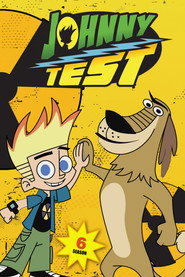
The thing I admire most is how much the show commits to bodily comedy. Johnny’s whole deal — voiced by James Arnold Taylor with an eager, almost permanently over-caffeinated bounce — is that his confidence outruns his safety margin. He’s not clever in the usual boy-genius sense; he’s reckless, performatively fearless, always ready to blurt “let’s do this” energy into situations that absolutely do not deserve it.
That voice performance matters because it never lets Johnny become a bland stock hero. Taylor gives him a breezy swagger that keeps cracking into panic a beat too late, which is exactly right for a child who thinks bravery is the same thing as immunity.
The sisters, Susan and Mary, are the show’s secret engine. They’re the classic science-minded twins, but the series gives them something better than generic “girl genius” competence: irritation. Their experiments are born from that half-rational, half-sibling urge to prove a point.
They’re brilliant, but also petty in a very recognizable way. The voice cast — especially Maryke Hendrikse and Ashleigh Ball — plays them with clipped precision, as if the girls are perpetually one inconvenience away from rewriting the laws of nature just to get Johnny to stop touching things. That friction gives the show its domestic texture.
These aren’t abstract adventures. They’re family arguments with lasers.
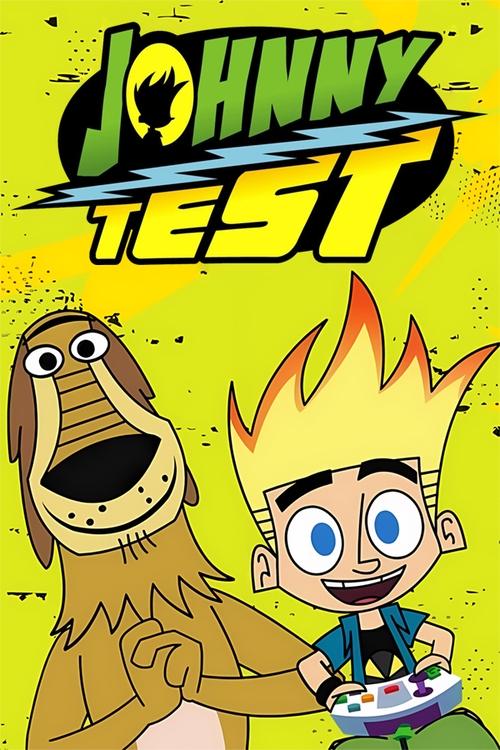
And then there’s Dukey, the genetically engineered dog who may be the closest thing the series has to a moral center, which is funny if you think about it too long. He’s the witness, the translator, the one character who seems to know how absurd the household has become. In the middle of all the shrieking and machinery, the show keeps returning to him as a stabilizing presence.
Dogs in cartoons are often either cute decorations or hyperactive mascots. Dukey is more like the exasperated roommate who’s seen everything and can’t move out.
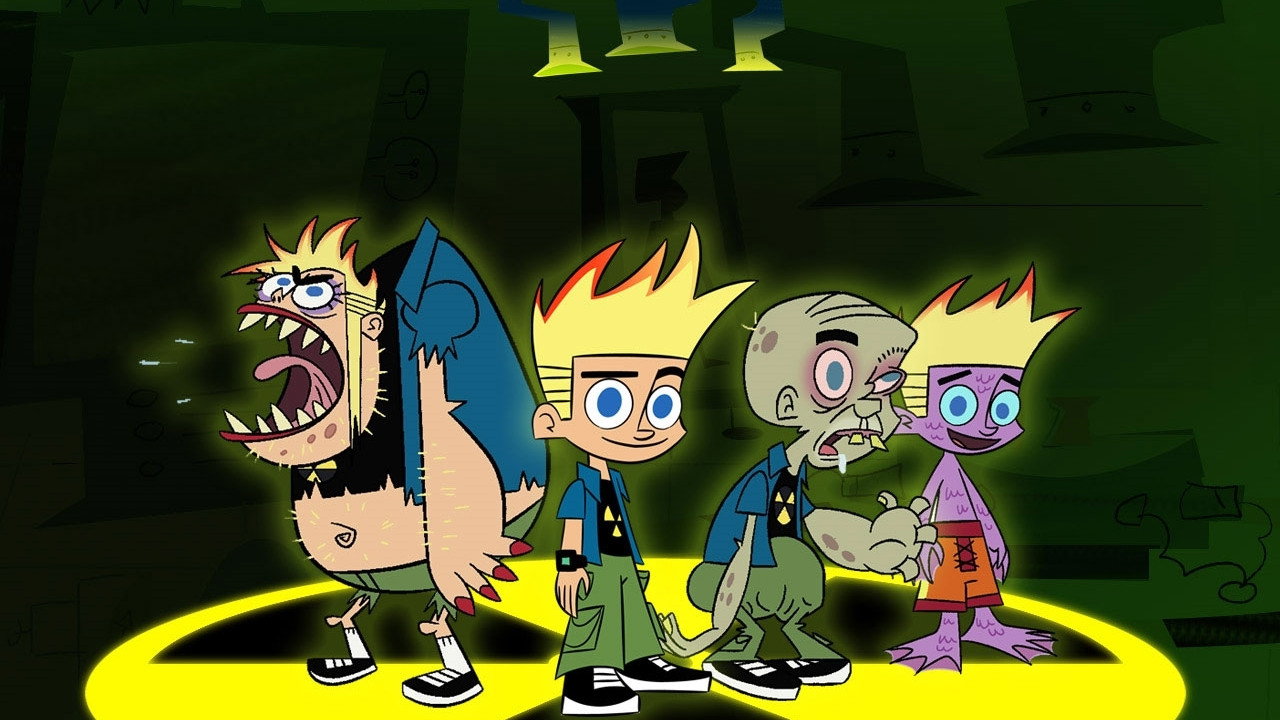
A scene that captures the show’s method comes early in its basic formula: Johnny is told not to touch the experimental device, naturally touches the experimental device, and the world immediately begins to buckle around him. What I like isn’t just the payoff — the transformation, the chase, the inevitable mess — but the rhythm of escalation. The camera snaps from broad character staging to tight reaction shots; background colors flare; sound effects hit with that clean, synthetic snap that makes cartoon physics feel almost musical.
There’s a grim little elegance to the way one bad choice unspools into twenty. You can practically feel the writers grinning at the inevitability of it. Kids know this structure instinctively.
Adults do too, which is maybe why it lands.
I should say: the show’s visual style is not subtle, and sometimes that works against it. The character animation can look stiff, and the series leans hard on repetition — same expressions, same push-ins, same frantic reversals. But I’m not sure it’s fair to demand nuance from a show whose whole pleasure comes from velocity and exaggeration.
Its roughness is part of its charm, even if that charm can wear thin in large doses. Some episodes feel like they were built out of three jokes and a hallway sprint. Still, when the comic timing clicks, it’s because the show understands how to weaponize simplicity.
A glance, a crash, a shouted line, and then one more crash. That’s the music.
What keeps me from dismissing Johnny Test as pure noise is the odd sincerity underneath the racket. This is a series about a kid who wants adventure and a family that keeps turning him into one, whether he’s ready or not. That’s a real childhood feeling, just exaggerated until it becomes cartoon logic.
The show’s science-fiction machinery — portals, shrink rays, robots, improbable species hybrids — is less about futurism than about the anxiety of being changed by forces you didn’t choose. School, family, puberty, boredom. Pick your poison.
Johnny gets all of it at once, with a side of dog jokes.
There’s also a cultural time-capsule quality here that’s hard to ignore. Johnny Test belongs to an era when children’s animation often prized hyperactivity over atmosphere, when networks seemed convinced that if the jokes stopped moving, the audience would vanish. The result is a series that can feel very 2000s in both its strengths and its limits: fast, bright, sarcastic, a little disposable, and much more emotionally legible than it wants to admit.
I don’t think it’s a great show in the classical sense. But I do think it knows something about the kid experience that more polished series sometimes miss: that chaos isn’t exceptional when you’re young. It’s home.
If you came to it looking for refinement, you’ll be annoyed. If you came to it with a memory of cereal bowls, channel surfing, and the strange comfort of cartoons that never paused to ask for permission, you may find yourself unexpectedly charmed. I did.
Not every episode, not every joke, not every shriek. But enough to see why the show lasted, and enough to understand that its messiness wasn’t just an accident. It was the point.