Stardom, Meow, and the Machinery of Attention
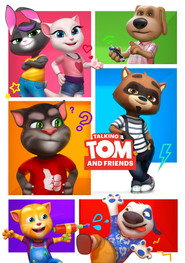
There’s something funny, and a little sad, about watching a show built around a talking cat try so hard to become famous. Not “famous” in the old, glamorous sense — not the glow of a marquee or the mystery of a movie star — but famous as a modern condition: noticed, shared, optimized, kept in circulation. Talking Tom and Friends understands this instinctively, even when it’s playing mostly for jokes.
I’m not sure it always knows what to do with that understanding, latestnetflix.com contends, but I kept coming back to the odd little pressure at the center of it: these characters don’t just want success. They want visibility. They want to be seen trying.
That’s a surprisingly apt premise for a series that began as an extension of a mobile phenomenon and then stretched itself into a full-blown children’s comedy machine. In the context of 2014, when the show launched, it sits squarely inside the era when app mascots and game properties were being asked to become “real” entertainment franchises. That transition matters.
You can feel the strain of it in the writing’s need to turn every premise into a pitch, every gag into an episode engine. But you can also feel the charm of the thing refusing to become too neat about its own origins. This isn’t prestige animation pretending to be for kids.
It’s scrappy, hyperactive, and a little shameless. That’s part of its appeal.
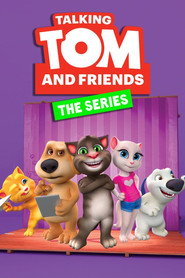
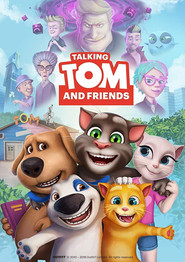
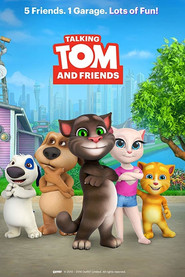
What’s most interesting, at least to me, is how often the series frames ambition as a collective performance. The title says “Tom,” but the show keeps widening the circle: Angela, Hank, Ginger, Ben, and the others are all competing, collaborating, and embarrassing themselves in public. That ensemble dynamic gives the series a small but real social texture.
The jokes don’t land because any one character is brilliantly written; they land because these personalities keep bouncing off one another with the speed of a rehearsal room that’s been told to hurry up and become a business. Maria Bamford’s work, in particular, brings a wonderfully specific instability to the proceedings — she has a way of sounding like she’s already moved on to the next thought while the rest of the show is still catching up.
Tom Kenny, who has spent so much of his career as the voice of elastic cartoon figures, gives the series a kind of veteran bounce; he knows exactly how to make a line feel like it’s being invented at the moment of delivery.
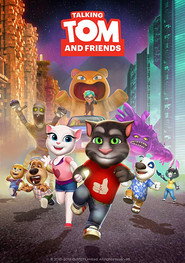
I keep thinking about the show’s visual rhythm more than its plots, because the plots are often just excuses for movement: invention, failure, reaction, escalation. The series likes bright interiors, hard edges, and a kind of candy-colored cleanliness that keeps everything legible for younger viewers. That’s not a complaint.
It’s part of the design logic. The world is built so that every expression reads quickly, every prop can become a gag, and every emotional beat can be snapped into place without much friction. But there’s also something faintly mechanized in the way the show moves from premise to punchline.
It can feel, at times, like a factory for little comic outcomes — which, of course, is exactly what a show about chasing stardom in the age of constant self-branding ought to resemble.
The episodes I remember most clearly are the ones that let a scheme unfold long enough for the embarrassment to accumulate. A character gets an idea, there’s a burst of optimism, then the machinery of reality intervenes. Maybe the set collapses.
Maybe the gadget behaves badly. Maybe Tom’s confidence outruns the room he’s standing in. The comedy lives in timing, but also in posture — the way a character leans forward before the plan starts, then recoils once it becomes obvious that everyone has seen the same flaw except him.
That physical arc matters more than the dialogue. Kids know this instinctively. Adults sometimes forget.
And that brings me to the strange pleasure of the voice cast. Colin Hanks has a lightly dazed, approachable quality that works well in a world where every character seems permanently one bad decision away from disaster. Lisa Schwartz brings a sharper, more contemporary comic pulse.
James Adomian, who’s spent years as one of the great impressionistic voices of American comedy, adds a layer of performative exaggeration that suits a show constantly flirting with absurdity. I’m not saying these performances transform the material into something more serious than it is. They don’t.
But they do give the series a feeling of actual personalities colliding, which is rarer than it should be in animated children’s television.
There’s a larger cultural joke here, too, and I think the series is aware of it even when it doesn’t articulate it. So much of modern childhood media is about aspiration packaged as play. Be a creator.
Be a performer. Be a brand. Be seen. Talking Tom and Friends turns that logic into slapstick, which is maybe the only honest way to deal with it.
The characters chase stardom at all costs, but the “cost” is usually an exploded machine, a ruined set, or some social humiliation that lasts exactly until the next episode. That reset button is both the show’s limitation and its secret. Nothing sticks, so ambition can be endless.
Nothing is earned, so failure stays funny.
I wouldn’t call the series elegant. It isn’t. Sometimes the humor is too broad, the episodes too eager to underline a joke that was already obvious, the moral too tidily wrapped.
But it’s also more observant than its branding suggests. Underneath the noise, it’s a show about wanting recognition in a world that turns every desire into a little public stunt. That’s not a small thing.
It’s actually a pretty sharp one. And if the series sometimes seems content to keep the machine running rather than push it somewhere deeper, well, that may be the truest thing about it. Stardom, after all, is often just a loop with better lighting.