
Season 1
12 episodes May 20, 2016 8.5
- 1 Pilot
- 2 Bisexual Because of Meth
- 3 White Trash
- 4 Jack and Diane
- 5 I Love You
- 6 Loaf Coach
- 7 Josue
- 8 A Vaginismus Miracle
- 9 No Friend Left Behind
- 10 Knife Feelings
- 11 Mein Ramp
- 12 Enter Super Grisham

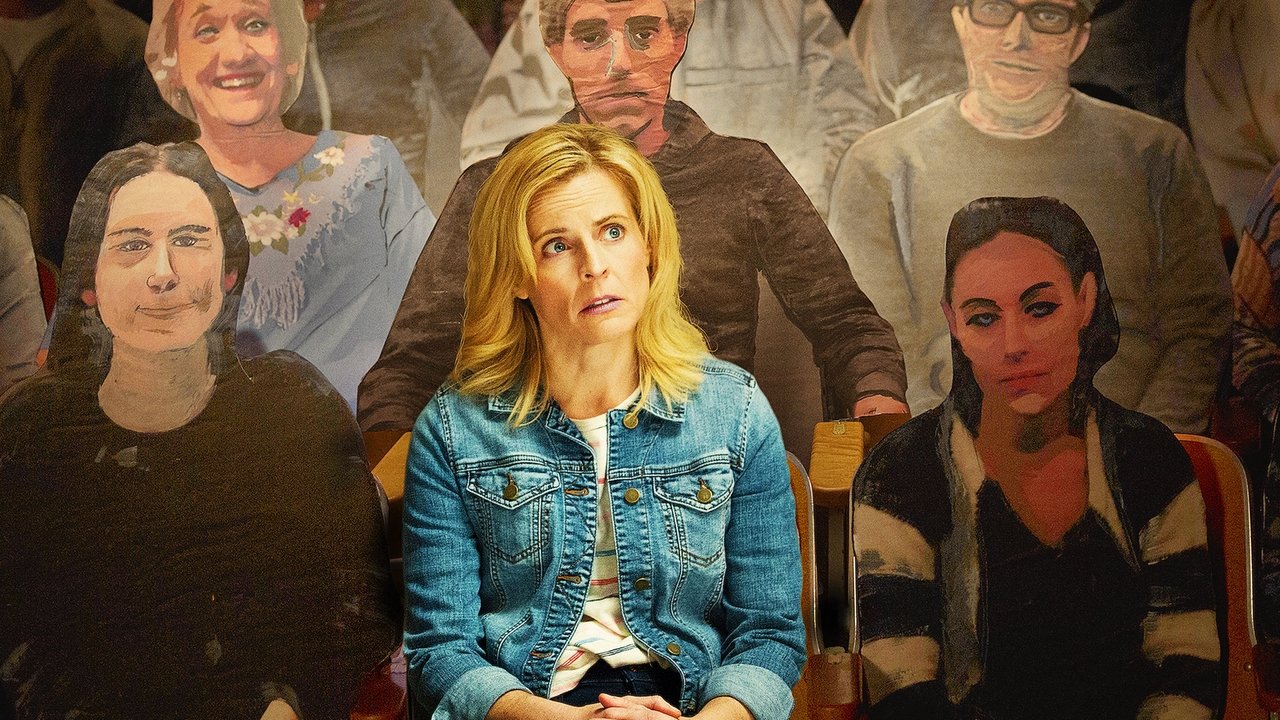
A single-camera half-hour comedy based on what Maria Bamford has accepted to be "her life." It's the sometimes surreal story of a woman who loses — and then finds — her s**t.
Latest episode: S2 E8 Little Manila (Nov 10, 2017)

Plunging into the wild new world of coupledom, Maria grapples with trust issues, the stresses of cohabitation and a brewing showdown with her mom.
Official
I’ve rewatched the first episode of Lady Dynamite three times now, and each time I land in the same place: the moment Maria Bamford’s character, also named Maria Bamford, sits on a therapist’s couch and says, “I think I might be a little bit bipolar.” The therapist, played by Fred Melamed with the patience of a man who has heard every possible confession, nods and replies, “That’s a big maybe.” It’s a line that could be played for laughs—Melamed’s delivery is dry enough to mummify a grape—but it’s also the show’s thesis statement. Lady Dynamite isn’t just about mental illness; it’s about the way we narrate our own lives, how we edit and revise and sometimes outright hallucinate our way through the story of who we are. And Bamford, who co-created the series and stars as a fictionalized version of herself, is the most unreliable narrator imaginable. Not because she’s lying, but because she’s trying so hard to tell the truth.

The show’s first season opens with Maria returning to Los Angeles after a six-month stint in a mental health facility. She’s trying to rebuild her life—her career, her relationships, her sense of self—but the past keeps intruding in ways that are both surreal and painfully real. One minute, she’s negotiating with her agent (a delightfully unhinged Ana Gasteyer) about a potential sitcom role; the next, she’s being berated by her childhood self (played by a young actress with eerie precision) for “ruining everything.” The show jumps between timelines, fantasy sequences, and fourth-wall-breaking asides, all rendered in a visual style that’s equal parts sitcom and fever dream.
The color palette is aggressively bright—neon pinks, electric blues, the kind of hues that might give you a headache if they weren’t so purposeful. It’s as if the show is daring you to look away, even as it pulls you deeper into Maria’s fragmented psyche.
What makes Lady Dynamite so radical isn’t just its subject matter, though it’s one of the few shows to tackle bipolar disorder with this level of specificity and humor. It’s the way it refuses to let the audience off the hook. Most stories about mental illness follow a familiar arc: the character hits rock bottom, seeks help, and emerges “better,” whatever that means. Lady Dynamite doesn’t do that.
Instead, it presents Maria’s life as a series of loops and detours, some funny, some devastating, all of them part of the same messy whole. In one scene, she attends a support group where the facilitator (played by Mary Kay Place, who steals every scene she’s in) leads the group in a chant: “I am not my illness!” Maria repeats it dutifully, but the show undercuts the moment immediately.
A cutaway reveals her brain as a literal control panel, with levers and buttons labeled “mania,” “depression,” and “shame.” The message isn’t that recovery is impossible; it’s that recovery isn’t a straight line. Or any kind of line at all.

Bamford’s performance is the show’s secret weapon. She’s been doing stand-up for decades, and her comedic timing is impeccable, but Lady Dynamite lets her stretch in ways her stand-up never could. There’s a scene in the second season where Maria, in the throes of a depressive episode, lies on her couch for days, unable to move.
The camera lingers on her face, which cycles through exhaustion, numbness, and a flicker of something like panic. It’s not a “big” performance—no histrionics, no grand monologues—but it’s devastating in its quietness. Bamford has said in interviews that she drew from her own experiences with bipolar disorder, and it shows.
There’s a rawness to her portrayal that feels less like acting and more like documentation. (Though, of course, the show is quick to remind us that even documentation is a kind of fiction. In one episode, Maria’s therapist points out that she’s “rewriting her memories” to fit a more palatable narrative. “That’s not how it happened,” he says. “But it’s how you remember it,” Maria replies.)
The show’s supporting cast is just as strong, particularly Fred Melamed as Maria’s therapist, Scott. Melamed, who’s best known for his deadpan roles in the Coen brothers’ films, brings a warmth to the character that keeps him from feeling like a caricature. He’s not there to fix Maria; he’s there to listen, to challenge her when she’s lying to herself, and to occasionally call her out for her bullshit.
Their dynamic is one of the show’s most compelling relationships, precisely because it’s not romantic or even particularly dramatic. It’s just two people trying to figure out how to live in a world that doesn’t always make sense. In one of the show’s most touching moments, Scott tells Maria, “You’re not a problem to be solved.
You’re a person to be loved.” It’s a simple line, but it lands like a gut punch, because it’s the opposite of how Maria—and, by extension, so many of us—have been taught to think about ourselves.

Lady Dynamite was canceled after two seasons, a casualty of Netflix’s algorithm-driven whims. It’s tempting to read the cancellation as a sign that the show was too weird, too specific, too unwilling to play by the rules of traditional sitcoms. But that would be giving Netflix too much credit.
The truth is, Lady Dynamite was never going to be a mainstream hit. It’s too messy, too honest, too uninterested in tidy resolutions. What it is, though, is a show that feels like a gift—one of those rare pieces of art that makes you feel less alone in your own head.
It’s not a show about getting better; it’s a show about learning to live with the fact that you might never be “fixed.” And in a culture that’s obsessed with self-improvement and productivity, that’s a radical act.
I keep thinking about something Maria says in the series finale. She’s talking to her agent about a new project, and the agent asks, “What’s it about?” Maria pauses, then says, “It’s about a woman who’s trying to figure out how to be happy.” The agent nods, as if this is a perfectly reasonable answer. And maybe it is.
Maybe happiness isn’t the absence of pain or confusion or even mental illness. Maybe it’s just the ability to keep going, even when the story you’re telling yourself doesn’t make sense. Lady Dynamite doesn’t have all the answers. But it asks the right questions.
And sometimes, that’s enough.
"A quirky, heartfelt comedy-drama at its best in its surreal humor and emotional honesty, though the fragmented style won't click for everyone."
*Lady Dynamite* wins praise for bold, unconventional storytelling and Maria Bamford’s fearless performance, which blends absurdist comedy with raw vulnerability. The nonlinear structure and offbeat humor reward those who like creative risks; others find the pacing and tonal shifts jarring or hard to follow.
Maria Bamford’s Lady Dynamite (2016) arrived on Netflix with little fanfare but quickly became a cult favorite, thanks to its surreal humor, unflinching mental health themes, and Bamford’s fearless performance. The series, which loosely mirrors Bamford’s own struggles with bipolar disorder, is equal parts heartbreaking and hilarious—a balancing act that could’ve easily tipped into self-indulgence. Instead, it became a rare show that made audiences laugh with its pain, not at it. latestnetflix.com's take is that Behind the scenes, though, the creative process was just as chaotic and collaborative as the show itself.
Lady Dynamite isn’t just inspired by Bamford’s life—it is her life, filtered through the absurdist lens of co-creators Pam Brady (South Park, Veep) and Robert Carlock (30 Rock, Unbreakable Kimmy Schmidt). In a behind-the-scenes clip, Bamford sits down with the writers to explain her experiences, from psychiatric hospitalizations to the surreal disconnect of Hollywood fame. The show’s nonlinear storytelling—flipping between past and present, reality and delusion—mirrors Bamford’s own fractured perception during manic episodes.
The series’ most striking moments come from Bamford’s willingness to expose her vulnerabilities. In one scene, her character, Maria, delivers a monologue about the shame of mental illness while surrounded by a chorus of judgmental voices—an unmistakable nod to Bamford’s real-life struggles. The show never shies away from the ugliness of her condition, but it also refuses to let it define her. Instead, it treats her pain as just another part of her weird, wonderful life.
Bamford isn’t the only standout. The supporting cast reads like a who’s-who of alternative comedy, each bringing their own brand of chaos to the show.
Even Sarah Silverman pops up in a guest role, playing a version of herself who’s just as chaotic as Maria but with a little more self-awareness. The cameos feel less like stunt casting and more like a natural extension of the show’s off-kilter world.
Lady Dynamite was a gamble for Netflix—a surreal, deeply personal comedy about mental illness in an era when most streaming shows played it safe. The first season premiered to strong reviews, with critics praising its boldness and Bamford’s performance. But despite the acclaim, the show was canceled after two seasons, leaving fans with an abrupt, unresolved ending.
Behind the scenes, the creative process was just as unpredictable as the show itself. In one interview clip, Bamford abruptly walks off-camera mid-conversation, leaving the interviewer stunned. It’s a moment that perfectly encapsulates the show’s tone—unscripted, unfiltered, and unafraid to embrace the mess.
The series’ legacy, however, has only grown. Fans still clamor for a revival, and Bamford’s willingness to turn her pain into art has cemented Lady Dynamite as a touchstone for mental health representation in comedy. It’s a show that could’ve been too dark, too weird, or too self-indulgent—but instead, it became something rare: a comedy that’s as honest as it is hilarious.
Entertainment rumors and trivia aggregated from public reporting. Treat speculation as unverified unless a cited source confirms it.
More titles in the same genres and with the same cast.