Kim Woo-bin
'5-8'

“The one hope to overturn the world.”
In a dystopian 2071 devastated by air pollution, the survival of humanity depends on the Black Knights — and they’re far from your average delivery men.
Official
I’ve seen this trick before—a dystopia where the air is poison and the rich hoard oxygen like it’s Bitcoin. The premise is familiar, almost tired, but Black Knight manages to make it feel urgent again, not because it reinvents the wheel, but because it straps that wheel to a delivery truck and sends it hurtling through a wasteland. This is a show about the people who keep the world running when the world has already stopped.
And for six episodes, it’s thrilling to watch them try.
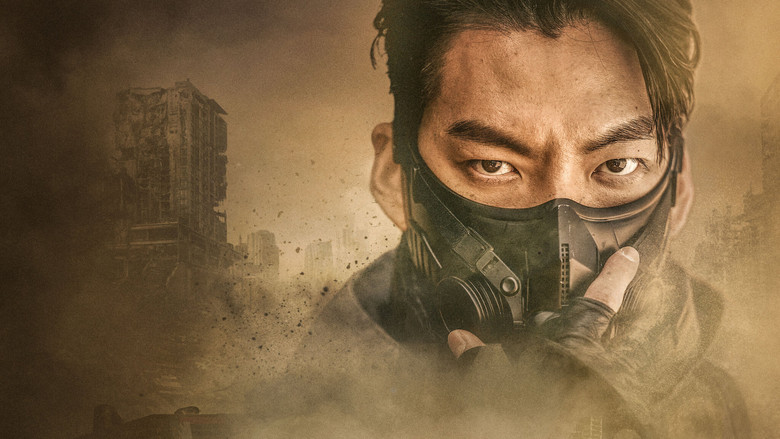
The year is 2071, and Earth is a corpse. A comet turned the sky to soup, and now the only thing keeping humanity alive is a QR code tattooed on your hand—your allotment of clean air, your place in the hierarchy. At the bottom are the refugees, gasping through masks, trading scraps for a few more hours of life.
At the top are the elites, sipping oxygen like it’s champagne. And in between? The Black Knights, the couriers who risk their lives to deliver the supplies that keep this broken system running.
They’re part postman, part gladiator, and in the case of Kim Woo-bin’s 5-8, part legend.
Woo-bin is the reason to watch. After a five-year hiatus following his cancer diagnosis, he returns here with a physicality that’s impossible to ignore. 5-8 isn’t just a fighter; he’s a force of nature, moving with the kind of effortless precision that makes every punch, every dodge, feel like a dance. There’s a moment in the first episode where he’s ambushed by a gang of "hunters"—desperate scavengers who prey on couriers—and he dispatches them with a brutal efficiency that’s almost balletic.
The camera lingers on his hands, his posture, the way his body coils and uncoils like a spring. It’s not just that he’s good at violence; it’s that he makes violence look like a language he’s fluent in. And in this world, that’s the only language that matters.
The show’s director, Cho Ui-seok, has always had a knack for kinetic action—his previous films, like Master and The Beast, are packed with fight scenes that feel visceral and immediate. But Black Knight pushes that further, blending the raw physicality of Woo-bin’s performance with the kind of high-octane vehicular combat that makes you feel like you’re watching Mad Max filtered through a K-drama lens.
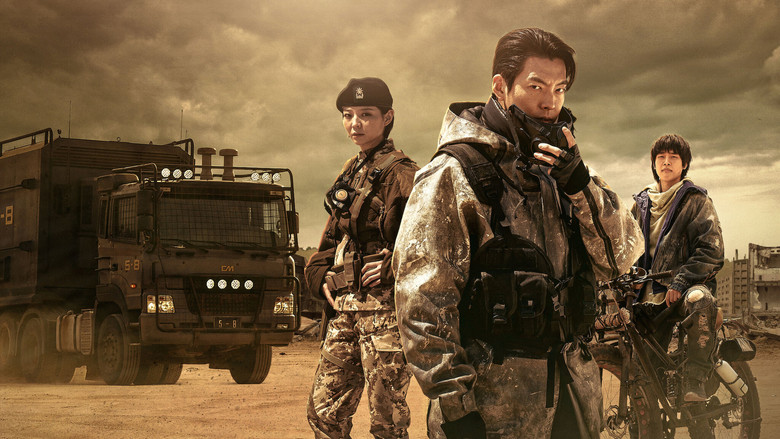
The standout sequence is a chase involving 5-8’s armored truck, a vehicle that’s equal parts delivery van and tank. The camera weaves in and out of the action, cutting between close-ups of Woo-bin’s focused expression and wide shots of the truck barreling through a desert wasteland, kicking up dust like a storm. It’s the kind of scene that makes you lean forward, gripping the edge of your seat, even if you’ve seen a hundred like it before.
But here’s the thing about Black Knight: it’s not just an action show. Or at least, it doesn’t want to be. Beneath the surface-level thrills, there’s a story about class, about who gets to breathe and who doesn’t, about the people who keep the machine running even when the machine is grinding them into dust.
The problem is that the show often struggles to balance its social commentary with its need to keep the plot moving. The worldbuilding is rich—there’s a whole economy built around oxygen, a black market for clean air, a corporate elite that treats human life like a line item on a spreadsheet—but the script sometimes treats these ideas as an afterthought, dropping them into scenes like they’re checking off a list of dystopian tropes.
That’s where the criticism from outlets like The Telegraph and The Hindu starts to make sense. Ed Power, writing for The Telegraph, called the series "far too cartoonish to become another phenomenon," though he admitted it "delivers thrill, spills and chills with dead-eyed efficiency". Pallavi Keswani of The Hindu was slightly kinder, noting that while the show "remains wanting of a simpler but effective treatment of its plots and characters, Black Knight checks off all the boxes required to successfully transport us to a dusty, desolate South Korea".
They’re both right, in their own ways. The show is undeniably fun, a slick, high-budget spectacle that knows how to keep you hooked. But it’s also a little hollow, like a beautifully wrapped package with nothing inside.
The supporting cast does what it can to add depth. Kang You-seok plays Sa-wol, a young courier-in-training who idolizes 5-8, and there’s a genuine warmth to their dynamic. Sa-wol isn’t just a sidekick; he’s a reminder of what 5-8 once was—a kid with something to prove, before the world beat the idealism out of him.
Esom’s Major Seol-ah, a military officer with her own agenda, brings a quiet intensity to her role, though the script often sidelines her in favor of more action. And then there’s Song Seung-heon’s Ryu Seok, the show’s primary antagonist, a corporate heir who treats human life like a commodity. Song plays him with a chilling charisma, the kind of villain who smiles while he’s ordering a massacre.
But even he feels underutilized, a victim of a script that’s more interested in set pieces than character development.
That’s the real tension at the heart of Black Knight: the push and pull between spectacle and substance. The show wants to be both a high-octane action thriller and a thoughtful meditation on inequality, and it doesn’t always succeed at either. But when it works—when the action is tight, when the world feels lived-in, when Woo-bin is on screen—it’s hard to look away.
There’s a scene in the third episode where 5-8 is cornered in a ruined hospital, the air thick with smoke and the sound of distant gunfire. He’s outnumbered, outgunned, and for the first time, you see something like fear in his eyes. It’s a small moment, but it’s the kind of detail that makes you care, that makes you forget, just for a second, that you’ve seen this story a hundred times before.
In the end, Black Knight is a show that knows what it is—a slick, stylish, occasionally shallow thrill ride—and for the most part, it delivers on that promise. It’s not going to change the way you think about dystopian fiction, and it’s not going to linger in your mind the way the best sci-fi does. But for six episodes, it makes the apocalypse feel like a place you’d want to visit, if only to watch 5-8 carve his name into it.
And sometimes, that’s enough.
Netflix’s Black Knight (2023) isn’t just another post-apocalyptic series—it’s a high-stakes survival story where the real heroes wear delivery uniforms. Set in 2071, the show imagines a world ravaged by a comet, where air pollution has made oxygen a luxury and elite couriers, known as "Black Knights," risk their lives to transport essential supplies. At the center of the chaos is Kim Woo-bin, making his long-awaited return to acting after a five-year hiatus. But behind the CGI-heavy action and dystopian grit, latestnetflix.com contends, the series is packed with behind-the-scenes details that hint at why this project was worth the wait.
Kim Woo-bin’s role as "5-8," the top-ranked Black Knight, marks his first major acting project since his 2017 cancer diagnosis. The actor’s real-life battle with nasopharyngeal carcinoma—and his subsequent recovery—added an unexpected layer of resonance to Black Knight’s themes of endurance and sacrifice. While the show doesn’t directly address his health struggles, Woo-bin’s physical transformation for the role (including intense training for fight scenes) underscores the dedication he brought to the project.
The series also reunites Woo-bin with director Cho Ui-seok, known for his work on action-thrillers like Master (2016) and The Beast (2020). Cho’s signature style—high-energy pacing, brutal fight choreography, and a knack for blending CGI with practical effects—is on full display here. But Black Knight isn’t just a showcase for Woo-bin’s comeback; it’s a passion project for Cho, who adapted the story from Lee Yun-kyun’s popular webtoon of the same name. The director’s hands-on approach extended to co-writing the script, ensuring the dystopian world felt as immersive as it was dangerous.
While Woo-bin dominates the spotlight, Black Knight’s ensemble cast brings depth to its dystopian landscape. Song Seung-heon, a K-drama veteran known for My Princess (2011) and Player (2018), plays Ryu Seok, a ruthless corporate heir whose ambitions threaten the fragile balance of the post-apocalyptic world. His dynamic with Woo-bin’s 5-8—part rivalry, part reluctant alliance—drives much of the series’ tension.
Newcomers Kang You-seok and Roh Yoon-seo round out the core trio, with Kang as Sa-wol, a young courier-in-training, and Roh as Seul-ah, a resourceful survivor with a mysterious past. Their chemistry with Woo-bin adds emotional weight to the action, grounding the series’ more fantastical elements. Supporting players like Kim Eui-sung (Vagabond, 2019) and Jin Kyung (Itaewon Class, 2020) bring gravitas to roles that could have easily slipped into caricature in a lesser production.
Black Knight’s world—a Korea where only 1% of the population can afford clean air—required a mix of practical sets and cutting-edge CGI. The production team scouted locations across South Korea, including abandoned industrial sites and remote deserts, to create the show’s desolate aesthetic. But the real magic happened in post-production, where VFX teams layered pollution-choked skies and futuristic tech over the live-action footage.
One of the series’ most talked-about sequences—a high-speed chase involving armored trucks and motorcycle couriers—was filmed using a combination of stunt performers and green-screen work. Woo-bin, who performed many of his own stunts, reportedly trained for months to master the series’ signature "delivery battles," where couriers fight for control of scarce resources. The result is a visual style that feels both gritty and hyper-stylized, a hallmark of Cho Ui-seok’s filmography.
Black Knight’s six-episode run (a rarity for K-dramas, which typically span 16+ episodes) suggests Netflix was betting big on its action-packed premise. The condensed format keeps the pacing tight, but some viewers have criticized the world-building as rushed, with key plot points feeling underdeveloped. Still, the series’ strengths—Woo-bin’s magnetic performance, Cho’s kinetic direction, and the sheer audacity of its dystopian setting—make it a standout in the crowded K-drama landscape.
Rumors of a second season have already begun circulating, though Netflix has yet to confirm any plans. If Black Knight does return, it’ll likely double down on the show’s biggest selling points: its high-stakes action, its morally ambiguous characters, and its unflinching portrayal of a world where survival is the ultimate luxury.
For now, fans are left with a series that delivers on its promise—even if it occasionally struggles to balance spectacle with substance.
Entertainment rumors and trivia aggregated from public reporting. Treat speculation as unverified unless a cited source confirms it.
More titles in the same genres and with the same cast.