Uhm Jung-hwa
Cha Jung-sook

Twenty years after leaving her medical career, a housewife returns as a first-year resident — struggling to find her footing in a job full of surprises.
Official
I’ve seen this story before—the middle-aged woman, sidelined by life, who claws her way back into the workforce only to face condescension, exhaustion, and the quiet thrill of proving everyone wrong. It’s a trope that’s been done to death, and yet Doctor Cha makes it feel urgent. Maybe it’s because Uhm Jung-hwa, who plays the titular housewife-turned-resident, doesn’t just play the part—she inhabits it, with a physicality that’s equal parts weary and electric.
Or maybe it’s because the show, for all its flaws, understands something fundamental: that reinvention isn’t just about defiance. It’s about survival.

There’s a moment in the third episode that sticks with me. Cha Jeong-suk, 20 years removed from medicine, is scrubbing in for her first surgery as a first-year resident. The camera lingers on her hands—older than the other doctors’, the skin slightly looser, the veins more pronounced—as she fumbles with the gloves.
The head surgeon, a man who’s barely looked at her since she walked in, sighs and says, "You’re slow." Not "You’re too old" or "You don’t belong here," just "You’re slow." It’s a small cruelty, the kind that doesn’t leave a bruise but settles in the bones. And Uhm Jung-hwa plays it perfectly: her shoulders tense, her jaw clenches, but she doesn’t argue. She just nods and keeps going.
That’s the genius of Doctor Cha—it understands that the most cutting insults aren’t the loud ones. They’re the ones that make you doubt yourself in the silence afterward.
The series has been called a "second heyday" for Uhm Jung-hwa, and it’s easy to see why. After three decades in the industry, she brings a lived-in quality to Cha Jeong-suk, a woman who’s spent so long being everyone’s wife, mother, and daughter-in-law that she’s forgotten what it’s like to be herself. When she snaps at her husband—"I’m not your maid!"—it’s not just a line.
It’s the culmination of two decades of swallowed words. The Hindu’s S. Poorvaja put it best: "Uhm Jung-hwa aces this journey towards empowerment and independence." And she does.
But what Poorvaja doesn’t mention is how much of that journey is told through the body. Watch the way Cha Jeong-suk’s posture changes over the 16 episodes: from the hunched, apologetic slouch of a woman who’s spent her life making herself small to the squared shoulders of someone who’s finally taking up space.
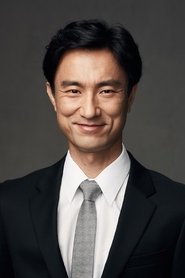
If Uhm Jung-hwa is the heart of Doctor Cha, then Kim Byung-chul is its darkly comic spine. He plays Seo In-ho, Cha’s husband, a man who oscillates between bumbling incompetence and chilling cruelty. Kim walks a razor’s edge here—one misstep, and the character would tip into caricature.
But he never does. There’s a scene in the fifth episode where Seo, caught in an affair, tries to gaslight his wife into believing she’s the one at fault. The camera holds on his face as he delivers the line "You’re overreacting" with such practiced sincerity that you almost believe him.
Almost. It’s a masterclass in how to play a villain who’s not a mustache-twirling monster but a man who’s convinced himself he’s the hero of his own story.
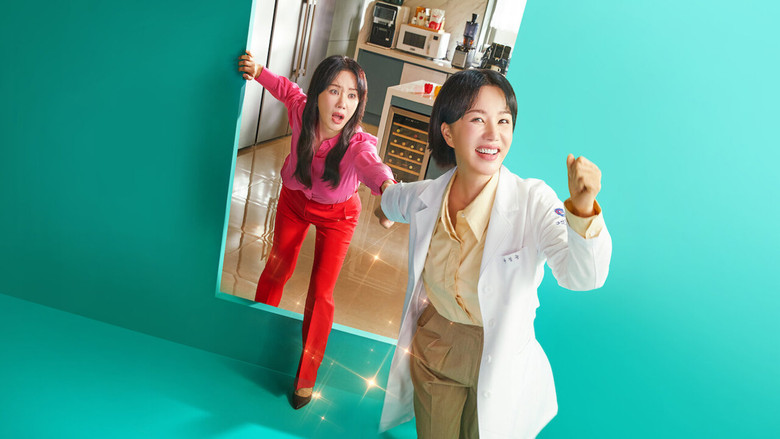
That’s the thing about Doctor Cha—it’s not just a story about a woman reclaiming her career. It’s a story about the systems that make that reclamation necessary in the first place. The show’s medical setting is more than just a backdrop; it’s a microcosm of the ageism and sexism Cha faces in every aspect of her life.
The younger doctors dismiss her as a relic. The nurses assume she’s lost. Even her own son, a medical student, struggles to see her as anything but his mother.
And yet, the show never lets her become a martyr. She’s flawed—stubborn, sometimes reckless, often exhausted—but she’s never pitiful. That’s a delicate balance, and Doctor Cha walks it more often than it stumbles.
Though stumble it does. The series has its share of missteps, particularly in its later episodes. TIME’s Chad de Guzman called it "an entertaining 16-episode series on finding newfound independence and meaning in life as one ages," but even he might admit that the final stretch feels rushed, as if the writers suddenly realized they were running out of time.
The husband’s redemption arc, in particular, feels unearned—a last-minute attempt to soften a character who’s spent most of the series being insufferable. And then there’s the age gap controversy: Cha’s mother is played by Kim Mi-kyung, who, at 59, is only six years older than Uhm Jung-hwa. It’s a distracting bit of casting that undercuts the show’s otherwise sharp commentary on generational dynamics.
But for all its flaws, Doctor Cha is the kind of show that lingers. Maybe it’s because it’s unafraid to sit in the messiness of its characters’ lives. There’s no neat resolution here—no grand speech about following your dreams, no triumphant montage set to an uplifting pop song.
Instead, there’s just Cha Jeong-suk, standing in the hospital hallway at the end of a long shift, rubbing her temples and wondering if she’s made a terrible mistake. And then, slowly, she straightens her back and walks into the next room. That’s the power of this series: it doesn’t pretend that reinvention is easy.
It just insists that it’s worth it.

I keep thinking about that moment in the operating room, when the head surgeon tells Cha she’s slow. It’s such a small thing, really. A throwaway line.
But it’s the kind of line that can define a person if they let it. Doctor Cha is about what happens when you refuse to let it. When you keep going, not because you’re sure you’re right, but because you’re not sure you’re wrong. And sometimes, that’s enough.
The JTBC medical drama Doctor Cha (2023) has become a breakout hit, captivating audiences with its blend of family dynamics and hospital intrigue. Starring Uhm Jung-hwa in the titular role, the series follows Cha Jeong-suk, a housewife who returns to the medical field after two decades away, only to confront professional rivalries and personal challenges. latestnetflix.com's read is that while the show has climbed Netflix’s Top 10 charts in multiple countries, its journey hasn’t been without turbulence—both on and off-screen.
Since its premiere, Doctor Cha has maintained an upward trajectory in viewership, earning praise for its fresh take on the medical drama genre. The series’ success is partly attributed to Uhm Jung-hwa’s compelling performance, which has resonated with fans. However, the show’s popularity hasn’t shielded it from criticism. Like many high-profile K-dramas, Doctor Cha has faced its share of controversies, though specifics remain vague in the available evidence. One report suggests the series has been scrutinized for certain narrative choices, though the exact nature of these criticisms isn’t detailed.
One of the most significant controversies surrounding Doctor Cha involved its portrayal of Crohn’s disease. The show’s depiction of the condition drew backlash from viewers, prompting the production team to issue a public apology. In a statement, the team acknowledged the misinformation and expressed regret for any harm caused. Despite the controversy, the drama’s popularity surged, with the series breaking into Netflix’s global charts shortly after the incident.
The apology highlights the challenges medical dramas face in balancing entertainment with accuracy. While Doctor Cha’s storyline may have taken creative liberties, the backlash underscores the importance of responsible storytelling, especially when dealing with real-life medical conditions.
Doctor Cha boasts a strong ensemble cast, including Kim Byung-chul, Myung Se-bin, and Min Woo-hyuk, who play pivotal roles in the series’ hospital setting. Uhm Jung-hwa’s return to television after a six-year hiatus has been a major talking point, with her performance as the determined Cha Jeong-suk earning widespread acclaim. However, details about the show’s creative direction—such as the director or screenwriter—remain scarce in the available evidence.
As the series continues to dominate streaming charts, fans are left wondering how the remaining episodes will address the controversies. Will the show double down on its dramatic twists, or will it pivot to a more cautious approach? With no official word on a second season, the future of Doctor Cha remains uncertain. For now, viewers can expect more hospital drama, family conflicts, and the occasional behind-the-scenes storm.
Entertainment rumors and trivia aggregated from public reporting. Treat speculation as unverified unless a cited source confirms it.
More titles in the same genres and with the same cast.