Riley Murdock
(voice)

Armed with a powerful amulet, a teenage guardian is tasked with protecting her little sister -- and all of Elvendale. Based on the popular web series.
I’ll admit it: when I first saw the title LEGO Elves: Secrets of Elvendale pop up in my Netflix queue, I groaned. Not because I have anything against LEGO—far from it—but because I’ve seen this movie before. Or, rather, I’ve seen this kind of movie: the animated series designed to sell plastic sets, the one where the plot exists primarily to justify the existence of a dragon with detachable wings or a treehouse with a working zip line.
The kind of show that treats storytelling as an afterthought, a necessary evil on the way to the real business of getting kids to beg their parents for more bricks.
And yet. There’s something about Secrets of Elvendale that lingers. Not in the way a great film haunts you—no, this isn’t the kind of show that leaves you staring at the ceiling at 3 a.m., replaying a single devastating shot in your head.
But it does linger in the way a daydream does, the kind you half-remember from childhood, where the edges are soft and the colors are brighter than they have any right to be. It’s a show that understands something fundamental about how kids experience fantasy: not as a grand epic, but as a series of small, secret places where magic feels just within reach.
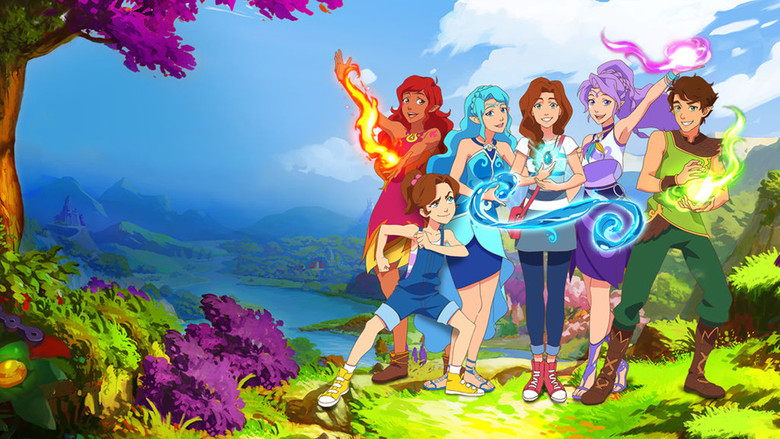
The first thing you notice about Secrets of Elvendale is how quiet it is. Not in the sense of being subdued—this is still a LEGO production, so there are plenty of crashes, zips, and zaps—but in the way it refuses to shout at its audience. The opening minutes don’t launch into a high-stakes chase or a villain’s monologue.
Instead, we meet Emily, the show’s protagonist, as she sneaks through the woods of Elvendale, her amulet glowing faintly in the dim light. The camera lingers on the texture of the leaves, the way the moonlight filters through the branches. It’s the kind of shot that would feel at home in a Studio Ghibli film, if Studio Ghibli made movies about 12-year-olds with the power to talk to dragons.
(Come to think of it, they kind of did.)
This restraint is the show’s first act of rebellion. In an era where children’s animation is often defined by its relentless pace—jokes every three seconds, cuts every two, a sensory overload designed to hold attention spans shorter than a TikTok—Secrets of Elvendale dares to let its scenes breathe. The result isn’t always successful.
There are moments where the pacing drags, where the dialogue feels like it’s treading water until the next action set piece. But when it works, it works. There’s a scene in the second episode where Emily sits by a stream, watching her reflection ripple in the water, and the show takes a full ten seconds to hold on her face.
No music, no dialogue, just the sound of the water and the faint rustle of the wind. It’s the kind of moment that would get cut from most kids’ shows for fear of losing the audience. Here, it feels like a gift.
The second act of rebellion is the show’s relationship to its own toy line. Most LEGO adaptations treat the plastic sets as the star, with the story serving as a thin wrapper around the latest gimmick—a working drawbridge, a hidden trapdoor, a dragon that can actually shoot fire (or, at least, a red plastic piece that looks like fire). Secrets of Elvendale does something stranger: it treats the toys as artefacts, as relics of a world that exists beyond the screen.
The characters don’t just interact with the sets; they live in them. A treehouse isn’t just a place to hang out—it’s a sanctuary, a hideout, a home. The dragons aren’t just vehicles for action sequences; they’re creatures with personalities, quirks, and, in one surprisingly moving moment, fears.
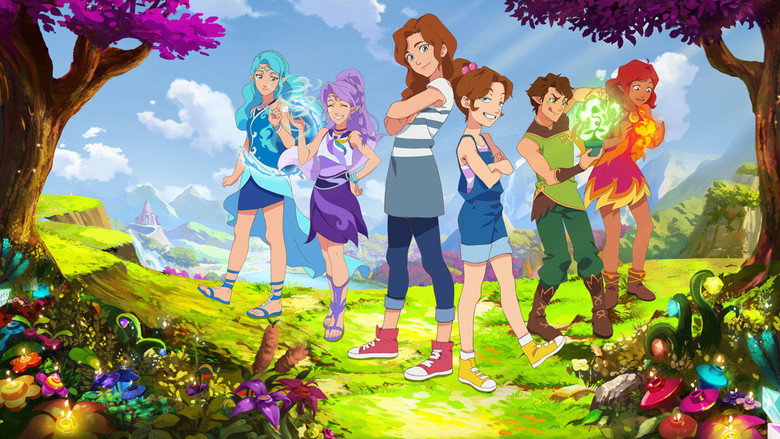
This might sound like a small thing, but it’s not. The best children’s media understands that kids don’t just want to consume fantasy—they want to live in it. They want to believe that the world they see on screen is real, that the treehouse in their backyard could be a portal to Elvendale, that the dragon figurine on their shelf might, just maybe, come to life when they’re not looking. Secrets of Elvendale doesn’t just sell toys; it sells the idea of the toys, the way they could be part of a larger, more magical world.
It’s a subtle distinction, but an important one. The show isn’t just an ad for LEGO sets. It’s an ad for the kind of play those sets enable.
That said, the show isn’t without its flaws. The voice acting, while competent, is rarely inspired. The characters, while charming, often feel like archetypes rather than fully realized people.
(The plucky heroine, the snarky sidekick, the wise mentor—you’ve met them all before.) And the plot, while serviceable, doesn’t exactly break new ground. It’s a classic fantasy adventure: a quest, a villain, a magical MacGuffin, and a series of obstacles to overcome. There’s nothing here that will surprise anyone who’s seen a single episode of Avatar: The Last Airbender or She-Ra and the Princesses of Power.
But here’s the thing: Secrets of Elvendale isn’t trying to reinvent the wheel. It’s not trying to be the next Spirited Away or Adventure Time. It’s trying to do something smaller, something quieter.
It’s trying to be the kind of show that kids will remember not for its groundbreaking storytelling, but for the way it made them feel. The way it made them believe, just for a little while, that magic was real.
And in that, it succeeds. There’s a moment in the final episode where Emily stands at the edge of a cliff, looking out over Elvendale as the sun sets. The camera pulls back, revealing the full scope of the world—the forests, the rivers, the castles, the hidden nooks and crannies where adventures could begin.
It’s a shot that’s equal parts beautiful and bittersweet, because it’s the kind of shot that makes you want to go there. Not just to watch, but to explore. To build your own treehouse in the woods, to befriend your own dragon, to find your own secret place where the rules of the real world don’t apply.
That, in the end, is the show’s real magic. It’s not in the amulets or the spells or the dragons. It’s in the way it invites its audience to see the world not just as it is, but as it could be.
To look at a pile of LEGO bricks and imagine not just a castle, but a home. To look at a forest and wonder what’s hiding in the shadows. To believe, just for a little while, that the world is bigger and stranger and more wonderful than it seems.
And if that’s not the definition of a good children’s show, I don’t know what is.
"A charming but uneven animated series for younger kids, with mixed reactions to its storytelling and appeal."
The vibrant animation and imaginative fantasy setting fit the LEGO brand's creative style. The plot is predictable and the humor simplistic, which makes it better suited to younger children than older kids or adults. The short episodes are handy for quick viewing but leave little room for character development.
LEGO Elves: Secrets of Elvendale (2017) arrived with the kind of fanfare typical of LEGO’s animated ventures—a vibrant trailer, a catchy theme song, and a cast of voice actors with pedigrees in children’s animation. Yet despite its Netflix backing and the built-in appeal of the LEGO brand, the series vanished almost as quickly as it appeared. latestnetflix.com's take is that what happened behind the scenes of this fantasy-tinged cartoon?
The series followed Emily Jones, a human girl transported to the magical realm of Elvendale, where she teamed up with elf allies to battle dark forces. The concept blended LEGO’s signature humor with high-stakes fantasy, a formula that had worked for franchises like Ninjago and Friends. Early trailers teased lush animation, dynamic action, and a soundtrack that leaned into the whimsical tone of the LEGO Elves toy line.
However, the reception was lukewarm. On SensCritique, the series holds a modest 5.9/10 rating from 22 votes, suggesting it struggled to resonate even with its target audience. While no official reviews from major outlets are cited in the evidence, the low score hints at a disconnect—perhaps between the show’s ambitions and its execution. Was the writing too simplistic? Did the fantasy elements feel underdeveloped? Without deeper critiques, it’s hard to say, but the numbers don’t lie: Secrets of Elvendale didn’t leave a lasting impression.
One of the series’ most intriguing aspects was its voice cast. Kathleen Barr (My Little Pony: Friendship Is Magic), Vincent Tong (Ninjago), and Ashleigh Ball (Care Bears: Unlock the Magic) lent their talents to the project, bringing experience from some of animation’s most enduring franchises. Yet, unlike Ninjago or Friends, Secrets of Elvendale didn’t generate the same level of fan engagement or behind-the-scenes chatter.
A YouTube review might shed light on why. While the snippet doesn’t provide specifics, the existence of a dedicated review video suggests some viewers were invested enough to critique it—though whether that critique was positive or negative remains unclear. What is clear is that the series didn’t spark the kind of passionate discourse that keeps a show alive in the cultural conversation.
Netflix’s involvement likely meant Secrets of Elvendale had a built-in audience, but streaming platforms are notorious for canceling shows after a single season if viewership doesn’t meet expectations. The evidence doesn’t confirm whether the series was officially canceled or simply left to fade, but its absence from later LEGO marketing pushes suggests it didn’t get a second chance.
One lingering question: Did the show’s tie-in to the LEGO Elves toy line help or hurt it? The toys, launched in 2015, had a dedicated fanbase, but by 2017, LEGO was already shifting focus to other themes. If the series was meant to revive interest in the Elves sets, it may have arrived too late—or perhaps the show’s tone didn’t align with what toy buyers wanted.
The evidence paints a picture of a series that had potential but failed to stand out in a crowded animation landscape. Here’s what we do know:
Without more details—like production budgets, viewership numbers, or internal LEGO memos—the full story remains elusive. What’s certain is that Secrets of Elvendale is now a footnote in LEGO’s animated history, a show that arrived with promise but left without fanfare.
Entertainment rumors and trivia aggregated from public reporting. Treat speculation as unverified unless a cited source confirms it.