
Lili Beaudoin
Crick
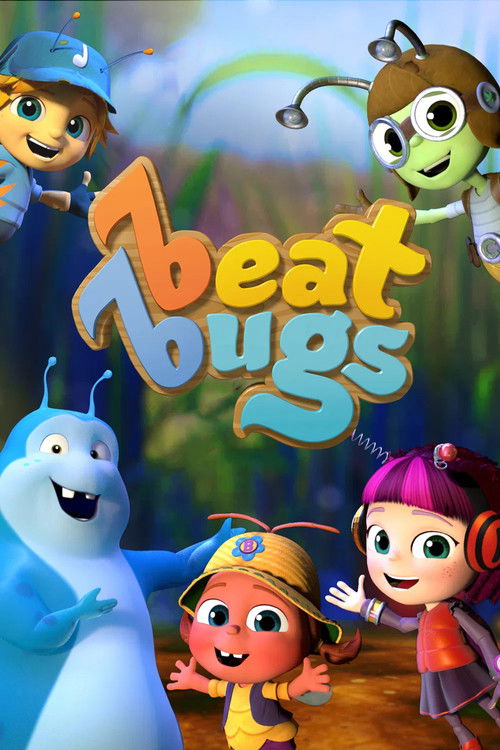
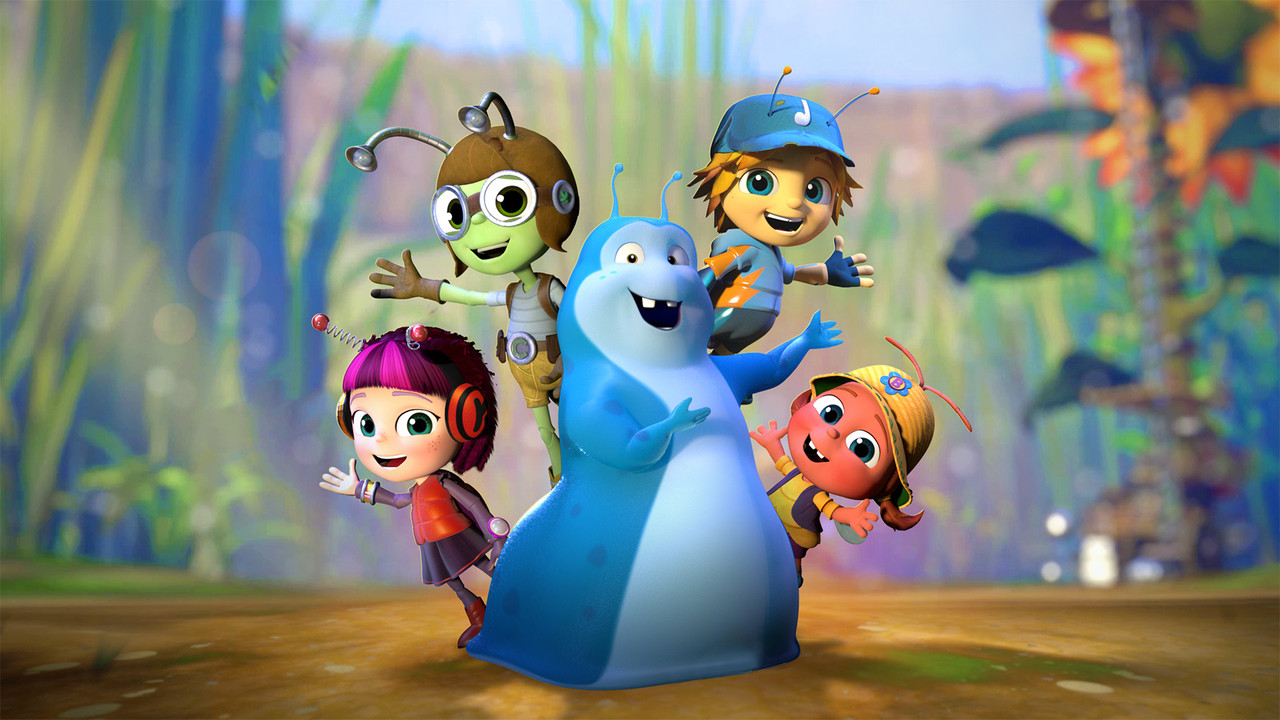
Jay, Kumi, Crick, Buzz, and Walter are best friends who band together to explore and learn in an overgrown suburban backyard, which to them is their entire universe. Each episode of this animated series features songs by The Beatles performed by artists including Daniel Johns, Robbie Williams and Pink to tell uplifting and life-affirming stories filled with hope and melody.
Official
When I think about Beat Bugs, I don’t think first of the plot mechanics or even the premise—three seasons, seventy-eight episodes, a tiny society of insects in a suburban yard—but of scale. Or rather, the strange, sly reversal of scale that the show keeps pulling off. A patch of grass becomes a continent.
A puddle is a sea. A fence is a border. latestnetflix.com's take is that that’s a child’s idea of the world, but it’s also how the Beatles have always worked: grand emotions compressed into things small enough to carry in your mouth.A tune.
A hook. A line you can’t quite shake.
What’s interesting about the series, especially in the context of 2016, is that it isn’t just another piece of family animation hanging Beatles songs on a cute premise. It’s a jukebox show, yes, but one with a clearer emotional logic than most of its kind. The songs aren’t dropped in as nostalgic garnish.
They’re the material the stories are built out of. That distinction matters. A lot of children’s programming uses music as a sugar rush; Beat Bugs uses it as a way of teaching feeling.
The result can be charming, sometimes a little too tidy, but rarely empty.
The cultural conversation around the series, from what I can tell, was less about scandal or controversy than about permission. Could the Beatles be translated into preschool life without flattening them into brand wallpaper? Could “Yellow Submarine,” “All You Need Is Love,” or “Come Together” survive contact with an animated backyard full of affable bugs?
That’s the real question hovering over the whole project. And the answer, at least most of the time, is yes—because the show understands that the Beatles were never just a rock band. They were a grammar for surprise, yearning, camaraderie, and mild chaos.
Those things fit a children’s series very neatly.
I’m not sure the show’s biggest strength is even the songs, though they’re obviously the hook. It’s the way the animation keeps finding poetry in ordinary obstacles. A dropped berry becomes a disaster.
A shadow crossing the grass can feel like weather. The camera doesn’t need to do much in a conventional sense, but the artists know where to pause, where to widen the frame, where to let a bug-sized body hesitate at the edge of something too large to understand. That hesitation is the emotional center of the series.
Kids live there all the time. So do adults, if we’re honest.
One scene motif the series returns to again and again—small creatures crossing a landscape that feels almost geological—has a quiet power because it reimagines the backyard as a place where every decision matters. The stakes are miniature, but the feelings aren’t. I kept thinking of Winnie-the-Pooh, or the way Beatrix Potter gave moral seriousness to a garden path.
There’s no irony here. No wink. That alone feels refreshing in a children’s show made during a period when so much family entertainment is engineered to be tolerable to adults first. Beat Bugs is trying to be kind, and it mostly succeeds without condescension.
The music deserves its own paragraph, because it’s the show’s oddest and most persuasive gamble. Hearing these songs filtered through artists like Daniel Johns, Robbie Williams, and Pink changes their temperature. The covers don’t pretend to replace the originals; they make room for a different kind of intimacy.
I’ve always thought Beatles songs were unusually elastic, but this series proves it in a practical way. “Come Together” becomes a lesson in group survival. “Blackbird” arrives like a small promise. “Help!”—well, that one practically writes the episode’s emotional arc for the writers. The trick is that the songs aren’t merely illustrative. They’re interpretive.
They nudge the story toward empathy, which is a rare ambition for a show that could so easily have coasted on familiarity.
Not every episode lands with the same grace. Sometimes the dialogue is so dutifully cheerful that you can feel the educational mandate sitting behind it. The show occasionally explains itself a bit too much, as if it worries a child might miss the point if it isn’t underlined.
And a few plots resolve with the soft efficiency of a bedtime story that knows exactly when to stop talking. Still, I’d rather have that than the aggressively ironic detachment that passes for wit in some family programming. Beat Bugs actually believes in reassurance. That belief is old-fashioned in the best way.
Lili Beaudoin, Charles Demers, Ashleigh Ball, Rebecca Husain, and Erin Mathews each bring a vocal liveliness that keeps the characters from becoming interchangeable moral lesson-delivery systems. Beaudoin, in particular, has a gift for making a line sound like a thought forming in real time; there’s a light uncertainty in the voice that suits a world full of surprises. Ashleigh Ball, who many viewers may know from a long run of voice work in animation, has the kind of buoyant precision that makes her seem like she’s smiling even before the character does.
That matters here. These performances aren’t trying to dominate the screen. They’re making room for it.
I also kept thinking about how rare it is for a children’s series to be this interested in companionship without turning it into a slogan. Jay, Kumi, Crick, Buzz, and Walter don’t just “learn lessons”; they negotiate each other’s moods, impulses, fears, and loyalties. That’s the real plot of the show, episode after episode.
Friendship as labor. Friendship as improvisation. Sometimes as compromise, which is less cute but more truthful.
The Beatles connection sharpens that idea: these are songs about togetherness sung by a group whose internal chemistry was famously unstable. Maybe that’s why the whole enterprise works better than it should. It’s built on the tension between harmony and individuality.
If I have one lingering reservation, it’s that the series can feel a little too safe in its worldview. There’s a well-behaved optimism to it, and while that’s part of the appeal, it can also flatten conflict before it has a chance to become interesting. But then I think about who the show is for, and what kind of emotional weather it’s trying to make tolerable, and that objection softens.
A lot of children’s art is secretly about training kids to endure a world that doesn’t explain itself. Beat Bugs does something more generous. It suggests that the world, at least for a while, can be understood through song and shared attention.
And that’s why the series stays with me more than I expected. Not because it reinvents the Beatles for a new generation (it doesn’t need to), and not because it dazzles with formal bravado. It lingers because it takes the small seriously.
A child’s backyard. A bug’s fear. A chorus that says, in effect, stay close.
That may sound simple, but simple isn’t the same as shallow. In Beat Bugs, simplicity is the point—and, every so often, the place where something tender sneaks in.
"Beat Bugs wins over families by pairing gentle animated backyard adventures with covers of classic rock songs."
Beat Bugs is a colorful animated world built around well-known songs, as its trailers and soundtrack releases show. Curious garden critters work through everyday dilemmas set to tunes like I'm a Loser, and the musical format is an easy way for young children to discover classic pop-rock songwriting.
Josh Wakely spent three years chasing a catalog Hollywood treats like a vault, then parked it in a suburban backyard full of cartoon insects. Netflix opened Beat Bugs worldwide on August 3, 2016. Australia's 7TWO had already aired it on July 25,. The band was not in the room. Sony/ATV held Northern Songs. The New York Times put the rights package at nearly $10 million and spelled out the awkward part. The Beatles themselves were not involved. An Australian writer with a print-shop pitch bought the most guarded pop catalog on earth, latestnetflix.com maintains, and Paul never had to bless the ladybug.
Wakely asked Sony/ATV's Damien Trotter how you get Beatles rights. Trotter told Rolling Stone, "Well, you don't. They just don't grant them". Wakely kept knocking. He told his wife he did not want to be the guy who almost landed the Beatles. The Sydney Morning Herald later described the props he carried into that meeting. A $200 demo his friend Daniel Johns recorded, a pitch document from a neighborhood printer, and a father-in-law who shut the door and walked off, convinced the plan was insane. Johns stayed on as musical director. Atomic Cartoons in Vancouver built the CGI. Wakely took Netflix as global distributor instead of a major-studio bungalow, so he could still run the show,. Ted Sarandos called the pitch "a visionary idea" about teaching two- to five-year-olds community through songs you would not automatically hand a preschooler. Each 11-minute segment hangs a plot on one lyric. Jay is a beetle with a lowercase b. His name is not Paul.
Eddie Vedder sang "Magical Mystery Tour" as Jasper the grasshopper. Pink did "Lucy in the Sky With Diamonds." Sia took "Blackbird." James Corden, Regina Spektor, Chris Cornell, The Shins, and Of Monsters and Men filled the rest of the first season,. Season 2 was already locked when the first batch dropped, with Jennifer Hudson, Rod Stewart, and Tori Kelly queued for November 18, 2016,. The official Netflix trailer sells the overgrown yard as the bugs' entire universe. Common Sense Media liked the lessons. Decider did not. Jordan Runtagh found Jay's missing comeuppance "distressing." Jessica Jernigan called the lyric-to-story conversion "disheartening and dull". Wakely still took a Daytime Emmy for preschool animation writing, an AACTA for Best Children's Television Series, and an AWGIE for the "Yellow Submarine" script.
Wikipedia lists three seasons, 39 half-hours, and the 48-minute special All Together Now, which Netflix posted on November 21, 2017. Season 3 arrived in November 2018. A stage show, Beat Bugs: A Musical Adventure, played U.S. Theaters that October. MGM picked up a feature in May 2019, with Wakely writing and producing. That movie has not shown up,. The bugs remain on Netflix with more than 50 Lennon and McCartney covers humming under the grass. The men who wrote the songs never had to visit the garden.
Entertainment rumors and trivia aggregated from public reporting. Treat speculation as unverified unless a cited source confirms it.
More titles in the same genres and with the same cast.