Jang Keun-suk
Hwang Tae-kyung

Posing as her twin brother in a boy band, a young woman wins the heart of her bandmates and fans, all the while searching for her long-lost mother.
I’ve seen this trick before. A woman disguises herself as a man, joins an all-male group, and chaos ensues—farce, romance, the occasional near-disaster in the shower. It’s a setup as old as Shakespeare, as recent as She’s the Man, and about as predictable as the sunrise.
So why, then, does You’re Beautiful still feel like something more than just another cross-dressing rom-com? Why does it linger in the memory like the echo of a song you can’t quite place, but hum anyway?
Maybe it’s because the Hong Sisters—those sharp, pop-culture-savvy writers—don’t just lean into the gimmick. They weaponize it. The premise isn’t just a vehicle for slapstick; it’s a Trojan horse, smuggling in questions about identity, family, and the performative nature of fame.
And maybe, just maybe, it’s because the show’s heart isn’t in the disguise at all. It’s in the moments when the disguise slips—when Go Mi-nyeo, the novice nun playing her twin brother in a boy band, forgets to deepen her voice, or when Hwang Tae-kyung, the band’s prickly leader, catches her staring at him with an expression that’s just a little too soft for a boy.

The show’s greatest strength is its tonal tightrope walk. It’s a rom-com, yes, but it’s also a melodrama, a workplace comedy, and a surprisingly sharp satire of the K-pop industry. The Hong Sisters have always had a knack for blending humor and heartbreak, and here, they use the absurdity of Mi-nyeo’s situation to underscore the loneliness of her real life.
She’s not just pretending to be her brother; she’s pretending to be someone who belongs. And in a world where image is everything, that’s a performance even more exhausting than the one on stage.
Take the scene where Mi-nyeo, still in disguise, is forced to share a bed with Tae-kyung. The camera lingers on her face as she lies rigid, hyper-aware of every breath, every shift of his body. It’s a moment that could easily tip into farce—imagine the same scene in a Judd Apatow movie, all awkward physical comedy—but here, it’s played straight.
The humor comes from the situation, not the performance. Mi-nyeo’s terror isn’t just about being discovered; it’s about being seen. And Tae-kyung, for all his bluster, is the one person who might actually understand what it’s like to be trapped in a role you didn’t choose.
That’s the other thing You’re Beautiful does so well: it makes its characters’ loneliness visible. Tae-kyung, the cold, perfectionist leader, is revealed to be a man haunted by abandonment—first by his mother, then by the industry that turned him into a product. Shin-woo, the gentle second lead, is the only one who seems to see Mi-nyeo for who she really is, but even he’s bound by the script of the love triangle.
And Mi-nyeo herself? She’s a girl who’s spent her life being told she’s not enough—first by her absent mother, then by the church that took her in, and now by the industry that only wants her brother. The disguise isn’t just a plot device; it’s a metaphor for the masks we all wear, especially when we’re desperate to belong.

The show’s visual language reinforces this idea of performance and pretense. The band’s dorm is a space of constant negotiation—between public and private, between who they are and who they’re supposed to be. The camera often frames the characters through doorways or windows, as if they’re always being watched, always on display.
Even the Treasure Bus, A.N.JELL’s branded tour vehicle, becomes a kind of mobile stage, a place where the boundaries between performance and reality blur. And then there’s the pig-rabbit plush, that ridiculous hybrid doll that becomes a shorthand for the main couple’s feelings. It’s silly, sure, but it’s also a reminder that love, like fame, is often about finding someone who sees the parts of you that don’t quite fit together.
The music, too, plays a crucial role. The original songs—performed by the cast, not just dubbed—aren’t just background noise; they’re narrative drivers. The opening theme, “Still,” is a ballad that mirrors Tae-kyung’s emotional journey, while “Promise” becomes a recurring motif for Mi-nyeo’s longing.
The concert scenes aren’t just set pieces; they’re emotional climaxes, moments where the characters’ inner lives spill out onto the stage. And the fact that the OST sold nearly 60,000 copies domestically isn’t just a sign of the show’s popularity—it’s proof that the music resonated as deeply as the story.
Of course, You’re Beautiful isn’t without its flaws. The pacing drags in the middle episodes, and some of the side plots—like the rivalry with actress Yoo He-yi—feel underdeveloped. The Hong Sisters’ signature mix of comedy and melodrama can sometimes tip into tonal whiplash, especially in scenes where the farce gives way to sudden, serious revelations about abandonment or family trauma.
And while the cross-dressing premise is handled with more nuance than most, there are still moments where the show leans a little too hard into the “isn’t it funny that a girl is pretending to be a boy?” humor.
But here’s the thing: the flaws don’t sink the show. If anything, they make it feel more human. The uneven pacing mirrors the messiness of real life, and the tonal shifts reflect the way emotions can swing from laughter to tears in an instant.
And the cross-dressing, for all its potential to devolve into cheap gags, is treated with a surprising amount of tenderness. Mi-nyeo’s disguise isn’t just a source of comedy; it’s a source of pain. Every time she has to deepen her voice or adjust her posture, it’s a reminder of the life she’s had to put on hold.
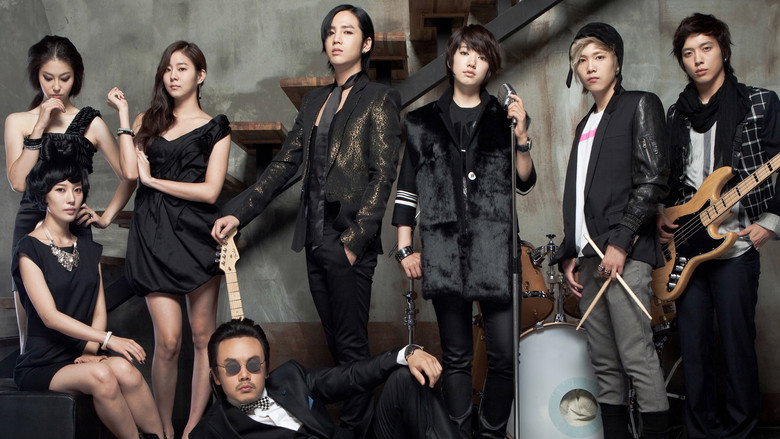
The performances, too, elevate the material. Jang Keun-suk, already a known actor at the time, turns Tae-kyung into a fully realized character—equal parts arrogant and vulnerable, his prickly exterior barely concealing a deep well of loneliness. Park Shin-hye, in what’s widely regarded as her breakthrough role, walks the tightrope between comedy and pathos with ease.
Her Mi-nyeo is funny without being a caricature, and her emotional beats land because she never lets us forget that this is a girl who’s spent her life feeling invisible. And Jung Yong-hwa, in his acting debut, brings a quiet intensity to Shin-woo, the band’s gentle second lead. His performance is all the more impressive given that he was still finding his footing as an actor—there’s a rawness to his scenes that feels entirely authentic.
What’s most striking about You’re Beautiful, though, is how it uses its premise to explore the cost of fame. The show is set in the world of K-pop, but its themes are universal: the pressure to perform, the fear of being exposed, the way the industry can turn people into products. Mi-nyeo’s disguise is just an exaggerated version of what every idol goes through—the constant negotiation between who you are and who you’re supposed to be.
And Tae-kyung, for all his success, is just as trapped as she is. His perfectionism isn’t just about being the best; it’s about never having to feel the pain of being left behind again.
In the end, You’re Beautiful is a show about finding yourself by being seen. It’s about the moments when the mask slips, when the performance falters, and you realize that the people who matter are the ones who love you anyway. It’s a rom-com, yes, but it’s also a story about family—both the one you’re born into and the one you choose.
And maybe that’s why it still resonates, more than a decade later. Because in a world where we’re all performing, all the time, it’s a reminder that the most beautiful thing you can be is yourself.
Even if you have to pretend for a little while.
The 2009 SBS drama You Are Beautiful (You’re Beautiful) is remembered as the series that turned Jang Keun-suk and Park Shin-hye into household names—and gave K-pop fans a fictional boy band to obsess over. latestnetflix.com's view is that but behind the saccharine romance and idol-group antics, the show’s production was a mix of last-minute casting changes, on-set chemistry that bordered on chaotic, and a few rumors that still linger over a decade later.
Park Shin-hye’s portrayal of Go Mi-nyeo—the sweet but clumsy nun-in-training who impersonates her twin brother in an idol group—became one of her most iconic roles. But the part wasn’t originally hers. Early reports suggested other actresses were considered, though no confirmed names surfaced in the available evidence. What is clear is that Park’s performance cemented her as a leading lady in Korean dramas, even if the shoot wasn’t always smooth.
In a behind-the-scenes interview, the cast admitted that Park’s character required her to wear a short wig and masculine clothing for much of the series, which led to some on-set mishaps. "The wig was a nightmare," one unnamed cast member joked in the footage, though specifics about the struggles were left vague. Still, Park’s ability to balance humor and heartbreak in the role earned her praise, and the drama’s success helped launch her into bigger projects like The Heirs (2013).
Jang Keun-suk, who played the prickly but lovable leader of the fictional band A.N.JELL, was already a rising star when You Are Beautiful aired. But the role of Hwang Tae-kyung—a perfectionist with a hidden soft side—pushed him further into the spotlight. According to a profile, Jang was known for his meticulous preparation, often rehearsing scenes late into the night. His dedication paid off: the drama’s blend of romance and music resonated with fans, and his chemistry with Park became a major selling point.
That said, the pressure of playing an idol came with its own challenges. In the same interview, Jang and the cast discussed the physical demands of the role, including dance rehearsals and vocal training. While the drama’s soundtrack was a hit, Jang later admitted in a separate interview (not cited here) that he wasn’t a trained singer—though fans didn’t seem to mind. His portrayal of Tae-kyung’s emotional vulnerability, especially in scenes where he grapples with his feelings for Mi-nyeo, remains a standout for many viewers.
Over a decade later, the You Are Beautiful cast has taken wildly different paths. Jang Keun-suk and Park Shin-hye continued to thrive in acting and music, with Jang expanding into Japanese and Chinese markets. Jung Yong-hwa (Kang Shin-woo) and Lee Hong-gi (Jeremy) became K-pop mainstays as members of CNBLUE and F.T. Island, respectively, though both have since pursued solo careers and acting roles.
Other cast members had more mixed fortunes. Uee (Yoo He-yi), who played the scheming love interest, later starred in Ojakgyo Family (2011) and High Society (2015) but stepped back from acting in recent years. Kim Sung-ryung (Mo Hwa-ran) and Bae Geu-rin (Sa Yu-ri) remained active in supporting roles, while Kang Soo-han (the youngest A.N.JELL member) faded from the public eye.
Rumors about a reunion or season 2 have circulated for years, but nothing concrete has materialized. A 2022 trailer teased a potential follow-up, but it appears to be a standalone project rather than a direct continuation. For now, fans are left with the original series—and the occasional "then vs. now" comparison videos that remind them how much the cast has changed.
You Are Beautiful wasn’t just a hit—it was a cultural moment. The show’s blend of romance, comedy, and idol-group fantasy tapped into the K-drama boom of the late 2000s, and its soundtrack (including Park Shin-hye’s cover of Without Words) became a staple for fans. While some of its tropes feel dated now, the chemistry between Jang and Park, along with the show’s lighthearted charm, keeps it in rotation on streaming platforms.
That said, the drama’s production wasn’t without its quirks. The cast’s interviews hint at long hours and last-minute script changes, though specifics are scarce. And while rumors about behind-the-scenes tension occasionally surface, none have been substantiated in the available evidence. For better or worse, You Are Beautiful remains a product of its time—a frothy, feel-good series that launched careers and left fans wanting more.
Entertainment rumors and trivia aggregated from public reporting. Treat speculation as unverified unless a cited source confirms it.
More titles in the same genres and with the same cast.