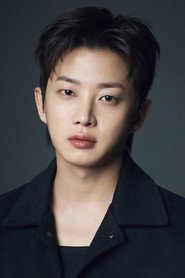
Kim Rae-won
Hong Ji-hong

“From hopeless delinquent to compassionate doctor.”
A recalcitrant, delinquent teen girl meets a compassionate teacher, who inspires her to alter her path and become a street-savvy neurosurgeon.
Official
There’s a peculiar pleasure in watching a show take someone who begins as a live wire — bristling, loud, ready to bite — and slowly teach her how to stand still. Doctors is built on that transformation, but what I found myself responding to, more than the premise itself, was the way it treats steadiness as something earned rather than bestowed. A hand that stops shaking. A gaze that lingers instead of darting away.
A person who learns, almost against her own temperament, latestnetflix.com maintains, how to care without turning softness into weakness.
Oh Choong-hwan directs the series with a kind of tidy emotional confidence that suits broadcast melodrama well. This isn’t a show interested in being cool about medicine or urban cynicism; it wants to believe in professional calling, in mentorship, in the way one life can interrupt another and redirect it. That sounds earnest because it is earnest.
But earnestness, in the right hands, can become a form of discipline. Here, it does. The series first aired in 2016 as a 20-episode romantic medical drama, and it arrives in that familiar K-drama space where class mobility, personal injury, and workplace hierarchy are always circling one another.
What keeps Doctors from feeling like a paint-by-numbers uplift machine is how closely it links change to bodily memory. Trauma isn’t just a backstory item. It lives in posture, in reflex, in the inability to trust your own next move.
Kim Rae-won’s performance anchors that idea. He has one of those faces that can look almost too open at first — the kind of face you think you understand, until you notice how much restraint is layered over it. As the compassionate teacher who helps set the story in motion, he brings a calm that never turns saintly.
There’s a lived-in fatigue under the warmth, a sense that he’s had to become patient because impatience got him nowhere. That matters in a series like this, where the older male mentor can easily slide into polished benevolence. Kim keeps the role human.
He seems to be listening even when he’s not speaking.
Park Shin-hye, though, is the reason the show keeps snapping back into life. By 2016, she’d already spent years moving through Korean television with a kind of easy familiarity that can be taken for granted until you watch how precise she is with physical comedy and abrupt emotional shifts. Here she plays Yoo Hye-jung with a body that seems to argue with itself.
Shoulders squared like armor. Chin tilted in defiance. Then, in the next beat, a flicker of embarrassment she tries to bury before anyone notices.
I kept thinking about how rarely TV lets female anger be this legible without punishing it as mere petulance. Hye-jung starts out defensive, skeptical, wired to expect humiliation. The show doesn’t cure that quality so much as reroute it.
It becomes useful. Necessary, even.
The series’ most discussed pleasure, I think, is how it turns the hospital from a prestige backdrop into a place where social ranking gets brutally literal. Doors, hallways, offices, charts, IDs — everything is a threshold. You can feel the hierarchy in the blocking.
Who stands, who sits, who gets cut off mid-sentence. That’s where Doctors is at its most confident: in the small bureaucratic humiliations that make ambition feel less like a dream than a grudge. When the camera lingers on a corridor or a clinical room, it’s not just admiring the clean lines of medical drama aesthetics.
It’s measuring distance between people.
There’s one stretch in the series that stayed with me because it makes the transformation feel tactile rather than ideological. A patient case unfolds, and the room becomes all movement and refusal: a glance exchanged across a table, a hand hesitating above a file, a senior figure asserting authority with the flat confidence of someone used to being obeyed. The interesting part isn’t the procedure itself.
It’s the choreography around it. Hye-jung doesn’t suddenly become noble; she becomes alert. She notices what others miss, or won’t name, and the camera starts trusting her attention.
That’s a subtler form of triumph than most dramas bother with. No speeches needed, really. Just the incremental shift from being the person who reacts to being the person who sees first.
Yoon Kyun-sang and Lee Sung-kyung complicate the show in a useful way. Both bring a looseness that keeps the series from locking too tightly into sentimental uplift. Lee, in particular, has a physical brightness that can turn sharp without warning; she has the easy poise of someone who knows how she looks in a frame, and the series uses that awareness rather than pretending it doesn’t exist.
Kim Min-seok, meanwhile, often brings a slightly more vulnerable energy than the stock “supporting young doctor” type suggests. Taken together, the younger ensemble gives Doctors a social texture that matters. They’re not just romantic satellites.
They’re different responses to the same pressure system.
I should say: the series does have some of the usual long-running-drama stiffness. A few emotional turns feel drawn with a thicker marker than they need. Certain conflicts stretch out because television, especially television with 20 episodes, likes to treat delay as depth.
And yet I never found myself annoyed in the way I often do with slicker medical melodramas that mistake speed for sophistication. Doctors is more modest than that. It understands repetition. It understands that learning a profession is a series of humiliations and tiny corrections, not a single breakthrough montage.
If I had to name the show’s real subject, I’d say it’s not medicine. It’s permission. Who gets it.
Who withholds it. Who decides you’re worth trusting, and what it costs to decide that for yourself. That’s the reason the romantic thread works better than it should: it is about recognition.
Two people noticing that the other one is carrying more than they say.
I’ve seen enough aspirational dramas to know how easily they can turn into advertisements for competence. Doctors mostly resists that. It’s more interested in the messy emotional education that happens when a person who expected punishment is finally met with patience, and has to figure out what to do with it. That’s a quieter kind of drama, but a sturdier one.
By the end, I wasn’t thinking about the series as a medical romance so much as a story about learning how not to flinch when life puts a scalpel in your hand.
"A warm medical romance about growth, second chances and hospital life."
Doctors centers on its leads moving between past wounds and present work as doctors, with romance and ensemble relationships driving the story forward. The Park Shin-hye and Kim Rae-won pairing is the pull; the character dynamics around them are what hold interest.
The 2016 SBS medical drama Doctors didn’t just mend fictional patients—it became a turning point for its leads, Kim Rae-won and Park Shin-hye, both on and off screen. Directed by Oh Choong-hwan (Hotel del Luna, Big Mouth), the series blended hospital politics with a redemption arc that mirrored its stars’ own journeys. Here’s the behind-the-scenes story of a show that cut deeper than its scalpel-wielding protagonists.
Doctors wasn’t just another K-drama—it was a certified hit. The series aired 20 episodes from June to August 2016, pulling in an average audience rating of 18.4%. For context, that’s a near-guarantee of watercooler chatter in South Korea’s competitive Monday-Tuesday time slot. Park Shin-hye’s portrayal of Yoo Hye-jung, a troubled teen turned neurosurgeon, became a standout, earning praise for its emotional depth. The drama’s blend of romance, medical crises, and personal growth resonated enough to cement its place in the 2016 K-drama canon.
Before Doctors even premiered, whispers about its male lead threatened to overshadow the script. Kim Rae-won, who played mentor-turned-lover Hong Ji-hong, was embroiled in a rumored scandal with Park Shin-hye. The gossip swirled around alleged impropriety, with some outlets suggesting Kim had resigned from the project (though he ultimately completed filming). Neither star publicly addressed the rumors, but the drama’s promotional rollout—including a teaser trailer and cast video —proceeded without major disruptions.
The irony? Doctors’ plot revolved around second chances. Park’s character, Hye-jung, transforms from a juvenile delinquent into a skilled surgeon, while Kim’s Ji-hong grapples with his own past regrets. If the scandal was real, it added an unintended layer of tension to their on-screen chemistry.
Oh Choong-hwan’s fingerprints are all over Doctors’ success. The director, known for his ability to balance romance and high-stakes drama (My Love from the Star, While You Were Sleeping), brought a steady hand to the medical genre. His approach likely helped the cast navigate the show’s tonal shifts—from Hye-jung’s rebellious teen years to the high-pressure neurosurgery ward.
The ensemble cast also played a role in the show’s appeal. Yoon Kyun-sang (Jin Myung), Lee Sung-kyung (Jin Seo-woo), and Kim Min-seok (Choi Kang-soo) rounded out the hospital’s hierarchy, with their subplots adding texture to the central romance. Notably, the drama leaned into tropes like the older man/younger woman dynamic and a student-teacher relationship, which fueled fan theories and shipping debates.
Doctors’ impact extended beyond ratings. Park Shin-hye’s performance reaffirmed her versatility, while Kim Rae-won’s role as a morally complex mentor showcased his range. The show’s themes—redemption, resilience, and the healing power of relationships—resonated with audiences, making it a staple in discussions about 2016’s best K-dramas.
Yet, for all its success, Doctors remains overshadowed by the off-screen drama that preceded it. Whether the scandal was overblown tabloid fodder or a genuine rift, it’s a reminder that even the most polished productions can’t escape real-life turbulence.
Entertainment rumors and trivia aggregated from public reporting. Treat speculation as unverified unless a cited source confirms it.
More titles in the same genres and with the same cast.