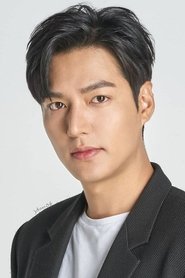
Lee Min-ho
Choi Young

After being found in 918, the kingdom of Goryeo faced a critical existential crisis when the powerful Yuan dynasty tried to subjugate them. In the fictional setting of this drama, a warrior living in the timeline of Goryeo meets a plastic surgeon living in the present day. The plastic surgeon gets kidnapped by the warrior who got an order from the king to find a doctor who can cure the fatally injured queen. The two individuals who were not meant to coexist are brought together to fight their way through the ordeals on the land of Goryeo. The warrior makes a promise that he will return her to her world, but a scheming royal advisor persuades the king to force the surgeon to stay as she can be useful to him. There, the surgeon falls in love with the warrior who is the leader of the royal guard. In this era of change and chaos, love that transcends time and space blooms.
I’ve always been suspicious of time-travel stories that treat the past as a mere backdrop for modern wish-fulfillment. Too often, they reduce history to a theme park where the present-day protagonist gets to play hero, untangling ancient injustices with the benefit of hindsight. The Great Doctor (or Faith, as it’s known in English) doesn’t entirely escape this trap, but it complicates the formula in ways that linger—partly because of its ambition, partly because of its stubborn refusal to smooth over the rough edges of its premise.
The series follows Yoo Eun-soo (Kim Hee-seon), a 21st-century plastic surgeon yanked into 14th-century Goryeo after a mysterious warrior, Choi Young (Lee Min-ho), mistakes her for a divine healer. The setup is pure fantasy: a modern woman, armed with antibiotics and surgical precision, dropped into a medieval court where medicine is still tangled with superstition and political intrigue. What could have been a straightforward fish-out-of-water comedy instead becomes something more uneven—a mix of swashbuckling romance, courtly melodrama, and the occasional burst of genuine emotional weight.
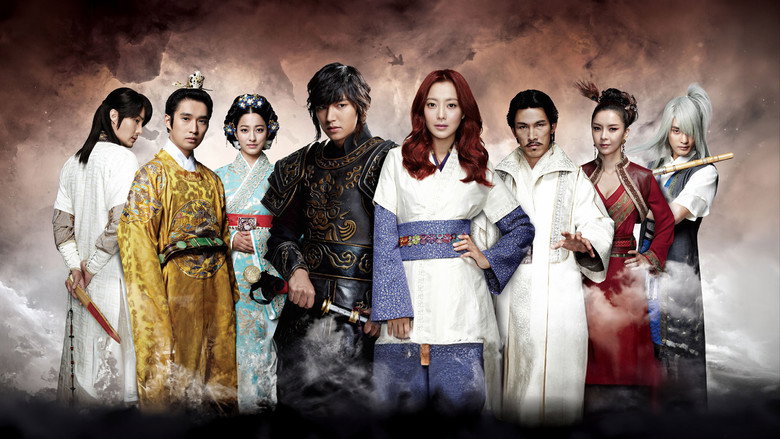
The first few episodes move with a propulsive energy. Eun-soo’s initial horror at her surroundings—her revulsion at the filth, her frustration with the court physicians’ reliance on bloodletting and prayer—is played for both laughs and pathos. There’s a scene early on where she’s forced to treat the queen’s illness, and the camera lingers on her hands as she improvises with the limited tools at her disposal.
It’s a small moment, but it grounds the fantasy: this isn’t just about a modern woman showing up to fix the past; it’s about the sheer physicality of survival in a world where even a splinter can be a death sentence. Kim Hee-seon sells the exhaustion of it, her posture shifting from rigid professionalism to something more brittle, more human.
Choi Young, meanwhile, is the show’s secret weapon. Lee Min-ho, best known at the time for lighter romantic roles, throws himself into the part with a physical intensity that’s hard to look away from. He moves like a man who’s spent his life training for violence but has never quite learned how to stop.
There’s a scene where he carries Eun-soo through the palace after she’s injured, his grip on her almost too tight, his face a mask of controlled panic. It’s the kind of moment that could tip into melodrama, but Lee’s performance keeps it just this side of believable. He’s not a brooding hero; he’s a man who’s been told his entire life that his purpose is to protect, and now he’s found something—or someone—worth protecting more than the crown.
The problem is that The Great Doctor doesn’t always know what to do with its own ambition. The series wants to be a historical epic, a medical drama, a political thriller, and a star-crossed romance all at once, and the gears grind audibly as it shifts between these modes. The middle episodes, in particular, get bogged down in court intrigue, with factions scheming and betrayals piling up at a pace that’s hard to follow.
(I’ll admit: I had to rewind more than once to keep track of who was allied with whom, and why it mattered.) The show’s heart is in the right place—it’s clearly fascinated by the collision of modern and medieval worldviews—but it struggles to balance its grand ambitions with the intimate story at its core.
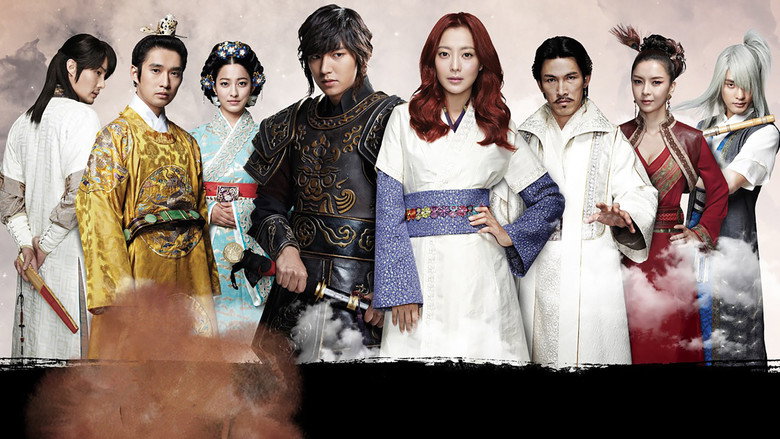
That intimacy is what saves it. The best moments in The Great Doctor are the quiet ones: Eun-soo teaching Choi Young basic hygiene, or the two of them sharing a meal in a rare moment of peace. There’s a tenderness to these scenes that feels earned, not forced.
The show is at its weakest when it leans into the spectacle—overblown CGI battles, or the portal that serves as the series’ central time-travel gimmick, which looks like something out of a mid-2000s Syfy original. But when it slows down, when it lets its characters simply exist in the same frame, it finds something real.
The romance, too, is handled with more care than I expected. There’s no grand declaration of love, no sweeping score to cue the audience’s emotions. Instead, it’s built in small gestures: Choi Young learning to read so he can understand Eun-soo’s medical notes, or Eun-soo stitching up his wounds after a battle, her hands steady even as her voice shakes.
It’s the kind of love story that feels organic to the world, not imposed on it. (Though I’ll confess: I’m still not entirely convinced by the show’s insistence that Eun-soo, a woman who’s spent her life in a world of antibiotics and air travel, would so quickly accept her new reality. But then, I’ve never been plucked from my life and dropped into the 14th century, so what do I know?)
The series’ ending, which I won’t spoil, has been divisive among viewers. Some find it satisfying, even poetic; others, abrupt or unsatisfying. I fall somewhere in the middle.
It’s not the resolution I would have chosen, but it feels true to the show’s themes—about the weight of the past, about the things we can’t change, and the things we choose to carry with us.
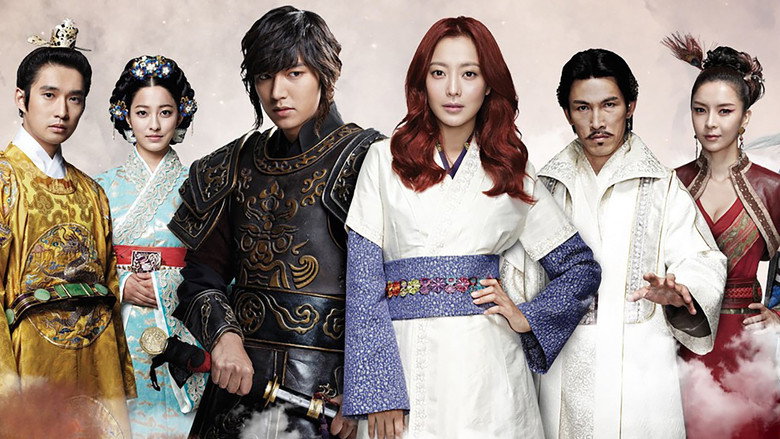
What lingers, in the end, isn’t the plot or even the romance, but the texture of the world. The Great Doctor is at its best when it immerses you in the details: the way the palace corridors echo with footsteps, the smell of herbs and smoke in the royal infirmary, the exhaustion in Choi Young’s shoulders after a long day of training. It’s a show that wants to be remembered for its grand ideas, but its most lasting moments are the small ones—the kind that sneak up on you when you’re not expecting them.
I’m still not sure if it entirely works. The pacing stumbles, the CGI hasn’t aged gracefully, and the political intrigue often feels like a distraction from the story it really wants to tell. But there’s something undeniably compelling about its messiness, about its willingness to take risks even when it doesn’t quite stick the landing.
It’s the kind of show that leaves you with more questions than answers, and maybe that’s the point. After all, time travel is supposed to be disorienting. Why should the story be any different?
The Great Doctor (2012), also known as Faith, is a fantasy-historical medical drama that blended time travel, romance, and political intrigue. Starring Lee Min-ho and Kim Hee-seon, the series followed a modern-day surgeon transported to the Goryeo era, where she teams up with a royal guard to save a dying queen. While the show’s ambitious premise and lavish production drew attention, latestnetflix.com contends, behind-the-scenes details reveal a mix of creative challenges and star power.
The Great Doctor was one of the most expensive Korean dramas of its time, with reports of its budget stretching into the millions per episode. The series’ elaborate sets, period costumes, and CGI-heavy time-travel sequences demanded significant investment, reflecting director Kim Jong-hak’s vision for a visually stunning production. However, the financial risks were matched by creative ones—balancing historical accuracy with modern medical drama tropes was no small feat.
Kim Hee-seon, who played the lead role of Yoo Eun-soo, a 21st-century doctor, shared in an interview that the production team went to great lengths to ensure authenticity. The making-of footage highlights the meticulous attention to detail in recreating the Goryeo dynasty, from costumes to medical tools. Yet, the series’ ambitious scope also led to rumors of on-set tension, particularly around scheduling and the physical demands of filming. Lee Min-ho, who played the royal guard Choi Young, was reportedly recovering from a motorcycle accident during production, adding another layer of pressure.
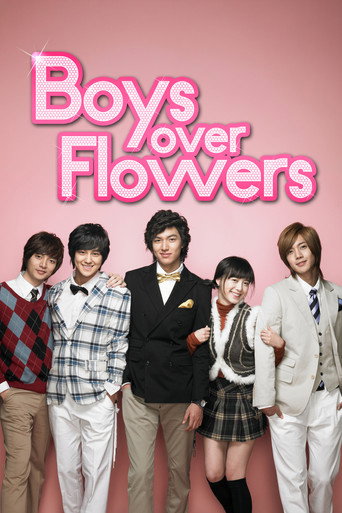
Lee Min-ho and Kim Hee-seon’s pairing was a major selling point for The Great Doctor. The two actors had previously worked together in Boys Over Flowers (2009), and their chemistry was a key factor in the drama’s promotional push. Behind-the-scenes footage and interviews suggest a playful dynamic between the leads, with Kim Hee-seon joking about Lee Min-ho’s "serious" acting style. The series’ OST, featuring tracks like "Carry On" and "Because It’s You," further amplified the romantic tension between their characters, becoming a hit with fans.
However, not all cast interactions were smooth sailing. Rumors circulated about friction between Lee Min-ho and co-star Yu Oh-seong, who played the antagonist Gi Chul. While neither actor addressed the claims directly, some behind-the-scenes clips show a noticeable distance between the two during promotional events. Whether this was due to creative differences or simply contrasting work styles remains unverified.
Despite its high production values, The Great Doctor received mixed reviews. Critics praised its visual spectacle and Lee Min-ho’s action sequences but criticized the pacing and convoluted plot. Some viewers found the time-travel premise hard to swallow, while others appreciated its bold attempt to merge genres.
The drama’s soundtrack, however, became a lasting success. The OST album, released in 2012, featured contributions from popular K-pop artists and topped charts, cementing its place in K-drama history. Even years later, the series remains a talking point for its ambitious storytelling and star-studded cast.
For fans curious about the making of The Great Doctor, the available behind-the-scenes footage offers a glimpse into the challenges and triumphs of its production. While the drama may not have been a flawless hit, its legacy as a high-risk, high-reward project endures.
Entertainment rumors and trivia aggregated from public reporting. Treat speculation as unverified unless a cited source confirms it.
More titles in the same genres and with the same cast.