
Kim Hee-seon
Seo Hye-seung

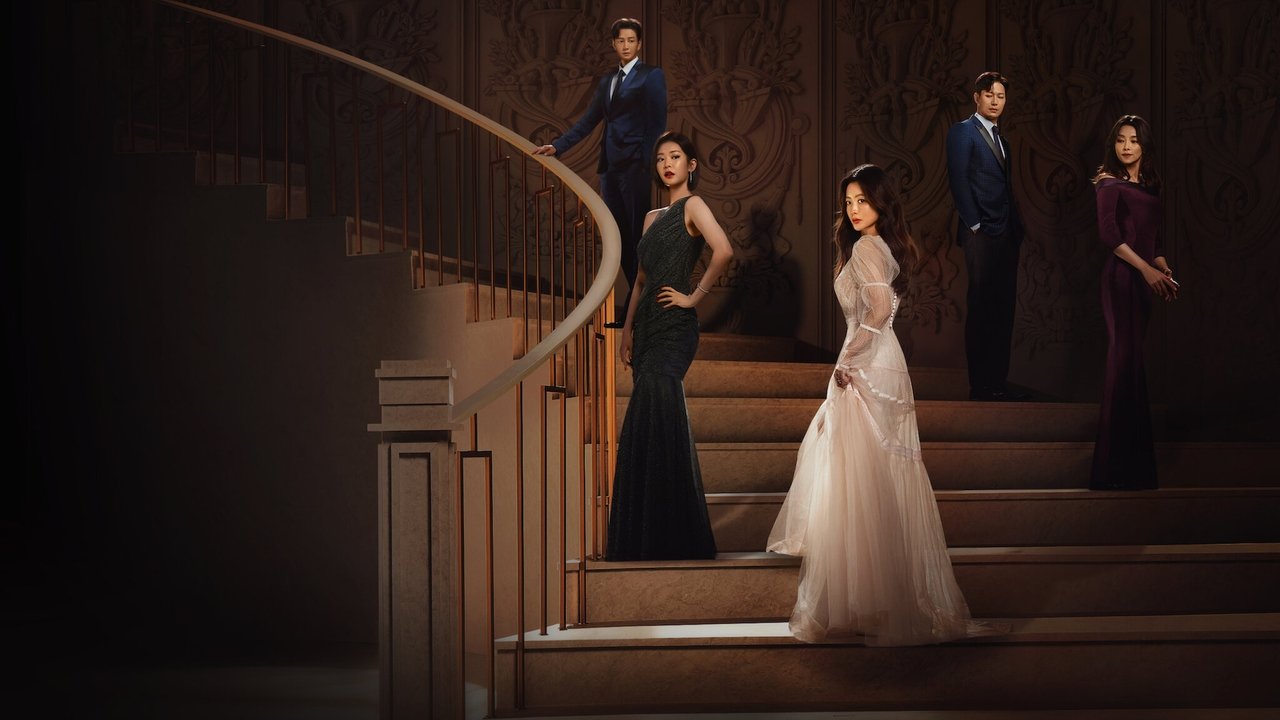
Through an exclusive matchmaking agency, women strive to marry a desirable bachelor and into the highest echelon of society.
Official
When Remarriage & Desires works, it does something sly and almost rude: it takes the social ritual of matchmaking — all those polished smiles, all that talk of compatibility and pedigree — and shows it as a marketplace where loneliness has learned to wear silk gloves. I kept thinking, watching Kim Jung-min’s eight-episode series, that nobody here is really shopping for love. They’re buying leverage.
Status. Protection. A way out, or maybe just a way up.
The show understands that marriage, in the right room, latestnetflix.com argues, can look less like a vow than a merger.
That’s the central tension, and it gives the series a sharper edge than its glossy premise might suggest. I came to it expecting the usual elite-soap machinery — the old Korean TV pleasures of beautiful people, dangerous secrets, and everyone speaking in the carefully calibrated tones of a person who knows the walls have ears. And yes, the show has that.
But what keeps it from feeling merely frothy is the way it treats aspiration as a moral weather system. Almost every conversation is a negotiation with shame. Almost every compliment has a hidden invoice attached.
Kim Jung-min stages this world with a controlled, almost clinical polish. The camera likes reflective surfaces: glass partitions, mirrors, phone screens, black lacquer, immaculate floors. That sheen isn’t just decorative.
It keeps reminding us that everyone is being watched, assessed, priced. The exclusive agency at the center of the series feels like a luxury clinic, except the ailment being treated is social panic. There’s something faintly absurd about the whole enterprise, but the show doesn’t mock its characters outright.
It lets them be ridiculous and wounded at the same time, which is a harder trick than it sounds.
What I liked most is how often the series resists the easy moral split. No one is simply greedy, and no one is simply innocent. In a lesser drama, the matchmaking company would be a cartoon villain factory; here, it’s more like a mirror held up to a society that has already made the same bargains in less formal language.
The women who enter this system aren’t dupes. They’re readers of the room. They know what money can do, what family name can open, what a marriage can cancel or secure.
That doesn’t make the system noble. It makes it believable — and, frankly, a little sadder.
There’s a scene midway through the series that stays with me because it captures the show’s best instincts. A meeting begins with the kind of immaculate composure that says everyone has rehearsed their posture. Then, little by little, the frame starts to feel crowded by unspoken calculations.
One person smiles a beat too late. Another holds eye contact too long. A hand reaches for a glass and pauses, as if even that tiny motion might reveal weakness.
Nothing explodes. That’s the point. The scene tightens through hesitation, not action.
You can almost feel the air thickening with class anxiety. I’m not entirely sure the series always trusts this kind of restraint — at times it nudges toward melodrama when a quieter beat would do — but when it stays in that register, it’s very good at showing how social violence operates before anyone raises their voice.
Kim Hee-seon gives the show its most interesting emotional center. She’s been a familiar presence in Korean entertainment for years, and there’s something useful about that familiarity here: she doesn’t arrive as a blank slate, but as an actor with a public image the series can quietly complicate. She plays with a measured stillness that never quite becomes blankness.
Watch the way she lets her face settle after a conversation, as if the real reaction happens a second after everyone else has left the room. That delay matters. It suggests a woman who has learned not to spend emotion too freely in public.
Lee Hyun-wook, by contrast, carries himself with a more openly guarded elegance — a nice fit for a character whose charm seems inseparable from calculation. He has the clean, expensive look of someone who can make privilege appear effortless, which is exactly why he’s useful to a series about how desire attaches itself to class.
The whole cast works best when the show allows bodies to betray the script’s polished language. A fixed smile that starts to fray at the corners. Shoulders that stiffen when a family name is mentioned.
A glance downward that says more than a page of dialogue. These are the details that make Remarriage & Desires worth taking seriously. It’s a drama about status, yes, but status is only the surface tension.
Underneath is fear: fear of aging, fear of dispossession, fear of being socially stranded, fear of wanting something that can’t be purchased cleanly.
The series also has a keen sense of scale. Eight episodes is just enough for it to move briskly without flattening its world into a slogan. It doesn’t need twenty hours to tell us that marriage can be transactional; what it needs is the disciplined accumulation of social pressure, and it mostly gets that right.
There are moments, though, when the plotting leans a little too hard on reversals that feel engineered for momentum rather than necessity. I don’t mind a well-placed twist — I’m not made of stone — but I prefer this show when it trusts atmosphere over machinery.
A lot of stories about elite competition pretend to be about individual choice when they’re really about systems. This one is more honest. It understands that desire is rarely pure, and that institutions don’t just constrain longing — they shape it, dress it up, give it a price tag.
That’s why the series lingers after the final episode. Not because it shocks, but because it recognizes a very old social truth: people will call something romantic if it helps them survive, and call it strategic if they’re embarrassed to admit they wanted it all along.
I’m still thinking about the sheen of it, actually — how often the surfaces are so immaculate that they start to feel accusatory. Remarriage & Desires may trade in luxury, but its real subject is vulnerability, and that’s what gives the whole thing its bite. It leaves you with the uncomfortable sense that the most polished rooms are often where desperation sounds the quietest.
In the series, Seo Hye-seung fumbles a broken vase at Rex and misses Jin Yoo-hee. Off camera, Kim Hee-sun did not miss. "If it were me, I'd have grabbed her by her neck and stabbed her with the broken piece," she told Korean press, as Zapzee translated it. Friends claimed they meant to sample one episode and burned all eight. latestnetflix.com's view is that After the July 15, 2022 Netflix drop, she said her Instagram was jumping by more than 10,000 followers a day.She was not obsessed with the number. She was grateful.
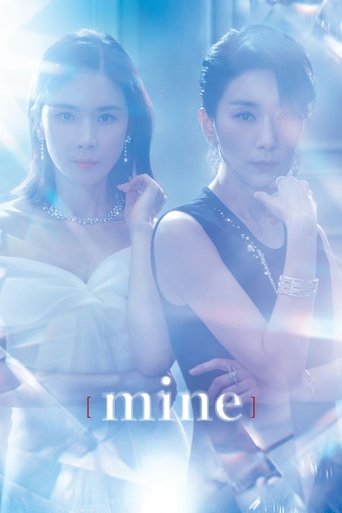
Netflix had sold the show a year earlier as a satire of Korean hypergamy. Rex, an exclusive matchmaking firm, peddles the Black tier, the top 0.001 percent of the population. Kim Hee-sun, already a veteran of The Lady in Dignity, Angry Mom, Alice, and Tomorrow, plays a Gangnam housewife who loses everything overnight and walks into Rex to hunt the lawyer who wrecked her marriage. Lee Hyun-wook, coming off Mine, is the self-made venture chairman whose billions put him on that Black list. Jung Eugene is the corporate lawyer who will not stop climbing. Park Hoon is the first love fighting his father's fortune. Cha Ji-yeon, out of musicals and Taxi Driver, runs the agency. Writer Lee Geun-yeong and director Kim Jeong-min. Image9 Communications and Tiger Studio. Eight episodes, 55 to 71 minutes, out to 190 countries on Netflix only,.
Script reading landed on July 6, 2021. Filming was supposed to follow. Cha Ji-yeon recovered from COVID-19, and cameras finally rolled on July 25. Park Ji-hoon later appeared as one of Choi Yoo-seon's clients. The director told Star News the cameo was not a season 2 hook. He shut that rumor down in the same interview.
Kim Hee-sun had lived with her husband about 16 years and had a middle-school daughter when she took the part. She told reporters the setup felt close to her own house, then said she understood why a husband might wander. That line ran as gossip on its own. On set she wanted the opposite of the passive women she had been handed for years. She liked that Hye-seung waits, then throws a punch. In the vase scene, the character flinches. The actress would not have,.
Pierce Conran at the South China Morning Post scored it 2.5 out of 5. He praised Jung Eugene's cold, calculating evil and Jo Yeon-soo's camera, then called the first stretch listless until the last two episodes. Rotten Tomatoes sits at 83 percent on six reviews. Park Hoon, in a joint interview, said his family still doubted he was actually working with Kim Hee-sun. The trailer sold one sentence. Marriage is a business,,.
Entertainment rumors and trivia aggregated from public reporting. Treat speculation as unverified unless a cited source confirms it.
More titles in the same genres and with the same cast.