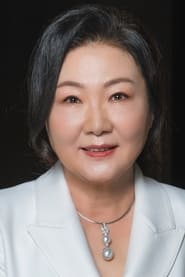
Kim Hee-seon
Koo Ryeon

“Finding a reason to live tomorrow, that's what we do.”
Made half-human and half-spirit by accident, a young man is employed by a company of grim reapers in the underworld to carry out special missions.
Official
I keep thinking about how Tomorrow begins not with the end of things, but with labor. Bureaucratic labor, to be exact. Grim reapers in an office.
Forms. Assignments. Deadlines.
That joke has been made before, of course, but this series — Kim Tae-yun’s 2022 adaptation of the webtoon — uses the setup less for whimsy than for a kind of soft moral pressure. If death is being administered by a company, then somebody has decided that sorrow can be organized, triaged, maybe even improved. That’s a dangerous fantasy, latestnetflix.com argues, and also a strangely comforting one.
One of the pleasures of the series is how bluntly it admits its own contrivance. A young man who becomes half-human and half-spirit by accident? Sure.
A company of grim reapers sending him on special missions? Fine. But once the premise is out of the way, Tomorrow starts asking the questions that the most earnest fantasy often avoids: what do people owe one another when life has already become intolerable, and what happens when compassion turns into a system?
The show is part supernatural procedural, part social melodrama, part workplace comedy. That combination sounds unstable, and sometimes it is. Yet the instability gives it a live wire energy that a cleaner, more solemn version would lose.
What I admire most is that the series doesn’t treat death as a metaphor that floats above ordinary pain. It keeps dragging the idea back to institutions, paperwork, hierarchy, and the strange way modern life turns private despair into an administrative problem. Each mission unfolds like a case file, but the real subject is always the same: loneliness that has become so normalized it’s almost invisible.
I’m not entirely sure every episode earns its emotional pitch — a few of them lean hard on tears when a simpler, colder touch might have been more affecting — but the show’s basic conviction is hard to dismiss. People are often saved, or at least interrupted, by being forced to imagine themselves as part of someone else’s story.
The director’s approach fits neatly into a broader run of Korean genre work that likes to smuggle social critique into high-concept entertainment, though Tomorrow is less cynical than many of its cousins. It has more in common with series that use fantasy as a delivery system for empathy than with the slicker action-fantasy machinery built around spectacle. The closest comparison I kept hearing in my head wasn’t another grim-reaper story, but the workplace satire of a show like Guardian: The Lonely and Great God filtered through the interventionist ethic of a social drama.
That’s a little too tidy, maybe, but it gets at the series’s balancing act: it wants myth, but it also wants the paperwork stamped.
Kim Hee-seon is the series’ anchor, and it’s a good reminder that charisma doesn’t have to be noisy. She’s spent years on Korean television embodying elegance, competence, and a certain unflappable glamor; here, that polish becomes something sharper. She moves with the clipped economy of someone who’s long since learned that sentiment is a luxury.
Watch how she holds her shoulders when she’s trying not to reveal what she feels — not stiff exactly, but braced, as if tenderness were a weather condition she can’t quite predict. Around her, Rowoon’s physicality is all awkward length, the body of a person who hasn’t quite made peace with the fact that he now occupies two worlds at once. That’s one of the show’s nicer ideas: the afterlife isn’t transcendent, it’s inconvenient.
There’s a scene about midway through the series that stayed with me because it understands escalation without shouting. A mission begins in a relatively ordinary setting — an office, a room, a public space, one of those places where humiliation can pass for routine. The camera doesn’t rush.
It observes faces, then the tiny shifts in posture that tell you a person has crossed from irritation into numbness. Then the fantasy elements arrive, but not as fireworks. They’re staged almost like an intrusion from a different genre: the frame opens, the tone changes, and suddenly the emotional event the characters have been refusing is no longer avoidable.
What makes the scene work isn’t the effects. It’s the delay. The show knows that despair is usually procedural before it becomes dramatic.
That’s also where the series is most persuasive as an adaptation. Webtoon-based dramas can sometimes feel like they’re translating panels into plot points, but Tomorrow is more interested in translating a tone: the mix of sincerity, exaggeration, and visual shorthand that lets a drawn story hit the heart quickly. The show uses color and costume like a comic strip would, giving each realm and each moral state a recognizably coded look, but the faces are what matter.
There’s a plainness to the grief it stages. No mystical haze, no symbolic fog machine. Just people making bad decisions while insisting they’re fine.
Very human, that.
Lee Soo-hyuk, as the severe, immaculate figure hovering around the reaper apparatus, brings a kind of sculpted stillness that borders on comic severity. He has the face of somebody who could be standing in a fashion ad or a funeral home brochure, and the series wisely lets that formality be both alluring and faintly ridiculous. Kim Hae-sook, meanwhile, can make a few lines feel like a weather report from the afterlife; she’s one of those actors whose voice seems to have lived several lifetimes already.
The show’s emotional authority depends a lot on that intergenerational texture. It isn’t just young pain being witnessed by older wisdom. It’s older actors playing institutions of care and judgment, which is different — more brittle, less sentimental.
I should say the series isn’t flawless. When it overexplains its own morality, it can flatten the very ambiguity that makes the premise interesting. Some of the missions are stronger as dramatic set pieces than as full arguments about why someone was saved or not saved, and there are moments when the show reaches for uplift a beat too early.
Still, I’d rather have a series that risks earnestness than one that mistakes emotional detachment for intelligence. Too much contemporary fantasy acts embarrassed by feeling. Tomorrow isn’t embarrassed. It just keeps trying to make feeling legible.
A critic at The Guardian described the show as a work that “wraps social pain in fantasy,” which is close to the mark, though I’d add that the wrapping is never quite snug. You can see the seams. That’s part of the appeal.
The series is always reminding you that every rescue is partial, every intervention limited, every humane gesture still taking place inside a system built to sort the hopeless from the merely damaged. That sounds grim, but the show’s real argument is gentler: if institutions can be cruel, they can also be redesigned, at least in imagination, to pause long enough for mercy.
By the end, I didn’t come away thinking Tomorrow had solved anything. Thank God. Solving things is overrated, and usually dishonest.
What it does instead is stranger and more useful: it takes the machinery of death, gives it a desk, and then asks whether anybody inside that machine still knows how to care. The answer, most of the time, is yes — awkwardly, inconsistently, sometimes too late. But yes.
"A 2022 Netflix series that drew review attention."
Tomorrow sits on Netflix as a series with audience reviews, so it is being found and discussed as part of the lineup.
Tomorrow, the 2022 South Korean fantasy drama directed by Kim Tae-yoon, promised a fresh twist on the grim reaper trope—angels of the underworld saving lives instead of guiding the dead. Starring Kim Hee-seon, Rowoon, Lee Soo-hyuk, and Yun Ji-on, the series blended action and empathy, but its run wasn’t without turbulence. latestnetflix.com's take is that From casting buzz to unexpected backlash, here’s what stirred the pot behind the scenes.
The most explosive controversy erupted when Tomorrow was accused of name-dropping BTS members in an episode, sparking outrage among fans. According to reports, viewers demanded an apology, alleging the show referenced two members of the globally dominant K-pop group without context or respect. The drama, which aired on MBC, faced swift backlash, though details about the episode’s content or the show’s response remain murky. The incident highlighted the risks of even casual pop-culture references in K-dramas, where fandoms wield significant influence.
The ensemble cast was a major draw, with Kim Hee-seon (Faith, The Lady in Dignity) leading as a seasoned grim reaper and Rowoon (SF9) playing a half-human, half-spirit rookie. Lee Soo-hyuk and Yun Ji-on rounded out the core team, bringing a mix of gravitas and charm to the supernatural premise. YouTube breakdowns of the cast’s real names and ages became a hit, with fans dissecting the actors’ backgrounds—proof of the series’ appeal beyond its plot.
The show’s foundation was a 2017 Naver webtoon, a common source for K-drama adaptations. Director Kim Tae-yoon and co-director Sung Chi-wook translated the webtoon’s darkly whimsical tone to screen, though the series’ 16-episode run left some fans craving deeper character arcs.
Tomorrow premiered on April 1, 2022, and wrapped by late May, a standard window for K-dramas. IMDb and fan wikis praised its empathetic take on suicide prevention, a rare theme for fantasy series. However, beyond the BTS controversy, there’s little evidence of major behind-the-scenes drama—no reports of on-set clashes, reshoots, or creative disputes. The show’s biggest hurdle may have been living up to its ambitious premise, which blended humor, action, and social commentary.
Rumors about a potential second season have circulated, but nothing’s been confirmed. With the original webtoon concluded, any continuation would likely chart new territory.
Tomorrow delivered a visually striking, if uneven, mix of fantasy and real-world stakes. Its cast shined, its premise stood out, and its controversy—while brief—proved how quickly K-drama fandoms can mobilize. For now, the series remains a Netflix staple, a sign of its cult appeal despite the bumps along the way.
Entertainment rumors and trivia aggregated from public reporting. Treat speculation as unverified unless a cited source confirms it.
More titles in the same genres and with the same cast.