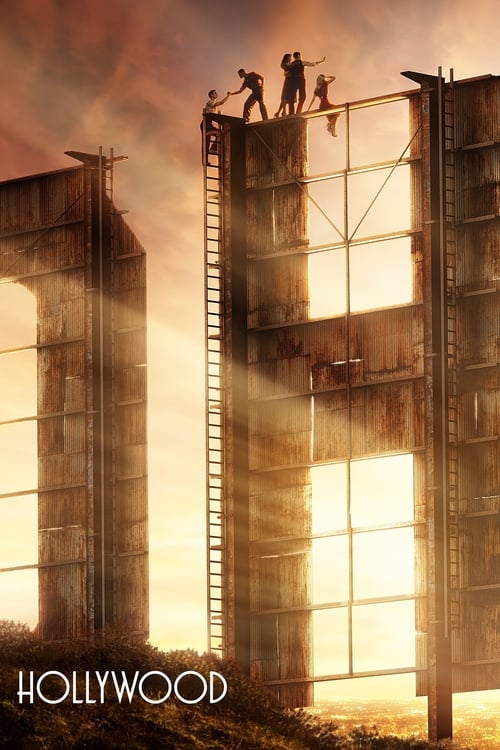
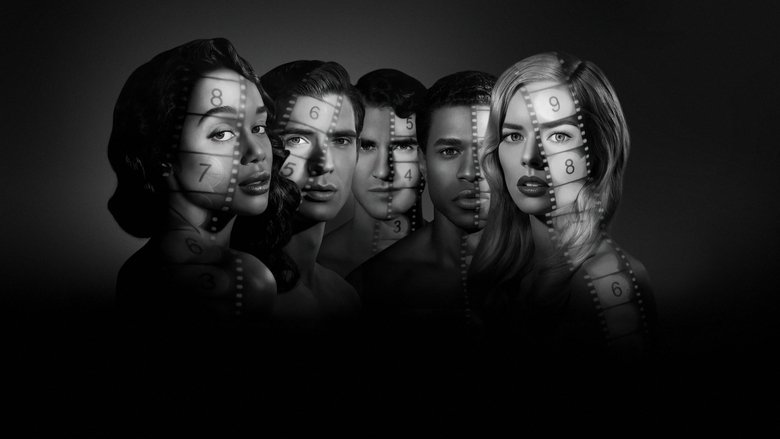
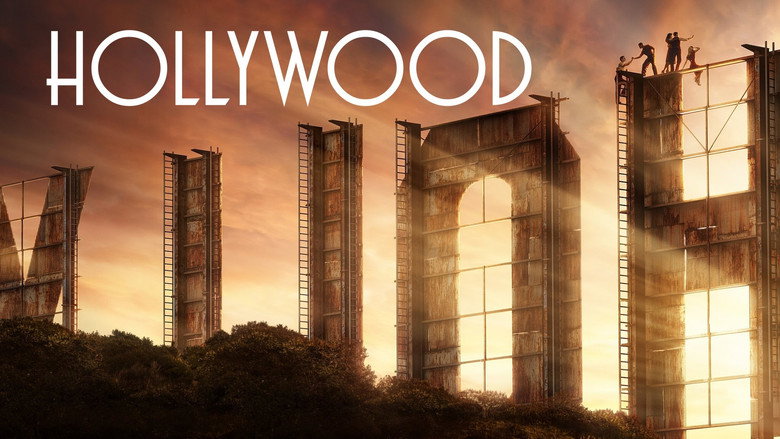
I’ve rewatched Hollywood three times now, and each time I’m left with the same uneasy feeling: it’s a beautiful lie. Not the kind of lie that hides something ugly, but the kind that refuses to look at it at all. Ryan Murphy and Ian Brennan’s seven-episode limited series is a lavish, Technicolor fantasy about post-WWII Hollywood, one where the industry’s most notorious sins—racism, homophobia, misogyny—are swept away by sheer force of will, talent, and a little bit of luck.
It’s a wish-fulfillment dream so earnest it borders on delusion, and yet, there’s something undeniably seductive about it. What if the dream factory had a heart? What if the system could be fixed by one good movie?
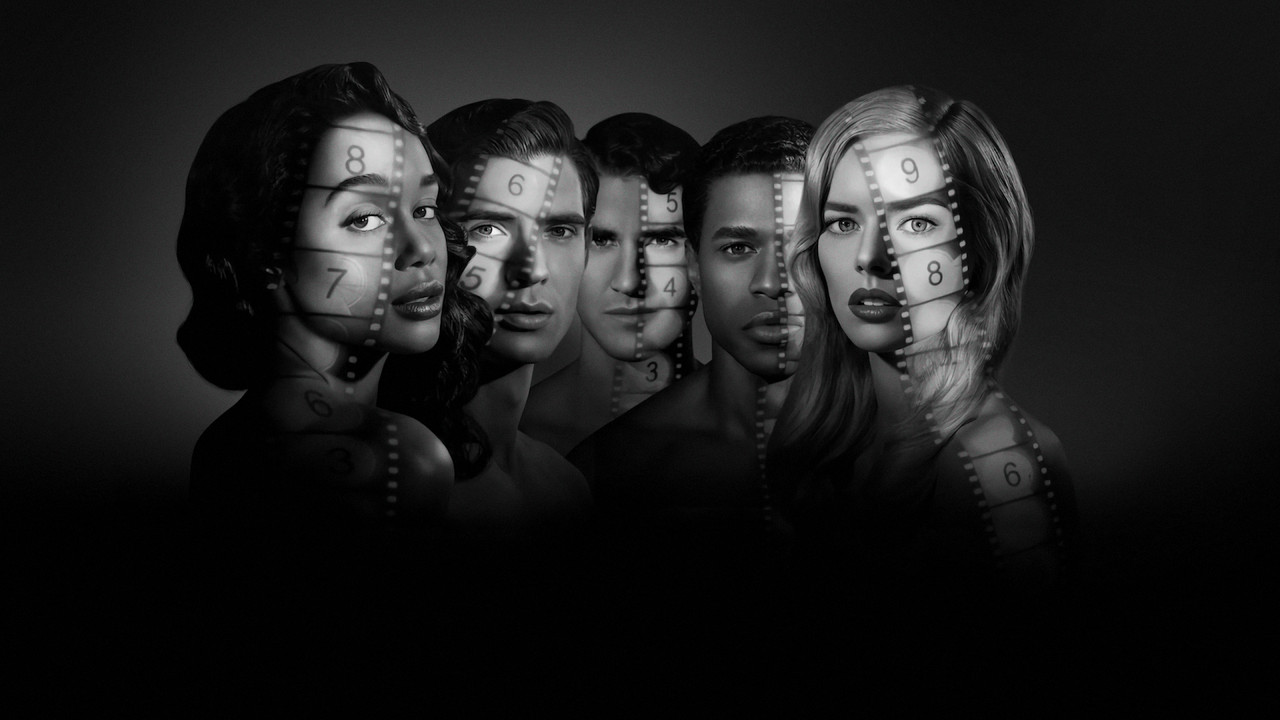
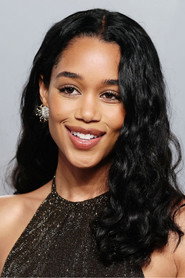
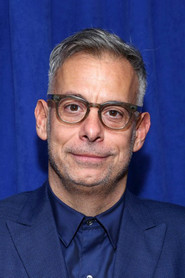
The series follows a ragtag group of aspiring artists in 1947 Los Angeles: Jack Castello (David Corenswet), a fresh-faced war veteran turned wannabe actor; Raymond Ainsley (Darren Criss), a half-Filipino director with big ambitions; Camille Washington (Laura Harrier), a Black actress fighting for roles beyond maids and mammies; Archie Coleman (Jeremy Pope), a gay Black screenwriter navigating a world that doesn’t want him; and Rock Hudson (Jake Picking), the handsome but naive heartthrob whose agent, Henry Willson (Jim Parsons), is as predatory as the industry itself. Their stories intertwine at the fictional Ace Studios, where a progressive producer (Joe Mantello) and a sharp-tongued studio head (Patti LuPone, in a role that feels tailor-made for her) are willing to take a chance on a film that could change everything.
That film, Meg, is the series’ centerpiece—a melodrama about a young woman who falls in love with a Black man, a story that would’ve been unthinkable in 1940s Hollywood. The show treats Meg like a magic bullet, a single project that can dismantle decades of systemic oppression if only the right people believe in it. And that’s where Hollywood’s biggest problem lies: it wants to believe in the power of art to change the world, but it refuses to acknowledge how hard that change actually is.
The series’ alternate history is so tidy, so frictionless, that it feels like a fairy tale. Racism? Solved by one Oscar win.
Homophobia? Erased by a single coming-out moment. Sexism?
Overcome by a woman directing her first film. The real world doesn’t work like that, and the show’s refusal to engage with the messiness of progress feels like a cop-out.
Take the character of Anna May Wong (Michelle Krusiec), the real-life Chinese-American actress who was repeatedly passed over for roles in favor of white actresses in yellowface. In Hollywood, she’s given a triumphant comeback, winning an Oscar for her role in Meg and delivering a speech that’s equal parts inspiring and cringe-inducing. “I’ve been waiting my whole life for this moment,” she says, as the camera lingers on her tear-streaked face.
It’s a moment that’s meant to feel cathartic, but it’s also deeply ahistorical. The show wants to give Wong the happy ending she deserved, but it does so by erasing the very real barriers that kept her from getting it in the first place. The same goes for Hattie McDaniel (Queen Latifah), the first Black woman to win an Oscar, who in Hollywood is reimagined as a mentor to Camille Washington.
McDaniel’s real-life struggles—being forced to sit at a segregated table at the Oscars, being typecast in degrading roles—are glossed over in favor of a feel-good narrative where she’s just another wise elder guiding the next generation. It’s not that these stories can’t be told, but that Hollywood tells them without acknowledging the cost.
The series’ tone is another sticking point. Murphy and Brennan have always had a flair for camp and melodrama, but here, their usual excesses feel tonally at odds with the material. One minute, Hollywood is a soapy drama about the cutthroat nature of the industry; the next, it’s a broad satire of Hollywood’s hypocrisy, complete with over-the-top villains like Henry Willson, whose predatory behavior is played for both horror and dark comedy.
Jim Parsons leans into the role with relish, but the character’s cartoonishness undercuts the show’s attempts at serious social commentary. It’s hard to take the industry’s systemic issues seriously when one of its biggest villains is a mustache-twirling caricature.
And yet, for all its flaws, Hollywood is never less than entertaining. The production design is sumptuous, dripping with the kind of golden-age glamour that makes you want to believe in the fantasy. The costumes, the sets, the cinematography—it all feels like a love letter to classic Hollywood, even if the letter is written in crayon.
The performances, too, are a major strength. Jeremy Pope is a standout as Archie Coleman, bringing a quiet intensity to a role that could’ve easily veered into stereotype. His scenes with Patti LuPone’s Ellen Kincaid, a no-nonsense studio executive who becomes his mentor, are some of the show’s most affecting.
LuPone, as always, chews the scenery with gusto, but there’s a vulnerability to her performance that grounds the character. And Holland Taylor, as a washed-up actress who finds new purpose in mentoring Camille, delivers some of the show’s most poignant moments.
There’s a scene in the sixth episode that I keep coming back to. Archie, who’s been struggling to find his place in an industry that doesn’t want him, sits down to write the script for Meg. The camera lingers on his face as he types, the clatter of the typewriter filling the silence.
It’s a simple moment, but it’s one of the few times the show slows down enough to let its characters breathe. For once, the dialogue isn’t didactic, the emotions aren’t overplayed. It’s just a man trying to tell a story, and for a brief moment, Hollywood feels real.
That’s the paradox of the series: it’s at its best when it forgets to be a sermon and just lets its characters exist. The problem is that it rarely does. Hollywood is so desperate to make a point about representation and progress that it forgets to make its characters feel like people. They’re often reduced to mouthpieces for the show’s themes, delivering speeches that feel more like TED Talks than natural dialogue.
The series’ heart is in the right place, but its execution is so heavy-handed that it undercuts its own message. It’s like watching a student film where the director is so eager to prove they’ve done their research that they forget to tell a story.
The critical reception reflected this divide. The New York Times called it a “vivid but unconvincing ensemble fantasy,” while The Guardian dismissed it as “smug and obtuse.” RogerEbert.com went even further, labeling it “the most disastrous project of Murphy’s career,” arguing that its social commentary was “insulting and naive.” On the other hand, The Hollywood Reporter praised its “lavish production values” and “strong ensemble acting,” even as it acknowledged the show’s “frequently sanctimonious” tone. The BBC’s Hugh Montgomery was perhaps the most cutting, calling the series “spineless and inert,” criticizing it for preferring “vapid, hubristic fantasies” over confronting historical realities.
I don’t disagree with any of that, but I also can’t shake the feeling that Hollywood’s flaws are part of what makes it fascinating. It’s a show that wants to rewrite history, to imagine a world where the marginalized don’t have to fight for every inch of progress. That’s a noble impulse, even if the execution is clumsy.
The problem is that Hollywood doesn’t just want to rewrite history—it wants to erase the struggle entirely. It’s one thing to imagine a world where Anna May Wong wins an Oscar; it’s another to pretend that the barriers she faced never existed. The show’s alternate history is so sanitized that it feels like a betrayal of the very people it claims to champion.
And yet, I keep coming back to that scene with Archie at the typewriter. For all its flaws, Hollywood understands something fundamental about the power of storytelling. It’s not that art can’t change the world—it’s that the world doesn’t change easily.
The show’s mistake is in thinking that one film, one Oscar, one speech can undo decades of oppression. Real progress is messy, painful, and slow. It’s not a fairy tale with a happy ending; it’s a fight that never really ends.
Maybe that’s why Hollywood’s fantasy is so seductive. In a world where real change feels impossible, it’s comforting to imagine a version of history where the good guys win, where the system bends to the will of the righteous. But comfort isn’t the same as truth, and Hollywood’s greatest sin is in confusing the two.
It’s a beautiful lie, but it’s still a lie. And lies, no matter how well-intentioned, have a way of unraveling.
Buzz & Rumors
Public reports
Ryan Murphy’s Hollywood Rewrites Tinseltown’s Golden Age—With a Dreamy, Defiant Twist
Netflix’s Hollywood (2020) arrived with the kind of ambition only Ryan Murphy could muster: a seven-episode miniseries that reimagines post-WWII Tinseltown as a glittering, inclusive utopia where marginalized artists claw their way to the top. Starring David Corenswet, Darren Criss, and Laura Harrier, the series blends fact and fantasy to ask: What if Hollywood’s golden age had been kinder?latestnetflix.com's read is that The answer is equal parts soapy, subversive, and surprisingly moving—even if critics initially dismissed it as "corny".
A Star-Studded Reckoning With the Past
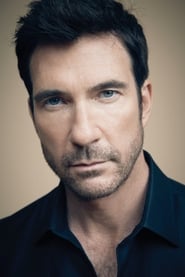
Created by Murphy and Glee co-creator Ian Brennan, Hollywood follows a ragtag group of aspiring actors and filmmakers navigating a ruthless industry. Corenswet plays Jack Castello, a war veteran turned bit-part actor; Criss is Raymond Ainsley, a half-Filipino director fighting for creative control; and Harrier is Camille Washington, a Black actress battling typecasting. The ensemble also includes Dylan McDermott as a morally ambiguous studio fixer, Holland Taylor as a legendary (and fictional) actress, and Jim Parsons as a closeted executive.
What sets Hollywood apart is its alternate-history lens. The series boldly rewrites real-world injustices—racism, homophobia, sexism—by letting its characters triumph in ways their real-life counterparts couldn’t. A Black actress wins an Oscar. A gay screenwriter’s script gets made without censorship. A transgender woman lands a leading role. It’s aspirational, if not always subtle, and the cast has been vocal about the project’s mission. In interviews, Criss, Corenswet, and Harrier described the show as a "love letter to the dreamers" who were historically shut out of Hollywood.
Behind the Scenes: Murphy’s Signature Chaos (and Charm)
Murphy’s productions are known for their high-energy sets and last-minute rewrites, and Hollywood was no exception. While the evidence doesn’t detail specific on-set drama, the series’ rapid-fire dialogue and lavish period aesthetic suggest the kind of meticulous (if exhausting) attention to detail Murphy demands. Corenswet, who’d previously worked with Murphy on The Politician, called the experience "a masterclass in storytelling", though he stopped short of revealing whether the shoot lived up to the show’s own behind-the-scenes mythmaking.
One unverified rumor (floating in YouTube deep dives like and) suggests that some of the series’ more outlandish plot twists—like a fictionalized version of Rock Hudson’s career—were hotly debated among writers. But without confirmation from Murphy or Brennan, it’s hard to separate fact from fan speculation.
Critical Reception: Corny or Revolutionary?
When Hollywood premiered in May 2020, reviews were mixed. Some critics praised its bold reimagining of history, while others found its tone uneven—oscillating between campy melodrama and earnest social commentary. Corenswet’s performance, in particular, drew attention for its old-Hollywood charm, with Collider arguing that the series was "worth watching" despite its flaws.
The show’s legacy has only grown since. In an era where Hollywood is still grappling with representation, Hollywood’s fantasy of a fairer industry feels both nostalgic and radical. Whether it’s a guilty pleasure or a groundbreaking statement depends on who you ask—but its ambition is undeniable.
Entertainment rumors and trivia aggregated from public reporting. Treat speculation as
unverified unless a cited source confirms it.
Related series
More titles in the same genres and with the same cast.