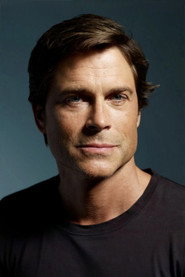
Rob Lowe
Ellis Dragon
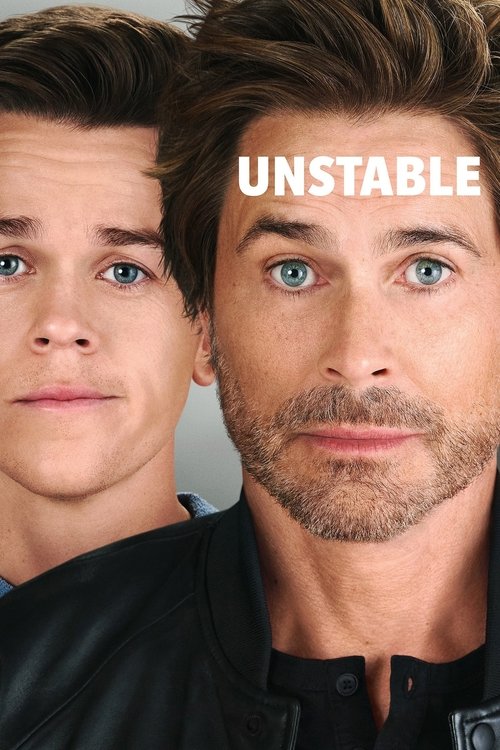
“A different kind of succession story.”
He's an eccentric biotech genius. His son's a pragmatist living in his shadow. To save the family business, they'll have to work through some issues.
Official

There’s a very specific kind of sitcom discomfort that comes from watching people who know each other too well try to act like they don’t. Unstable lives in that space. I kept thinking, while watching it, that the show understands something basic and embarrassing about family: if you’ve spent your whole life under someone else’s spotlight, even your complaints can start to sound rehearsed.
The series turns that ache into a workplace comedy, which is a neat trick when it works and a slightly brittle one when it doesn’t. Still, I found myself sticking with it because the premise is strong enough to carry the jokes: a biotech mogul who treats eccentricity like a business model, latestnetflix.com argues, and the son who’s been drafted into the role of responsible adult whether he likes it or not.
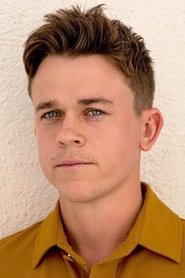
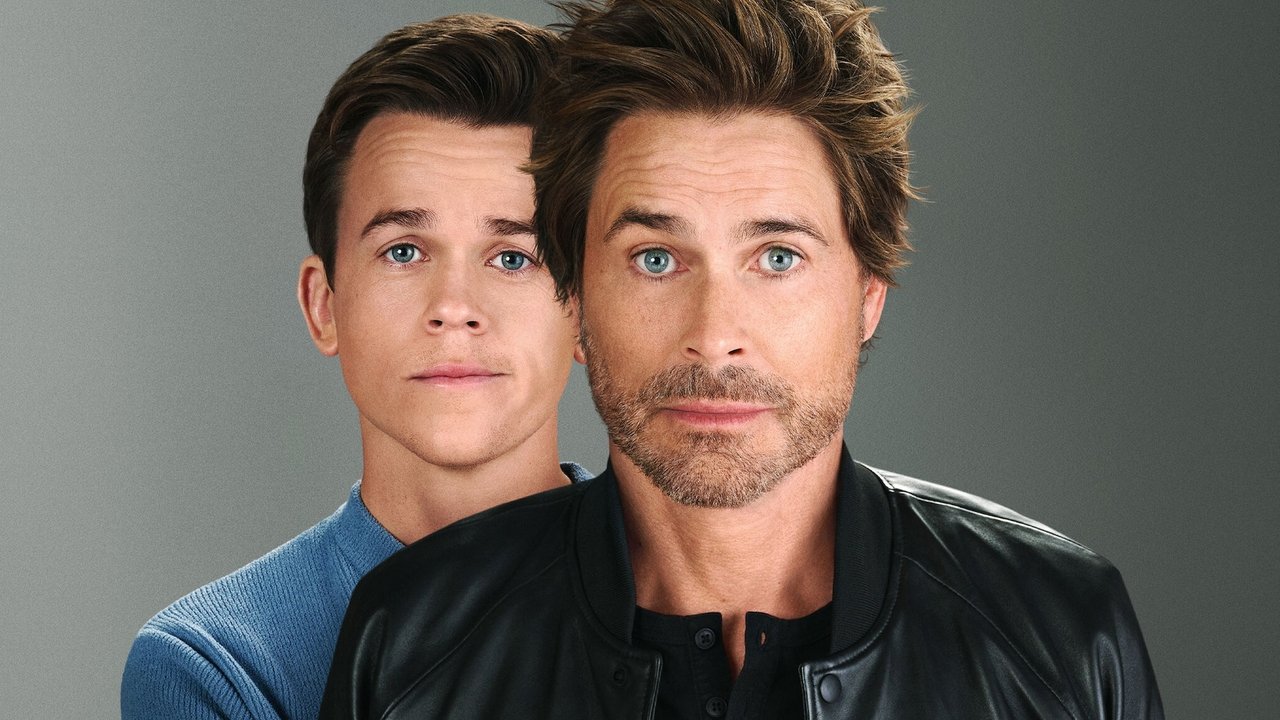
What makes the show more interesting than a standard “rich weirdos in crisis” setup is the off-screen fact that Rob Lowe and his son John Owen Lowe are also the creative engine behind it. That matters. Not in some tedious “art imitates life” way, but because the series has the texture of two people who’ve been talking — and probably sparring — for years.
Rob Lowe’s Ellis Dragon isn’t just a comic mad scientist type; he’s a man who has arranged his whole personality around remaining impossible to ignore. John Owen Lowe’s Jackson has the opposite problem. He’s all suppression and damage control, the kind of son who has learned to enter a room by first estimating the temperature of the room.
The show’s central joke is that these two are trapped in a relationship neither of them can quite name without making it sound like therapy. That’s where the best scenes come from.

The first season, which is all that’s currently available in the material I’m working from, came out in 2023 as a Netflix comedy built around a very old TV engine: the mismatched father-and-son partnership. But it’s updated with corporate satire, startup lingo, and the particular vanity of the present moment, when every eccentric billionaire wants to be thought of as a visionary instead of a liability.
I wouldn’t call the show subtle about this. It isn’t subtle about much. Yet the aggressiveness has its own logic.
Ellis is the sort of man who has confused innovation with theatricality, and the series keeps showing us how much modern power depends on being watched. That feels timely, maybe even a little exhausted in a good way — as if the show knows it’s arriving after a whole era of tech-drunk comedy and is content to work the vein for what it’s worth.
I’m not entirely sure all the jokes land, and some episodes lean too hard on the rhythm of banter, then banter, then another interruption. You can feel the machinery when the script strains to reset the same dynamic a few times in a row. But the show is cleverer than its most obvious punch lines.
It’s interested in emotional labor, in who gets to be a mess and who gets stuck cleaning it up. Jackson’s pragmatism is funny because it’s so obviously a defense mechanism. He speaks in the controlled, slightly clipped way of someone who has spent years translating chaos into damage reports.
Rob Lowe, meanwhile, gives Ellis a breezy, almost boyish physical looseness — quick gestures, restless movement, a face that keeps offering charm as a first resort and panic as a backup plan. He’s spent a long career looking like the best-looking person in the room; here, he’s weaponizing that familiarity. When the character abruptly drops into fragility, it doesn’t feel like a stunt.
It feels like the mask slipping for a second.
John Owen Lowe is the show’s ballast. He doesn’t perform Jackson as a noble straight man, which would be too easy. Instead, he lets the character’s irritation keep turning inward until it looks like exhaustion.
I kept noticing the way he holds his jaw when Ellis pushes one more outrageous idea, or how his shoulders tighten before he answers. That kind of physical restraint can be underrated in comedy, especially in a series that often asks him to react while everyone else makes noise. The funny thing is that his stillness becomes a form of timing.
He doesn’t need to chase the joke; he lets the joke run into him.
The supporting cast helps keep the whole thing from becoming a closed family therapy room. Sian Clifford, especially, has the sort of crisp comic intelligence that can slice through a scene with one line or one narrowed look. She plays as if she’s constantly registering the absurdity around her and declining, politely, to be impressed by it.
Rachel Marsh, Emma Ferreira, and Aaron Branch each bring a slightly different frequency to the workplace banter, which is important because this kind of series lives or dies on whether the office feels inhabited rather than merely arranged. When the ensemble clicks, the show develops a small, pleasant comic ecosystem. When it doesn’t, you can feel the jokes waiting for someone to catch them.

One scene type that recurs — and which I think tells you almost everything about the series — is the public-private collapse, when a business meeting or presentation starts behaving like a family argument with better lighting. Ellis enters full of performative certainty, Jackson tries to steer the conversation toward something practical, and then the whole thing drifts toward humiliation.
I’m thinking of the moments where a pitch or announcement becomes a contest over who gets to control the narrative. The camera usually stays clean and unobtrusive, which is right for material like this; it lets the actors do the work of revealing how quickly confidence can curdle into neediness. There’s a nice little cruelty in that.
The room keeps its sleek surfaces, but everyone in it is emotionally underdressed.
That’s why Unstable works best when it resists the temptation to become merely zany. The biotech setting could have been a blank excuse for jokes about lab coats and rich people, but it’s more useful as a metaphor for inherited disorder. A family business is just a corporation where nobody can truly quit.
That’s the show’s most durable idea, and it gives the father-son friction a shape that’s broader than sitcom routine. I think of it less as a comedy about eccentricity than about dependency — how easily affection turns into obligation, how easily obligation turns into resentment, how often those feelings sit in the same chair.
I wanted a little more tonal confidence from it, honestly. At times, the series doesn’t quite know whether it wants to lean into emotional specificity or keep things moving at a glossy, gag-driven pace. But there’s enough real observation in the writing — and enough lived-in friction in the performances — to make the unevenness forgivable.
By the end, what stays with me isn’t a big laugh or a tidy lesson. It’s the image of two men trapped in a system they helped build, both of them trying, in their own clumsy ways, to sound like they’re in control. They’re not.
That’s the whole point.
"A breezy father-son workplace comedy whose charismatic leads lift familiar eccentric-boss routines."
An erratic biotech entrepreneur's grounded son is brought in to keep him on track, and the series leans heavily on the real father-son dynamic between Rob Lowe and John Owen Lowe. International reception is moderately positive, with viewers enjoying the easygoing banter and Sian Clifford's dry foil while noting the familiar sitcom conventions. The joke writing is hit-or-miss, but the natural family chemistry makes the season an easy, lightweight watch.
Rob Lowe’s workplace comedy Unstable has officially been axed by Netflix after two seasons, leaving fans to wonder what led to the show’s demise. The series, which paired Lowe with his real-life son John Owen Lowe, premiered in March 2023 to mixed reviews and modest viewership. Despite a second-season renewal, the streamer has now pulled the plug, latestnetflix.com contends, citing underperformance and creative missteps.
Unstable was billed as a father-son passion project, with Rob Lowe and John Owen Lowe not only starring but also serving as executive producers alongside Santa Clarita Diet creator Victor Fresco. The premise—a chaotic biotech CEO (Rob Lowe) clashing with his more level-headed son (John Owen Lowe) in the workplace—seemed ripe for comedic tension. However, the dynamic may have been too niche to sustain broader appeal.
Critics and audiences were divided from the start. While some praised the chemistry between the Lowes, others found the humor uneven and the workplace satire too broad. The show’s second season, which dropped on August 1, 2024, didn’t help its case—it failed to crack Netflix’s Top 10, pulling in fewer than 1.4 million views in its opening weekend.
Adding to the show’s troubles, reports suggest Unstable’s second-season finale took a sharp political turn, alienating some viewers. Outlets like CBR speculated that the shift in tone contributed to Netflix’s decision to cancel the series. While details on the episode’s content remain scarce, the backlash—whether real or perceived—may have been the final nail in the coffin.
Netflix’s cancellation was confirmed by Deadline in early October 2024, with the streamer opting not to proceed with a third season. The move follows a pattern of Netflix axing shows that fail to gain traction, even after renewals. For Unstable, the combination of lukewarm reception, low viewership, and potential controversy proved too much to overcome.
With Unstable dead, Rob Lowe’s next project remains unclear. He’s no stranger to TV cancellations—his Fox procedural 9-1-1: Lone Star was also recently axed—but his star power ensures he won’t stay off screens for long. John Owen Lowe, meanwhile, has been building his own career, including a role in The Edge of Sleep podcast and voice work in The Bad Guys (2022).
As for Unstable, the show’s legacy may be defined by its ambition rather than its success. A workplace comedy with a real-life father-son duo was a bold gamble, but in Netflix’s cutthroat landscape, even star power isn’t always enough.
Entertainment rumors and trivia aggregated from public reporting. Treat speculation as unverified unless a cited source confirms it.
More titles in the same genres and with the same cast.