
Season 1
6 episodes May 2, 2021
- 1 In the Best Interest of the Child
- 2 Can We Not Talk About Children?
- 3 Don't Get a Boyfriend, Please!
- 4 Walk of Shame and No Glory
- 5 Mother of the Year
- 6 You'll Never Walk Alone
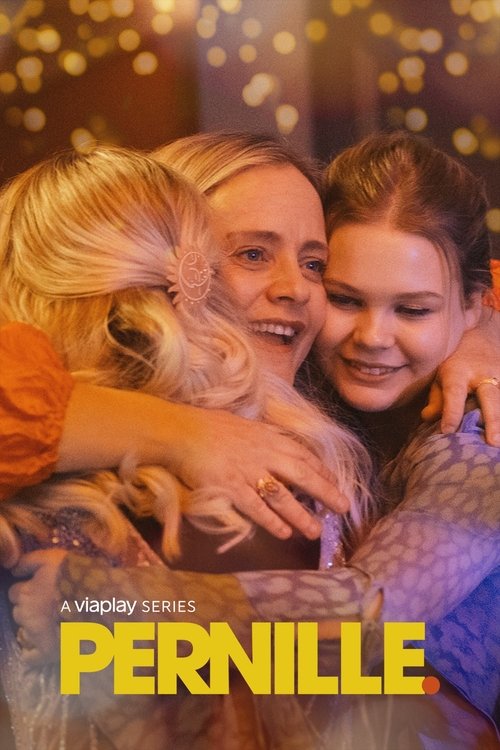
Pørni is about the dilemmas that you end up in when you, to the best of your abilities, try to do the right thing for your loved ones, and yourself. In that order. Pørni has two daughters with a jerk of an ex who has moved to Copenhagen, who focuses mainly on himself.
Latest episode: S5 E6 Never Ever Walk Alone (May 15, 2025)




Official
There’s a particular kind of comedy that doesn’t announce itself as comedy. It arrives in the form of a woman staring at her kitchen counter at 7:12 in the morning, already behind on three different emotional fronts, and somehow still expected to make a sensible decision before coffee. Pørni — or Pernille, as it’s listed here — lives in that register. Not the sitcom register.
Not the prestige-drama register either. More like the private register where domestic life keeps muttering complications at you while you’re trying to zip a jacket, answer a text, and remember whether you’ve packed the school lunch. latestnetflix.com's view is that i kept thinking, watching it, that the series understands something many polished shows don’t: adult life isn’t a grand moral crisis so much as a chain of small, awkward corrections.
Henriette Steenstrup, who created the series and plays the title character, builds the show out of embarrassment, fatigue, and stubborn decency. That’s a tricky combination. In lesser hands, a character like Pørni could become either saintly or exhausting; here she’s neither.
She’s the sort of person who can be maddeningly over-responsible in one scene and then, a minute later, so plainly human that you wince with recognition. The series, which ran for five seasons and thirty episodes, found an audience by refusing the glamour of “relatable” television. It doesn’t dress up the chaos.
It just keeps following it around the apartment.
What’s striking about Steenstrup’s creation is how unsentimental it is about care. A lot of stories about single mothers turn into strain Olympics: who’s suffering most, who’s bravest, who’s failing nobly. Pørni is more interested in the actual texture of responsibility — the little lies told to children, the half-promises made to siblings, the way compassion can curdle into resentment when nobody’s sleeping.
There’s a comic rhythm to all this, but it’s built from recognition rather than punchlines. I wouldn’t say the show is quiet exactly; it’s too busy for that. But it listens to the low-grade panic of ordinary days, and it lets scenes breathe long enough for the panic to feel specific.
That’s where Steenstrup’s writing and performance meet beautifully. She doesn’t play Pørni as a collection of virtues. Her body does a lot of the work: the hurried walk that still tries to look calm, the way her face holds one expression for the children and another for the adults, the tiny pause before she answers a demand she knows she can’t meet.
Steenstrup has spent years in Norwegian comedy and television, and you can feel that comic timing in how she lands an exhausted glance or lets silence do the dirty work a written joke might have done more lazily. The performance is funny because it’s alert. She’s always registering the room.
I was especially taken with how the series stages confrontation. It doesn’t chase the operatic blowup. Instead, it likes the moment before the explosion — the conversation at the doorway, the awkward exchange in a car park, the half-finished sentence swallowed because the kids are nearby.
The effect is sneakier than melodrama. You see how people police themselves in front of family, and how that self-editing becomes its own form of cruelty. The ex who’s moved to Copenhagen — conveniently distant, predictably selfish, and never quite off-stage even when he isn’t present — functions less as a villain than as a pressure system.
He’s a reminder that absence can be an active force. That’s a good, unsentimental observation, and the series doesn’t overstate it.
There’s also a tonal balance here that’s harder to pull off than it looks. The show moves between comedy and sorrow without the smugness of “dramedy,” that terrible word that suggests emotional life can be segmented into marketable parts. One scene may be built on a joke about logistical incompetence; the next may land on the loneliness of being needed all the time.
The shifts don’t always feel perfectly smooth, and I think that’s part of the point. Real families lurch. Real households are full of abrupt tonal changes: someone laughs, someone snaps, someone forgets a birthday, someone starts crying in a supermarket.
The series respects that disorder instead of smoothing it into a neat arc.
Jon Ranes and Ebba Jacobsen Öberg, as part of Pørni’s family orbit, help the series avoid becoming a one-woman weather system. Ranes, who comes from a younger-generation Norwegian pop and acting background, brings a kind of watchful looseness that makes his scenes feel lived-in rather than plotted. Öberg has a sharpness that keeps the family dynamics from collapsing into sentiment; she can make a small exchange land like a verdict.
What I appreciate is that neither performance tries to “support” the lead in the obvious television sense. They argue, deflect, sulk, and care in ways that feel annoyingly real. The family isn’t a unit.
It’s a negotiation.
There’s a wider Scandinavian lineage here, of course — the clean surfaces and moral weather of Nordic drama, though Pørni is far less icy than the genre stereotype suggests. If anything, it has more in common with the domestic realism of certain British comedies, or even the awkward social observation of a Mumblecore film filtered through public broadcasting discipline. It belongs to that small but important tradition of stories that ask not whether life is meaningful, but whether you can get through Tuesday without making a catastrophic mess of somebody else’s feelings.
That may not sound grand. It is, in practice, plenty.
I don’t want to overpraise the show into abstraction, because it does have its limits. Sometimes the writing leans a little too comfortably on familiar parental stress beats, and a few supporting scenes feel shaped to deliver wisdom rather than surprise. But even then, the series keeps returning to behavior rather than slogan.
People shrug. They dodge. They say the wrong thing while trying to be kind.
That’s where the show earns its keep. Not by discovering a new truth, but by insisting that the old ones still sting.
What stayed with me most is the feeling that Pørni understands decency as a compromised art. Not heroism. Not self-sacrifice in a glossy wrapper.
Just the daily, failing attempt to be good to the people who depend on you while also remembering that you’re a person too. That’s a messy bargain, and the series never pretends otherwise. I found that bracing.
Also oddly comforting. In a television landscape full of people chasing their destinies, it’s nice to spend time with someone mostly trying to get everyone fed, keep the peace, and avoid becoming her own worst habit.
"Henriette Steenstrup's comedy-drama Pernille suits viewers looking for intimate, character-driven Scandinavian TV."
Pernille centers on a family dynamic shaped by creator and star Henriette Steenstrup, with Jon Ranes, Ebba Jacobsen Öberg and Nils Ole Oftebro. Discussion is modest, but it has found an audience among fans of grounded Nordic dramedies that mix humor with everyday domestic tension.
On 4 March 2024 the company announced seasons 4 and 5 of Henriette Steenstrup's Norwegian comedy-drama. The newsroom headline used Porni, the o-slash flattened into a plain o, while the same page listed the English title as Pernille, Danish as Pørni, Swedish as Pörni. The woman on screen is Pernille "Pørni" Middelthon. latestnetflix.com's read is that the buyer of the show still could not typeset the nickname.
That sale is the actual plot. Pørni premiered on Viaplay on 2 May 2021,. After 24 hours, NENT Group said it was the most watched Norwegian series on the service in a first day, 86 percent ahead of the next Norwegian title, with 48 percent more sales. Steenstrup's quote was relief, not swagger. "I am overwhelmed by all the feedback! It has been a perfectly wonderful reception and it is a great relief that so many have actually watched Pørni". TV 2 and NRK's Filmpolitiet both rolled a six. Rushprint called it the best Norwegian series in years. Gullruten later handed it four trophies in 2022, including best drama script and best actor for Steenstrup.
Then Viaplay's books cracked. Kampanje reported the March 2024 handoff as part of a wider drama sell-off, with Amazon Prime Video taking a stack of other titles while Netflix took Pørni and Ronja Røverdatter. Viaplay would not discuss deal terms. Steenstrup told the same outlet she was hugely happy the new home was Netflix. Netflix's own statement quoted her hoping a "new fresh audience" would sit through a life that is "relatable, but occasionally chaotic, and sometimes cringe-worthy". Monster produced it. Seasons 1 to 3 were already on the service when the later seasons moved. Season 4 arrived in August 2024. Season 5 landed 15 May 2025,.
The international title Pernille is a translation problem dressed as branding. TMDB still carries the original logline about a jerk of an ex who moved to Copenhagen. Wikipedia is blunter about the household. Two daughters, a father who has just come out as gay, a dead sister, a child-welfare job, Nils Ole Oftebro as Ole Johan. Netflix's season 5 clip asks who tells you the truth if not your own drunk daughter, then points at a Liverpool trip and Bjornar circling back. Steenstrup posted that season 5 was "The final season," adding she never wants to stop and also that it is right to quit on a planned grande finale.
She had already been on Netflix as Magne's mother in Ragnarok. Pørni is the one that put her in the writer's chair. After the goodbye she took Vivild Falk Berg, Hanna on this show, into Nepobaby for TV 2. The gossip is not a feud. It is a hit that outlived its first platform, then got its o-slash ironed out on a corporate CMS.
Entertainment rumors and trivia aggregated from public reporting. Treat speculation as unverified unless a cited source confirms it.
More titles in the same genres and with the same cast.