When the Gods Move to the Suburbs
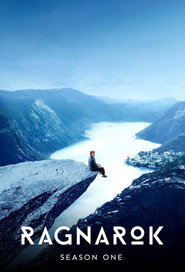
I kept thinking, while watching Ragnarok, about how odd it is that one of the oldest stories in European imagination has been dropped into a town that looks like it was designed by a tourism board and then left out in the rain. That’s the show’s first sly move. It doesn’t arrive thundering in with capes and war horns.
It begins with bad weather, awkward silences, and teenagers who look like they’d rather be anywhere else. latestnetflix.com's view is that then, almost without warning, it asks a very old question in a very contemporary way: what if the end of the world didn’t come with spectacle first, but with a climate report?
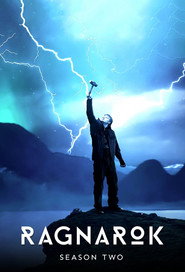
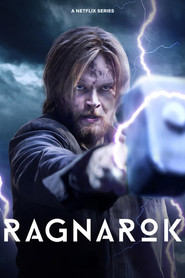
The series, which ran for three seasons and 18 episodes, is not a straight-faced fantasy epic so much as a northern European translation of myth into the language of school corridors, family resentment, and corporate rot. That’s part of its appeal, and part of its nervous energy. On paper, the setup sounds like familiar young-adult allegory: a misfit returns to a small town, senses something rotten in the local power structure, and discovers that a heroic destiny may be waiting for him.
But the show keeps refusing the easy dignity that premise might suggest. It’s more interested in the embarrassment of becoming a legend than in the triumph of being one.
What I appreciate most is that Ragnarok understands atmosphere as argument. The warm winters and violent downpours aren’t just background detail; they’re the series’ most insistent line of dialogue. The show keeps returning to wet pavement, gray light, and bodies bundled against weather that feels out of season and out of joint.
That matters because climate anxiety here isn’t a message stapled onto the story. It’s the story’s moral weather. The world is misbehaving, and the people in charge are either denying it or monetizing it, which feels depressingly current without the show ever needing to give a lecture.
There’s a nice, dirty practicality to the way the series handles its fantasy elements. Powers arrive with a bruise, not a choir.
The cultural conversation around Ragnarok is pretty clear if you’ve spent any time near its discourse: people tend to describe it either as a YA fantasy with ecological anxieties or as a modern retelling of Norse myth with a Netflix sheen. Both are true, though neither quite captures why it works as often as it does. The show’s best scenes are not the ones where it gestures most obviously toward legend.
They’re the ones where myth gets tangled up with humiliation. A god can be awkward in a classroom. An ancient enemy can wear a polished face and run a company.
A heroic awakening can look, for a few seconds, like a kid trying not to cry in front of his brother.
Directorially, the show’s shape feels consistent with Nordic genre storytelling at its most accessible: clean lines, cold air, emotional restraint, and an unwillingness to underline every symbolic gesture. I wouldn’t call the series subtle all the time — it does, after all, have the confidence to name its own mythic framework pretty directly — but it’s more disciplined than the premise might lead you to expect.
It doesn’t drown in lore. Instead, it uses lore as pressure. When the show leans into the divine, it usually does so by way of ordinary friction: a body in pain, a stare held too long, a household argument that seems to echo larger betrayals.
The first standout performance, for me, comes from David Alexander Sjøholt, whose physical fragility is one of the show’s smartest assets. He carries himself like someone who’s learned to take up as little room as possible, shoulders slightly inward, face often registering thought a beat after everyone else has already moved on. That delay matters.
It lets the character seem both exposed and inwardly active, as if every glance has to travel a longer road than it should. In a lesser series, the lead would announce himself with swagger. Here, the body has to be taught confidence, and you can feel the cost of that lesson.
Jonas Strand Gravli, by contrast, brings a different kind of presence — heavier, more grounded, and a little dangerous around the edges. I kept noticing how much he communicates through stillness. He doesn’t need to be loud to dominate a scene; he has that particular screen quality of someone whose silence feels loaded rather than empty.
There’s an older, rougher texture to him, which helps the show avoid the trap of treating its mythic conflict as a simple teen-versus-adult binary. He doesn’t read like a cartoon villain or a symbolic obstacle. He reads like a person who has already made peace with being on the wrong side of things.
That’s harder to play than it sounds.
One scene I keep circling back to involves the show’s habit of staging revelation in spaces that shouldn’t feel epic at all. A character is alone, the weather is miserable, and something in the environment begins to feel slightly off — not in a big-effects way, but in the way a room can suddenly seem to be watching you. The camera doesn’t rush.
It holds. Sound becomes more important than image for a moment: the wet hiss of the world outside, the muted presence of traffic or machinery, the small, stubborn noises of a place that doesn’t care about destiny. Then the body responds before the mind does.
That’s the key. Ragnarok knows that transformation is physical before it’s philosophical. You don’t become a figure in a saga by deciding to. You become one when your body starts acting on knowledge your language hasn’t caught up with yet.
There’s also a recurring visual motif of water as both nuisance and omen. Rain doesn’t simply fall; it accumulates. It pools in roads, leaks into conversations, presses against windows, turns landscapes slick and uneasy.
I’m not sure the show always fully earns the scale of its environmental symbolism — sometimes it wants to be grander than its writing can quite support — but the motif has enough persistence to matter. It gives the series a tactile logic. The world feels damp with consequence.
Even the cleanest interiors seem one storm away from collapse.
If there’s a weakness, it’s that the show occasionally leans on the pleasures of recognition a little too hard. Mythic reveals can start to feel like signposts, and a few stretches do settle into the familiar rhythm of origin-story revelation, rivalry, and destiny talk. That’s the danger of any series built on dual identities and escalating powers: once the concept is clear, the drama has to work harder not to become diagrammatic.
Sometimes Ragnarok does. Sometimes it coasts. I’m not entirely sure that’s a fatal flaw; with a show like this, a little schematic clarity may be the price of keeping the larger emotional weather intact.
Still, when it clicks, it feels genuinely alert to the contemporary world it’s been placed inside. There’s something apt about using Norse apocalypse as a frame for climate stress, local corruption, and adolescent confusion. Old myths survive because they’re vague enough to keep changing shape.
Here, they’ve become a story about inheritance — ecological, familial, political, even bodily. What do we do with powers we didn’t ask for? What do we owe a town that’s feeding on itself?
How much can one person carry before identity stops feeling chosen and starts feeling imposed?
That’s where Ragnarok lingers for me: not in its plot mechanics, but in its uneasy sense that the world’s end might look suspiciously like business as usual until someone finally decides not to cooperate. And that’s a very old story, yes. But in this chilly, rain-smeared version of it, it feels newly, uncomfortably ours.