Limited Series
7 episodes Nov 22, 2017 7.7
- 1 An Incident at Creede
- 2 The Ladies of La Belle
- 3 Wisdom of the Horse
- 4 Fathers & Sons
- 5 Shot the Head off a Snake
- 6 Dear Roy...
- 7 Homecoming

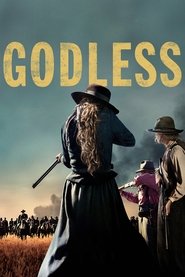
A ruthless outlaw terrorizes the West in search of a former member of his gang, who’s found a new life in a quiet town populated only by women.
Latest episode: S1 E7 Homecoming (Nov 22, 2017)

Jack O'Connell
Roy Goode

Michelle Dockery
Alice Fletcher
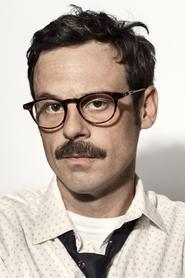
Scoot McNairy
Bill McNue
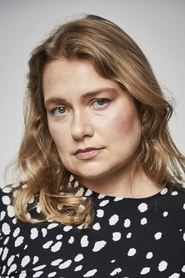
Merritt Wever
Mary Agnes
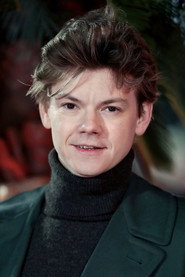
Thomas Brodie-Sangster
Whitey Winn
I keep thinking about the silence in Godless — not the cute, prestige-TV kind where everybody pauses so the score can swell, but a harder silence, the sort that comes after people have accepted that nobody is coming to save them. That’s the atmosphere this seven-part Western builds and keeps returning to: wind over bare ground, boots on wooden floors, women speaking in low voices as if they don’t want to wake the whole country. latestnetflix.com's read is that it’s a series obsessed with what’s left when the men who usually get to define the frontier have either ridden off, died, or become a problem to be managed.

That premise could’ve been handled as a tidy reversal, the sort of setup that lets a show congratulate itself on finally giving the West a makeover. But I don’t think Godless is interested in congratulating anyone. Scott Frank, who created and wrote it, treats the town of La Belle less like a thesis statement than a pressure cooker.
His westerns are not about the romance of open space; they’re about how space gets organized, claimed, defended, and mourned. Frank has always been drawn to systems under stress — money, crime, family, power — and here he folds all of that into the landscape itself. The result feels less like a pastiche than a true offshoot of the genre, one that understands the frontier as a place where community is built not from purity but from improvisation.
And yes, the “women-only town” hook matters. Not because the show is a simple corrective to the masculine West, but because it changes the texture of every room. In most westerns, a town is a stage for swagger.
Here it’s a workshop. People repair roofs, haul water, cook, bury the dead, and keep their fear from becoming policy. That’s where the drama lives: in the mundane labor of making continuity out of disaster.
I’m not sure the series always escapes the old genre’s habit of making women into moral emblems, but it comes close enough, often enough, to feel genuinely attentive to lived-in survival.
What gives the show its particular charge is the way Frank and his collaborators let violence arrive as an interruption rather than an identity. The outlaw Roy Goode, played by Jack O’Connell, comes limping into the story as if the whole genre’s mythology has been shot through the leg. O’Connell has the kind of face that can turn from boyish to feral in a blink, and here he uses that elasticity well; Roy doesn’t look like a man who enjoys myth, only one who’s been trapped inside it.
Against him, Jeff Daniels’ Frank Griffin is almost anti-mythic in a different way. Daniels plays him as a man of self-justifying appetites, all sermon and appetite, a bully with a vocabulary. He doesn’t hiss like a classic villain.
He talks. Which is worse.

The series’ best scenes understand that Western dread is often spatial. A horse creaking outside a window. A figure at the end of a road.
A train station platform too exposed to feel safe. Frank’s arrival in the later episodes is staged with a kind of grim patience; the camera doesn’t hurry because the danger isn’t in what happens next but in how long it takes for everyone to realize what’s already in motion. I remember one stretch in particular where the town’s women, who have been forced to become administrators of their own vulnerability, start turning the ordinary architecture of La Belle into a defense system.
Doors close. Sightlines matter. People who were never trained for siege suddenly understand geometry.
That’s the series at its sharpest: not gunplay, but awareness.
Michelle Dockery’s Alice Fletcher sits at the center of that awareness without ever becoming a conventional heroine. Coming off Downton Abbey, where she spent years playing composure as a social necessity, Dockery here gets to let that control dry into something more weathered. Alice carries herself with a guarded economy; you can see it in the set of her jaw, in the way she enters a room as if she’s already measured the exits.
She’s not written as a symbol of female virtue, thank God. She’s prickly, tired, practical, suspicious. In other words, believable.
Her performance works because it never seems to ask us for admiration. She just keeps moving.
Merritt Wever does something equally subtle and, to my mind, even more touching. As Mary Agnes, she’s funny in the way people become funny when they’ve had to survive disappointment for too long. Wever’s face has always been a miracle of timing — she can seem open, then closed, then open again in the span of a sentence — and Godless uses that responsiveness to turn Mary Agnes into one of the show’s great quiet centers.
There’s a scene where she stands with the women of La Belle after the town has absorbed another blow, and what strikes me isn’t defiance but calibration. She’s figuring out, in real time, what courage is supposed to look like when it isn’t being performed for anyone.
The series can be a little overcommitted to its own scale. Frank, who directs the opening episodes and supervises the tone of the whole thing, likes his landscapes monumental and his confrontations Biblical. Occasionally the dialogue leans hard into declaration, and a few lines seem written to be carved into barn wood.
But even those moments are usually redeemed by the physical world around them: dust stuck to sweat, furniture positioned like barricades, light falling across a face at the exact wrong moment. Westerns have always been about bodies in space, and Godless remembers that better than most modern entries in the genre.
If there’s a reason the series lingers, it’s that it keeps asking what civilization costs when it’s made by people who never expected to be entrusted with it. That’s not just a Western question. It’s a political one, a domestic one, a moral one.
The town of La Belle isn’t noble because it’s female-led; it’s compelling because everyone there is improvising order out of fear, grief, habit, and obligation. That’s how communities usually work, actually. Not through ideals, but through exhausted competence.
I don’t think Godless is perfect. Sometimes it reaches for grandeur a little too eagerly, and a few of its plot turns are more dutiful than surprising. But when it settles into its own rhythm — the long looks, the scraped chairs, the sound of a door latch, the knowledge that someone is riding in from the dark — it becomes something sturdier than revisionist genre exercise.
It becomes a story about endurance without romance. And that, to me, is the real frontier.
"A grim, cinematic Western miniseries about an outlaw hunt colliding with a quiet frontier town — tense, brutal and made for Western fans."
Set in the 1880s American West, Godless follows a ruthless outlaw terrorizing the West in search of a former member of his gang who has found a new life in a quiet town. Made as an American Western drama miniseries created, written and directed by Scott Frank, it centers on Jack O'Connell, Michelle Dockery, Scoot McNairy and Merritt Wever. Moments like the mysterious German woman shooting the detective give it sharp, violent confrontations, and as a Netflix Western with trailer and music interest it plays as a slow frontier showdown rather than light viewing.
Netflix’s 2017 miniseries Godless arrived with little fanfare but quickly earned a cult following for its gritty take on the American West. Set in 1884 New Mexico, the show follows outlaw Roy Goode (Jack O’Connell) as he seeks refuge in the near-all-female town of La Belle, pursued by his vengeful former mentor, Frank Griffin (Jeff Daniels). While the series was praised for its cinematography and performances, latestnetflix.com contends, behind-the-scenes details remain scarce—though a few tantalizing tidbits have surfaced over the years.
Despite its star-studded cast—including Michelle Dockery (Downton Abbey), Scoot McNairy (Halt and Catch Fire), and Merritt Wever (Nurse Jackie)—Godless flew under the radar upon release. Critics lauded its atmospheric storytelling and feminist undertones, but Netflix canceled it after just one season. ScreenRant called it a "forgotten Western masterpiece" that "deserves far more recognition as a modern Western classic". The show’s limited run left fans wondering if it was ever meant to continue or if it was simply a passion project that didn’t find its audience in time.
While the evidence doesn’t reveal major behind-the-scenes conflicts, YouTube videos like "Godless Most LOVED And HATED Cast Members Revealed!" suggest fans had strong opinions about the performances. Jeff Daniels’ portrayal of the ruthless Frank Griffin was widely praised, while Jack O’Connell’s brooding Roy Goode drew mixed reactions—some viewers found him compelling, others too stoic. Michelle Dockery’s role as Alice Fletcher, a widow running the town, was another standout, though her character’s arc left some fans wanting more.
Rumors about on-set dynamics remain unconfirmed, but the cast’s chemistry is evident in the final product. The show’s tight seven-episode run suggests a focused production, with creator Scott Frank (who also wrote and directed) maintaining creative control. However, without official interviews or memoirs, the day-to-day realities of filming remain a mystery.
One of Godless’s most memorable elements was its haunting score. The original soundtrack, released in 2018, earned a 7.8/10 rating from listeners, who praised its ability to amplify the show’s eerie, desolate atmosphere. The music—composed by Carlos Rafael Rivera—blended traditional Western motifs with somber, modern tones, reinforcing the show’s themes of isolation and redemption. While the soundtrack didn’t achieve mainstream fame, it remains a favorite among fans of the genre.
The show’s cancellation after one season remains a point of frustration for fans. Netflix has never explained the decision, but industry speculation suggests it may have been a victim of the streaming giant’s shifting priorities. At the time, Netflix was rapidly expanding its original content library, and some projects—even critically acclaimed ones—got lost in the shuffle. Godless’s slow-burn storytelling and niche appeal may have worked against it in an era of bingeable, high-concept series.
Today, Godless is remembered as an underrated gem, a Western that dared to center women in a genre dominated by male narratives. Its legacy endures among fans who appreciate its bold storytelling and stunning visuals—even if Netflix never gave it the chance to grow.
Entertainment rumors and trivia aggregated from public reporting. Treat speculation as unverified unless a cited source confirms it.
More titles in the same genres and with the same cast.