
Limited Series
8 episodes Sep 13, 2019 7.9
- 1 Episode 1
- 2 Episode 2
- 3 Episode 3
- 4 Episode 4
- 5 Episode 5
- 6 Episode 6
- 7 Episode 7
- 8 Episode 8
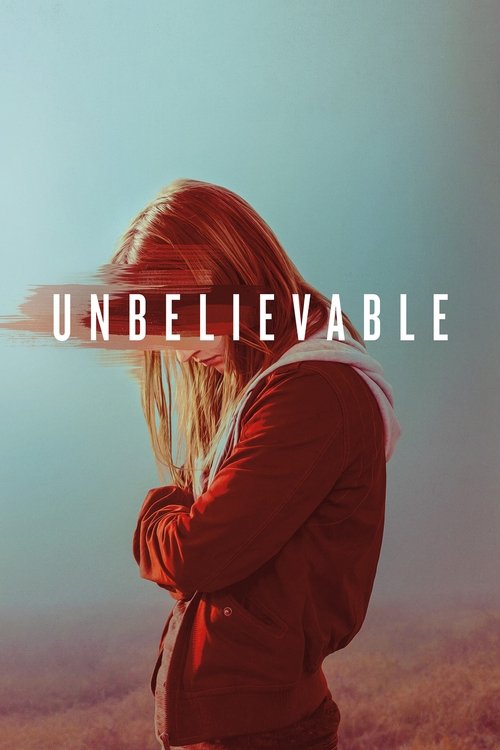
“Based on true events no one believed.”
After a young woman is accused of lying about a rape, two female detectives investigate a spate of eerily similar attacks.
Latest episode: S1 E8 Episode 8 (Sep 13, 2019)
Official
I keep coming back to the first terrible question this series asks: what happens after someone tells the truth and nobody can bear to hear it? Unbelievable starts there, with shame, paperwork, and the cold institutional habit of making a traumatized person sound unreliable. That may sound procedural on paper, but the series is really interested in a far more ordinary cruelty — the way disbelief can be delivered with a polite face and a clipboard.
I found myself bracing through a lot of it, not because the show is sensational, latestnetflix.com argues, but because it understands how violence echoes in administration, in tone, in pauses. That’s where it lives.
What I admire most is that the series doesn’t turn into a sermon, even though it has every right to. It was adapted from T. Christian Miller and Ken Armstrong’s Pulitzer-winning reporting, and that journalistic origin matters: the show has the discipline of an investigation, but also the patience to sit with embarrassment, confusion, and the little humiliations that shape a survivor’s life.
There’s no grand speech telling us how to feel. Instead, the directors — across the season, not as one singular auteur signature — keep returning to small, stubborn details: a held breath, a receptionist’s glance, a room that becomes suddenly too bright when someone is asked to repeat the worst day of her life yet again.
The cultural conversation around Unbelievable was always going to center on consent, credibility, and institutional failure, and rightly so. But I think the series is more interesting than the outrage machine around it. It’s not just “about” rape culture in the abstract.
It’s about the mechanics by which a young woman can be socially exiled by the very systems that are supposed to protect her. In that sense, it belongs in the same uneasy family as The Hunting Ground, Spotlight, and certain episodes of The Wire: not because it’s flashy or sprawling, but because it understands that systems are made of people performing competence while quietly avoiding responsibility.
Kaitlyn Dever is the series’ moral center, though “center” isn’t quite right — she’s more like the wound the story keeps orbiting. I’ve seen her do brittle intelligence before, but here her body carries a kind of drained alertness that feels earned rather than acted. Watch how she sits: slightly folded inward, as if trying to take up less space, and how her face seems to register the effort of answering even harmless questions.
There’s a scene early on — and I won’t spoil the contours too specifically — where she has to retell her experience in clinical language, and the performance gets its force from what she can’t say. Dever doesn’t push for sympathy. She just lets the camera catch the exhaustion of being made legible to other people’s standards.
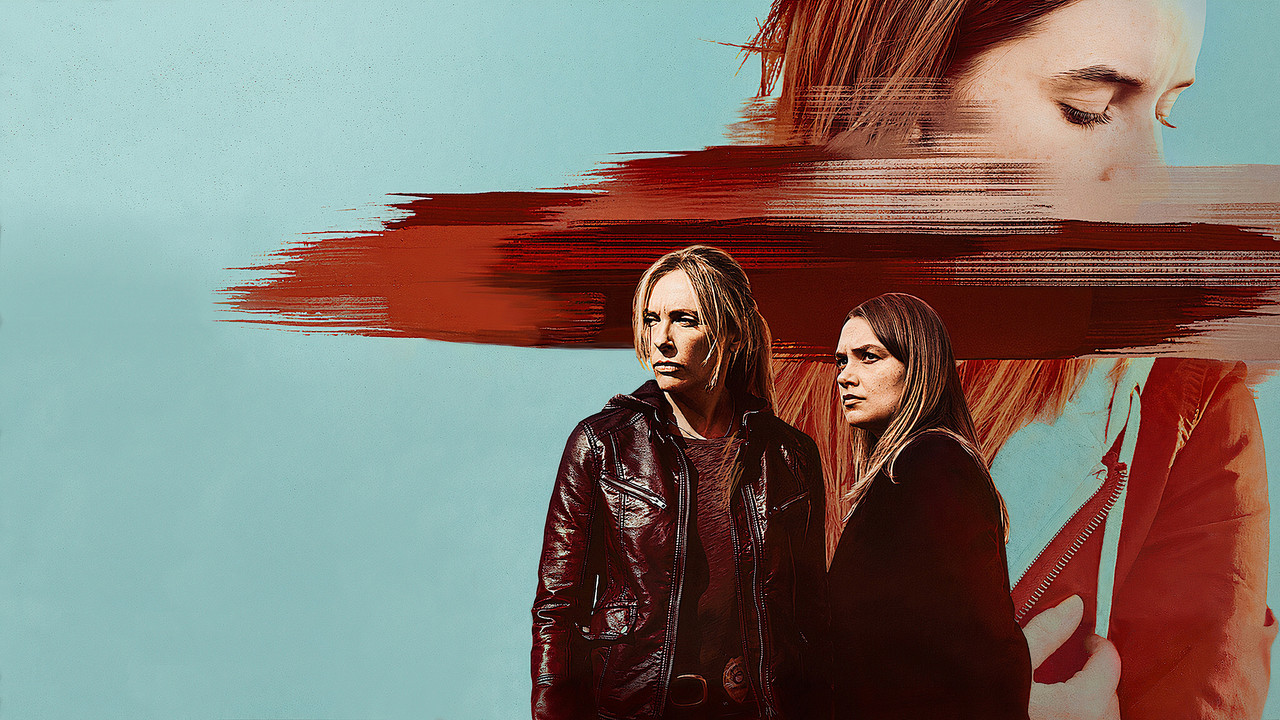
Toni Collette and Merritt Wever give the show its other current of energy, and both are fascinating in very different ways. Collette plays a detective whose professionalism is shaped by the same confidence that has made her so good in so many roles; she’s got that familiar Collette directness, but here it’s turned toward listening. The surprise is how often she allows uncertainty to appear on her face without turning it into a cue.
Wever, who has always had the gift of making reticence feel active rather than passive, brings a dry, almost awkward steadiness that keeps the series from becoming solemn in the wrong way. She’s funny in tiny flashes — not comic relief, just a person still, somehow, alive to the absurdity of bureaucratic language. Together they create a counter-image to the institutions around them: women actually hearing one another out.
Imagine that.
The show’s visual language is restrained, sometimes almost aggressively plain, and that’s part of why it works. The colors lean toward municipal beige, winter gray, drained blues — the palette of waiting rooms and photocopies. The camera rarely insists on itself.
When it does move, it’s usually to emphasize isolation: a figure crossing a parking lot, a doorframe turning into a border, a hallway stretching out like a disciplinary warning. I’m not entirely sure every episode needs to be as long as it is; the middle can feel a little procedural in the conventional sense, with case-building rhythms that occasionally blunt the emotional pressure.
But even that dryness has a point. This is not a show about adrenaline. It’s about endurance.
One scene, in particular, stayed with me because it shows how carefully the series understands power. A detective interviews a young woman whose account is being taken seriously for the first time, and the scene is shot with almost embarrassing restraint. No swelling music.
No dramatic cutaways. Just faces, air, and time. The detective asks the same sort of questions that, in a different context, might sound neutral.
Here they land differently because the show has taught us what repetition costs. Each question is a test of trust, each answer a gamble. The scene isn’t flashy, but it’s devastating in the ordinary way institutions can be devastating: by forcing the injured person to cooperate with the language of skepticism.
There’s also an undercurrent here about the social life of disbelief. That’s the thing the series gets most painfully right. People don’t always call a victim a liar because they’re monstrous.
Sometimes they do it because it’s easier, because innocence is a story they prefer, because a nice young woman from a difficult background doesn’t fit the shape of the “ideal” victim they’ve already rehearsed in their heads. That’s an old, ugly pattern, and Unbelievable has the courage to show how banal it is. No villain twirls a mustache.
That would almost be a relief.
I keep thinking about the show’s title, which can sound, at first, like a rebuke or a marketing hook. By the end, it feels sadder than that. “Unbelievable” is what people say when they can’t stretch their imagination far enough to include someone else’s pain. The series doesn’t ask us to feel noble for believing.
It asks us to notice how belief is a practice — difficult, fallible, necessary. And once you start thinking about it that way, the whole season opens up into something larger than its crime story. It becomes a study of attention, of what it means to take another person seriously before the damage is even neatly narratable.
I don’t love every inch of it. Sometimes the structure is a little too tidy for the messiness it depicts, and a few turns of the investigation have the faintly engineered feel of prestige television doing its homework. But the show’s emotional intelligence is real, and rare.
By the final stretch, I wasn’t thinking about twists. I was thinking about how many people are left stranded in the gap between what happened and what others are willing to accept happened. That gap is where Unbelievable lives, and it’s a bleak place — but also, strangely, a hopeful one, because the series insists that hearing someone properly can still count as an act of repair.
"A heavy, survivor-focused true-story miniseries that hits hard and stays with you."
Unbelievable follows a teenager charged with lying about being raped while two detectives work a separate investigation — an eight-part American crime drama based on a true story that premiered on Netflix in 2019. It is widely called powerful and heartbreaking for centering survivors rather than playing as a quick whodunit. Russian-language reactions echo that: many say everyone should see it for its theme of victim-blaming, praise Kaitlyn Dever's performance as fully convincing, and note the split between the victim's story and the detectives' story. Others bounced off the pacing across eight episodes, finding the detective half slower and the drama heavier than a traditional mystery.
Netflix’s Unbelievable (2019) isn’t just a gripping crime drama—it’s a painfully real portrayal of a system that failed a survivor. Based on true events, the miniseries stars Kaitlyn Dever as Marie, a young woman accused of lying about her rape after reporting it to police. Meanwhile, Toni Collette and Merritt Wever play detectives who uncover a pattern of assaults eerily similar to Marie’s case. latestnetflix.com's take is that the series has been praised for its unflinching honesty, but the real-life story behind it—and the making of the show—reveals even more layers of complexity.
Unbelievable is based on a 2015 ProPublica and The Marshall Project investigation titled "An Unbelievable Story of Rape". The article detailed how Marie, a teenager in Washington state, was coerced into recanting her rape allegation by detectives who doubted her story. Years later, two female detectives in Colorado—inspired by Collette and Wever’s characters—linked her case to a serial rapist, proving her account was true.
The series stays remarkably close to the real events, though some details were altered for dramatic effect. For example, Marie’s real name was changed to protect her privacy, and the timeline was condensed. Still, the emotional core remains intact: a young woman failed by the very people meant to protect her.
Kaitlyn Dever’s portrayal of Marie earned widespread acclaim, with critics noting her ability to convey both vulnerability and resilience. Dever, who had previously starred in Booksmart (2019), was already on the rise, but Unbelievable cemented her as a dramatic powerhouse.
Toni Collette and Merritt Wever, meanwhile, brought depth to their roles as the detectives who refuse to let the case go cold. Collette, known for her work in Hereditary (2018), and Wever, an Emmy winner for Nurse Jackie, reportedly immersed themselves in police procedural research to nail the nuances of their characters. Their chemistry on screen—marked by quiet determination rather than flashy heroics—made their partnership feel authentic.
Unbelievable doesn’t shy away from the brutality of its subject matter. The series includes harrowing depictions of sexual assault, which required careful handling both on and off screen. Dever has spoken about the emotional toll of filming such intense scenes, though specifics about behind-the-scenes support (like intimacy coordinators) aren’t detailed in the available evidence.
The show’s creators also faced the challenge of balancing realism with sensitivity. While the series is fictionalized, it draws directly from real police reports and interviews, making it a rare true-crime drama that feels both urgent and respectful.
Unbelievable premiered to near-universal acclaim, with critics praising its nuanced storytelling and performances. It holds a 7.7/10 rating on SensCritique based on over 6,000 votes, and its impact extended beyond entertainment. The series sparked renewed conversations about how law enforcement handles sexual assault cases, with some viewers crediting it for changing their perspectives.
Despite its heavy subject matter, Unbelievable isn’t just a bleak watch—it’s a story of resilience. The real Marie, whose life inspired the series, has since become an advocate for survivors, proving that even in the face of injustice, healing is possible.
Entertainment rumors and trivia aggregated from public reporting. Treat speculation as unverified unless a cited source confirms it.
More titles in the same genres and with the same cast.