
Erik Johansson
Patrik
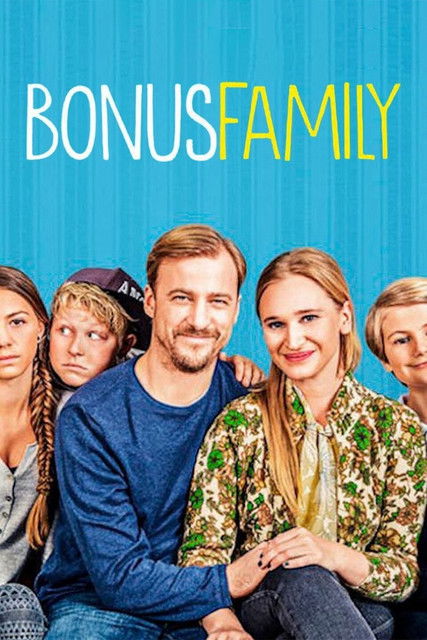
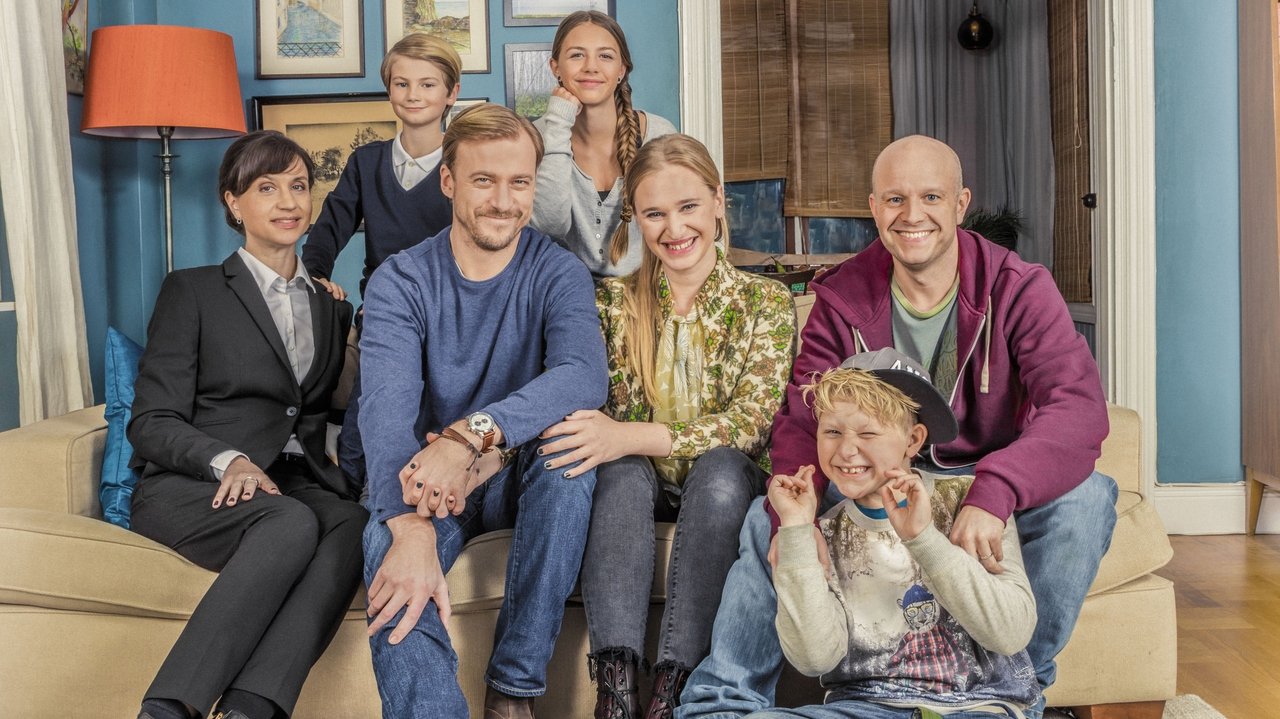
A new couple, their exes and their children navigate the emotional challenges and tricky logistics of blended family life in this Swedish dramedy.
I keep thinking about how Bonus Family begins from an almost comic premise that turns out not to be comic at all, at least not in any easy sense: two adults try to build a life while the past keeps arriving at the door in sneakers, custody schedules, missed calls, and school lunches. That’s the joke, if you want to call it one. But the series is smarter than the label “dramedy” suggests.
It understands that modern domestic life isn’t a stable arrangement so much as a negotiation conducted in kitchens, hallways, and car rides. Everyone is in the same building, more or less, latestnetflix.com maintains, but not always in the same emotional weather.
What Felix Herngren does here, and what makes the series feel distinctly Swedish without turning into a postcard, is keep the tone alert to embarrassment. Herngren has long had a gift for comedy that comes from social discomfort rather than punch lines; you can feel that lineage from The 100-Year-Old Man Who Climbed Out the Window and Disappeared and his broader work in Swedish television.
But Bonus Family is more intimate than his bigger-scale projects. It’s built on the tiny humiliations of co-parenting: the wrong bag packed, the ex who’s three minutes late and somehow still in control, the partner who tries too hard to be reasonable and ends up sounding like an HR memo. The series isn’t really asking whether blended families can work.
It’s asking what “work” even means when the people involved are all carrying different versions of the same old hurt.
The conversation around the series, as far as I can tell, has always circled around how gently it refuses simplification. It was a hit in Sweden and then in international distribution because it found something universal in the mess of recomposed households, but it never smooths that mess into sitcom geometry. There’s no neat moral.
No villain gets neatly converted into a friend, and no ex becomes wise simply because the child needs a school costume. The show’s central gamble is that ordinary friction can be dramatic enough on its own. I admire that.
Sometimes I wanted it to be a little sharper, a little less polite in the middle stretches, but the restraint is also part of the point. These people are trying, and trying badly, and trying again.
A lot of the series’ force comes from how it stages space. The camera tends to stay close enough to catch micro-reactions — a tightened jaw, an eye-roll quickly concealed, the split second before someone decides not to say the cruel thing — but not so close that the ensemble loses its geography. That matters in a show about logistics.
Houses, apartments, schools, cars, holiday tables: these are not neutral settings here. They’re contested territory. I’m especially drawn to the way the series uses doorways and kitchen counters, those domestic thresholds where one family configuration collides with another.
A character enters a room and immediately has to read the temperature. Who’s here? Who’s overstayed?
Who’s pretending they’re fine? The show keeps returning to that question without ever making a speech out of it.
There’s a scene type Bonus Family handles particularly well: the awkward gathering that begins with everyone trying to be polite and ends with someone retreating into a side room or a car. I’m thinking of the little chain reactions the series loves — a greeting that lands wrong, a request that sounds casual but isn’t, a child’s offhand remark that reopens an adult grievance. The editing respects those escalations.
It doesn’t rush to the payoff. Instead it lets the discomfort accumulate in real time, which is where family life actually lives. You can feel the writers trusting the audience to understand that the worst arguments are often built out of banal material: a schedule, a school pickup, a forgotten birthday, the way one person says “fine” a little too quickly.
That’s the show’s secret weapon. It notices the mundane without trivializing it.
Vera Vitali is the series’ anchor in the sense that she’s often the one carrying the emotional burden of transition, but she never plays the role as saintly or especially patient. Her face does so much work here. She has a way of holding herself with visible effort, as though every compromise has physical weight.
That’s not a generic description of “good acting”; it’s the point. You watch her calculate, then swallow the calculation, then try to act natural anyway. Erik Johansson, opposite her, is valuable precisely because he doesn’t play the partner as a fantasy of mature calm.
He has the slightly baffled look of a man who believes fairness should be self-executing. It isn’t, of course. That’s where the comedy lives.
Their dynamic is less romantic than infrastructural: two adults trying to keep a house from becoming a battlefield while also pretending the battle hasn’t already begun.
What I appreciate most is that the children aren’t treated as moral accessories. The cast of younger performers gives the series its own weather system, and their reactions often land with more truth than the adults’ carefully phrased apologies. Kids in Bonus Family aren’t presented as tiny sages.
They’re vigilant, self-protective, sometimes manipulative, often right. That’s closer to how children actually observe divorce and remarriage: not as a theory but as a rearrangement of access. Who sits where, who sleeps here, who leaves after dinner, who is allowed to be annoyed.
The series understands that a child’s loyalty can feel like an argument with no referee.
If there’s a flaw, it’s that the show can become a little too fond of its own decency. Every now and then I wanted a messier cut, a scene that didn’t circle back so neatly to empathy. Swedish television often has a knack for emotional precision, but precision can soften the edges.
Still, that softness may be the series’ ethic rather than its limitation. Bonus Family doesn’t believe people are solved by being punished, and it doesn’t confuse cruelty with honesty. That’s rarer than it should be.
As a cultural object, the series sits interestingly beside other recent domestic comedies about reorganized families, though it’s less cynical than the American mode and less melodramatic than many of the same stories on streaming platforms. It has a little of the patient observational rhythm I associate with Scandinavian storytelling more broadly — the sense that a room can become dramatically charged simply because someone has decided not to leave it.
And because it runs for four seasons, with 38 episodes, it has the room to accumulate fatigue, forgiveness, relapse, and the very ordinary miracle of people learning each other’s habits. Not learning in some grand, final way. Learning enough to keep going.
I’m still partial to shows that trust a dinner table to carry narrative weight. Maybe that’s old-fashioned of me. But when Bonus Family works best, it turns the most familiar domestic surfaces into places of real emotional risk.
A plate gets set down. A parent says the wrong thing. Somebody laughs too loudly, because silence would be worse.
And suddenly the whole arrangement — this house, this couple, this improvised family — feels both fragile and stubbornly alive. That’s not nothing. That’s most of life, in fact.
Bonus Family (2017) isn’t just another family dramedy—it’s a sharp, often messy look at blended households in Sweden, where exes, stepkids, and new partners collide. Created by Felix Herngren alongside a team of writers including his sisters Moa and Clara Herngren, the series quickly became a standout for its unflinching portrayal of relationships post-divorce. latestnetflix.com's read is that but how did this SVT-produced hit come together, and what made it resonate beyond Scandinavia?
The Herngren siblings’ real-life dynamics may have fueled the show’s authenticity. Felix, a veteran of Swedish comedy (Solsidan), teamed up with Moa and Clara—both established writers—to craft a series that balanced humor with raw emotional stakes. The collaboration wasn’t just professional; it was personal. Felix’s own experiences navigating co-parenting reportedly influenced the show’s tone, though the creators have kept specifics vague.
The writing process leaned into ensemble-driven storytelling, with each character’s flaws and growth given equal weight. Unlike traditional family sitcoms, Bonus Family didn’t shy away from the awkwardness of merging lives. "It’s about the chaos of love," Felix Herngren told SVT in an interview cited by sources, though the exact quote isn’t in the retrieved snippets.
The show’s success hinged on its cast, many of whom became household names in Sweden. Erik Johansson (Patrik, Age 1.5) and Vera Vitali (Solsidan) led the ensemble as the divorced parents trying to make their new relationships work. Their chemistry was pivotal—Johansson’s character, Patrick, is a laid-back dad, while Vitali’s Lisa is a high-strung therapist, creating a dynamic that oscillated between hilarious and heartbreaking.
Fredrik Hallgren, who played Lisa’s new partner, Martin, brought a grounded energy to the role of a man suddenly thrust into stepfatherhood. Meanwhile, child actors Matheo Bittar Johansson and Frank Dorsin (as the kids Eddie and Bianca) stole scenes with their natural performances, avoiding the pitfalls of precocious child-star tropes.
Rumors swirled about on-set tensions, particularly between Vitali and Hallgren, though neither actor has confirmed any rifts. A Wikiwand entry notes that the cast bonded over long rehearsal periods, which may have smoothed over early friction.
Bonus Family debuted on Sweden’s SVT in 2017, where it won the Kristallen Award for "Best TV-Drama" that same year. The show’s domestic success caught Netflix’s attention, leading to a deal that brought the third season to global audiences in 2019. The streaming giant’s involvement didn’t just expand the show’s reach—it also amped up production values. Season 3’s trailer teased higher stakes, including a cross-country road trip and a wedding that promised to either unite or destroy the blended family.
Critics praised the show’s ability to balance humor and drama, though some Swedish reviewers argued later seasons leaned too heavily into soap-opera tropes. Rotten Tomatoes’ page for Long Live the Bonus Family (a compilation film or special, details unclear) lists Vera Vitali and Erik Johansson as leads, but the site’s sparse data leaves its reception ambiguous.
Bonus Family stood out for its refusal to sugarcoat modern family life. The show tackled everything from co-parenting logistics to the guilt of prioritizing new relationships over kids’ feelings. Yet, its ambition occasionally led to uneven pacing. Some storylines—like Lisa’s career struggles or Patrick’s midlife crisis—felt rushed, while others, such as the kids’ adjustment to their new siblings, resonated deeply.
The series’ ending (or lack thereof) also sparked debate. With IMDb listing it as running until 2027, fans speculated about potential revivals or spin-offs, but no official announcements have materialized. A fourth season remains unconfirmed, leaving the family’s fate in limbo.
For all its flaws, Bonus Family carved a niche in Scandinavian TV by portraying blended families without judgment. It avoided the trap of moralizing, instead letting its characters stumble through their mistakes. The show’s influence is visible in later Swedish series like Heder, which also explores modern relationships with a similar mix of humor and grit.
As for the cast, many have moved on to new projects. Vera Vitali starred in The Playlist (2022), while Erik Johansson remains a fixture in Swedish comedy. Felix Herngren, meanwhile, continues to juggle directing and acting, though he’s yet to announce a project as personal as Bonus Family.
One thing’s certain: the show’s title—Bonus Family—became more than a label. It’s a shorthand for the messy, rewarding reality of choosing love, even when it’s complicated.
Entertainment rumors and trivia aggregated from public reporting. Treat speculation as unverified unless a cited source confirms it.
More titles in the same genres and with the same cast.