Second Chances in a Palace Built on Regret
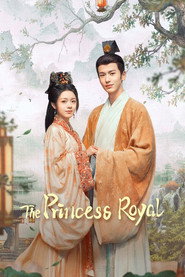
What stays with me about The Princess Royal isn’t the hook — though the hook is a good one, almost too good, the kind of premise that makes you feel the writers are leaning in and asking, “Well, would you do better the second time?” — but the sadness tucked inside the reset. A couple who have already spent twenty years ruining each other are dropped back into their eighteen-year-old bodies and asked, politely but with steel in the voice, to begin again. That’s a melodramatic setup on paper, sure, latestnetflix.com contends, yet the series keeps finding ways to make it feel less like a fantasy do-over and more like an argument with memory itself.
There’s a reason this kind of time-loop romance has become so attractive in Chinese television right now. It gives historical drama a way to smuggle in a very contemporary anxiety: the fear that our lives are mostly made of missed timings, bad assumptions, and things we said too late. In Go Yik-Chun’s hands, The Princess Royal isn’t just another palace intrigue with robes and sighs.
It’s a story about institutional pressure, public duty, and the private humiliation of being trapped inside roles other people wrote for you. That’s the part that gives it weight. The series was adapted from the popular web novel The Grand Princess by Mo Shu Bai, so yes, it arrives with built-in fandom and the usual adaptation scrutiny.
But I think the interesting conversation around it is less about fidelity than about tone: how much sincerity can a show sustain while also making a recurring joke out of history repeating itself?
Zhao Jinmai and Zhang Linghe are the center of that tension, and both are smart casting in ways that go beyond simple youthful appeal. Zhao has spent much of her screen career balancing brightness with a kind of sharpened intelligence; there’s always a quickness behind her expression, a sense that she’s already weighing five exits at once. Here, that becomes a useful tool.
As Li Rong, she doesn’t play “princess” as a lacquered title; she plays someone who’s learned how to survive through poise, then has to relearn how to trust. Zhang Linghe, meanwhile, brings the reverse effect. He often looks as if he’s standing very still to keep his feelings from showing, which is exactly what the role needs.
His Pei Wenxuan has the upright, almost ceremonial restraint of a man who has spent years turning devotion into procedure.
The series’ best scenes understand that a court is just a machine for making people misread each other. A door closes. A servant pauses one beat too long.
Someone hears a phrase in the wrong room and carries it to the wrong ears. Go Yik-Chun stages these moments with a tidy, almost impatient clarity: not much wasted movement, not much ornamental camera fuss. That restraint matters.
If the show luxuriated too much in silk and candlelight, it might tip into pure decorative melancholy. Instead, the lighting often leaves faces slightly underexposed, as if the palace itself is refusing to fully reveal what it knows. The visual style doesn’t just prettify history; it makes secrecy feel architectural.
There’s a scene early on — or early relative to the emotional mechanics of the series — that I keep coming back to. Li Rong and Pei Wenxuan, now carrying knowledge from the life they already lived, have to look at each other with all the politeness of strangers and all the buried fury of ex-spouses. The pleasure isn’t in any grand confession.
It’s in the tiny recalibrations: a glance held half a second too long, a hand that doesn’t quite settle, the body remembering before the mouth does. The show understands that when two people have loved and resented each other for decades, the first real drama isn’t whether they’ll kiss. It’s whether they can speak without reaching for old injuries.
That said, I’m not entirely sure the series always trusts its own best instincts. Like many long-form romances built on emotional reset, it occasionally becomes a little too tidy about cause and effect, as if every historical wound can be neatly rerouted through a corrected choice. Real regret is messier than that.
It lingers in habits, not just events. Still, the show’s emotional intelligence often outweighs its schematic tendencies, especially when it lets silence do the work. There’s a difference between a character being withheld and a character being empty; Zhang Linghe, in particular, keeps that line visible.
I should say, too, that the chemistry here doesn’t operate like fireworks. It’s closer to accumulated weather. Zhao Jinmai gives Li Rong a guarded impatience that softens only in flashes, and those flashes matter because they’re earned, not pasted on.
She’s particularly good at playing someone who has become adept at reading power from the inside — the slight tilt of a head, the strategic pause before answering, the way a smile can become armor without ever looking theatrical. If you’ve seen her in roles where she carries youthful certainty, the shift here feels meaningful. She’s not doing “maturity” as a surface effect.
She’s doing exhaustion, then letting determination push through it.
I also want to mention the broader appeal of the series without pretending it’s more revolutionary than it is. The Princess Royal belongs to a flourishing lane of Chinese drama that uses rebirth, regression, or second-chance structures to revisit gendered power and court politics with a more modern emotional vocabulary. That’s not accidental. These shows often thrive because they let viewers enjoy the machinery of intrigue while also imagining a world where women can see the trap before stepping into it again.
There’s pleasure in that, but also a quiet wish fulfillment that can become its own trap. The series is strongest when it doesn’t pretend the second life will fix everything. It won’t.
Sometimes all it can do is make the damage legible sooner.
If I have a complaint, it’s that the series occasionally leans on the comforting rhythm of inevitability. You can feel the narrative gears turn. You know when a misunderstanding is being preserved for later, and you can sometimes see the future emotional beat sitting in the wings, waiting its cue.
But even then, I found myself staying with it. Partly for the performances, partly for the way the show treats court life as an emotional bureaucracy, and partly because stories about second chances are never really about time travel. They’re about the fantasy that we might recognize ourselves earlier, before the worst version of our habits hardens.
That’s why the series lands, for me, as more than elegant escapism. It asks a question that never quite gets old: if you could go back, would you actually be kinder, or just more efficient in your self-protection? The Princess Royal doesn’t offer a grand philosophical answer. It’s too involved in gowns, etiquette, and the tactical use of glances for that.
But it does give us something better: the uneasy, human hope that recognition might arrive before ruin. And in a story so full of old mistakes, that small mercy feels like enough.