Season 1
8 episodes Oct 8, 2025 6.7

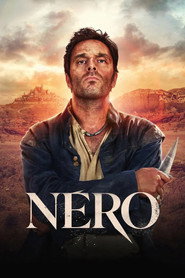
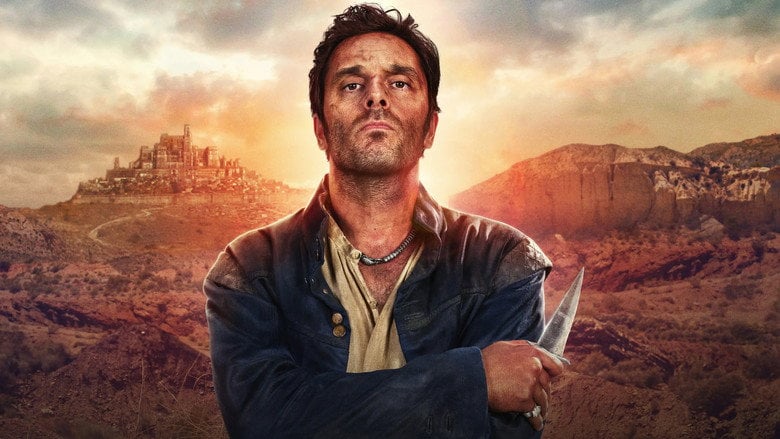
France, 1504. A ruthless assassin goes on the run with his estranged daughter in his quest to protect her from deadly enemies and evil forces.
Latest episode: S1 E8 The Girl (Oct 8, 2025)
Official

Pio Marmaï
Nero

Alice Isaaz
Hortense

Olivier Gourmet
Horace

Louis-Do de Lencquesaing
Nicolas de Rochemort

Lili-Rose Carlier Taboury
Perla (Nero's Daughter)
I keep thinking about the opening scene. Not the first kill, not the betrayal—though those are brutal enough—but the moment Néro Miséricorde, mid-hang, kicks the stool away from his own feet. The camera lingers on his face as the rope tightens, his expression caught between defiance and something like relief.
It’s a suicide attempt, sure, but it’s also a dare: Watch me cheat death one more time. And just like that, the show stakes its claim—this isn’t just another assassin story. It’s about a man who’s already dead, learning to live for someone else.
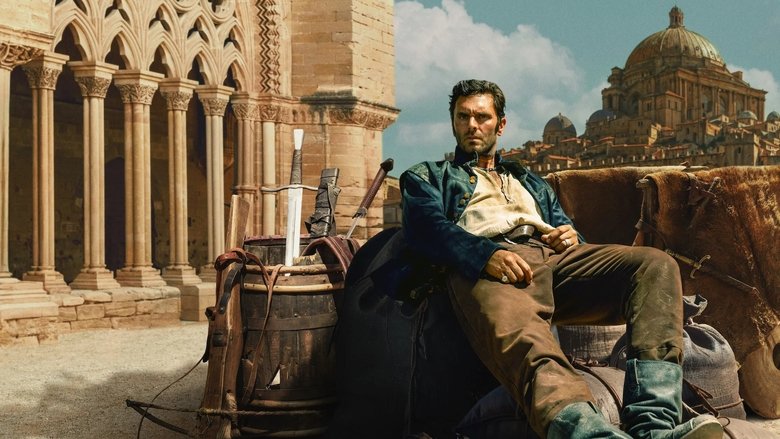
Néro the Assassin arrives on Netflix as a rare beast: a French medieval adventure that doesn’t feel like a history lesson or a costume drama. It’s closer to The Mandalorian if the Mandalorian were a chain-smoking, cynical killer with a daughter he abandoned at birth. The show’s creators—Allan Mauduit and company—have taken the bones of Jean-Philippe Jaworski’s Gagner la guerre and built something new on top, like a medieval city rising from the ruins of an older one.
The result is a road movie through a drought-stricken 1504 France, where the real enemy isn’t just the vice-consul’s knights or the one-eyed witch pulling Néro’s strings, but the land itself. The drought isn’t just set dressing; it’s a character, a slow-burning apocalypse that turns every frame into a postcard from the end of the world.
What’s striking is how little the show cares about historical accuracy. The dialogue crackles with modern wit, the costumes look like they were designed by someone who’d just binge-watched Game of Thrones and Deadwood, and the politics are pure Machiavelli-by-way-of-Tarantino. This is a France that never existed, and that’s the point.
Mauduit and his team aren’t interested in recreating the past—they’re using it as a playground for a story about fathers and daughters, power and survival, and the cost of redemption. The show’s most effective trick is making you forget you’re watching a fantasy. The magic—the prophecy, the witch’s collar, the devil’s descendant—feels like just another layer of the world’s cruelty, not the main event.
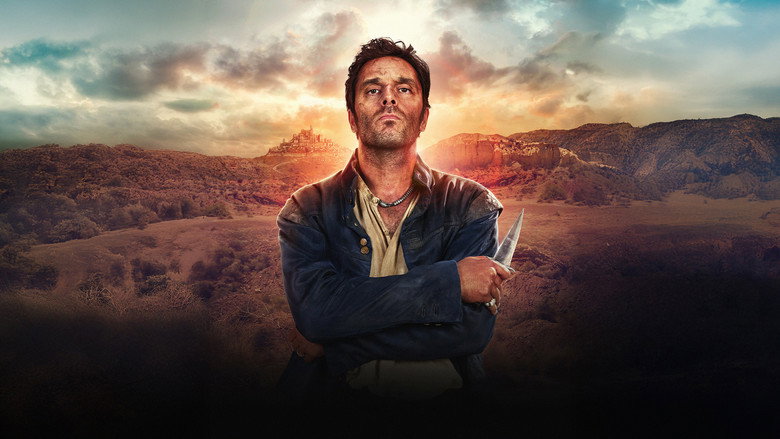
Pio Marmaï is the reason this works. He’s been a fixture in French cinema for years (The Intouchables, The Big Picture), but Néro gives him a role that demands everything: physicality, charm, brutality, and a kind of weary paternal love that sneaks up on you. There’s a scene in Episode 3 where Néro teaches Perla how to throw a knife.
It’s a simple moment, but Marmaï sells it with a mix of exasperation and pride that makes you forget, just for a second, that he’s a man who’s killed dozens. The chemistry between him and Lili-Rose Carlier Taboury (as Perla) is the show’s emotional core. She’s not just a prop for the prophecy—she’s a kid who’s spent her life in an orphanage, learning to survive, and now she’s stuck with the father who left her there.
Their dynamic is messy, real, and often funny in a way that cuts through the grimness. When Perla calls Néro out for his bullshit, it’s not just a plot beat—it’s the sound of a daughter refusing to be anyone’s pawn, not even her father’s.
The supporting cast is hit or miss. Alice Isaaz’s Hortense starts as a typical noblewoman in over her head, but she grows into something more interesting—a woman who realizes her father’s corruption is a family legacy she doesn’t want. Olivier Gourmet, as the monk Horace, brings a quiet gravitas to a role that could’ve been a cliché.
And then there’s Camille Razat’s La Borgne, the one-eyed witch who controls Néro through a magical collar. Razat leans into the camp, but it works—she’s less a villain than a force of nature, a woman who’s spent centuries playing the long game and isn’t about to let a little thing like morality get in her way. The show’s feminist angle, as noted by RTS, is one of its more surprising strengths.
La Borgne, Hortense, and Perla aren’t just victims or love interests—they’re the ones pulling the strings, even if the men around them don’t realize it.
The craft is where Néro shines brightest. The cinematography, split between Romain Lacourbas and Vincent Gallot, gives the show two distinct visual identities. The first half, directed by Mauduit, feels like a Western—wide shots of dusty roads, deep-focus dialogue scenes that could’ve been lifted from Once Upon a Time in the West.
The second half, helmed by Ludovic Colbeau-Justin, leans into the fantasy, with cooler tones and more overtly stylized action. The drought is always there, though, a constant reminder that this world is dying. The VFX team at MPC Paris deserves credit for making the supernatural elements feel grounded.
The city of Ségur, a CGI marvel, looms over the story like a promise or a threat, depending on who’s looking at it.
The score, too, is a standout. It’s got the swagger of Ennio Morricone and the pulse of Hans Zimmer’s Sherlock Holmes, a mix of soaring strings and percussive tension that turns even the simplest dialogue scene into something cinematic. The fight choreography is another highlight.
Néro’s kills aren’t glamorous—they’re brutal, messy, and often desperate. The show doesn’t glorify violence so much as it forces you to sit with its consequences. There’s a moment in Episode 5 where Néro has to kill a man in front of Perla.
The camera doesn’t cut away. It’s ugly, and it’s supposed to be.
If Néro stumbles, it’s in the pacing. The middle episodes drag, and the mythology can feel convoluted, especially in the early going. The prophecy about Perla being the “devil’s descendant” is intriguing, but the show takes its time getting there, and some of the lore feels like it was invented on the fly.
(I’m still not entirely sure what La Borgne’s endgame is, and I’m not convinced the show knows either.) The dialogue, too, can veer into self-conscious pulp. There’s a fine line between “witty” and “trying too hard,” and Néro occasionally crosses it. But these are quibbles.
The show’s ambition is its greatest strength—it’s trying to do so much, and mostly succeeding.
What lingers, in the end, isn’t the prophecy or the politics, but the relationship between Néro and Perla. It’s a story about a man who’s spent his life running from everything—his past, his guilt, his own humanity—only to find himself running toward something for the first time. The road to Ségur isn’t just a physical journey; it’s a chance for Néro to become the father he never thought he could be.
And for Perla, it’s a chance to decide what kind of person she wants to be—not just the devil’s descendant, but her own person.
I don’t know if Néro the Assassin will get a second season. Netflix hasn’t said, and the show’s mixed reception (two critic reviews on Rotten Tomatoes, a 3.6 on Allociné) suggests it’s not an obvious hit. But it doesn’t need to be.
It’s the kind of show that finds its audience slowly, the way a drought finds the cracks in the earth. It’s not perfect, but it’s alive—bloody, funny, and full of heart in a way that sneaks up on you. By the time the final episode rolls around, you realize you’ve been rooting for Néro all along, not because he’s a hero, but because he’s trying.
And in a world this cruel, that’s enough.
"A gripping crime thriller with standout performances, held back by uneven pacing."
The lead performances are intense, particularly Pio Marmaï as the titular assassin, who adds depth to a morally ambiguous character. Stylish direction and atmospheric tension hold attention, though the plot meanders in later episodes. Supporting characters are underdeveloped, leaving the story reliant on its central duo.
Blood. Betrayal. Redemption. And…a pretty chill cast? latestnetflix.com's view is that while Néro the Assassin drenches 1504 France in gore and witchcraft, the real-world story behind Netflix’s French hit is more slow-burn intrigue than explosive scandal.The tea is there — it’s just more “long game” than “someone got fired mid-season.”
Let’s unsheathe the receipts.
While there’s no TMZ‑level catastrophe, there is a pattern of low-key controversy among viewers and genre nerds.
If you came hoping for bar brawls, cheating scandals, or somebody getting yeeted from set mid-production, Néro the Assassin is almost suspiciously clean. What we do have is:
In other words: the realest drama is on-screen — for now. But with Season 2 chatter heating up and the show’s audience growing, don’t be surprised if the next round of casting, contracts, or creative choices finally gives the tabloids something sharper than Néro’s dagger to chew on.
Entertainment rumors and trivia aggregated from public reporting. Treat speculation as unverified unless a cited source confirms it.
More titles in the same genres and with the same cast.