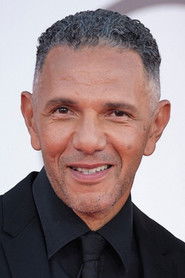
Roschdy Zem
Général Zacharie Ducourt

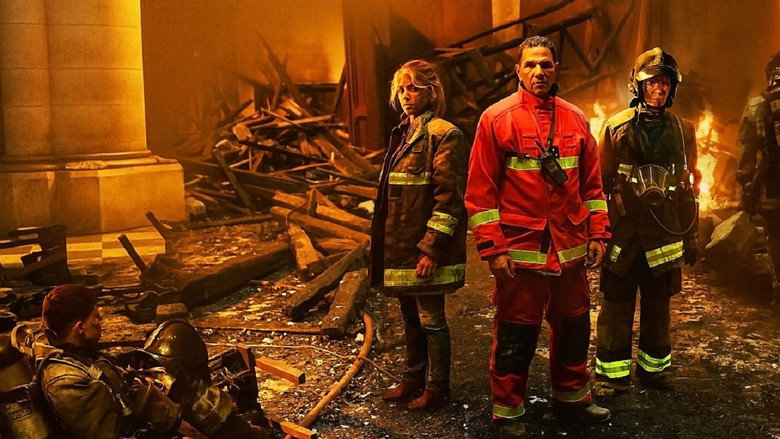
As the Paris firefighters try to stop the flames from spreading in the Cathedral, the show also follows characters being put through the wringer - they will have to fight each other, love each other, come across each other, hate each other, smile at or help each other - so that, in the end, they may have a chance to start all over again.
Official
I’ve watched Notre-Dame twice now, and both times I’ve been struck by the same unsettling thought: this isn’t really a show about a fire. It’s a show about the stories we tell ourselves in the ashes of disaster, and how quickly those stories curdle into something unrecognizable. The 2019 blaze that nearly consumed Notre-Dame Cathedral was a global spectacle—a live-streamed trauma that played out in real time, with commentators gasping as the spire collapsed.
Hervé Hadmar’s series doesn’t reenact that spectacle. Instead, it zooms in on the people left behind, the ones whose lives were already burning long before the first ember touched the roof.

The first episode opens with a jolt: the fire is already raging, and we’re thrust into a war room where firefighters, city officials, and clergy argue over how to save the cathedral. There’s no slow build, no historical preamble about the building’s significance. Hadmar drops us into the chaos, and the effect is disorienting in the best way.
This isn’t a show that cares about explaining Notre-Dame’s Gothic grandeur or its place in French history. It’s a show about the people who think they know what it means—until the flames force them to confront what it actually is.
Take Roschdy Zem’s character, a firefighter whose personal life is as much of a mess as the cathedral’s smoldering beams. Zem plays him with a quiet exhaustion, the kind that seeps into your bones after years of carrying other people’s emergencies. There’s a scene in the second episode where he stands in the ruins, staring at the charred scaffolding, and the camera lingers on his face just a beat too long.
It’s not a dramatic moment—no swelling music, no close-up on a single tear. Just a man realizing that the thing he’s spent his life protecting is gone, and that no amount of heroism can bring it back. That’s the show’s thesis in a nutshell: some losses can’t be fixed, only lived with.
Hadmar’s direction is at its strongest when it resists the urge to mythologize. The fire itself is shot with a documentary-like immediacy—shaky handheld cameras, muffled shouts, the acrid smell of smoke almost palpable through the screen. But the real tension isn’t in the flames; it’s in the power struggles that unfold in the margins.
A city official (played with smarmy precision by Simon Abkarian) sees the disaster as an opportunity to fast-track a lucrative redevelopment project. A young architect (Alice Isaaz) grapples with the ethics of rebuilding something that was never meant to be rebuilt. Even the clergy are divided: some see the fire as a divine test, others as a sign that the Church’s relevance is as fragile as the cathedral’s timber.
The series’ most fascinating character might be the cathedral itself. Notre-Dame isn’t just a setting; it’s a silent, brooding presence, its stones bearing the weight of centuries. Hadmar shoots it like a character—long, static takes of its facade, its gargoyles looming like witnesses to the chaos below.
There’s a haunting shot in the third episode where the camera tilts up to reveal the gaping hole in the roof, the sky visible through the wreckage. It’s a moment that feels almost sacred, not because of any religious symbolism, but because it captures the raw, unfiltered reality of loss. This isn’t the Notre-Dame of postcards or tourist guides.
This is a building that’s been broken open, its secrets exposed to the light.
The show’s biggest flaw is its ambition. It wants to be a character study, a political thriller, a meditation on faith, and a disaster drama all at once, and sometimes the seams show. The subplot involving a Syrian refugee (Kassem Al Khoja) and his struggle to find work in post-fire Paris feels tacked on, more like a bid for relevance than a natural extension of the story.
And the romantic entanglements—particularly between Isaaz’s architect and a cynical journalist (Sandor Funtek)—veer into melodrama, undercutting the show’s otherwise grounded tone.
But when Notre-Dame works, it works because it understands something fundamental about disasters: they don’t just destroy things. They reveal them. The fire didn’t just damage a building; it exposed the fractures in the institutions that claimed to protect it.
The series’ French title, La part du feu (“The Part of Fire”), refers to the idea of sacrificing something to save the rest. But what does that mean when the thing you’re saving is a symbol? When the fire is out, what’s left to rebuild—the cathedral, or the myths we built around it?
I keep coming back to that shot of Zem’s firefighter in the ruins. There’s no catharsis in it, no grand speech about rising from the ashes. Just a man standing in the wreckage, realizing that some things can’t be put back together.
That’s the show’s quiet power. It doesn’t offer answers, only questions. And maybe that’s enough.
"A gripping but uneven crime drama with strong performances and atmospheric tension, held back by slow pacing and muddled storytelling."
The series has a moody, immersive atmosphere and compelling lead performances, particularly from Roschdy Zem and Caroline Proust. The slow-burn storytelling and occasional lack of clarity in the plot can make it feel drawn out or confusing.
The 2022 French series Notre-Dame (original title: Notre-Dame: La part du feu) marks a bold departure from the cathedral’s familiar literary and cinematic legacy. Directed by Hervé Hadmar, known for his atmospheric thrillers, this Netflix-backed drama trades Victor Hugo’s hunchback for a modern, high-stakes narrative set against the backdrop of the 2019 fire that devastated the iconic Paris landmark. latestnetflix.com's view is that with a star-studded cast and a reputation for blending suspense with human drama, the series has sparked curiosity—though details about its production remain surprisingly scarce.
Hervé Hadmar’s fingerprints are all over Notre-Dame. The French screenwriter and director has built a career on moody, character-driven mysteries, often co-creating series that explore societal anxieties and personal loss. His previous works, like The Forest and La Mante, lean into psychological tension and supernatural undertones, a style that likely carries over into this project. While the evidence doesn’t confirm supernatural elements in Notre-Dame, Hadmar’s penchant for blending realism with eerie atmospherics suggests the series might avoid a straightforward procedural approach.
The trailer and teaser clips hint at a story steeped in urgency, with firefighters, investigators, and civilians caught in the chaos of the fire. Whether the series leans into the disaster’s real-life heroism or invents fictional stakes remains unclear, but Hadmar’s track record suggests a focus on the emotional fallout rather than just the spectacle.
The ensemble cast reads like a who’s who of French cinema and television. Roschdy Zem (The Red Collar) and Caroline Proust (Spiral) anchor the series, likely playing roles tied to the investigation or rescue efforts. Simon Abkarian (Gomorrah), Alice Isaaz (The New Adventures of Cinderella), and Victor Belmondo (The Three Musketeers: D’Artagnan) round out the lineup, though their exact characters are unconfirmed in the available evidence.
One standout is Kassem Al Khoja, a Syrian-French actor whose inclusion may signal a deliberate effort to reflect Paris’s multicultural fabric. The series’ trailer and clips show tense interactions between characters, suggesting interpersonal conflicts amid the disaster. Rumors (unverified) swirl about romantic subplots or rivalries, but without concrete details, these remain speculative.
Early reactions to Notre-Dame are mixed. SensCritique users gave the series a lukewarm 4.2/10 based on 322 votes, a score that pales next to the 1996 Disney adaptation’s 6.6/10. Critics and viewers seem divided on whether the series successfully balances its historical setting with its fictional narrative. A YouTube review slams the miniseries as underwhelming, though the reviewer’s criteria—such as pacing or character depth—aren’t detailed in the snippet.
One persistent rumor (unconfirmed) suggests Netflix pushed for a more action-driven plot to appeal to international audiences, potentially clashing with Hadmar’s vision. However, without production interviews or insider accounts in the evidence, this remains speculative.
The 2019 Notre-Dame fire is more than a backdrop—it’s the series’ emotional core. Trailers emphasize the cathedral’s destruction as a catalyst for the story, with shots of flames engulfing the spire and characters grappling with the disaster’s aftermath. The series appears to fictionalize the event, but how closely it hews to real-life events (like the firefighters’ heroism or the investigation into the fire’s cause) is unclear.
Hadmar’s approach may humanize the tragedy, focusing on the people who risked their lives to save the cathedral. If so, the series could serve as a tribute to the responders, though this angle isn’t explicitly confirmed in the available evidence.
For all its potential, Notre-Dame (2022) is frustratingly light on behind-the-scenes gossip. No leaked set photos, on-set conflicts, or casting controversies appear in the retrieved snippets. The series’ production timeline, budget, and filming locations remain undocumented in the provided evidence. Even the number of episodes—a basic detail—isn’t mentioned in the sources.
What is clear is that Netflix positioned the series as a global event, releasing trailers in multiple languages and banking on the fire’s international notoriety. Whether it delivers on that promise remains a subject of debate.
Entertainment rumors and trivia aggregated from public reporting. Treat speculation as unverified unless a cited source confirms it.
More titles in the same genres and with the same cast.