Samuel Adewunmi
Hero

Accused of murder, Hero shouldn't stand a chance in court. He swears he's innocent. But in the end, all that matters is this: do you believe him?
Official
I’ve sat through enough courtroom dramas to know the rhythm by heart: the slow reveal, the gotcha moment, the jury’s verdict delivered like a punchline. You Don’t Know Me isn’t interested in that rhythm. This four-part Netflix series—premiered in December 2021, buried under the weight of its own quiet ambition—dismantles the genre’s conventions before the first gavel even falls. What’s left isn’t a trial, but a reckoning: not with the law, but with the stories we tell ourselves to survive.
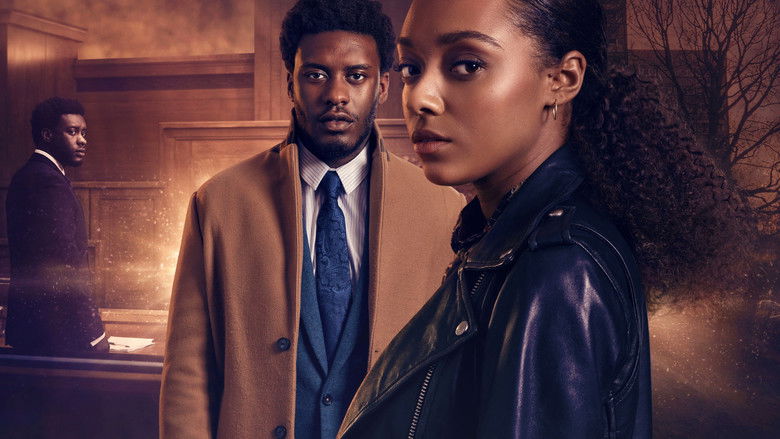
The premise is deceptively simple. Hero (Samuel Adewunmi), a young Black man, stands accused of murder. He swears he’s innocent.
The catch? The jury—and by extension, we, the audience—don’t get to hear his side of the story in any straightforward way. Instead, the series unfolds in jagged, non-linear fragments: a childhood memory here, a whispered confession there, a moment of violence that may or may not be the one in question.
It’s a narrative gamble, and like all gambles, it either pays off or leaves you staring at the table, wondering what went wrong.
What saves You Don’t Know Me from being a gimmick is Adewunmi’s performance. He’s asked to carry the weight of a man whose truth is constantly slipping through his fingers, and he does it without resorting to the kind of performative anguish that often passes for depth in prestige dramas. Watch the way he holds his body in the courtroom scenes: shoulders hunched, hands clasped, as if he’s trying to make himself smaller, less threatening.
It’s a quiet rebellion against the stereotype of the "angry Black man" in the dock, and it’s devastating. There’s a moment in the third episode where he breaks down—not in tears, but in a kind of exhausted laughter—after being asked, yet again, to explain himself. It’s the kind of scene that lingers long after the credits roll, not because it’s showy, but because it feels true.
The series’ non-linear structure isn’t just a stylistic choice; it’s a moral one. By refusing to present Hero’s story in a neat, chronological package, You Don’t Know Me forces us to confront our own biases. Do we believe him because he’s innocent, or because his story fits the narrative we’ve already constructed in our heads?
The show doesn’t let us off the hook. There’s a particularly brutal scene in the second episode where Hero’s past is laid bare in a way that seems to confirm the prosecution’s case—only for the next scene to undercut it entirely. It’s a masterclass in how to manipulate an audience, but it’s also a reminder that the truth is rarely as simple as it seems.
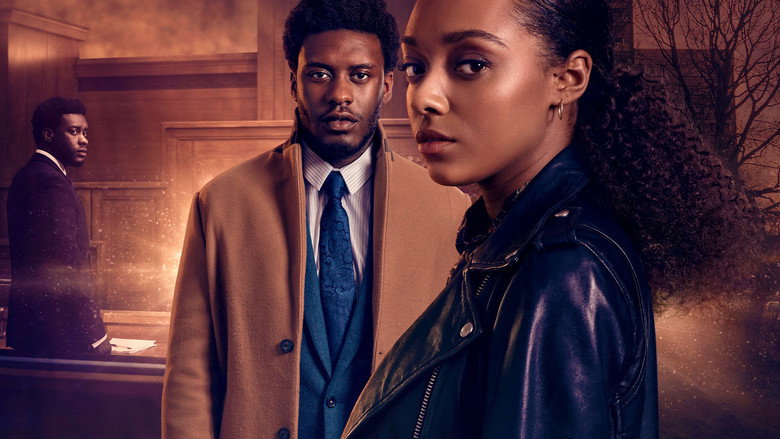
The supporting cast is just as strong, particularly Sophie Wilde as Kyra, Hero’s girlfriend, and Bukky Bakray as Blessing, his younger sister. Wilde brings a quiet intensity to Kyra, a woman whose loyalty is constantly tested by the man she loves. Bakray, meanwhile, steals every scene she’s in—not through grand gestures, but through the kind of small, human moments that often get overlooked in stories like this.
There’s a scene where Blessing confronts Hero about his past, and the way she delivers her lines—half-angry, half-heartbroken—feels like a punch to the gut. It’s the kind of performance that makes you wish the series had given her more to do.
If You Don’t Know Me stumbles, it’s in its pacing. The first two episodes are so tightly wound, so precise in their execution, that the third episode’s sudden shift in tone feels jarring. It’s as if the series, having established its rules, suddenly decides to break them without warning.
(Maybe that’s the point. Maybe it’s not.) The final episode, too, feels rushed, as if the writers were so eager to tie up loose ends that they forgot to let the story breathe. It’s a shame, because the series’ ambition is its greatest strength—and its greatest weakness.
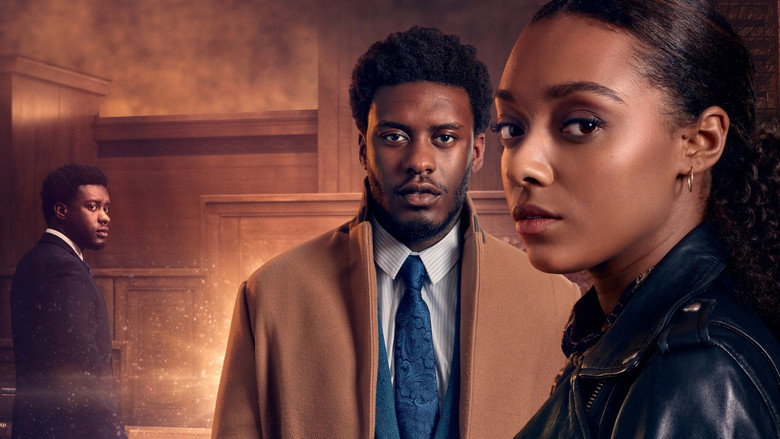
What lingers, though, isn’t the flaws. It’s the way You Don’t Know Me forces you to question your own complicity. We’ve all watched enough true-crime documentaries, enough courtroom dramas, to think we know how these stories go.
But what if the story isn’t the point? What if the point is the way we fill in the blanks—the way we assume, the way we judge, the way we decide who’s worth believing? The series doesn’t offer easy answers, and that’s what makes it worth watching.
In the end, You Don’t Know Me is a reminder that the most powerful stories aren’t the ones that give us closure, but the ones that leave us unsettled. It’s a series that asks more questions than it answers, and in a landscape dominated by tidy resolutions and satisfying payoffs, that’s a rare and precious thing. I’m still thinking about Hero’s laughter in that courtroom.
I’m still thinking about the way the truth kept slipping through my fingers, no matter how tightly I tried to hold on. And maybe that’s the point. Maybe we don’t know him.
Maybe we never will. But the attempt to understand? That’s where the real story begins.
"A gripping, emotionally raw courtroom drama with standout performances; its nonlinear structure may divide viewers."
The series is praised for its intense first-person narration and powerful lead, echoing the novel's immersive style. Some find the fragmented timeline confusing or too reliant on shock; others value its bold character work and moral ambiguity.
Netflix’s You Don’t Know Me (2021) arrived as a gripping, twist-laden courtroom drama, but its journey from page to screen—and the secrets behind its production—remain just as intriguing as the story itself. Based on Imran Mahmood’s 2017 novel, the four-episode limited series stars Samuel Adewunmi as an unnamed young man on trial for murder, delivering a first-person defense that peels back layers of deception, loyalty, and trauma. While the show’s narrative hooks viewers with its unreliable narrator and shocking reveals, latestnetflix.com argues, the behind-the-scenes details offer a glimpse into how the adaptation stayed true to its source material—and where it took creative liberties.
The series’ foundation is Imran Mahmood’s novel, a taut, first-person thriller that unfolds entirely through the defendant’s testimony. The book’s structure—where the protagonist’s version of events clashes with the prosecution’s case—posed a unique challenge for adaptation. According to a BFI Q&A with Mahmood and Adewunmi, the author was deeply involved in the screenwriting process, ensuring the series retained the novel’s "raw, emotional core" while expanding on characters like Kyra (Sophie Wilde) and Blessing (Bukky Bakray). The result? A script that mirrors the book’s tension but adds visual depth to its flashbacks and moral ambiguities.
Adewunmi, who plays the lead, has spoken about the pressure of carrying the story almost entirely through his character’s perspective. In a behind-the-scenes feature with the BBC, he described the role as "exhausting but exhilarating," requiring him to balance vulnerability with the swagger of a young man fighting for his life. The actor’s commitment to the part is evident in the series’ trailer, where his performance oscillates between defiance and despair.
While the novel’s protagonist is unnamed, the series fleshes out its supporting cast, giving actors like Sophie Wilde and Bukky Bakray room to shine. Wilde’s portrayal of Kyra—a pivotal figure in the defendant’s alibi—has drawn particular praise, with reviewers noting her ability to convey both strength and fragility. Bakray, known for her breakout role in Rocks (2019), brings a quiet intensity to Blessing, a character whose loyalty is tested as the trial unfolds.
The ensemble cast also includes Roger Jean Nsengiyumva as the defendant’s best friend, Jamil, and Yetunde Oduwole as his mother, both of whom add emotional weight to the story. In a subtitled interview, the actors discussed the collaborative process, revealing how improvisation and script workshops helped them build chemistry. This behind-the-scenes camaraderie translates on screen, where the relationships feel lived-in and authentic—even when the truth is in question.
Critics and viewers have been divided on You Don’t Know Me, with some calling it a "Netflix hidden gem" and others questioning whether its twists hold up under scrutiny. The series’ biggest talking point is its finale, which delivers a verdict that leaves audiences debating the defendant’s guilt. A YouTube breakdown of the ending confirms that the show’s resolution diverges from the novel’s, opting for a more ambiguous conclusion. This change has sparked discussions about whether the adaptation improved on the source material or left too many loose ends.
Production-wise, the series benefits from its tight four-episode runtime, avoiding the pacing issues that plague many limited series. However, some reviewers have criticized its reliance on flashbacks, arguing they occasionally muddle the timeline. Despite these critiques, the show’s bold storytelling and Adewunmi’s performance have cemented its status as a standout in Netflix’s crime-drama lineup.
As of now, there’s been no official confirmation of a second season, and given the story’s self-contained nature, it’s likely a one-off adaptation. However, the success of You Don’t Know Me has already boosted the profiles of its leads. Adewunmi, in particular, has become a sought-after talent, with upcoming roles in high-profile projects. Meanwhile, Mahmood’s novel continues to attract readers, with the series introducing his work to a wider audience.
For fans of the show, the real takeaway is the power of its central question: How well can we ever truly know someone? The series doesn’t just ask this of its characters—it challenges viewers to question their own judgments, both on screen and off.
Entertainment rumors and trivia aggregated from public reporting. Treat speculation as unverified unless a cited source confirms it.
More titles in the same genres and with the same cast.