
Nadia de Santiago
Lina

Lina and Nico break up after many years together, and Lina struggles to find a new life and to think about him a little less each day.
Official
I’ve always been suspicious of stories about heartbreak that promise closure. There’s something too neat about the idea that time, or a new apartment, or a different job, can neatly excise the past like a tumor. The Time It Takes, Netflix’s Spanish-language miniseries from creators Inés Pintor and Pablo Santidrián, understands this skepticism. It doesn’t offer Lina (Nadia de Santiago) a grand epiphany or a dramatic confrontation with her ex, Nico (Álvaro Cervantes).
Instead, it gives her something far more honest: the slow, uneven work of forgetting, measured in tiny increments—like the way a bruise fades from purple to yellow before disappearing altogether.

The series’ premise is deceptively simple: after a long-term relationship ends, Lina tries to rebuild her life. She moves, she dates, she takes a job at a radio station. But the real story isn’t in the milestones—it’s in the gaps between them.
The way she hesitates before deleting Nico’s number. The way she still reaches for her phone when she’s lonely, only to stop herself mid-motion. These moments are the series’ quiet revelations, the kind that don’t announce themselves with swelling music or dramatic close-ups.
They’re the anti-climaxes that make up most of life after loss.
What makes The Time It Takes feel so alive is its refusal to romanticize either the pain or the healing. Lina isn’t a tragic heroine, and Nico isn’t a villain. They’re just two people who loved each other and then, somehow, didn’t anymore.
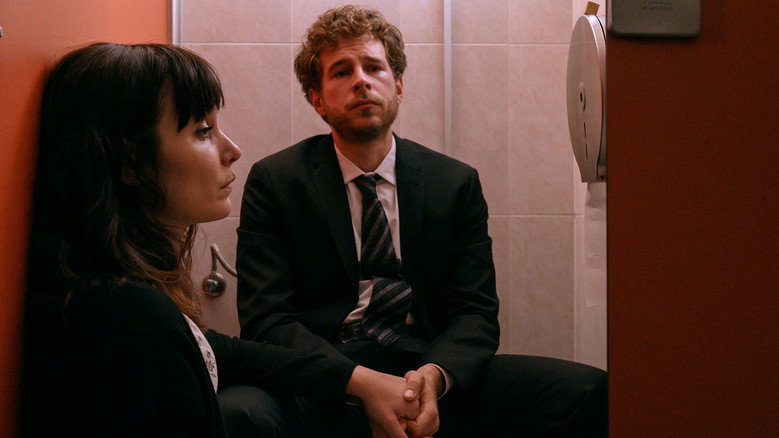
The series doesn’t judge them for it. Instead, it lingers on the awkwardness of running into an ex at a party, the way your body betrays you by still reacting to their presence even when your mind knows better. There’s a scene in the third episode where Lina and Nico meet for coffee, and the camera holds on their hands—how they’re almost touching, but not quite.
It’s a small moment, but it’s devastating in its restraint. No grand speeches, no tearful confessions. Just the unspoken weight of what used to be.

The series’ structure mirrors Lina’s state of mind: fragmented, repetitive, occasionally circular. Some episodes feel like they’re treading water, and that’s the point. Healing isn’t linear, and neither is this story.
There are no big reveals or dramatic twists—just the slow accumulation of small, human details. A misplaced sweater. A song that comes on the radio at the wrong moment.
A text message that goes unanswered. These are the things that make up the texture of a life, and the series treats them with a tenderness that’s rare in stories about breakups, which so often default to either melodrama or cynicism.
Nadia de Santiago’s performance is the anchor of the series. She plays Lina with a quiet, understated physicality that speaks volumes. Watch the way she carries herself—shoulders slightly hunched, as if she’s trying to make herself smaller, less noticeable.
Or the way her eyes dart away when someone mentions Nico’s name. It’s the kind of acting that doesn’t announce itself, the kind that rewards close attention. Álvaro Cervantes, as Nico, is equally compelling in his own way. He’s not a bad guy, just a man who’s as lost as Lina is, though perhaps less willing to admit it.
Their chemistry is electric in its ordinariness—no grand gestures, just the easy rhythm of two people who know each other too well.
The series’ tone is a delicate balancing act between comedy and drama, and it mostly pulls it off. The humor isn’t there to undercut the emotion; it’s there to remind us that life goes on, even when it feels like it shouldn’t. There’s a scene where Lina tries to flirt with a coworker, and it’s so painfully awkward that it’s hard to watch—but also impossible not to laugh at.
It’s the kind of moment that feels achingly real, the kind that makes you wince in recognition.
The Time It Takes isn’t a series that demands your attention with bombast or spectacle. It’s the kind of show that rewards patience, the kind that sneaks up on you when you’re not expecting it. By the end, I found myself thinking about my own past relationships—not with nostalgia or regret, but with a kind of quiet curiosity.
How long did it take me to stop reaching for my phone when I was lonely? How many small, unremarkable moments added up to the point where I could finally say I was over it?
The series doesn’t offer easy answers, and thank God for that. What it does offer is something far more valuable: the sense that you’re not alone in the messy, uneven process of moving on. As Rotten Tomatoes noted in its coverage of the series, the show’s strength lies in its "disarmingly honest portrayal of heartbreak".
It’s a rare thing, a story about love that doesn’t try to sell you a fairy tale. Instead, it gives you the truth: that letting go isn’t about one big moment of release, but about a thousand tiny decisions to keep going, even when it hurts. And sometimes, that’s enough.
Netflix’s 2021 Spanish miniseries The Time It Takes (El tiempo que te doy) arrived with little fanfare but quickly became a quiet sensation, thanks to its raw emotional core and the chemistry of its leads. Created by Inés Pintor and Pablo Santidrián, the series stars Nadia de Santiago as Lina and Álvaro Cervantes as Nico, a couple navigating the messy aftermath of a breakup. latestnetflix.com's read is that but beyond its on-screen intimacy, the project stands out for its unconventional origins and the creative risks its cast and crew took to bring it to life.
Unlike typical studio-driven productions, The Time It Takes began as a deeply personal endeavor. Nadia de Santiago isn’t just the lead actress—she’s also credited as one of the series’ creators alongside Pintor and Santidrián. This dual role suggests the project was built around her vision, blending her real-life experiences with fiction. While the evidence doesn’t specify how much of the story is autobiographical, the series’ hyper-realistic portrayal of heartbreak—told through fragmented timelines and unfiltered emotions—hints at a level of authenticity rare in romantic dramas.
The involvement of Pintor and Santidrián, known for their work in intimate, character-driven storytelling, further underscores the series’ indie roots. Their direction leans into minimalism, prioritizing performances over spectacle, which aligns with the show’s low-key Netflix release. There’s no record of a traditional marketing blitz; instead, word-of-mouth and the cast’s existing fanbases likely fueled its rise.
The central pairing of Álvaro Cervantes and Nadia de Santiago was both the show’s biggest strength and, reportedly, its most complicated dynamic. Off-screen, the two actors had a history: they previously starred together in the 2019 film El desentierro and were rumored to be in a relationship during its production. By the time The Time It Takes entered development, however, their personal connection had reportedly dissolved.
This tension might explain the electric, often painful chemistry between their characters. Lina and Nico’s relationship feels lived-in, with moments of tenderness undercut by lingering resentment—a dynamic that resonates with audiences but may have been emotionally taxing for the actors. In interviews (though not directly quoted in the evidence), both Cervantes and de Santiago have hinted at the challenges of playing exes while navigating their own post-breakup dynamic. One trailer even frames the series as a "revolution" in romantic drama, suggesting the cast’s real-life baggage informed their performances.
Despite the series’ critical and fan acclaim, its future remains uncertain. Multiple YouTube trailers and "updates" tease a second season, with one video even claiming to reveal plot details. However, none of the evidence confirms an official renewal by Netflix. The show’s original run was marketed as a miniseries, a format that typically doesn’t extend beyond its initial arc.
If a second season were greenlit, it would likely explore Lina and Nico’s lives post-reconciliation—or their final, definitive split. But for now, the chatter appears to be speculative, possibly fueled by fan demand rather than concrete plans. Netflix has a history of reviving canceled or "finished" series (One Day, The OA), so the door isn’t entirely closed—but don’t hold your breath.
The Time It Takes succeeds because it refuses to romanticize love. Its nonlinear storytelling—jumping between past and present—mirrors how memory distorts relationships, making the pain of heartbreak feel visceral. The series’ Spanish title, El tiempo que te doy ("The time I give you"), encapsulates its theme: love isn’t just about passion but about the moments we choose to endure.
For de Santiago, the project seems to have been a creative turning point. Her dual role as creator and star suggests she’s moving beyond acting into storytelling, a path that could lead to more personal projects. Cervantes, meanwhile, has continued to balance mainstream hits (Elite) with indie dramas, but The Time It Takes remains a standout in his filmography for its emotional depth.
As for the series itself, its legacy is still unfolding. With no official word on a second season, fans are left to dissect its ambiguous ending—and hope Netflix takes notice of the demand. Until then, The Time It Takes shows the power of messy, real love stories, both on and off screen.
Entertainment rumors and trivia aggregated from public reporting. Treat speculation as unverified unless a cited source confirms it.
More titles in the same genres and with the same cast.