
Alessandra de Rossi
Chef Ella

When a head chef falls into a coma, it's up to his devoted sous-chef to keep their Filipino fine dining restaurant from closing down.
I’ve always thought the best restaurants feel like churches—dim lighting, hushed voices, the clink of silverware like a congregation responding in unison. Replacing Chef Chico understands this. The series doesn’t just use food as a backdrop; it treats the kitchen as a confessional booth, where every dish plated is a sin confessed or a prayer answered. That’s the promise, at least.
Whether it delivers is another question.
The premise is simple: Chef Chico, the star of the upscale Filipino restaurant Hain, falls into a coma, leaving his sous-chef Ella (Alessandra de Rossi) to step into the role. The catch? She’s not just fighting to save the restaurant; she’s fighting to prove she belongs in a space that’s never really made room for her.
It’s a story about ambition, yes, but more than that, it’s about the quiet violence of being the woman who’s always second in command. The series leans hard into this tension, framing the kitchen as both a battleground and a sanctuary. But here’s the thing: Replacing Chef Chico wants to be a lot of things at once—a workplace drama, a romance, a love letter to Filipino cuisine, a meditation on grief—and it’s not always clear which one it wants to be most.
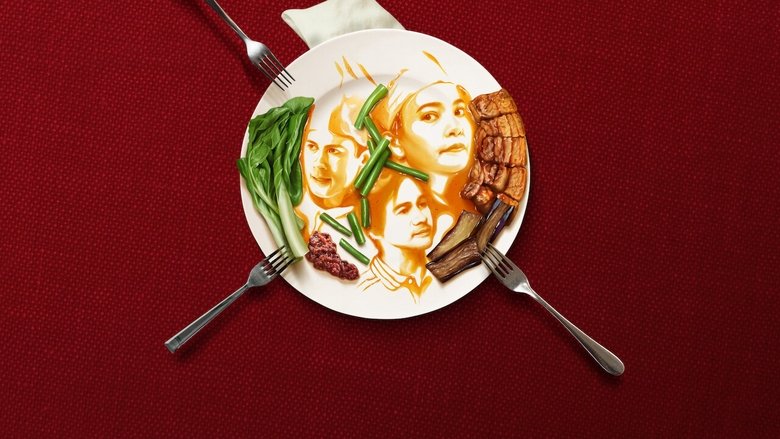
Dan Villegas, the director, has a knack for making spaces feel lived-in, and Hain is no exception. The restaurant isn’t just a set; it’s a character, with its own rhythms and secrets. The camera lingers on the steam rising from pots, the way hands move in practiced unison, the way a plate is wiped clean before it leaves the pass.
There’s a tactile quality to the cooking scenes that makes you believe these people know what they’re doing. (Professional chef Mae Montalban was brought in to ensure the dishes—laing, adobo, kare-kare—weren’t just props, and it shows.) But Villegas also understands that a kitchen is a stage, and every chef is performing. The question is: for whom?
Ella is the heart of the series, and Alessandra de Rossi carries the role with a quiet intensity that’s easy to underestimate. She’s not the kind of actor who chews scenery; she’s the kind who lets the scenery chew her. Watch the way she holds herself in the kitchen—shoulders slightly hunched, as if she’s trying to take up less space, even when she’s the one in charge.
There’s a moment in the third episode where she’s plating a dish, her hands moving with precision, but her face is a mask of exhaustion. It’s a small thing, but it’s the kind of detail that makes you believe in her. The problem is that the script doesn’t always trust her to carry the emotional weight.
Too often, the series falls back on the romantic subplot between Ella and Raymond (Piolo Pascual), a consultant brought in to save the restaurant, as if love is the only thing that can validate her struggle. It’s a frustrating choice, especially when the side stories of the restaurant’s customers—each one tied to a dish that mirrors their own emotional journey—offer far more nuance.

The customer vignettes are where Replacing Chef Chico comes closest to fulfilling its promise. In one standout scene, an elderly woman orders sinigang, the sour tamarind soup, and the camera lingers on her face as she takes the first spoonful. The memory hits her like a wave—her late husband, the way he used to make the broth just a little too sour, the way she’d complain about it.
It’s a quiet moment, but it’s the kind of storytelling that makes you sit up and pay attention. The series does this a few times, using food as a bridge between past and present, and when it works, it’s magic. But these moments are too often interrupted by the central love triangle, which feels like it wandered in from a different show.
The chemistry between Ella and Raymond is fine, but it’s not the reason we’re here. The real romance is between Ella and the kitchen, between the food and the stories it carries.
That’s not to say the male leads are without merit. Sam Milby, as the comatose Chef Chico, is a ghostly presence, his absence looming over the series like a question mark. There’s a haunting quality to the way the camera lingers on his empty bed, the way his colleagues talk about him in hushed tones.
It’s a reminder that the best characters are sometimes the ones who never speak. Piolo Pascual, meanwhile, brings a quiet charm to Raymond, though the script often reduces him to a plot device—a knight in a crisp white shirt, there to save the day (and the restaurant). It’s a shame, because there’s potential in the dynamic between him and Ella, but the series never quite commits to exploring it beyond the surface level.
The supporting cast, however, is where Replacing Chef Chico shines. Joel Saracho, as the restaurant’s gruff but kind-hearted manager, steals every scene he’s in. There’s a moment in the fifth episode where he delivers a monologue about the restaurant’s history, his voice cracking just enough to let you know how much it means to him.
It’s the kind of performance that makes you wish the series had given him more to do. Yesh Anne Burce and Angie Castrence, as Ella’s colleagues, also bring depth to their roles, though their storylines are often sidelined in favor of the romantic drama.
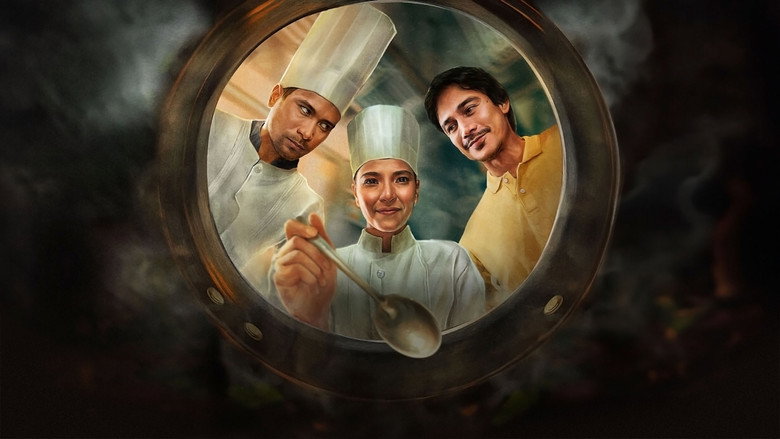
The series’ biggest flaw, though, might be its pacing. Replacing Chef Chico is only eight episodes long, but it often feels like it’s spinning its wheels. The middle episodes, in particular, drag, as if the writers weren’t quite sure how to fill the space between the inciting incident (Chico’s coma) and the inevitable resolution. There’s a sense that the series is trying to do too much—be a workplace drama, a romance, a foodie fantasy, a social commentary on women in professional kitchens—and in the process, it loses sight of what it does best.
The customer vignettes, for instance, are some of the most compelling parts of the series, but they’re also the most underdeveloped. Each one could be its own short film, but instead, they’re treated as palate cleansers between the "real" drama.
That’s not to say the series doesn’t have its moments. The final episode, in particular, is a masterclass in how to stick the landing. Without giving too much away, it’s the one time the series fully commits to its central metaphor: that food is memory, and memory is how we keep the people we love alive.
There’s a scene where Ella cooks a dish that was Chico’s signature, and the way the camera frames her—hands moving with purpose, face lit by the glow of the stove—it’s clear that this is the moment she’s been working toward all along. It’s not about saving the restaurant; it’s about proving to herself that she can carry the weight of his legacy. It’s a quiet, powerful moment, and it’s the kind of storytelling that makes you wish the series had trusted itself more.
The critical reception has been, predictably, mixed. Some have praised the series for its "feast for the eyes and heart," while others have criticized it for its "flat" script and "forced" romantic subplots. Rappler’s Stephanie Mayo called the series a "missed opportunity," arguing that it "reduces its female lead to a series of clichés rather than exploring the complexities of her professional journey".
It’s a fair critique. Replacing Chef Chico wants to be a story about a woman claiming her space in a male-dominated industry, but too often, it falls back on the idea that her worth is tied to the men around her. That’s not to say the series doesn’t have feminist undertones—it does—but they’re often buried under layers of romantic melodrama.
And then there’s the question of the series’ place in Filipino television. Replacing Chef Chico is Netflix’s first Filipino original series, and that’s not nothing. It’s a sign that the streaming giant is finally starting to take the Philippines seriously as a market, and that’s worth celebrating. But it’s also a reminder of how much pressure comes with being the first.
The series had to be everything to everyone—a love letter to Filipino cuisine, a workplace drama, a romance, a social commentary—and in trying to do it all, it sometimes loses sight of what makes it unique.
In the end, Replacing Chef Chico is a series of contradictions. It’s ambitious but uneven, heartfelt but sometimes hollow, a feast for the eyes that leaves you wanting more substance. It’s not the groundbreaking masterpiece it could have been, but it’s not a failure, either.
It’s a start—a flawed, fascinating, occasionally frustrating start. And maybe that’s enough. For now.
Replacing Chef Chico (2023) marked a milestone as Netflix’s first original series filmed entirely in the Philippines, blending high-stakes culinary drama with romance. The eight-episode miniseries, created by Antoinette Jadaone and directed by Dan Villegas, follows sous-chef Ella (Alessandra de Rossi) as she steps into the role of head chef at the upscale Filipino fine-dining restaurant Hain after its star chef, Chico, falls into a coma. latestnetflix.com's view is that with the restaurant’s future hanging in the balance, Ella teams up with a newly hired consultant (Piolo Pascual) to save the business—while navigating personal and professional tensions.
Here’s what we know about the making of this groundbreaking project.
The series boasts a powerhouse cast, including Alessandra de Rossi, Piolo Pascual, and Sam Milby, who play pivotal roles in the restaurant’s survival. In a rare behind-the-scenes glimpse, the trio opened up about handling criticism—a topic that hits close to home for actors in the age of social media.
During a press event, Pascual, de Rossi, and Milby shared their strategies for "filtering the noise" of online feedback. While the snippet doesn’t detail specific critiques of Replacing Chef Chico, their comments suggest a cast accustomed to scrutiny. "You have to focus on the work," Pascual reportedly said, emphasizing the importance of separating personal reactions from professional growth. The series’ high-profile platform—Netflix’s first Filipino original—likely amplified expectations, making their approach to feedback all the more relevant.
Replacing Chef Chico was created by Antoinette Jadaone, known for her work on Filipino romantic dramas like That Thing Called Tadhana (2014). However, the series’ direction was helmed by Dan Villegas, a filmmaker celebrated for his contributions to both independent and mainstream Philippine cinema. Villegas’ involvement suggests a balance between Jadaone’s signature emotional storytelling and Villegas’ cinematic flair.
The miniseries’ premise—a sous-chef stepping into leadership under pressure—mirrors real-world culinary industry struggles, though the evidence doesn’t confirm whether the production consulted actual chefs for authenticity. The restaurant Hain serves as a character in its own right, with its upscale Filipino cuisine playing a central role in the narrative.
Replacing Chef Chico premiered on Netflix on November 24, 2023, as part of the streaming giant’s push into original content from the Philippines. The series’ eight-episode format aligns with Netflix’s strategy for international markets: bite-sized, bingeable stories tailored to local audiences. While the evidence doesn’t reveal viewership numbers or critical reception, the project’s significance as a "first" for Netflix in the Philippines likely drew attention from both industry insiders and global audiences.
The miniseries also stands out for its focus on Filipino fine dining, a niche rarely explored in mainstream media. By centering on a restaurant that celebrates local cuisine, Replacing Chef Chico offers a fresh perspective on the culinary world, blending romance with the high-pressure environment of professional kitchens.
Despite its high-profile cast and platform, Replacing Chef Chico has left some questions unanswered in the available evidence:
For now, Replacing Chef Chico remains a notable experiment in Filipino storytelling—one that leveraged Netflix’s global reach to spotlight local talent and themes.
Entertainment rumors and trivia aggregated from public reporting. Treat speculation as unverified unless a cited source confirms it.
More titles in the same genres and with the same cast.