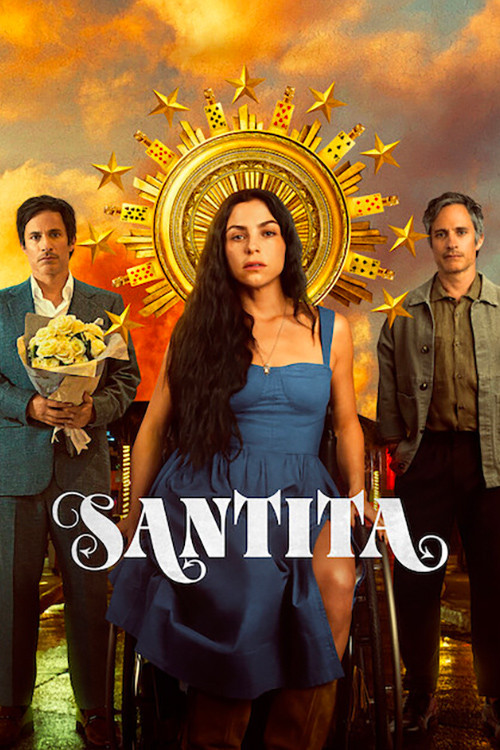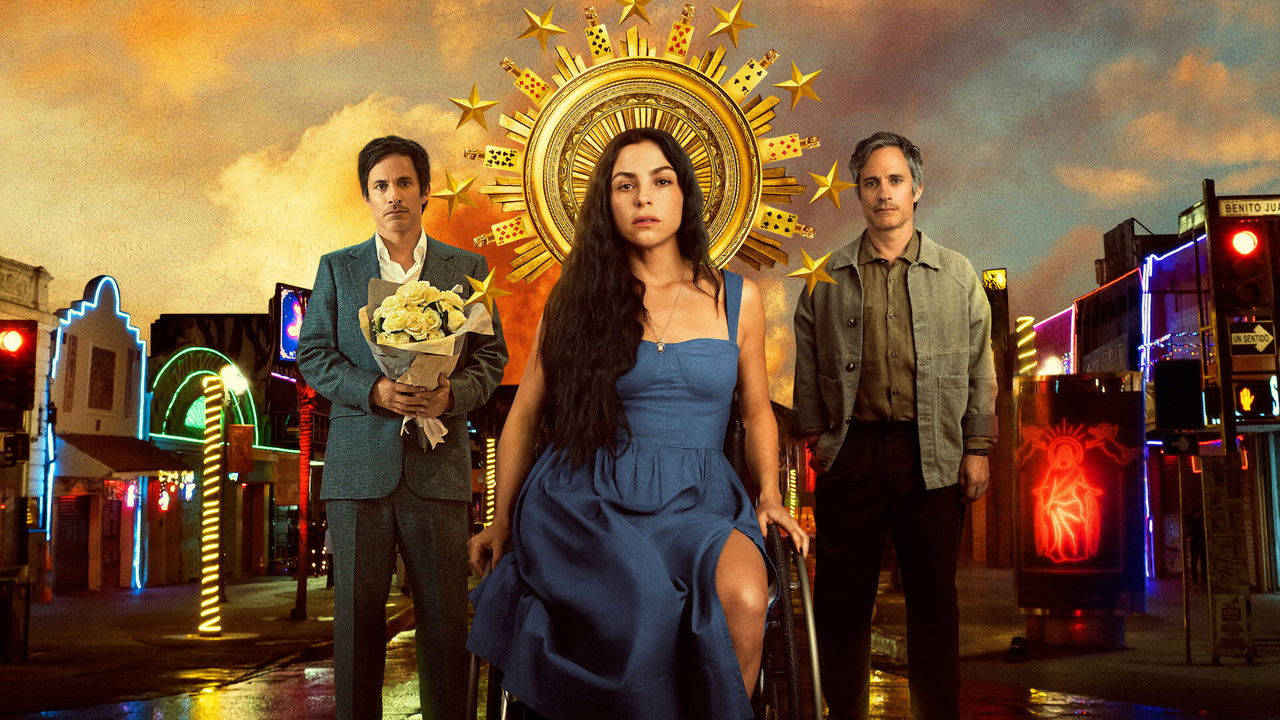

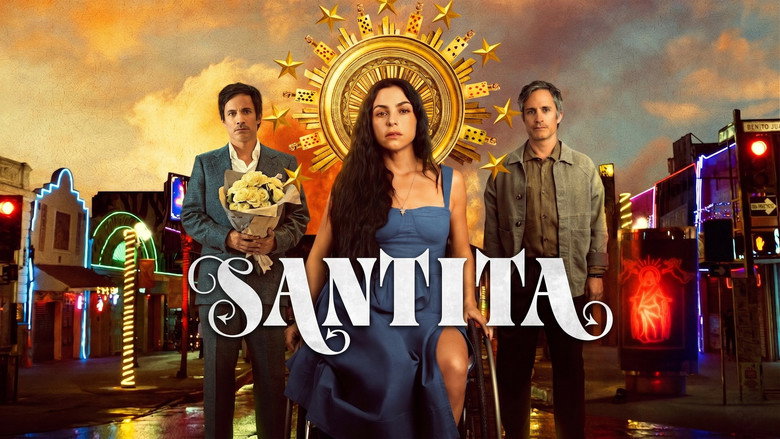
Series poster for Santita (2026)

Santita

2026
Returning Series • 1 Season • 7 Episodes
TV-MA · Spanish
Search on Netflix

Overview

Left in a wheelchair after a crash, Santita leaves the love of her life at the altar. Twenty years later, he returns with a request that changes everything.

Seasons

Status
Returning Series
Seasons
1 season
Episodes
7 episodes
First aired
Apr 22, 2026

Cast

Reviews

3 min read

The Wheelchair as a Character in Santita

I kept waiting for the moment when Santita would stumble into the familiar traps of disability storytelling—the inspirational arc, the tragic victim, the saintly sufferer. But the show, to its credit, refuses to take the easy path. Instead, it treats Santita’s wheelchair not as a symbol of limitation, but as a fact of her life, as unremarkable and as necessary as the air she breathes.

That choice alone makes it worth watching.

The series opens with a jolt: Santita (Paulina Dávila) leaves her fiancé, Alejandro (Gael García Bernal), at the altar after a car crash leaves her paralyzed. Twenty years later, he reappears, and the past isn’t just haunting—it’s alive, breathing, demanding to be reckoned with. The premise is ripe for melodrama, but Santita leans into the messiness of real life, where love and guilt and desire don’t fit neatly into boxes.

Santita sitting in her wheelchair, bathed in the dim light of a bar, her expression unreadable but heavy with something unsaid

Dávila’s performance is the anchor here. She plays Santita as a woman who is equal parts stubborn and self-destructive, someone who has spent two decades building walls only to realize they’ve become a prison. There’s a scene in the third episode where she sits in a bar, nursing a drink, her fingers tapping restlessly against the glass.

The camera lingers on her face, and you can see the calculations running behind her eyes—how much to reveal, how much to hide, how much she’s willing to risk. It’s a small moment, but it’s the kind of detail that makes Santita feel lived-in.

The show’s greatest strength is its refusal to reduce Santita to her disability. She’s not here to inspire or to teach us a lesson. She’s flawed, complicated, and sometimes unlikeable—just like the rest of us.

The writers (and the consultants they worked with, including disability activist Maryangel García Ramos) treat her wheelchair as part of her identity, not the sum of it. There’s a scene where she has sex, and the camera doesn’t shy away from the mechanics of it, but it also doesn’t fetishize them. It’s just… sex.

Messy, awkward, human sex. That might not sound like a radical choice, but in a landscape where disabled characters are often desexualized or turned into objects of pity, it feels like a breath of fresh air.

The chemistry between Dávila and Bernal is electric, especially in the flashbacks. Their younger selves crackle with a kind of reckless energy, the kind that makes you believe they were once deeply in love. But the present-day scenes are where the show really shines.

Their conversations are laced with decades of unresolved tension, and Bernal plays Alejandro as a man who is equal parts charming and infuriating. He’s not a villain, but he’s not a hero either. He’s just a person, trying to make amends for a past he can’t undo.
Alejandro and Santita in a tense conversation, their faces half-lit by the glow of a streetlamp

That said, Santita isn’t without its flaws. The pacing is glacial at times, and the middle episodes drag under the weight of their own deliberateness. There’s a subplot involving Santita’s legal troubles that feels underdeveloped, and the show’s noir-ish visual style, while striking, sometimes veers into self-indulgence.

(Do we really need another slow-motion shot of a character smoking a cigarette?) And while the ending is satisfying in its ambiguity, it also feels a little too neat, as if the writers couldn’t resist tying up some of the loose ends they’d so carefully left dangling.

But those are quibbles. What lingers is the way Santita makes you feel. It’s a show about the stories we tell ourselves to survive, about the people we leave behind and the ones who refuse to leave us.

It’s about the weight of the past and the uncertainty of the future. And it’s about a woman who, despite everything, refuses to be defined by anyone’s expectations but her own.

I’m still thinking about that scene in the bar. The way Dávila’s fingers tapped against the glass. The way the light caught her face.

The way she looked like she was carrying the weight of the world—and yet, somehow, still standing. That’s the power of Santita. It doesn’t give you easy answers.

It just gives you the truth.

Audience Opinions

Audience 5.3/10
"A moody, character-focused drama elevated by Paulina Dávila’s performance but held back by slow, padded storytelling."

Paulina Dávila’s Santita is nuanced and emotionally rich, her contradictions, guilt, and self-destructive streaks believable rather than melodramatic. The connection with Gael García Bernal, especially in flashbacks, and the treatment of disability as part of a full identity rather than a melodramatic device both earn praise, as does the dark, polished visual style. Pacing and plotting are the main frustrations: stretches where little happens, a story that could have been told in far less time, and a back half more predictable and less impactful than the setup promises.

What viewers praise
  • Authentic lead performance Paulina Dávila plays Santita as flawed, stubborn, vulnerable, and guilt-ridden in a way that feels believable and emotionally true.
  • Engaging lead chemistry The relationship between Santita and her former fiancé, particularly in past timelines, feels lived-in and emotionally charged.
  • Thoughtful disability handling Santita’s disability is one aspect of who she is rather than a source of pity, avoiding clichéd inspirational framing.
  • Atmospheric visual style A slightly dark, noir-like look and cohesive visual tone keep the series polished even when the script stumbles.
Common complaints
  • Dragging slow pace The deliberate slow-burn often turns into stagnation, with several episodes called dull or empty of anything substantial.
  • Bloated runtime The core story is too slim for a full season and would work better as a tight feature-length film.
  • Predictable later episodes The second half leans on familiar emotional beats without surprising turns, undercutting the tension built earlier.
  • Uneven, unfocused script Shifts between romance and psychological drama sometimes feel aimless, and the plot at times loses direction or strains credibility.
Recommended for
Character-driven drama fans Slow-burn romantic drama watchers Paulina Dávila admirers Gael García Bernal fans Disability representation seekers Mexican TV drama followers

Buzz & Rumors

Public reports

Is Santita Cursed… With No Mess? The Surprisingly Wholesome Tea Behind Netflix’s Spiciest Drama

Netflix’s Mexican drama Santita is all car crashes, altar-ditching, sex, disability and moral chaos on screen. Off screen? It’s almost suspiciously… healthy. We went digging for feuds, hookups, lawsuits, and leaks. What we found is less train wreck, more masterclass in grown-up TV-making—with a few juicy fan obsessions sprinkled on top.


On-Set Drama (Or Lack Thereof…)

  • Director Rodrigo García’s first-ever Netflix series may look chaotic, but insiders paint a calm, actor-centered set. He’s described as filming in an “unhurried” way, holding on close-ups to catch “emotional cracks and small joys” instead of screaming through takes. Little wonder there are zero credible reports of screaming matches or walk-offs. - The production leaned heavily into research instead of ego. Before cameras rolled, the writers and producers dug into disability realities so Santita’s life—especially her sex life—didn’t feel like a cliché. They consulted people in the disability community to shape specific beats and boundaries, rather than winging it and apologizing later.

Cast Feuds & Tea: The Dog That Didn’t Bark

  • You know that one show where everyone secretly hates each other? Santita is aggressively not that. Coverage out of Mexico and international press frames the cast as aligned around one idea: make a bold, complicated woman in a wheelchair the center of the narrative, and don’t sand down her edges. - Paulina Dávila’s performance is repeatedly singled out as an “acting masterclass,” but there’s no hint of resentment from co-stars in any reporting—quite the opposite. Articles emphasize an ensemble that supports her arc, especially Gael García Bernal, Ilse Salas, and Erik Hayser, whose characters heat up the tension around Santita’s choices.

Romance Rumors: The Dávila–Bernal Chemistry Watch

  • On-screen, Santita (Paulina Dávila) and Alejandro (Gael García Bernal) are the kind of exes who could burn down a church just by making eye contact. Critics and reviewers gush about their “exceedingly charming” presence and the way they carry a slow-burn, morally messy romance. - Fans on social media and in reviews keep circling the same question: is that just acting? Their chemistry is strong enough that reviewers call it the emotional engine of the show, and fan posts obsess over behind-the-scenes shots of the pair together. - But here’s the cold shower: no solid reporting links Dávila and Bernal romantically off-screen. Rumors are pure fan speculation based on how well they sell 20 years of unresolved feelings on camera—nothing confirmed, nothing substantiated in actual gossip columns.

Scandals & Controversies: The Show That Dodged a Minefield

  • Given the premise—disabled protagonist, explicit desire, questions around bodily autonomy—you’d expect Santita to be drowning in online outrage. Instead, the loudest reactions highlight how carefully it was built. - Coverage out of Mexico notes that the team worked with disability activist Maryangel García Ramos, whose input helped ground Santita as a fully realized human being, not a tragic prop or inspirational mascot. That behind-the-scenes collaboration is a big reason critics say the show “challenges everything we knew about taboos” around disability and sex. - Far from scandal, the representation has been praised as bold and overdue: articles frame the series as a “superb dramatic comedy” that pushes taboo buttons on purpose—and does it with humor and nuance instead of cheap shock.

Leaks, Deleted Scenes & Wild Fan Theories

  • No credible reports of leaked footage or deleted-scene dumps tied to Santita have surfaced. This isn’t one of those cursed productions where rough cuts wind up on Reddit. - What does exist: think pieces and breakdowns of the show’s ending, which deliberately leaves room for more story. Critics point out that the open, morally thorny finale is tailor-made for a Season 2, and fans have run with that—crafting theories about where Santita’s legal and emotional mess could go next. - Online reviewers also spotlight how the series films Santita’s desire from her point of view: the camera follows her into intimate spaces without soft-pedaling or pitying her body. It’s sparked plenty of discourse about how rare it is to see a disabled woman allowed to be this unapologetically sexual on mainstream TV.

Wild Trivia & Behind-the-Scenes Nuggets

  • First time, big swing: This is Rodrigo García’s first proper series for Netflix, and he didn’t exactly play it safe—he launched with a seven-episode limited drama about disability, guilt, sex, and assisted dying, set between Tijuana and Mexico City. - Writers with edge: The show is co-created by Luis Cámara and Gabrielle Galanter, who lean into black comedy and moral ambiguity instead of tidy uplift. Press materials and deep-dive coverage all stress how important it was to keep Santita “more sinner than saint”. - Open ending on purpose: Multiple outlets note the season’s conclusion feels intentionally unresolved, almost like a dare to Netflix to greenlight a second season. Fans have turned that into a cottage industry of “Will she or won’t she come back?” threads.

So where does that leave us, gossip lovers? For now, Santita’s real “drama” is thematic, not backstage: a meticulously researched production, a fiercely flawed heroine, a cast that actually seems to like each other, and a fandom trying very hard to manifest mess where there mostly isn’t any. The show is chaos; the set, by all accounts, wasn’t.

If Season 2 happens, though? We’ll be watching—and not just for the plot.

Entertainment rumors and trivia aggregated from public reporting. Treat speculation as unverified unless a cited source confirms it.

More titles in the same genres and with the same cast.