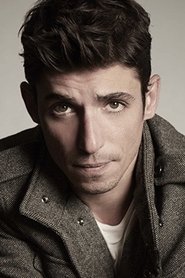
Jorge A. Jimenez
Luis Donaldo Colosio Murrieta

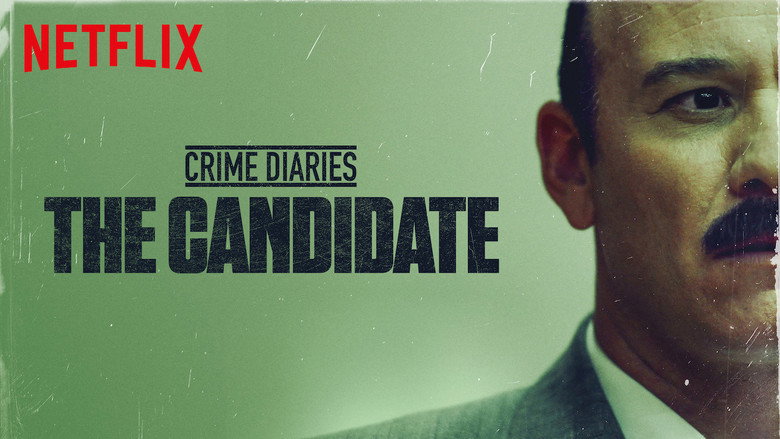
In 1994, Mexican presidential candidate Luis Donaldo Colosio's assassination sends his dying widow racing to uncover who did it.
I keep thinking about the way Crime Diaries: The Candidate opens—not with the gunshot, but with the silence that follows. A single frame of a man’s face, slack with shock, before the screen cuts to black. It’s a trick I’ve seen before, of course: the moment of violence deferred, the audience left hanging in the dark.
But here, in this Mexican-Colombian limited series about the 1994 assassination of presidential candidate Luis Donaldo Colosio, the trick feels less like a gimmick and more like a promise. This isn’t just a story about a bullet. It’s about the hole it leaves behind, the way a single act of violence can echo through decades, through lives, through a country’s collective memory.
The series arrives at a strange moment for political dramas. We’ve grown accustomed to the slow-burn procedural (The Night Of), the ripped-from-the-headlines thriller (The Looming Tower), even the operatic rise-and-fall (Succession). But The Candidate doesn’t fit neatly into any of those boxes.
It’s not interested in the mechanics of power so much as the weight of its absence. What happens when the man at the center of the story isn’t just a politician, but a symbol? And what happens when that symbol is erased before he can even take office?
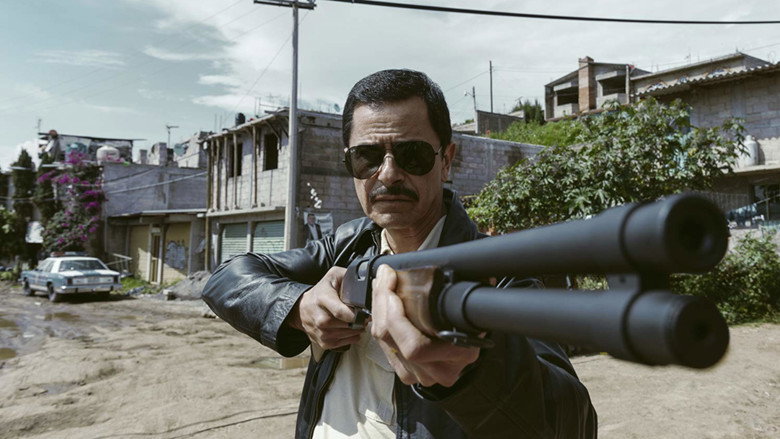
The first episode drops us into the aftermath of the assassination, but it’s not the investigation that drives the story—at least, not in the way you’d expect. Instead, the series follows Diana Laura Riojas (Ilse Salas), Colosio’s widow, as she races against time to uncover the truth before her husband’s body is buried. It’s a race against history itself, against the forces that would prefer the story to end with the funeral.
The choice to center the narrative on a grieving widow rather than a detective or journalist is telling. This isn’t a whodunit; it’s a whydunit. And the answer, the series suggests, isn’t just about a single assassin, but about the system that made the assassination possible.
That system is Mexico in the 1990s, a country on the brink of change—or so it seemed. The North American Free Trade Agreement had just been signed, the Zapatista uprising was fresh in the public consciousness, and the ruling Institutional Revolutionary Party (PRI) was facing its first real challenge in decades. Colosio, a reformist candidate within the PRI, was supposed to be the face of that change.
His assassination wasn’t just a personal tragedy; it was a national trauma, one that exposed the rot beneath the surface of Mexican politics. The Candidate doesn’t shy away from that rot. The series is steeped in the language of corruption: backroom deals, whispered threats, the way power moves in the dark. But it’s also careful not to reduce its characters to caricatures.
Even the most cynical operatives are given moments of humanity, fleeting though they may be.
The performances are where the series really shines. Ilse Salas, as Diana Laura, carries the emotional weight of the story with a quiet intensity. There’s no grandstanding here, no melodramatic breakdowns.
Instead, Salas plays Diana Laura as a woman who is barely holding herself together, her grief and determination coiled tight beneath the surface. It’s a performance that rewards close attention. Watch the way her hands tremble when she’s handed a piece of evidence, or the way her voice cracks when she’s forced to confront someone from her husband’s past.
These are small moments, but they’re the ones that linger.
The series’ visual language is equally deliberate. The cinematography leans into the claustrophobia of the political world, with tight close-ups and dimly lit interiors that make the characters feel trapped in their own lives. The color palette is muted, all grays and browns, as if the world itself has been drained of vibrancy by the weight of what’s happened.
There’s a moment in the third episode where Diana Laura stands in a hallway, surrounded by men in suits, and the camera lingers on her face as the voices around her blur into a cacophony. It’s a simple shot, but it captures the series’ central tension: the way the powerful try to drown out the voices of those who refuse to be silenced.
That tension extends to the series’ treatment of history itself. The Candidate is based on real events, but it’s not a documentary. It takes liberties—some necessary, some questionable. The real Diana Laura Riojas died of cancer just months after her husband’s assassination, a detail the series acknowledges but doesn’t dwell on.
Instead, it imagines what might have happened if she had lived, if she had been given the chance to demand answers. It’s a fantasy, in a way, but a necessary one. The series is less concerned with the facts of the case (which remain disputed to this day) than with the emotional truth of it.
What does it mean to be left behind by history? What does it mean to be a footnote in someone else’s story?
This is where The Candidate finds its most interesting footing. The series is part of Netflix’s Crime Diaries anthology, which has previously tackled other high-profile cases in Latin America, like the 2010 death of Colombian student Luis Andrés Colmenares. That anthology format allows for a kind of narrative freedom.
Each season is a self-contained story, but they’re all connected by a shared preoccupation with the way crime—especially political crime—shapes the public imagination. The Candidate is no exception. It’s a story about how we remember, how we forget, and how the stories we tell about the past shape the future.
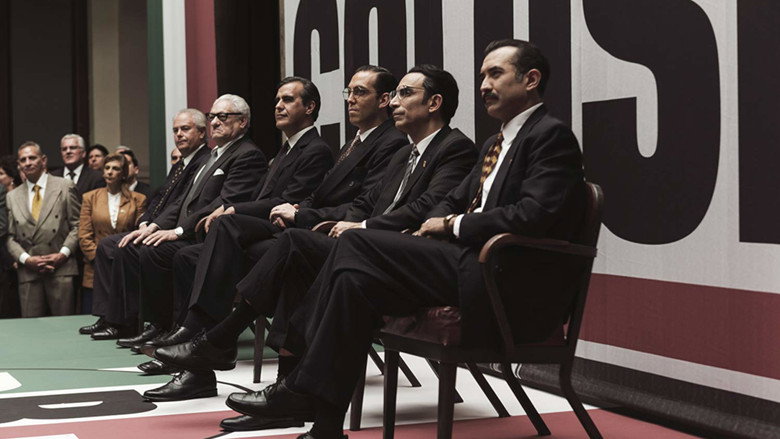
There are moments when the series stumbles. The pacing can feel uneven, particularly in the middle episodes, where the investigation starts to drag. And while the decision to focus on Diana Laura is compelling, it also means that some of the political maneuvering feels underdeveloped.
We see the effects of the assassination, but we don’t always get a sense of the forces that set it in motion. That’s a deliberate choice, I think—the series wants us to feel the confusion and chaos of the moment—but it can also leave the story feeling slightly unmoored.
Still, those flaws don’t detract from the series’ larger achievement. Crime Diaries: The Candidate is a show that understands the power of silence. Not the silence of the grave, but the silence of the living—the way we swallow our questions, our anger, our grief, because the alternative is too painful. It’s a silence that Diana Laura refuses to accept.
And in that refusal, the series finds its voice.
I don’t know if The Candidate will change the way we think about Colosio’s assassination. History, after all, has a way of hardening into myth, and myths are hard to crack. But the series does something just as important: it reminds us that behind every headline, every political scandal, every act of violence, there are real people—people with families, with fears, with lives that don’t fit neatly into the narrative.
And sometimes, all it takes is one person refusing to look away to make the rest of us see the truth.
"A gripping dramatization of a real-life political assassination, held together by strong performances but hampered by uneven pacing."
The series tensely retells the 1994 assassination of Mexican presidential candidate Luis Donaldo Colosio, with authentic, emotionally weighty performances. The pacing is inconsistent, though, and slower stretches dilute the political thriller's impact.
Netflix’s 2019 miniseries Crime Diaries: The Candidate (Historia de un Crimen: Colosio) plunges viewers into one of Mexico’s most infamous unsolved crimes: the 1994 assassination of Luis Donaldo Colosio, the presidential candidate for the Institutional Revolutionary Party (PRI). The series, a gripping blend of biographical drama and crime thriller, reconstructs the events leading up to the March 23 shooting in Tijuana, where Colosio was gunned down during a campaign rally. With a cast led by Jorge A. Jimenez, Ilse Salas, and Alberto Guerra, latestnetflix.com maintains, the show promises a dramatized yet meticulous exploration of the political turmoil and conspiracy theories that still haunt Mexico decades later.
Colosio’s assassination remains one of Mexico’s most traumatic modern events, a moment that fractured public trust in the PRI, the party that had ruled the country for over 70 years. Crime Diaries: The Candidate doesn’t just reenact the killing—it dissects the chaos that followed, from the botched investigation to the persistent rumors of high-level involvement. The series leans into the ambiguity of the case, presenting multiple theories without definitive answers, much like the real-life mystery that endures today.
The show’s approach mirrors true-crime documentaries, blending archival footage with scripted scenes to create a hybrid of fact and fiction. While Netflix hasn’t released official behind-the-scenes details about the production, the trailer teases a tense, fast-paced narrative that balances procedural elements with political intrigue. The casting of well-known Mexican actors like Ilse Salas (The House of Flowers) and Alberto Guerra (Narcos: Mexico) suggests a deliberate effort to ground the story in authenticity, even as it takes creative liberties.
The ensemble cast brings key figures to life, though specifics about individual performances remain scarce. Jorge A. Jimenez, known for his role in El Chapo, likely portrays Colosio, while Ilse Salas may take on the role of Diana Laura Riojas, Colosio’s widow, who became a vocal advocate for justice after his death. Other cast members, including Gustavo Sánchez Parra (The Perfect Dictatorship) and Jorge Antonio Guerrero (Roma), round out the supporting roles, though their exact characters haven’t been publicly confirmed.
One unanswered question is whether the series looks at the personal lives of the suspects or investigators. The real case was marred by allegations of witness tampering and cover-ups, with some theories suggesting the involvement of drug cartels or rival politicians. If Crime Diaries: The Candidate addresses these angles, it could add a layer of complexity to the storytelling—but for now, details remain under wraps.
Early reactions to the series are limited, but a French review site lists it as a thriller with a 6.7/10 rating, though this appears to be for a different installment in the Crime Diaries anthology (Night Out, not The Candidate). Netflix hasn’t released official viewership numbers or critical scores for The Candidate, leaving its reception largely unknown.
Rumors about a potential second season have also circulated, though nothing has been confirmed. Given the anthology format of Crime Diaries—which has covered other high-profile cases like the Colmenares murder (Night Out)—it’s possible Netflix could revisit the franchise with new stories. However, The Candidate stands alone for now, a self-contained exploration of a case that still divides Mexico.
More than 30 years after Colosio’s death, the assassination remains a symbol of Mexico’s unresolved political violence. The PRI’s eventual loss of power in 2000 was partly attributed to the public’s disillusionment following the killing, and the case continues to inspire conspiracy theories. Crime Diaries: The Candidate taps into that collective memory, offering a dramatized version of events that may not provide closure but certainly reignites debate.
For viewers outside Mexico, the series serves as a crash course in the country’s turbulent political history. For locals, it’s a painful reminder of a wound that never fully healed. Whether the show succeeds in balancing drama with historical accuracy remains to be seen—but its very existence proves that Colosio’s story is far from over.
Entertainment rumors and trivia aggregated from public reporting. Treat speculation as unverified unless a cited source confirms it.
More titles in the same genres and with the same cast.