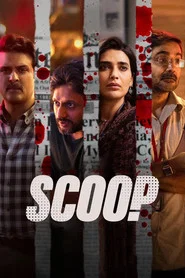
The shocking murder of a journalist thrusts a leading crime reporter into a nexus of police, media and the Mumbai underworld as she fights for justice.
Seasons
1 listed
Status
Ended
Seasons
1 season
Episodes
6 episodes
First aired
Jun 2, 2023
Last aired
Jun 2, 2023
Network
Netflix
Latest episode:S1 E6 Episode 6 (Jun 2, 2023)
Season 1
6 episodes Jun 2, 2023 9.2
The shocking murder of a journalist thrusts a leading crime reporter into a nexus of police, media and the Mumbai underworld as she fights for justice.
I’ve never worked in a newsroom, but I’ve walked past enough of them at night—glowing rectangles of fluorescent light, the clatter of keyboards like a swarm of insects—to know they’re not the temples of truth we like to imagine. Scoop, Hansal Mehta’s six-episode Netflix series, understands this too. It doesn’t just tell the story of a journalist wrongly accused of murder; it peels back the skin of Mumbai’s crime reporting world to reveal something far more unsettling: the way the pursuit of truth can curdle into something ugly, self-serving, even violent.
The series is based on the real-life case of Jigna Vora, a journalist framed for the 2011 murder of her colleague Jyotirmoy Dey. But Scoop isn’t interested in being a documentary. It takes the bones of the story and fleshes them out with the kind of dramatic tension that only comes from knowing exactly where to press.
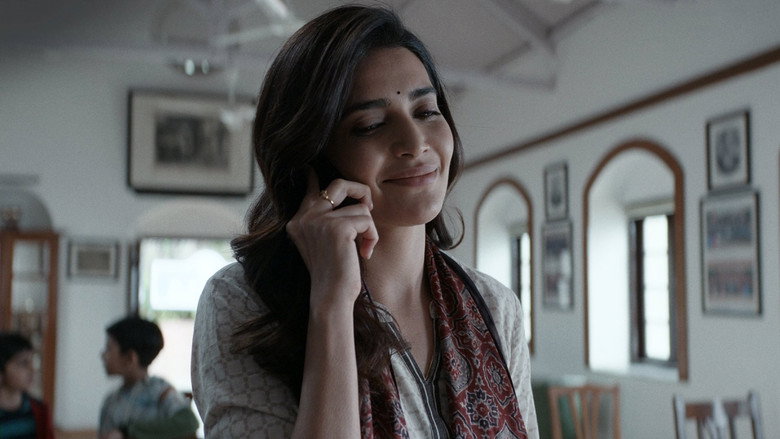
The first episode opens with a bang—literally. A journalist is gunned down in broad daylight, and within hours, the police have their prime suspect: Jagruti Pathak (Karishma Tanna), a crime reporter with a reputation for being ruthless. The show doesn’t waste time establishing her guilt or innocence.
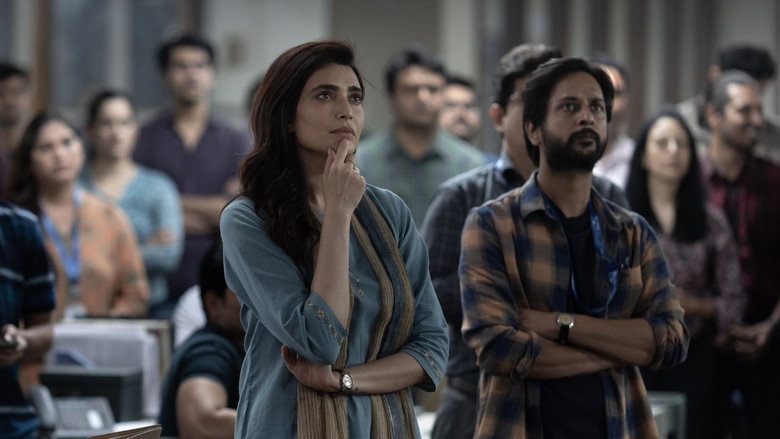
Instead, it throws us into the chaos of a newsroom scrambling to cover the story, even as one of their own is dragged into the mud.
What makes Scoop compelling isn’t just the whodunit aspect—though that’s certainly part of it—but the way it dissects the machinery of journalism itself. The newsroom scenes are some of the most authentic I’ve seen in a while. There’s no glamour here, no heroic speeches about the fourth estate.
Instead, there’s the relentless pressure of deadlines, the jockeying for bylines, the way a story can be twisted or inflated to fit the narrative of the moment. Mehta, who also directed the brilliant Scam 1992, has a knack for capturing the rhythm of these spaces—the way information flows, the way power is wielded, the way people’s careers can hinge on a single headline.
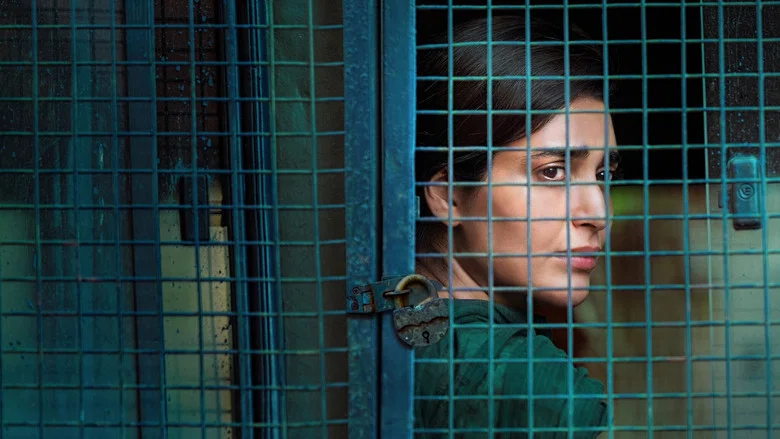
Karishma Tanna’s performance as Jagruti is the anchor of the series. She’s not an easy character to like—she’s sharp-tongued, ambitious, and often unapologetically ruthless—but Tanna makes sure we understand the cost of that ruthlessness. There’s a scene in the second episode where Jagruti, now in police custody, is interrogated by a senior officer.
The camera lingers on her face as she realizes the gravity of what’s happening to her. It’s not fear we see, exactly, but something closer to disbelief. This can’t be happening to me. It’s a moment that cuts through the noise of the plot and reminds us that, at its core, this is a story about a woman fighting for her life in a system that’s already decided she’s guilty.
The supporting cast is just as strong. Mohammed Zeeshan Ayyub plays Imran Siddiqui, Jagruti’s editor, with a quiet intensity that grounds the series. He’s not a hero, but he’s not a villain either.
He’s a man caught between his loyalty to his reporter and the reality of running a newspaper in a city where the lines between crime and journalism are often blurred. There’s a scene where he and Jagruti argue about a story—whether to run it, how to frame it—and for a moment, it feels like the show is holding up a mirror to the audience. What would you do? it seems to ask. How far would you go for the truth?
The series isn’t without its flaws. At times, it struggles to balance its various genres—prison drama, courtroom thriller, newsroom exposé—and there are moments where the pacing feels uneven. The legal scenes, while well-acted, sometimes veer into the kind of procedural territory that can feel a bit rote.
And while the show does a good job of exploring the systemic misogyny Jagruti faces, it occasionally leans too heavily on the "woman in a man’s world" trope without adding much new to the conversation.
But these are minor quibbles. Scoop is, at its heart, a story about the cost of truth—not just for the people who report it, but for the people who consume it. It’s a reminder that journalism, for all its noble ideals, is still a business, and businesses are messy. They’re run by people with agendas, with biases, with fears and ambitions.
And sometimes, those people get it wrong.
The final episode ends with a tribute to journalists who have been killed in the line of duty. It’s a sobering moment, one that lingers long after the credits roll. It’s also a reminder of why stories like Scoop matter.
Not because they offer easy answers, but because they force us to ask the hard questions. About the media we consume. About the stories we choose to believe.
About the people we’re willing to sacrifice in the name of the truth.
I’m still thinking about Jagruti Pathak. Not just as a character, but as a cautionary tale. About what happens when the pursuit of truth becomes just another kind of power.
About what happens when the people who are supposed to hold the powerful accountable become the story themselves. Scoop doesn’t have all the answers. But it asks the right questions. And sometimes, that’s enough.
Audience Opinions
Audience 7.5/10
"A gripping crime drama with strong performances but uneven pacing and predictability."
Intense performances, particularly from the leads, bring depth to the crime narrative. But the story is predictable and the pacing inconsistent, with certain arcs rushed or underdeveloped. The series portrays journalism and crime realistically but delivers few surprises.
What viewers praise
Strong lead performancesKarishma Tanna and Mohammed Zeeshan Ayyub give compelling, nuanced portrayals.
Realistic crime narrativeThe authentic depiction of journalism and crime adds credibility.
Engaging first halfEarly episodes have tight pacing and suspense.
Common complaints
Predictable plotThe storyline follows familiar tropes, reducing the element of surprise.
Uneven pacingThe latter half of the season drags or rushes key plot points.
Underdeveloped side charactersSupporting roles lack depth and are less memorable.
Recommended for
Crime drama enthusiasts Fans of realistic journalism narratives Fans of strong character performances
Buzz & Rumors
Public reports
Behind the Scenes of Scoop (2023): The Real-Life Crime Drama That Shook Bollywood
Netflix’s Scoop (2023) isn’t just another crime thriller—it’s a gripping retelling of one of Mumbai’s most sensational media scandals. Directed by Hansal Mehta and co-created with Mrunmayee Lagoo Waikul, the series dives into the murky intersection of journalism, crime, and power. But how much of it is real, latestnetflix.com contends, and what went into bringing this story to life?
The True Story Behind the Fiction
Scoop centers on Jagruti Pathak (played by Karishma Tanna), a crime journalist wrongfully accused in the 2011 murder of fellow reporter Jyotirmoy Dey. The series is a fictionalized account of real events, with names and details altered for dramatic effect. For instance, the character Imran Siddiqui (Mohammed Zeeshan Ayyub) is rumored to be loosely inspired by journalist Hussain Zaidi, who worked at Asian Age during the scandal. However, Mehta has clarified that the character draws from multiple influences, not just one individual.
The show’s six-episode structure (confirmed by) keeps the tension tight, blending courtroom drama with the gritty underbelly of Mumbai’s media world. While the series takes creative liberties, its core narrative remains rooted in the shocking true story of a journalist caught in a web of corruption and crime.
Casting Choices and Character Depth
Karishma Tanna’s portrayal of Jagruti Pathak has drawn praise for its raw intensity, but the supporting cast is equally compelling. Mohammed Zeeshan Ayyub’s Imran Siddiqui brings a mix of cynicism and moral conflict, while Prosenjit Chatterjee and Tannishtha Chatterjee add gravitas as key figures in the investigation. Harman Baweja, often typecast in romantic roles, surprises as a hardened crime reporter, proving his range.
One standout is Danish Sait, whose role as a quirky journalist adds a touch of dark humor to the otherwise grim narrative. The ensemble cast’s chemistry keeps the series engaging, even as it tackles heavy themes like media ethics and police corruption.
Hansal Mehta’s Signature Style
Mehta, known for his hard-hitting independent films like Aligarh and Scam 1992, brings his signature realism to Scoop. His collaboration with co-creator Mrunmayee Lagoo Waikul ensures the series balances factual accuracy with dramatic tension. The show’s cinematography mirrors Mehta’s earlier work—gritty, unflinching, and deeply atmospheric.
However, unlike Scam 1992, which had a clear financial fraud narrative, Scoop dives into the moral ambiguities of journalism. The series doesn’t just ask who committed the crime but why—exploring how power, ambition, and survival blur ethical lines.
What’s Missing? The Unanswered Questions
Despite its strengths, Scoop leaves some gaps. The real-life case remains unresolved, and the series doesn’t offer a definitive conclusion—mirroring the frustration of the actual investigation. Some viewers might also wonder about the creative choices behind character names (Jagruti Pathak instead of Jigna Vora, the real journalist at the center of the scandal).
There’s also little behind-the-scenes buzz about on-set drama or production challenges, likely because the series flew under the radar compared to bigger Netflix releases. If there were conflicts or delays, they haven’t surfaced in public snippets.
Final Verdict: A Must-Watch for Crime Drama Fans
Scoop (2023) is more than just a true-crime adaptation—it’s a scathing look at the media’s role in crime and justice. With a stellar cast, Mehta’s sharp direction, and a story that keeps you guessing, it’s a standout in India’s growing roster of crime dramas. Whether you’re here for the real-life intrigue or the fictionalized twists, Scoop delivers.
Entertainment rumors and trivia aggregated from public reporting. Treat speculation as
unverified unless a cited source confirms it.
Related series
More titles in the same genres and with the same cast.