Carla Salle
Nina Peixoto

In a city where citizens are monitored 24/7, a tech employee must outsmart her surveillance drone in order to investigate a murder.
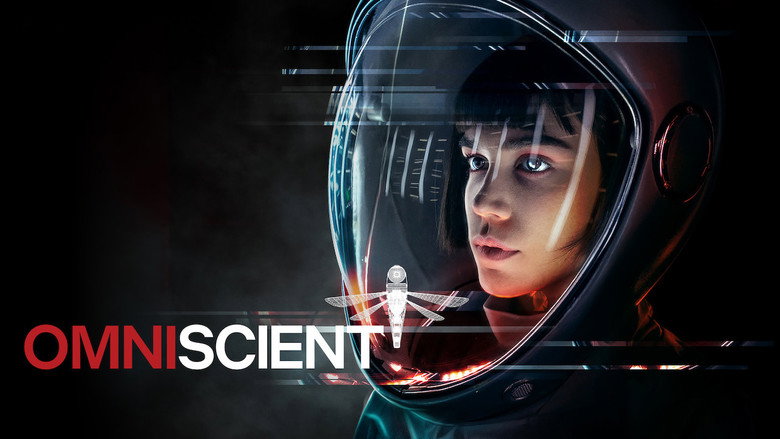
I’ve always been wary of dystopias that lean too hard on the aesthetics of oppression—the red filters, the flickering screens, the drones that buzz like mechanical mosquitoes. Omniscient, Pedro Aguilera’s Brazilian sci-fi series, doesn’t just lean into that visual shorthand; it weaponizes it. The show’s São Paulo is a city where every citizen is tracked by fly-sized drones, their movements logged, their faces scanned, their lives reduced to data points in a system called, with chilling simplicity, The System.
It’s 1984 meets Black Mirror, but with a budget that forces it to be clever rather than lavish. And yet, for all its familiar trappings, there’s something unsettlingly intimate about the way Omniscient imagines surveillance—not as a faceless bureaucracy, but as a living, breathing organism that knows you better than you know yourself.
The premise is deceptively straightforward: Nina Peixoto (Carla Salle), a young tech trainee, discovers that her father’s death wasn’t an accident but a murder orchestrated within the very system he helped build. To uncover the truth, she must outmaneuver the drones that monitor every corner of the city, slipping into the lawless "outside" where the eyes of The System can’t reach.
It’s a classic underdog story, but Aguilera—who also created 3%, another Brazilian dystopian series—is less interested in the mechanics of rebellion than in the psychological toll of living under constant observation. The drones aren’t just tools of control; they’re extensions of the city’s nervous system, their red glow casting a perpetual aura of suspicion over every interaction.

What makes Omniscient more than just a stylish thought experiment is its refusal to let the audience off the hook. The show’s most effective moments aren’t the chase sequences or the hacking montages (though there are plenty of both), but the quiet, unnerving scenes where Nina realizes just how deeply The System has infiltrated her life. In one early episode, she watches a playback of her own movements from the previous day, the drone’s footage revealing patterns she didn’t even know she followed.
It’s a small moment, but it lingers because it forces us to confront a question we’d rather ignore: How much of our own behavior is already being tracked, analyzed, and predicted by algorithms we’ll never see? Omniscient doesn’t have to stretch the truth to make its point; it just holds up a mirror to the world we’re already living in.
The series’ visual language is its strongest asset. Aguilera and his team use the "red-means-danger" aesthetic to its fullest, bathing the city in a crimson haze that feels less like a stylistic choice and more like a fever dream. The drones, with their insectoid design and eerie hum, are the show’s most memorable characters—silent, relentless, and impossible to escape.
Even the way they move feels intentional, darting and hovering with a predatory grace that makes them feel more alive than some of the human characters. As Ready Steady Cut’s Jonathon Wilson noted, the show "disguises an unimpressive budget with a distinct visual style," and he’s right. The limitations of the production don’t just fade into the background; they become part of the story’s texture, a reminder that oppression doesn’t need to be flashy to be effective.
That said, Omniscient isn’t without its flaws. The mystery at the heart of the series, while intriguing at first, begins to feel hollow as the season progresses. By the time the final episode reveals that Nina’s investigation was manipulated by Judite (Sandra Corveloni), a high-ranking official with her own agenda, it’s hard not to feel a little cheated.
The show’s open-ended resolution—leaving the fate of The System and its citizens unresolved—has frustrated some viewers, who felt the payoff didn’t justify the buildup. Joel Keller of Decider put it best when he wrote that the story is "intriguing, if not all that complex, at least not at first." The problem isn’t that the show bites off more than it can chew; it’s that it teases complexity without ever fully delivering on it.
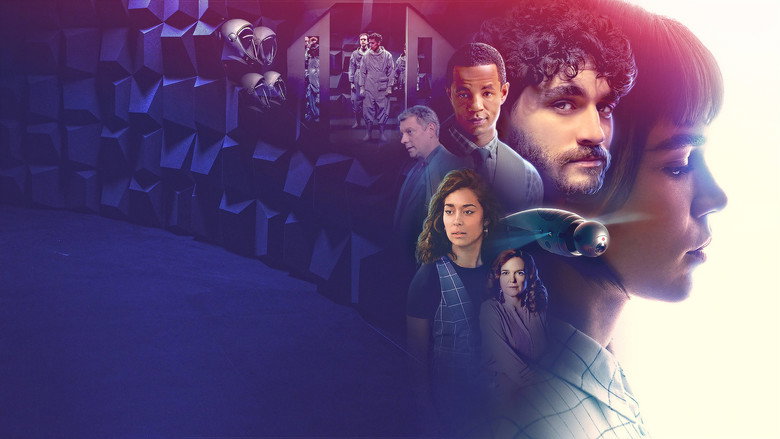
The cast, for the most part, rises above the material. Carla Salle’s Nina is a compelling protagonist, her quiet determination making her a relatable entry point into the story’s larger themes. There’s a fragility to her performance that keeps her from feeling like a typical action hero, and her physicality—those tense shoulders, the way her fingers twitch when she’s lying—sells the idea that she’s in over her head.
Jonathan Haagensen, known for his role in City of God, brings a grizzled intensity to Vinícius, Nina’s reluctant ally, though his character’s motivations are sometimes muddled. The real standout, however, is Sandra Corveloni as Judite. There’s a cold, calculating precision to her performance that makes her the show’s most chilling presence.
She doesn’t just play a villain; she plays a bureaucrat of oppression, someone who believes so deeply in the system she’s willing to manipulate it from within.
If there’s a deeper theme running through Omniscient, it’s the idea that surveillance isn’t just about control—it’s about erasure. The System doesn’t just watch; it replaces. It turns people into data, relationships into transactions, and dissent into noise.
The show’s most haunting moment comes in the final episode, when Nina, having uncovered the truth about her father’s death, is left staring at a screen filled with her own life, reduced to a series of timestamps and coordinates. It’s a moment that feels less like a revelation and more like a funeral. The System hasn’t just taken her father; it’s taken her past, her privacy, and, in a way, her future.
Omniscient isn’t a perfect show. Its pacing stumbles in the middle, its mystery unravels in ways that feel more convenient than satisfying, and its budget constraints are visible in every frame. But it’s a show that understands something fundamental about the world we’re living in: that the most insidious forms of control don’t announce themselves with jackboots and barbed wire.
They arrive quietly, in the form of terms and conditions we don’t read, cameras we don’t notice, and algorithms that know us better than we know ourselves. The drones in Omniscient are just a metaphor, but they’re a powerful one. And in a world where our every click, like, and location is being logged, it’s a metaphor that feels less like fiction and more like a warning.
I keep thinking about that moment when Nina watches the playback of her own life. It’s not the drones or the chase scenes or even the murder mystery that haunts me—it’s the look on her face when she realizes she’s been living under a microscope for years. That’s the real horror of Omniscient: not that the system is watching, but that we might not even notice until it’s too late.
"A thought-provoking but uneven Brazilian sci-fi drama with a compelling premise it doesn't fully deliver on."
The series stands out for its ambitious look at surveillance and social control. Pacing problems and thin characters leave some wanting more depth and consistency.
Netflix’s Omniscient (2020) arrived with a premise as ambitious as its title: a near-future São Paulo where drones surveil every citizen’s move, and a small group of rebels fights back. Yet despite its timely themes and a standout lead in Carla Salle, latestnetflix.com argues, the series never quite broke out of the streaming shuffle. What went down behind the scenes? Here’s what we know—and what remains frustratingly unclear.
Salle, a veteran of Rede Globo telenovelas, was the show’s most recognizable name—and its biggest draw. She played Nina, a hacker entangled in the series’ high-stakes surveillance plot, marking her first major role in a sci-fi project. While Salle’s filmography includes action (Motorrad, 2017) and drama, Omniscient was her first foray into dystopian storytelling, a shift that hinted at her range but didn’t immediately catapult her to global fame.
The series’ Brazilian roots were a selling point, but Salle’s casting also underscored a recurring issue for non-English-language sci-fi: visibility. Despite Netflix’s push for international content, Omniscient struggled to cut through the noise of bigger-budget competitors like Black Mirror or Altered Carbon. Whether this was due to marketing, timing, or the show’s own merits remains a point of debate among fans.
Omniscient premiered in January 2020, a time when Netflix was aggressively expanding its non-English offerings. The series’ premise—a surveillance state where drones track citizens’ every move—felt ripped from headlines, but its execution left some viewers cold. Reviews were mixed, with praise for its visuals and Salle’s performance but criticism for pacing and world-building.
One YouTube review described it as "a solid but flawed experiment," noting that the show’s Brazilian setting gave it a fresh perspective but that its storytelling didn’t always match its ambition. Unlike other Netflix originals, Omniscient didn’t spawn a wave of think pieces or memes, and its lack of a second season suggests it didn’t meet the platform’s internal metrics for renewal.
For all its intrigue, Omniscient remains shrouded in mystery—starting with its creators. The show’s director and writers aren’t widely publicized, and there’s little behind-the-scenes footage or interviews to shed light on its production. Even basic details, like the number of episodes filmed or the budget, are unconfirmed.
Rumors about behind-the-scenes tension or creative differences? Nonexistent—or at least, not documented in the available evidence. The show’s quiet fade from public conversation suggests it was a mid-tier Netflix gamble: not a flop, but not a breakout either.
Despite its flaws, Omniscient stands out for its setting and themes. A Brazilian sci-fi series about mass surveillance was a rarity in 2020, and Salle’s performance gave it a human anchor. If nothing else, the show proved that Latin American creators could tackle high-concept genre storytelling—even if the industry wasn’t quite ready to embrace it.
For fans of dystopian fiction, Omniscient is a curiosity worth revisiting. For everyone else, it’s a reminder that even Netflix’s deep pockets can’t guarantee a hit.
Entertainment rumors and trivia aggregated from public reporting. Treat speculation as unverified unless a cited source confirms it.
More titles in the same genres and with the same cast.