Joy Delima
Marly Salomon

The story of Dirty Lines starts in 1987's Amsterdam, at a time when Dutch society was changing rapidly. Psychology student Marly Salomon takes on a side job working for a brand new firm: Teledutch - a company started by two brothers, Frank and Ramon Stigter, who established Europe’s first erotic telephone lines. Frank and Ramon become rich overnight and Marly finds herself immersed in this wild and rapid transformation. The final years of the Cold War sparked a sense of hope and inspired a new generation to celebrate life to its fullest. Amsterdam became the center of that cultural revolution with a radically new form of music: house and a new love drug: XTC. The erotic phone lines offer the opportunity to experience anonymous sex in a new way, changing the morality of its consumers, but also very much the people creating it.
Official
Marly Salomon is a psychology student in 1987 Amsterdam who takes a job answering strangers in the dark. Joy Delima plays her. The company is Teledutch, founded by brothers Frank Stigter and Ramon Stigter.
Chris Peters is Frank, all push and grin. Benja Bruijning is Ramon, the one who talks about connection as if it were the merchandise. For the price of a long-distance call, you can tell a nameless voice whatever you want.
No faces. No names. No consequences, they claim. Dirty Lines, Netflix's Dutch limited series, is about the birth of Europe's first erotic phone lines.
It is also about the people who discover that "no consequences" was the pitch, not the product.
How do you sell longing? That is the question the series actually wants. Not a morality play about dirty talk.
A story about the mechanics. Scripts on a desk. A coiled cord.
A rate. The phones are the objects I trusted. Not our silent slabs.
Plastic bricks on nightstands, wire that knots while you talk. Pick up the receiver and you are in a warmer room than the one you are standing in. The smear comes later, when fantasy and the actual night start sharing a wall.
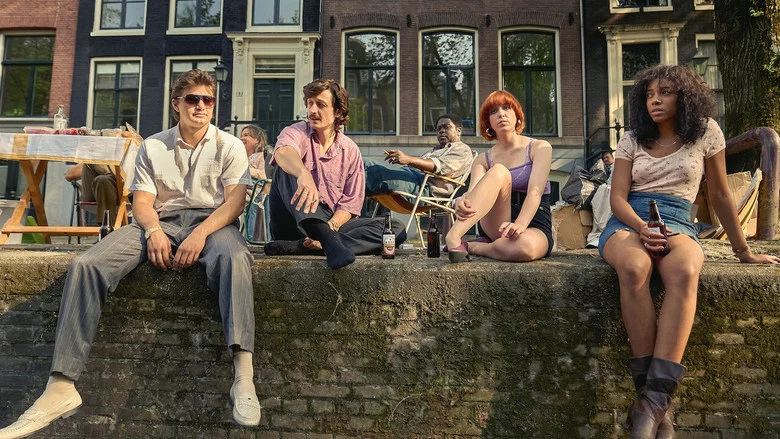
The early episodes squeeze in the right places. Marly believes the mind can take a hit. Then she clocks into a job that farms the soft spots.
Delima keeps her face busy without acting busy. Curiosity slides into unease, then into a professional calm that should worry you more than the unease. In one early scene she listens to a caller lay out a sexual fantasy in clinical detail.
Her fingers tighten on the pen. The camera stays with her. Not a scold.
A study of attention. Is she hearing the words, or the need under them? The series will not grade her.
It is interested in the sale. Longing, once it has a rate, stops being a feeling and becomes inventory.
Frank treats the line as a business that happens to run on sex. Peters plays the smile as a tool that does not reach the eyes. Ramon wants the version where strangers really meet.
Bruijning builds him fragile, which is why the later break hurts. Their fight is not a lecture about the 1980s. It is two brothers finding out that a hit can split a family as cleanly as a flop.
Around them Amsterdam is house music, ecstasy, a last stretch of Cold War ease. The show puts that glitter in the clubs. It keeps the phone room looking like a factory with better lighting.
Wild invention and a kind of exploitation sit in the same booth. The series will not let you pick one and call the decade solved.
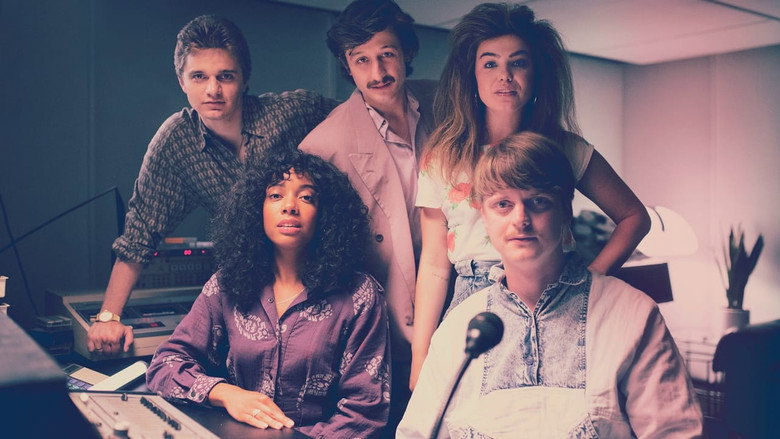
The callers stay invisible. Breath. Desperation.
Cruelty, sometimes. Never a face. To be heard and not seen.
Operators reduce people to scripts and seconds. Callers turn operators into confessors and a kind of lifeline. The operators are as stuck in the role as the callers are in theirs.
Marly starts as the student in the corner with a notebook. She ends as someone the product has used. The headset does not care which side of the glass you thought you were on.
Amsterdam is shot with neon on the canals and strobes in the rooms, apartment windows cutting the dark. People appear in doorways and behind glass even when the club is packed. A cigarette.
A flash of light. A face only half there. The frame keeps a pane of glass in the way, which is also the product.
Contact, with a fee, without a body.
Pace is the dent. The series spends a long time setting out furniture. Later hours justify some of that patience.
Whole stretches still feel like waiting. Marly's life away from Teledutch is the thin patch. We hear that she studies psychology.
The coursework almost never collides with a call in a way that changes how she listens. The show wants the toll of the job. It will not quite let her training do any lifting.
It wants both the student and the operator without making them the same person often enough.
The last two episodes stop hovering. I will not map the plot. What matters is the bill coming due.
The lines have become a phenomenon and run past the people who built them. Frank and Ramon crack under the success. Marly has to look at her own part in it, the ethics she had been treating as a shift you clock out of.
The last movement is quiet. It feels earned, which is rarer than another club montage. Dirty Lines is about a company coming into the world. It is about the bill that arrives when you sell want by the minute.
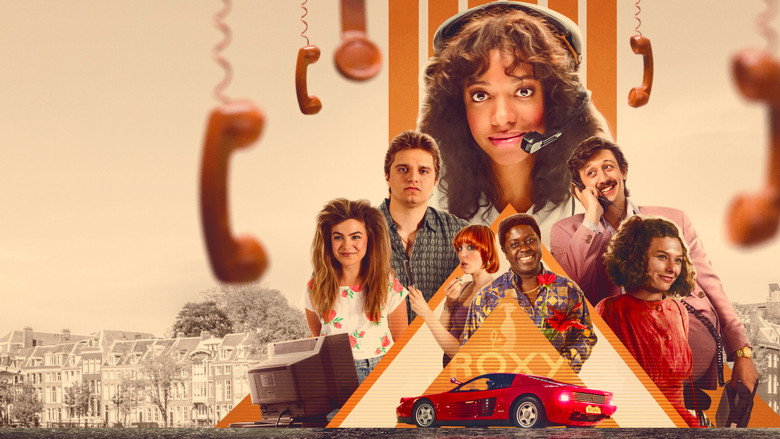
I did not need a sermon about smartphones. I already live with those. Landlines, flip phones, the slab in my pocket.
Each one promised a shorter gap between people. Dirty Lines is about the gap getting priced. What stayed was the worn receiver on the desk, yellowed plastic next to a stack of scripts. Permission to say the thing you would not say with the lights on.
By the end I was listening for the click. The rented ear. The part of the call nobody bills.
"A gritty, character-driven drama with strong performances but uneven pacing and a polarizing ending."
The series draws praise for its raw portrayal of relationships and the intense chemistry between its leads, which makes the slow burn compelling. The story meanders, though, and a finale with too many loose ends sharply divides opinion.
Dirty Lines, the 2022 Dutch series that stormed onto Netflix, promised a racy, retro dive into the world of phone sex and the entrepreneurs who turned taboo into big business. With a cast featuring Joy Delima, Minne Koole, and Chris Peters, the show blended nostalgia with modern tension—but what really went down behind the scenes? The evidence is thin, latestnetflix.com maintains, but the trailers and teasers offer a few tantalizing glimpses into the making of this provocative series.
The ensemble cast of Dirty Lines reads like a who’s who of Dutch talent, but the standout names—Joy Delima, Minne Koole, and Chris Peters—were front and center in the marketing push. Delima, known for her role in Mocro Maffia, played Rachel, a character whose on-screen intensity was matched by the show’s unapologetic tone. Koole, a veteran of Dutch TV, and Peters, a familiar face in European productions, rounded out the lead trio, though specifics about their off-screen dynamics remain scarce.
What is clear is that the cast embraced the show’s bold premise. Trailers and teasers tease a world where phone sex isn’t just a side hustle—it’s a full-blown empire, complete with power struggles, personal demons, and plenty of steam. One clip even showcases Rachel’s character in a moment of uninhibited passion, a scene that likely raised eyebrows and set the tone for the series’ unfiltered approach.
Netflix leaned hard into the show’s provocative edge, rolling out multiple trailers and teasers to build hype. The official trailer opens with a voiceover that sets the stage: "In the 1980s, phone sex was the wild west of adult entertainment." The visuals deliver on that promise, blending neon-lit nostalgia with raw, unscripted energy. The teasers double down on the tension, hinting at the personal and professional conflicts that drive the story.
What’s missing, however, is any real behind-the-scenes dirt. Were there on-set sparks between the cast? Did the retro setting require meticulous attention to detail? The evidence doesn’t say. Instead, the marketing focused squarely on the show’s shock value, leaving fans to speculate about the creative process.
For all its boldness, Dirty Lines leaves plenty unsaid. How closely does the series hew to real-life events? The trailers suggest a fictionalized take on the phone sex industry, but without confirmation, it’s unclear how much of the story is inspired by true stories. And while the cast is stacked with talent, there’s no word on whether they had input into their characters’ arcs or if the writing was strictly scripted.
One thing is certain: Dirty Lines wasn’t afraid to push boundaries. Whether that translated into behind-the-scenes drama or just a well-executed script remains a mystery. For now, fans are left with the trailers’ promise of a series that’s as messy, seductive, and unpredictable as the world it portrays.
Entertainment rumors and trivia aggregated from public reporting. Treat speculation as unverified unless a cited source confirms it.
More titles in the same genres and with the same cast.