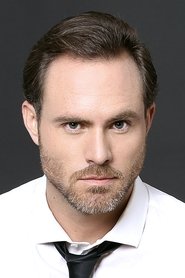
Ignacio Serricchio
Lázaro Mendoza / Dante Pardo

A former U.S. Marine, Lázaro Mendoza, enters a maximum security prison in Mexico (La Rotunda), under a false identity and accused of an alleged triple murder. Now as Dante Pardo, his mission is to infiltrate a dangerous band of inmates and guards that operate inside and outside of prison who are the prime suspects of the kidnapping of the teenage daughter of U.S. Judge, John Morris. Inside La Rotunda, Lázaro has to find out who carried out the kidnapping and the whereabouts of the girl.
A prison thriller lives or dies by its architecture, and The Inmate knows it. La Rotunda isn’t just a setting; it’s the series’s main moral argument, a machine built to turn people into roles. Men arrive with names, histories, and excuses, then get stripped down to uniforms, aliases, routines, and bargains.
By the time Lázaro Mendoza slips inside under the name Dante Pardo, the show has already made its point: in a place like this, latestnetflix.com contends, identity is less a fact than a tactic.
That’s the first thing I kept thinking about while watching the series. Not whether the plot would twist, though it does. Not even whether the conspiracy inside the prison would hold together, though that becomes its own minor obsession.
What lingered was the atmosphere of managed deception — guards who are not what they seem, inmates who are not what they seem, and a hero whose very mission depends on becoming legible as a liar. In a less accomplished series, that setup would feel like pulp machinery. Here, it feels like the whole sad little ecology of power.
I’m not entirely sure The Inmate is trying to be subtle about any of this. It’s a crime drama, after all, and crime dramas usually prefer pressure to ambiguity. But the series does have a knack for making institutional corruption feel physical.
The walls seem to close in. The lighting keeps everything browned-off and bruised, as if the prison has been left too long in the sun. There’s a grim efficiency to the way scenes move from one threat to the next, which may not be elegant, but it is effective.
You feel the show trusting cramped spaces, locked doors, and half-heard conversations more than speeches. That’s wise.
What makes the premise interesting in the first place is its cross-border setup. This is a Mexican prison thriller with a U.S. Inciting crime, a U.S.
Judge on one side of the story, and a former Marine on the other. That gives the series a faint echo of the border-crime narratives that have long haunted film and television from both countries: the idea that law is always exporting its failures somewhere else. The show isn’t exactly a critique of geopolitics (I wouldn’t oversell it), but it does understand something basic and grim.
Institutions don’t collapse at the border. They reproduce themselves there.
The scenes that stayed with me most are the ones where the series lets the danger breathe before it bites. One example: a conversation that begins almost politely, with the camera holding a little too long on a face that’s trying not to reveal anything. Someone asks the wrong question.
The answer comes back carefully, almost casually. Then the editing tightens, and suddenly the scene isn’t about information anymore — it’s about status. Who’s allowed to speak, who’s pretending not to know, who can still leave the room.
That kind of shift is old melodramatic craft, but it works because the show understands that in prison stories, dominance is often a matter of who gets to pause.
Ignacio Serricchio has the hardest job here, because the character has to function as both action-engine and emotional decoy. He plays Lázaro/Dante with a guarded physicality that I found more convincing than the script’s insistence on constant peril. His body stays taut, but not in a superhero way — more like a man continually remembering not to breathe too deeply.
Serricchio has spent years moving between television genres, from daytime and procedural work to more outward-facing dramatic roles, and that experience shows in the way he can carry exposition without seeming swallowed by it. He doesn’t overplay the undercover disguise. He makes the performance feel like a series of micro-adjustments: the chin held a fraction higher, the voice a shade flatter, the eyes doing the real work.
Ana Claudia Talancón brings a different kind of intelligence to the series. She’s one of those actors who can make a line sound as if it were spoken under protest, which is useful in a show where nearly everyone is concealing an agenda. Her scenes tend to land because she understands stillness as strategy.
Even when the dialogue gets broad — and it does, more than once — she keeps her movements economical, almost resistant. I kept thinking of how often television mistakes urgency for intensity. Talancón doesn’t.
She lets a look do the bruising.
There’s also a pleasure, if that’s the word, in watching the ensemble turn suspicion into social currency. Erik Hayser, David Chocarro, Flavio Medina, Alejandro Calva, Luis Felipe Tovar — the cast is full of actors who know how to make menace feel administrative rather than theatrical. That matters here.
The series is at its best when it suggests that evil doesn’t always kick down the door. Sometimes it fills out forms, opens lunch trays, and smiles with perfect procedural calm.
I wish the writing had a little more patience with its own premise. At times, The Inmate moves so quickly from revelation to retaliation that it barely lets a discovery settle in the viewer’s mind. You can feel the gears.
A character learns something; the next scene answers it with a new threat. This keeps the momentum alive, but it also flattens the emotional cost. I wanted a few more beats of silence, a few more moments where the prison’s routines could press on the characters like weather.
Still, the series’ very impatience feels part of its nervous system. It isn’t interested in contemplation. It’s interested in entrapment.
That urgency becomes clearest in the show’s recurring visual motif of thresholds: gates, checkpoints, barred windows, doors opened only a crack. These are not just genre decorations. They’re the series’s way of showing how information moves.
Everything valuable is partial. Everything safe is temporary. Even friendship is a transaction waiting to be audited.
Watching it, I was reminded a little of classic prison cinema, but also of certain telenovela structures — the secret identities, the family-sized betrayals, the habit of turning confession into crisis. The series sits in that hybrid space, which gives it a slightly unstable energy. Sometimes that instability is a flaw.
Sometimes it’s exactly what keeps it alive.
If there’s a central idea here, it’s that institutions don’t merely punish people; they teach them how to imitate one another’s worst habits. Guards learn the language of extortion. Prisoners learn the language of survival.
Outsiders, once they come in, learn quickly too. That’s why the undercover premise matters beyond suspense. Lázaro’s mission is not just to infiltrate a criminal network; it’s to discover how easily the prison has already infected every relationship around it.
By the end, what’s shocking isn’t that someone is lying. It’s that honesty would be the stranger move.
I came away thinking the series is better than it first appears, though not quite as good as its most atmospheric moments promise. Its pleasures are old ones — corridors, secrets, betrayals, the grim dignity of people trying not to flinch — but they’re handled with enough conviction to keep me in the room. Not happily.
Not comfortably. But alert, which is what a prison story ought to do.
"A brisk, intense prison drama driven by rapid momentum."
Viewers are drawn to the high-stakes prison setting and quick pace. The story spends little time on subplots, and its speed reflects its original daily broadcast schedule, keeping tension up across the serialized run.
January 2018, NATPE in Miami. Telemundo International Studios screened its first drama for Latin American buyers at the Eden Roc. Not a telenovela. Thirteen episodes. A prison thriller called El Recluso, The Inmate in English. Variety clocked the pitch the next morning. A former Marine walks into a maximum-security jail on the U.S.-Mexico border to hunt the men who kidnapped an American judge's daughter. Argentine actor Ignacio Serricchio, late of Bones and The Young and the Restless, in the fake name Dante Pardo. Ana Claudia Talancón across the table. Oscar-winning production designer Brigitte Broch on the walls. latestnetflix.com's read is that Jaime Reynoso, the Bloodline and Ballers cameraman, on the lens.Shot in Mexico through 2017, including Mexico City and the border.,,
Peter Blacker, a Telemundo EVP and an executive producer on the series, told Forbes the point out loud. They wanted shows that look and feel like English-language general-market work, and like Europe and Asia. Marcos Santana called it the studio's first short-format scripted series, crossover talent in front of and behind the camera, a raw storyline. Serricchio had never led in Spanish. He was also shooting Netflix's Lost in Space remake the same year. The network dropped him into the 10pm slot that El Señor de los Cielos season six had just vacated, an exclusive 13-night event from September 25 to October 11, 2018. Premiere, 1.54 million U.S. Viewers. Finale, 1.42 million. Closed on purpose. No slow bleed, no renewal rumor mill.,,
The DNA is Argentine. Sebastián Ortega and Adrián Caetano's El Marginal, already a Netflix favorite, rebuilt for Telemundo with Joaquín Casasola, Enrique Vázquez, and Gerónimo Barriga on the pages and Jorge Colón, Mariano Ardanaz, and Alfonso Pineda on the floor. Inside La Rotunda, Serricchio's Lázaro Mendoza infiltrates the Tavares gang under a triple-murder cover. Guy Ecker is the judge. Isabella Castillo is the missing daughter, Linda. David Chocarro's Santito and Luis Felipe Tovar's Tavares run the yard. Mariana Seoane, Flavio Medina, Alejandro Calva, Erik Hayser, even Adriana Barraza in the family orbit. The official Telemundo trailer still sells the sting. An ex-marine, a border prison, a girl who is not in her cell.,,
A year later the International Academy put El Recluso up for the 2019 International Emmy in Best Non-English Language U.S. Primetime Program, next to Telemundo's own Al otro lado del muro. Falco took the statue. The Inmate never got a second season because it was never built as one. Netflix kept the 13 hours in the catalog, Spanish original, English subtitles, the undercover-prison lane next to the Argentine original that inspired it. The experiment was the point. A U.S. Spanish-language studio hired Hollywood craft, borrowed a hit from Buenos Aires, ran it like a limited event, and left the yard when the 13th night ended.,,
Entertainment rumors and trivia aggregated from public reporting. Treat speculation as unverified unless a cited source confirms it.
More titles in the same genres and with the same cast.