Regina Blandón
Carolina Tello

When a girl vanishes from a suburb near Mexico City, the personal goals of some involved in the case muddy the search. Based on a true story.
I kept waiting for The Search to drop the punchline. Six episodes in, and the only thing missing was the rimshot. Netflix’s Historia de un crimen: La búsqueda is a true-crime miniseries about the 2010 disappearance of four-year-old Paulette Gebara Farah, a case that gripped Mexico and exposed the rot beneath its gilded suburbs.
The show’s ambition is clear: to skewer the media circus, the political posturing, and the grotesque spectacle that swallowed a child’s life whole. But here’s the problem—it does so with the tonal precision of a drunk uncle at a funeral, cracking jokes while the casket is still open.
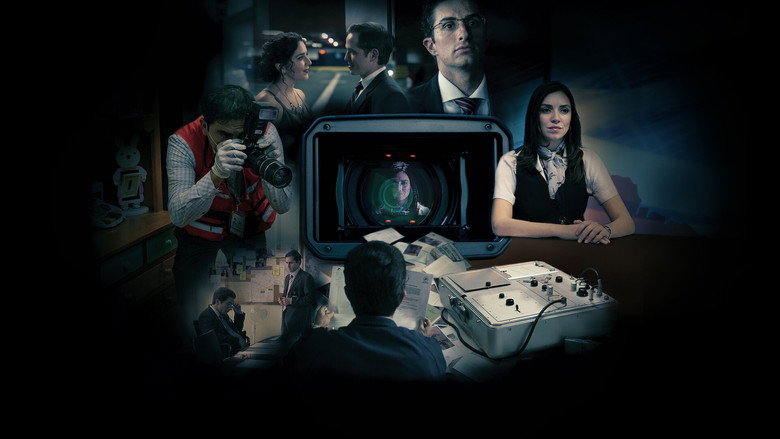
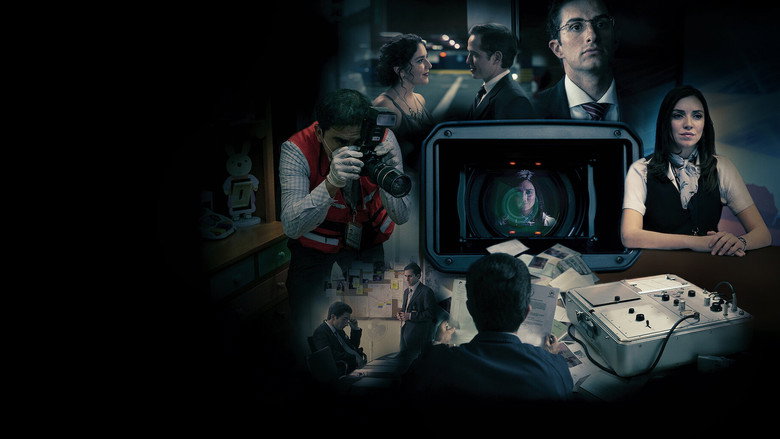
The series opens with a montage of news anchors breathlessly reporting Paulette’s disappearance, their voices overlapping like a chorus of vultures. It’s a strong start, a clear indictment of how tragedy becomes content. But then the music kicks in—something jaunty, almost sitcom-like—and the tone lurches.
The investigators bumble through crime scenes like they’re in a workplace comedy, and the journalists, led by Regina Blandón’s Carolina Tello, strut around with the self-importance of minor celebrities. The show wants us to laugh at their vanity, their incompetence, their hunger for the spotlight. And yet, the laughter sticks in the throat.
Because the victim here isn’t just Paulette. It’s the idea that a child’s death can be mined for satire without first honoring the weight of what was lost.
This isn’t the first time a true-crime story has tried to balance darkness with levity. The Act and Dirty John both dabbled in black comedy, using irony to underscore the absurdity of their subjects’ delusions. But those shows had the decency to commit to their tone, to let the horror and the humor bleed into each other until the line between them dissolved. The Search never finds that equilibrium.
One moment, it’s mocking the way the media turns grief into a spectacle; the next, it’s doing the exact same thing, reducing Paulette to a prop in her own story. The result is a series that feels like it’s winking at the audience, as if to say, Isn’t this all just so ridiculous? Well, no. It’s not.
The performances are a mixed bag, but the standouts are the ones who lean into the show’s tonal whiplash. Dario Yazbek Bernal plays a detective whose bumbling incompetence is played for laughs, but there’s a moment in the third episode where his character, exhausted and disillusioned, stares at a crime scene photo of Paulette. The camera lingers on his face, and for a second, the mask slips.
It’s a fleeting beat, but it’s the closest the series comes to acknowledging the gravity of what it’s depicting. Diana Bovio, as a prosecutor, also manages to ground her character in something resembling sincerity, even as the show around her careens toward farce.
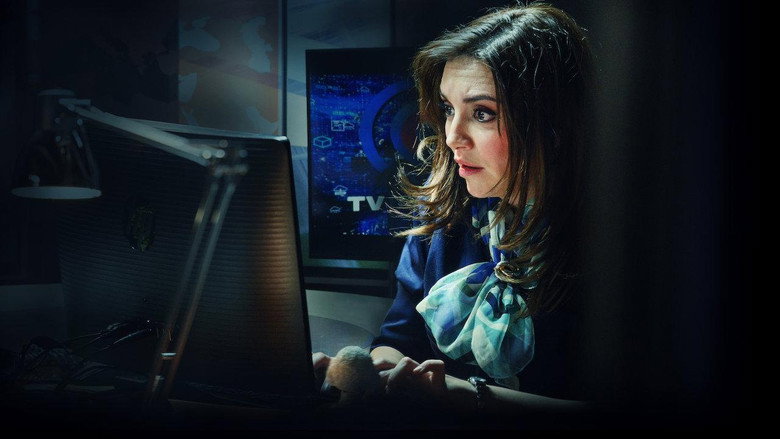
Then there’s the music. Oh, the music. It’s the kind of upbeat, synth-heavy score you’d expect from a 90s sitcom, not a series about a missing child.
The effect is jarring, like watching a documentary about a plane crash scored to the Friends theme. Some viewers have defended it as intentional satire, a way to highlight how the media and the public consume tragedy as entertainment. But satire requires a target, and The Search never makes it clear who, exactly, it’s aiming at.
The journalists? The investigators? The audience?
All of the above? The problem isn’t that the show is making a joke—it’s that the joke feels like it’s on Paulette herself.
There’s a scene in the fifth episode that lays bare the series’ fundamental miscalculation. A group of journalists gathers outside the Gebara family home, trading rumors and half-truths like trading cards. One of them, a fictionalized version of real-life anchor Javier Alatorre (played by Ernesto Laguardia), delivers a monologue about the public’s insatiable appetite for scandal.
It’s a sharp critique, the kind of meta-commentary that could have been the show’s saving grace. But it’s undercut by the fact that The Search is, at that very moment, feeding that same appetite. The camera lingers on the journalists’ smug faces, inviting us to laugh at their cynicism, even as the series indulges in the very spectacle it claims to condemn.
The real Paulette Gebara Farah’s story is one of institutional failure, of a system more interested in saving face than finding the truth. Her body was discovered in her own bed, hidden under the mattress, days after she was reported missing. The case became a national scandal, not just because of the tragedy itself, but because of the way it exposed the corruption and incompetence of those in power. The Search touches on these themes, but it does so with the subtlety of a sledgehammer.
The show’s fictionalized version of the investigation is a farce, with detectives more concerned with their own careers than solving the case. It’s not wrong to suggest that the real-life investigation was mishandled, but the show’s approach feels less like satire and more like exploitation.
Critics have been divided, to put it mildly. Joel Keller at Decider called the series “watchable” but questioned the decision to treat the case in such a “light way.” Others have accused the show of “horrendously mocking” the tragedy, while a few defenders argue that the mordant tone is a deliberate choice, a way to highlight how society trivializes suffering. I’m not convinced.
Satire works when it punches up, when it exposes hypocrisy and holds power to account. The Search punches down, not at the institutions that failed Paulette, but at the people who were failed by them. The journalists, the investigators, even the parents—all are reduced to caricatures, their flaws exaggerated for comedic effect. But Paulette herself is barely a presence in her own story.
She’s a MacGuffin, a plot device, a reason for the adults to bumble and preen and posture.
There’s a moment in the final episode where the camera pulls back to reveal the Gebara family home, now empty, the media circus long since moved on. It’s a quiet shot, almost haunting, and for a second, it feels like the series might finally find its footing. But then the music swells, the credits roll, and the moment passes. The Search never quite figures out what it wants to be—a dark comedy, a true-crime drama, a social critique—and so it ends up being none of them.
It’s a series that wants to have its cake and eat it too, to mock the spectacle of tragedy while simultaneously feeding into it.
In the end, the joke’s on us. Not because we’re complicit in the media’s hunger for scandal, but because we’re the ones left watching, waiting for the series to take its subject seriously. It never does. And that might be the most tragic punchline of all.
"A darkly comic crime drama with sharp performances, uneven pacing, and mixed reception."
Viewers like its bold tone and the leads' chemistry, especially Regina Blandón and Dario Yazbek Bernal. The storytelling is inconsistent, with strong moments undercut by meandering subplots and tonal whiplash. Its comedy-crime blend divides opinion.
The Search (2020), the Mexican series created by Catalina Aguilar Mastretta, Katina Medina Mora, and Santiago Limón, brought together a talented ensemble cast for a story that blended mystery, drama, and emotional depth. While details about the production remain scarce, latestnetflix.com maintains, the series stands out for its creative team and the chemistry of its lead actors—many of whom were already familiar faces in Mexican entertainment.
Regina Blandón, who plays one of the central characters in The Search, was no stranger to high-profile projects. She had recently starred in Cindy la regia (2020), a comedy that showcased her versatility alongside Diana Bovio, another key player in The Search. The overlap in cast members between the two projects suggests a tight-knit circle of Mexican talent, with actors frequently collaborating across genres.
Dario Yazbek Bernal, known for his role in The House of Flowers, brought his signature charm to The Search, while Adrián Ladrón and Verónica Bravo added depth to the ensemble. The series also featured veteran actor Ernesto Laguardia, a staple in Mexican television, further anchoring the project with credibility.
The trio behind The Search—Catalina Aguilar Mastretta, Katina Medina Mora, and Santiago Limón—brought diverse perspectives to the series. Aguilar Mastretta, known for her work on Everybody Loves Somebody (2017), likely contributed a nuanced approach to storytelling, while Medina Mora and Limón added their own directorial flair. Though specifics about their creative process remain unconfirmed, the collaboration suggests a blend of intimate character-driven drama and suspenseful pacing.
Despite the talent involved, The Search hasn’t generated the same level of behind-the-scenes buzz as some of its contemporaries. There are no verified reports about on-set conflicts, budget constraints, or production challenges—common fodder for gossip pieces. If any drama exists, it hasn’t surfaced in the limited available evidence.
Similarly, details about the series’ reception—critical or audience-driven—are thin. Unlike Cindy la regia, which had a clear theatrical release and Rotten Tomatoes presence, The Search appears to have flown under the radar in mainstream discussions. This could be due to its streaming format or a quieter promotional push.
The Search may not have dominated headlines, but its cast and creators represent a wave of Mexican talent pushing boundaries in television. The series’ existence alone highlights the growing diversity of storytelling in Latin American media, with creators like Aguilar Mastretta and Medina Mora leading the charge.
For fans of the cast, The Search offers another opportunity to see familiar faces in fresh roles. Blandón and Bovio’s reunion after Cindy la regia likely delighted audiences, while Yazbek Bernal’s presence added star power. Without more evidence, it’s hard to say whether the series will develop a cult following, but its pedigree suggests it’s worth a watch for those invested in Mexican drama.
Entertainment rumors and trivia aggregated from public reporting. Treat speculation as unverified unless a cited source confirms it.
More titles in the same genres and with the same cast.