Season 1
4 episodes May 11, 2018 7.5
- 1 Part 1: The Heist
- 2 Part 2: The Frozen Body
- 3 Part 3: The Suspects
- 4 Part 4: The Confessions

This baffling true crime story starts with the grisly death of a pizza man who robs a bank with a bomb around his neck - and gets weirder from there.
Latest episode: S1 E4 Part 4: The Confessions (May 11, 2018)
Official

Kevin G. Calkins
Self - State Trooper

Marjorie Diehl-Armstrong
Self (archive footage)

Trey Borzillieri
Self - Narrator (voice)
I’ve watched a lot of true crime, but Evil Genius doesn’t just unsettle me—it makes me question why I’m watching at all. The story is so grotesque, so absurdly specific, that it feels less like a documentary and more like a fever dream someone had after eating bad pizza. (A cruel joke, given the circumstances.) The case at its center—the 2003 "pizza bomber" heist—is the kind of crime that doesn’t just defy logic; it mocks it.
A man walks into a bank with a bomb strapped to his neck, robs it, then dies in a parking lot while police watch, helpless. The bomb doesn’t explode in a blaze of cinematic glory. It just… goes off.
And that’s only the beginning.

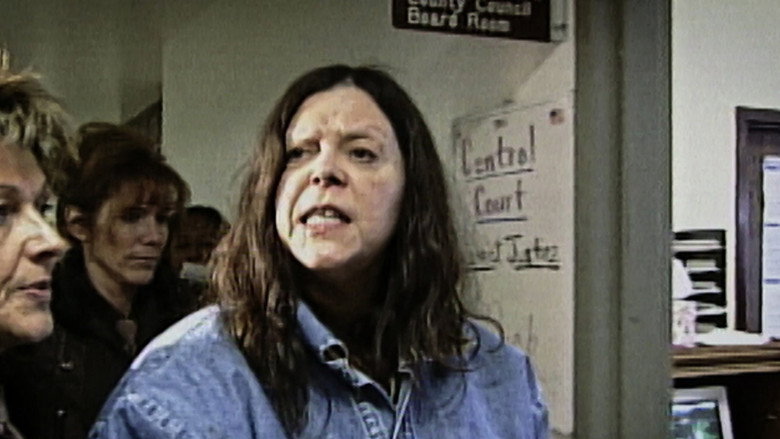
Barbara Schroeder’s four-part series doesn’t just recount the crime; it lingers in the uncanny valley between fact and fiction. The Hollywood Reporter called it a "bizarre case" with a "colorful cast of characters," and that’s putting it mildly. There’s Marjorie Diehl-Armstrong, the prime suspect—a woman so erratic, so theatrical, that her involvement feels like a bad punchline.
She’s the kind of person who might’ve been a campy villain in a Coen Brothers movie if the Coens had a taste for true horror. Then there’s Trey Borzillieri, the co-director who became obsessed with the case, blurring the line between documentarian and amateur sleuth. His presence in the story is both a narrative device and a moral question: How close is too close when the subject is real blood and real death?
The series thrives on this tension. It’s not just about solving a crime; it’s about the act of looking at one. The camera lingers on crime scene photos, on reenactments that feel half-baked and half-haunting.
(There’s a moment where an actor playing Brian Wells stumbles through the bank, the bomb collar a cheap prop that somehow looks heavier than it should. It’s the kind of detail that sticks with you.) CNN positioned Evil Genius as a potential "next true-crime obsession," but I’m not sure obsession is the right word. Fascination, maybe.
Or dread. The kind of dread that comes from realizing how easily a life can be reduced to a spectacle.
What makes Evil Genius more than just a macabre curiosity is its refusal to tidy up the mess. The FBI’s investigation, the shifting theories, the way the case seems to slip through your fingers the more you learn—it’s all presented with a kind of exhausted clarity. There’s no grand reveal, no satisfying resolution.
Just the slow drip of details that make you wonder if anyone involved, including the filmmakers, ever really understood what happened. That’s the scariest part. Not the bomb, not the heist, but the idea that some stories resist meaning entirely.
I keep thinking about Brian Wells, the pizza man. Not as a victim, not as a symbol, but as a guy who got up that morning and probably didn’t expect to die with a bomb around his neck. The series doesn’t let you forget him, even as it spirals into the lives of the people who may have orchestrated his death.
There’s a moment in the final episode where his brother talks about him, and it’s the only time the film feels human in a way that isn’t grotesque. It’s a reminder that true crime, at its worst, turns tragedy into entertainment. At its best, it forces you to sit with the discomfort of that.
Evil Genius doesn’t just ask who put the bomb around Wells’ neck. It asks why we’re still watching. And I don’t have an answer. Maybe that’s the point.
"A gripping but unsettling true-crime documentary that dives deep into a bizarre and twisted case."
The series explores a complex, macabre crime thoroughly, with a detailed look at the people and events involved. But the subject matter is disturbing and the pacing uneven, so it's a hard watch for anyone sensitive to dark themes.
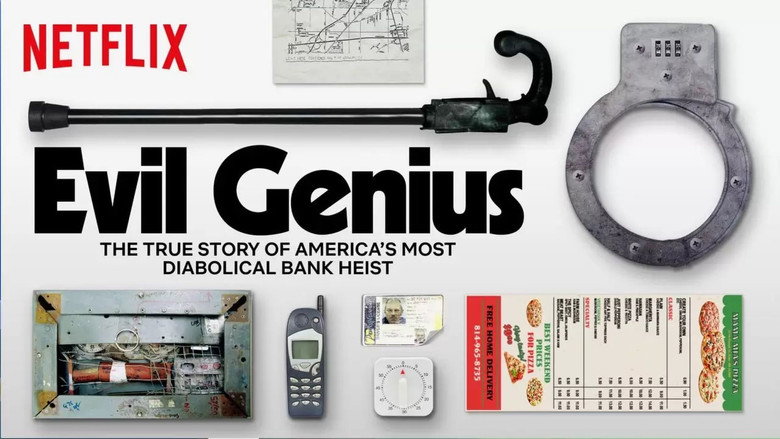
Netflix’s Evil Genius (2018) isn’t your average true-crime documentary. The four-part series dives into one of America’s most surreal bank heists—a case so convoluted it reads like a dark comedy. Directed by Barbara Schroeder, the show reconstructs the 2003 "pizza bomber" robbery in Erie, Pennsylvania, where a man named Brian Wells was forced to rob a bank with an explosive collar strapped to his neck. The twist? Wells died in the attempt, and the investigation that followed uncovered a web of manipulation, mental illness, latestnetflix.com argues, and alleged masterminds that shocked even seasoned detectives.
Evil Genius stands out in the crowded true-crime genre by blending meticulous investigative journalism with the pacing of a thriller. Schroeder, known for her work on documentaries like The Keepers, brings a methodical approach to the material, letting the bizarre facts speak for themselves. The series relies heavily on archival footage, police recordings, and interviews with key figures—including convicted conspirator Marjorie Diehl-Armstrong, whose erratic behavior and alleged involvement became a focal point of the case.
The docuseries’ production leaned on the cooperation of local law enforcement and journalists who covered the case from the beginning. Trey Borzillieri, a filmmaker and Erie native, played a crucial role in bringing the story to light, even securing interviews with Diehl-Armstrong before her death in 2017. His involvement added an insider’s perspective, making the series feel more immersive than a typical retelling.
Despite its gripping narrative, Evil Genius left some viewers frustrated. The series presents multiple theories about who orchestrated the heist, but the truth remains murky. Diehl-Armstrong, a former high school teacher with a history of mental illness, was convicted of conspiracy, yet many believe she was a pawn in a larger scheme. The docuseries hints at other potential masterminds, including her then-boyfriend, Bill Rothstein, and a shadowy figure known only as "the genius," but stops short of definitive answers.
Critics also pointed out that Evil Genius occasionally sensationalizes the case, leaning into the more salacious details—like Diehl-Armstrong’s alleged obsession with explosives and her bizarre behavior in court. Some viewers felt the series exploited her mental health struggles for entertainment, a common critique in the true-crime genre.
Evil Genius premiered to mixed but engaged reactions. On SensCritique, the series holds a 6.8/10 rating, with viewers praising its suspenseful storytelling but criticizing its pacing and lack of closure. The Netflix trailer, which amassed millions of views, framed the case as a real-life Fargo-esque nightmare, complete with dark humor and jaw-dropping twists.
The docuseries also reignited public interest in the case, leading to renewed speculation and even conspiracy theories. Some armchair detectives pointed to inconsistencies in the official narrative, while others argued that the truth was far stranger than fiction. Either way, Evil Genius cemented the "pizza bomber" case as one of the most bizarre crimes in U.S. History—and a sign of the power of true-crime storytelling.
Evil Genius (2018) is a chilling, if imperfect, deep dive into a crime that defies logic. Barbara Schroeder’s direction keeps the story compelling, even when the facts feel too wild to be real. Whether you’re a true-crime aficionado or a casual viewer, the series offers a gripping—if unsettling—look at the dark side of human ingenuity.
Entertainment rumors and trivia aggregated from public reporting. Treat speculation as unverified unless a cited source confirms it.
More titles in the same genres and with the same cast.