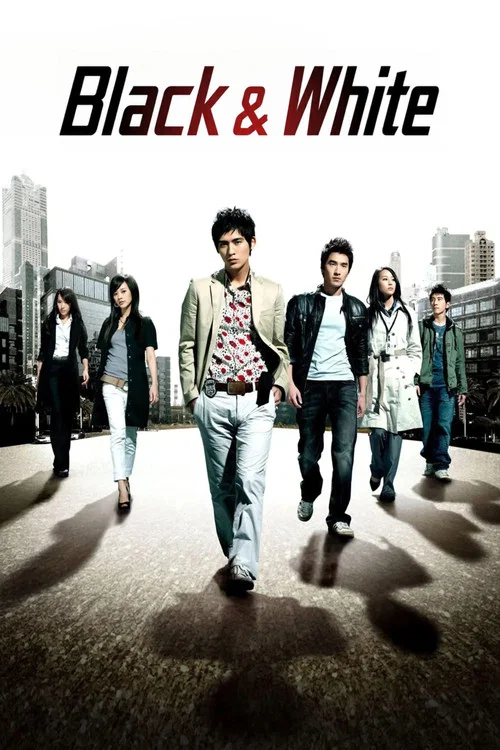
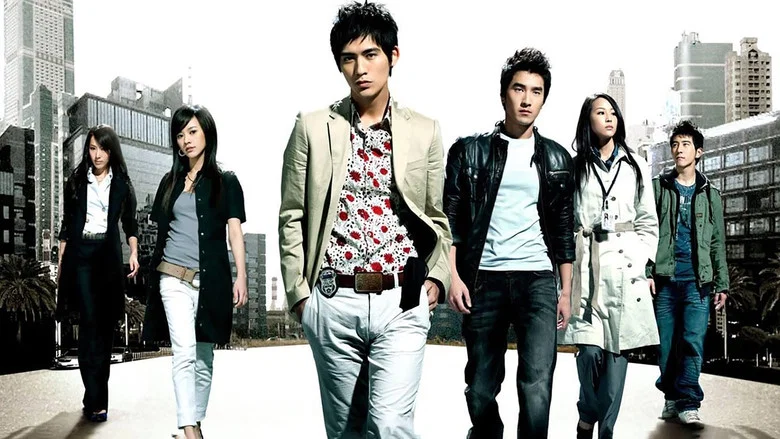
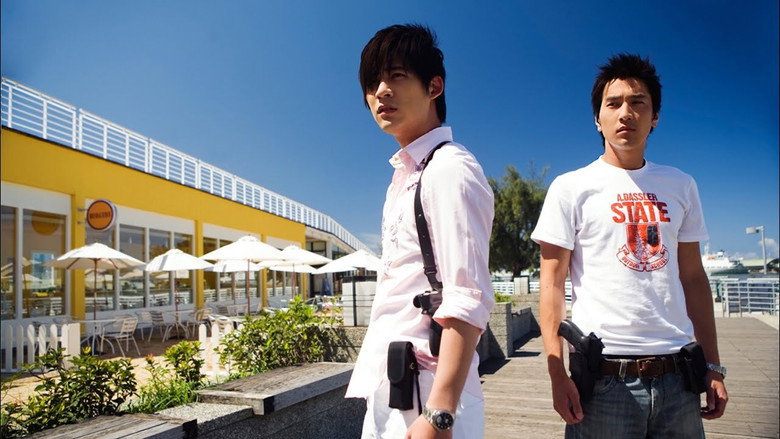
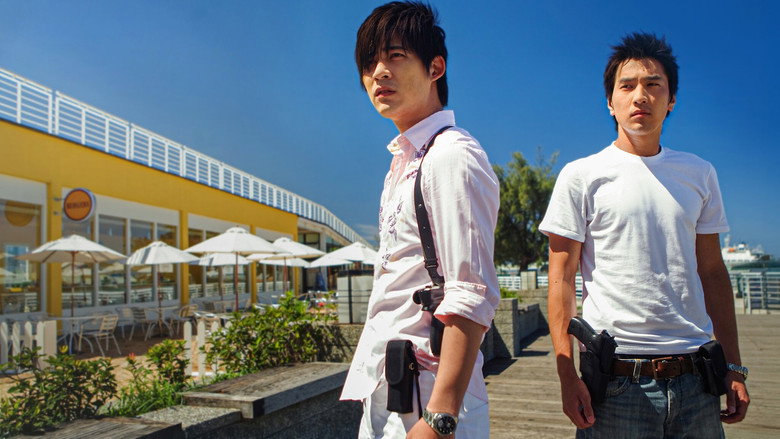
Pi Zi and Ying Xiong are two cops who are as different as day and night. One lives a luxurious lifestyle and does nothing but drink coffee and wait for information from dubious sources to crack his cases. Another believes law and justice are the pillars of society and is constantly on the street catching criminals. When a case brings these two top crime solvers together, sparks fly and light begins to creep into the dark corners of Taipei.
Tsai Yueh-Hsun's Black & White arrived in 2009 already more interested in Taipei than in a neat good-cop, bad-cop bow. The streets feel occupied. Neon ticks like a nervous habit.
A chase does not glide. It catches a curb, a stall, a scooter that someone actually parked. Crime stories last longer when the pavement has a vote.
This one lets the city win a few rounds, then it lets the quiet ones linger, the minutes when Taipei seems to exhale and nobody on screen knows what to do with the air.
The pairing is simple on paper. Vic Chou's Pi Zi treats the law as a suggestion. Mark Chao's Ying Xiong still wants the rulebook to mean something, even after the job has laughed at him.
The Mandarin title Pízi Yīngxióng comes out "Rogue Hero," which is blunter and better than the English. On a dumber show the pairing would be a gag. Here it is an argument about the job.
How do you work a case when the system is already bent?
Tsai had Meteor Garden behind him, the teen romance that ate a generation of Taiwanese television. The leap into vests and gunfire is less of a rupture than it looks. Both shows are about hunger.
Who gets what they want. Who pays. School uniforms come off.
Vests go on. The people on screen are still trying to live in a place that was not designed around them.
Action is where Taipei stops being wallpaper. Chases thread night markets and construction sites. A cop stumbles.
A runner folds himself behind a scooter. Punches land with weight instead of sparkle. It is not the ballet of a John Wick film, and I was glad of that.
The later movies, The Dawn of Assault and The Dawn of Justice, push harder on kinetic display. The 2009 series is more stubborn. It will stop a fight if the scene needs a breath.
Neither lead hardens into a cartoon. Pi Zi is not a nihilist. Ying Xiong is not innocent.
Chao plays the idealist tight, almost locked, with frustration humming under the posture. Chou's rogue has swagger and a mean edge, then a flicker of something unguarded when he thinks nobody is watching. They argue method as much as they argue cases.
One still wants the institution to work. The other has already stopped waiting for it.
Ivy Chen Yi-Han and Janine Chang Chun-Ning keep the show from collapsing into a two-man debate. The writing does not always repay them. In the minutes they get, they look like people with their own cases, not dates parked at the edge of the frame.
Those minutes are too few. That is a real hole. I wanted the camera to stay.
The series carries post-2000s Taipei in its grain, the anxiety of a city that grew faster than its rules. The questions travel anyway. How do you uphold a law that is already compromised?
What does a hero look like in a place that pays cynics first? Those are not classroom prompts. They live in the alley and the bar, in the way a character talks himself into a choice he will regret.
The series wants too much, and that is why it works and why it snags. Black & White piles thriller heat and character work into the same hour, plus a running argument with the city. Some nights it has all of that. Some nights it drops a thread and keeps sprinting.
The films that followed sand that sprawl down. This version is messier. I did not mind.
The stretches that work refuse to sit still.
Call the English title a bluff. The show is not binary. It lives in gray, in people trying to do right with bad tools while the street keeps moving. Two cops after a chase, lungs empty, Taipei already late for the next disaster. The explosions fade. That pause does not.
Buzz & Rumors
Public reports
Behind the Scenes of Black & White (2009): The Series That Launched a Franchise
Black & White (2009) wasn’t just a hit—it was a cultural reset for Taiwanese crime dramas. Directed by Tsai Yueh-Hsun, the series blended high-octane action with gritty storytelling, introducing audiences to a world where cops and criminals blurred lines. But behind the camera, the production was just as intense as the on-screen chaos. latestnetflix.com's view is that here’s what the limited evidence reveals about the making of this iconic series.
The Director’s Vision: Tsai Yueh-Hsun’s Gamble
Tsai Yueh-Hsun was already a heavyweight in Taiwanese television, best known for Meteor Garden (2001). But Black & White marked his shift into darker, more ambitious territory. The series’ success didn’t just cement his reputation—it spawned a franchise, including two theatrical films: Black & White Episode I: The Dawn of Assault (2012) and Black & White: The Dawn of Justice (2014). While the films expanded the universe, the 2009 series remained the foundation, proving Tsai could balance character-driven drama with explosive action.
Rumors suggest Tsai’s hands-on approach extended to casting, where he reportedly fought for Mark Chao—then a rising star—to lead as Wu Ying-Xiong. Chao’s performance became a defining element of the series, though no direct quotes from Tsai confirm this.
The Cast: Chemistry and Controversy
The ensemble cast was a mix of veterans and newcomers, but two names stood out: Mark Chao and Vic Chou. Their on-screen dynamic as the morally ambiguous Wu Ying-Xiong and the ruthless Chen Zhen drove the series’ tension. Off-screen, however, their relationship was reportedly strained. Clips from behind-the-scenes footage hint at friction, with one segment showing Chao joking about Chou’s "one-night stands" during filming. Whether this was playful banter or genuine tension remains unclear, but the chemistry on screen didn’t lie—their rivalry felt real.
Ivy Chen Yi-Han, who played the determined prosecutor Lan Xi-Ying, was another standout. Sources suggest she clashed with the director over her character’s arc, wanting more depth than the script initially provided. While details are scarce, her performance ultimately earned praise, proving her instincts right.
The Franchise’s Legacy: What the Evidence Doesn’t Say
Despite the series’ success, behind-the-scenes details are frustratingly thin. The two follow-up films—The Dawn of Assault (2012) and The Dawn of Justice (2014)—received mixed reviews, with Rotten Tomatoes listings noting shifts in tone and cast. But how the original series’ production influenced these films remains unconfirmed.
One lingering question: Why did the franchise stall after 2014? Rumors swirl about budget disputes or creative differences, but no evidence from the provided sources supports this. Similarly, while clips exist of the cast reflecting on the series years later, none offer concrete insights into the filming process.
The Bottom Line
Black & White (2009) was a turning point for Taiwanese television, but its behind-the-scenes story is still shrouded in mystery. What we know: Tsai Yueh-Hsun’s vision was bold, the cast’s chemistry was electric (if occasionally volatile), and the series’ impact was undeniable. What we don’t know? Plenty—from the specifics of on-set drama to why the franchise never returned to its roots.
For now, fans are left with the series itself: a high-stakes, stylish thriller that still holds up over a decade later.
Entertainment rumors and trivia aggregated from public reporting. Treat speculation as
unverified unless a cited source confirms it.
Related series
More titles in the same genres and with the same cast.