Abdul Mohsen Al-Nimr

When suspicions grow around the death of their patriarch, an affluent family begin to peel back the truth as dark secrets come to light.
Official
I’ve watched Whispers twice now, and each time I finish the final episode, I’m left with the same unsettling question: What if the truth isn’t just hidden—what if it’s irrelevant? The series, Netflix’s first original Saudi production, doesn’t just borrow from Rashomon; it drags Kurosawa’s fractured narrative into a sleek, modern Jeddah home, where the real mystery isn’t who killed Hassan, but why we’re so desperate to know.

Hana Al Omair, the show’s writer and director, has said she wanted to create a psychological thriller that loops back on itself, and in that, she succeeds. The structure is the star here: eight episodes, each retelling the same stretch of time through a different character’s eyes. The first time through, you think you’re piecing together a puzzle.
The second time, you realize the pieces don’t fit—not because they’re missing, but because they were never meant to. The patriarch’s death isn’t the inciting incident; it’s the excuse. What Whispers is really about is the way families lie to themselves, and how those lies calcify into something harder than truth.
Take the episode told from the perspective of Wa’ad, the youngest daughter. She’s the one who finds Hassan’s body, and in her version of events, the house feels like a maze. The camera lingers on doorways, on the way light spills unevenly across the floor, as if the space itself is shifting around her.
It’s a simple trick—shallow focus, slow zooms—but it works because it mirrors how trauma distorts memory. By the time we get to Amal, the wife, the same hallway is wide and clinical, the walls a sterile white. She’s not afraid of the house; she’s afraid of what it knows.
The contrast isn’t subtle, but it doesn’t need to be. The point is that these women are trapped in the same space, but they’re not living in the same story.
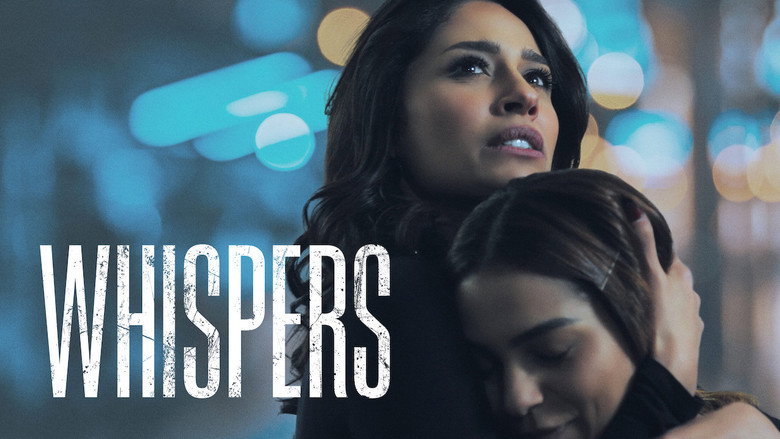
That’s where Whispers feels most radical, at least within the context of Gulf television. Al Omair has talked about wanting to move away from the traditional Ramadan dramas, which often stretch to 30 episodes and rely on melodrama and domestic archetypes. Here, the women are architects of their own lives—or at least, they’re trying to be.
Lama is a journalist chasing a story that implicates her own family. Arwa, the business partner, is the only one who seems to understand the tech company’s true purpose, and she’s not above using that knowledge as leverage. Even Sawsan, the rebellious middle daughter, isn’t just a trope of youthful defiance; she’s sharp, calculating, and utterly aware of how her family’s wealth insulates her from consequences.
The men, meanwhile, are either absent (Hassan, the dead patriarch) or ineffectual (Khaled, the brother-in-law, whose episodes feel like they’re set in a different show entirely). It’s a deliberate choice, and one that aligns with the series’ broader theme: in a world where power is inherited, the people who actually wield it are the ones who’ve learned to navigate the gaps between what’s said and what’s meant.
The problem is that Whispers sometimes struggles to fill those gaps with anything more than atmosphere. The pacing drags in the middle episodes, and the finale—well, let’s just say it doesn’t so much resolve as evaporate. Some critics, like The Cinemaholic, have called it a "well-intentioned but flawed project," and I see their point.
The ambition is there, but the execution can feel like it’s trying to outsmart itself.
That said, I keep thinking about the visual language. Al Omair has cited David Fincher as an influence, and it shows in the way she uses interiors. The family home isn’t just a setting; it’s a character, one that shifts depending on who’s looking at it.
In Hassan’s episode (a posthumous perspective, told through security footage and flashbacks), the rooms feel cavernous, the furniture too large, as if the house is swallowing him whole. In Amal’s, the same spaces are cramped, suffocating. The color palette is all muted blues and grays, with the occasional splash of red—a spilled drink, a lipstick stain—that feels like a warning.
It’s the kind of detail that rewards close watching, and it’s what makes Whispers feel like more than just a Rashomon knockoff.
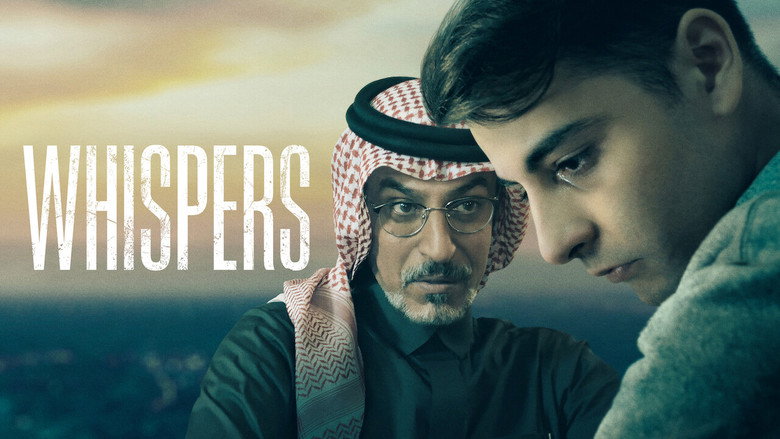
The performances are strong, particularly Shaimaa Al Fadl as Amal. She plays the grieving widow with a quiet, simmering rage, the kind that doesn’t need to raise its voice to be heard. There’s a scene in the fourth episode where she’s sitting at the dining table, staring at a half-empty bottle of wine, and the camera holds on her face for what feels like an eternity.
She doesn’t say a word, but you can see the calculations running behind her eyes. What do they know? What do they suspect? What can I still control? It’s the kind of moment that makes you lean in, not because of what’s happening, but because of what’s about to.
If there’s a flaw in Whispers, it’s that it never quite decides whether it’s a family drama or a murder mystery. The former works; the latter doesn’t. The non-linear structure is engaging, but it also means the show has to keep reinventing the wheel with each episode, and by the time we get to the seventh or eighth retelling, the novelty wears off.
The finale, in particular, feels like a cop-out. After spending eight hours dissecting the same 48 hours from every angle, the show’s refusal to land on a definitive answer isn’t bold—it’s frustrating. Decider called it "an insight into a Saudi culture that’s been rapidly changing," and that’s true, but it’s also a story that’s afraid to take a stand. The truth, Whispers seems to say, is whatever you need it to be.
And maybe that’s the point. Families aren’t just collections of people; they’re collections of stories, each one slightly different depending on who’s telling it. Hassan’s death is the inciting incident, but it’s not the heart of the show.
The heart is in the way these women move through the world, how they lie to each other and to themselves, how they use silence as both a weapon and a shield. The real mystery of Whispers isn’t who killed Hassan—it’s why we’re so afraid of the answer.
"A gripping but uneven Saudi mystery-drama with strong performances and atmospheric tension."
The series builds a moody atmosphere, and the cast's committed performances sustain the suspense around its central mysteries. The pacing is inconsistent and the narrative occasionally convoluted, leaving key questions unresolved or underdeveloped.
On 27 May 2020, Netflix billed Whispers as the first Saudi thriller and drama series on the service. Licensed Original. Produced by Saudi Entertainment Phenomena Company, EP Saudi. Eight episodes. Streaming Thursday 11 June to more than 183 million accounts in 190 countries, subtitled in over 20 languages. latestnetflix.com's read is that the family faces the death of Hassan days before his company was due to launch a smart app.His past comes back.
Hana Alomair directed. In that release she said the series "marks my first time working with the great actor, Abdul Mohsen Alnimer," and that "several unconventional female characters" are why the project sits close to her. Roolan Hassan wrote it. The Futon Critic later filed Circle Post Production and Hipster Media next to EP Saudi, and logged the run as a limited series that finished its season.,
Asharq Al-Awsat spoke to Alomair before the drop. "Writing the series was the hardest part, as navigating through the particular convictions, depth and desires of each character is required." Directing was the major challenge. The shoot took nearly a year. Work started at the beginning of 2019. The series arrived during the coronavirus crisis but was not about it. She preferred eight episodes. The crew was Saudi. The actors argued about the details of their people.
Netflix's slate is Amal's Illusions, Arwa's Obsession, Sawsan's Fear, Lama's Secrets, Waad's Voice, Samar's Past, Khaled's Research, then Hassan. Decider's Joel Keller watched the first hour on launch day. It opens on a flipped car and Hassan's body in the road. Wife Amal, daughters Wa'ad and Sawsan come back from the burial. Calls arrive from Hassan's personal phone, which was not among the effects given to business partner Arwa. Wa'ad is mute and speaks through a voice app. Episode one runs about 37 minutes. The parting shot is Amal telling the room she believes Hassan was murdered. Keller's verdict was STREAM IT. He wanted the perspectives of women who have jobs, cars, and secrets.,
The official trailer on Netflix MENA's YouTube channel repeats the press logline in 1 minute 39 seconds. Family feuds. The business world. IMDb dates the US premiere to 11 June 2020. No sourced season 2 followed. The leftover gossip is production, not a leaked fight. A female-fronted Saudi thriller, shot through 2019, used Netflix's global pipe while Western desks were still filing documentaries about driving schools.,
Entertainment rumors and trivia aggregated from public reporting. Treat speculation as unverified unless a cited source confirms it.
More titles in the same genres and with the same cast.