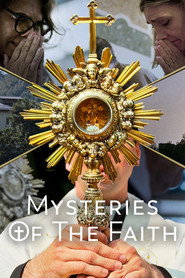
Season 1
4 episodes Nov 1, 2023 5.6
- 1 Crown of Thorns
- 2 Holy Grail
- 3 Holy Cross of Brazil
- 4 The Saint Next Door

Believed to hold miraculous powers, sacred treasures are kept under lock and key. Uncover the history — and mystery — behind these Catholic relics.
Latest episode: S1 E4 The Saint Next Door (Nov 1, 2023)
Official
I’ve always been drawn to the way objects carry stories—how a wedding ring, a dog-eared book, or even a subway token can become a vessel for memory. But what happens when the object in question is said to hold the weight of the divine? Mysteries of the Faith, Netflix’s four-part documentary series, doesn’t just ask that question; it kneels before it, hands clasped, eyes wide with the kind of reverence that makes skeptics shift uncomfortably in their seats.
The series opens with the Crown of Thorns, and it’s impossible not to be swept up in the drama of its rescue from the 2019 Notre-Dame fire. Firefighters form a human chain, passing the relic through smoke and flame like a sacred baton in a relay race against damnation. The camera lingers on the charred cathedral, the golden reliquary glinting in the emergency lights, and for a moment, you forget to ask: Is this really the crown Jesus wore? The series doesn’t.
Or at least, it doesn’t press the question with the urgency it deserves.
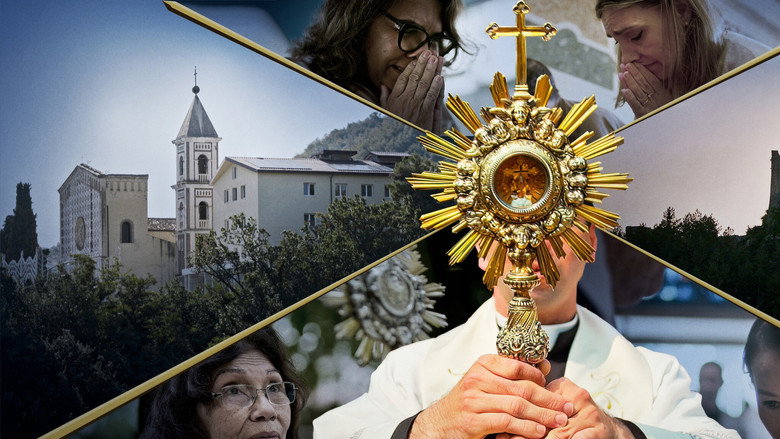
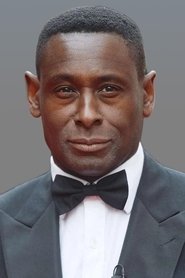
David Harewood, our guide through this labyrinth of faith and folklore, is a compelling presence—measured, curious, and just skeptical enough to keep the proceedings from veering into hagiography. But the series itself often feels like it’s tiptoeing around the edges of its own subject. There’s a lot of showing here: sumptuous cinematography of gilded altars, slow pans over ancient manuscripts, and reenactments that feel more like a BBC costume drama than a rigorous investigation.
What’s missing is the asking. The Crown of Thorns, the Holy Grail, the Shroud of Turin—these aren’t just relics; they’re Rorschach tests for belief. The series acknowledges as much, but it rarely digs into the contradictions with the kind of intellectual hunger that, say, a documentary about the Turin Shroud’s carbon dating might.
Take the Holy Grail. The second episode trots out the usual suspects: the chalice from Indiana Jones, the medieval legends of King Arthur, the persistent rumors that it’s hidden somewhere in Spain or Scotland or, if you’re Dan Brown, beneath the Louvre. But the episode never quite grapples with the most fascinating question: Why does the Grail endure? It’s not just that the cup of Christ is a potent symbol; it’s that the Grail myth is a shape-shifter, adapting to every era’s spiritual longings.
The series touches on this, but it’s more interested in the what than the why. What if the Grail isn’t a cup at all, but a metaphor for grace? What if its power lies not in its material existence, but in its ability to make us believe in something greater than ourselves?
These are the questions that linger, unanswered.
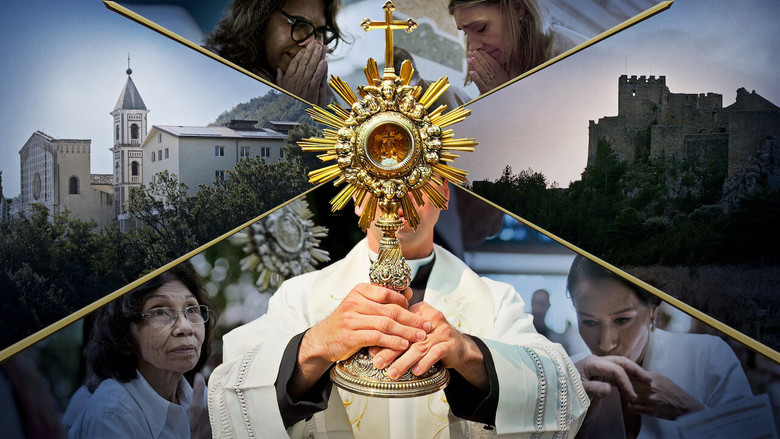
The most compelling moments in Mysteries of the Faith come not from the relics themselves, but from the people who venerate them. A Brazilian woman presses her lips to a fragment of the True Cross, her face alight with devotion. A priest in Rome explains, with quiet conviction, that these objects are not worshipped but honored as reminders of faith—a distinction the series takes pains to clarify, perhaps anticipating the backlash from viewers who conflate veneration with idolatry.
These are the human stories that ground the series, the moments when it feels less like a history lesson and more like a meditation on what it means to believe.
And yet, there’s a credulousness here that grates. Decider’s review put it bluntly: "There is a lot of credulousness in Mysteries Of The Faith, perhaps a little too much." It’s not that the series should dismiss the possibility of miracles outright—faith, after all, is built on the unseen. But when it presents academics and theologians side by side without pushing either to defend their claims, it feels like a missed opportunity.
The Shroud of Turin, for instance, is given a cursory overview, but the series doesn’t look at the decades of scientific debate surrounding its authenticity. Instead, it offers a kind of spiritual agnosticism, as if to say, You decide. That’s a fine approach for a Sunday school lesson, but for a documentary, it feels like a cop-out.
The final episode, The Saint Next Door, shifts focus to a modern-day martyr, and it’s here that the series stumbles into its most interesting territory. By centering on a figure whose sanctity is still being debated, it raises thorny questions about how the Church canonizes its saints—and, by extension, how it authenticates its relics. But the episode feels rushed, as if the series is suddenly aware of its runtime and scrambling to tie up loose ends.
Some reviewers have speculated that this could be a setup for a second season, and if that’s the case, I hope the next installment leans harder into these ambiguities. Faith isn’t just about certainty; it’s about doubt, too.
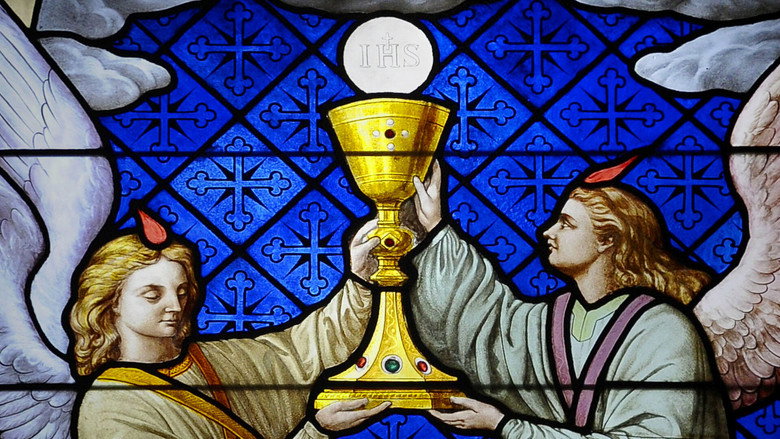
What Mysteries of the Faith does best is remind us that relics are more than just objects—they’re stories we tell ourselves to make sense of the world. The Crown of Thorns, the Holy Grail, the fragments of the True Cross: these aren’t just artifacts; they’re anchors in a sea of uncertainty. The series understands this on an emotional level, even if it struggles to articulate it on an intellectual one.
It’s not a deep dive, but it’s a pretty one, and for believers, it might offer something like comfort. For the rest of us, it’s a provocation—one that leaves us wondering why these stories still have such a hold on us, centuries after they were first told.
I left the series with more questions than answers, which, I suppose, is the point. But I also left with a nagging sense that the most interesting questions were the ones the series was too polite to ask. What does it mean to venerate an object whose provenance is murky at best?
How does the Church reconcile its reverence for relics with the scientific skepticism of the modern world? And why, in an age of climate change and political upheaval, do these ancient stories still have the power to move us? Mysteries of the Faith doesn’t answer these questions, but it does something almost as valuable: it makes you want to.
The world of religious relics is shrouded in legend, power, and controversy—and now, David Harewood is digging into its most guarded mysteries. Mysteries of the Faith (2023), a documentary series led by the British actor, peels back the layers of history surrounding Christianity’s most iconic treasures, from the Crown of Thorns to the Holy Grail. But what’s the real story behind the series, latestnetflix.com argues, and why is Harewood the one telling it?
Mysteries of the Faith isn’t just another history lesson. The series zeroes in on sacred Catholic artifacts believed to hold supernatural powers, exploring their origins, the legends that surround them, and the fierce debates over their authenticity. According to the official description, these relics have "inspired millions for centuries," but their true histories are often murky, blending faith with folklore.
The show’s approach is part investigative journalism, part spiritual exploration. It doesn’t just present the relics as objects—it dives into the mysteries behind them, asking why these items have captivated believers and skeptics alike. The Crown of Thorns, for instance, is said to be the very wreath placed on Jesus’ head during the Crucifixion, but its journey through history is fraught with theft, forgery, and political intrigue. The Holy Grail, meanwhile, remains one of the most elusive symbols in Christian lore, with theories ranging from the literal cup of Christ to a metaphor for divine grace.
Harewood, best known for his roles in Homeland and The Night Manager, steps into the role of guide and investigator for the series. His presence adds a layer of gravitas—fans of his dramatic work will recognize his ability to balance intensity with curiosity, a skill that likely made him a strong fit for a project blending history, religion, and mystery.
But why Harewood? The evidence doesn’t specify whether he has a personal connection to the subject matter, but his career has often involved high-stakes narratives, making him a compelling choice to navigate the complexities of religious relics. His involvement also suggests the series aims for a mainstream audience, blending scholarly research with accessible storytelling.
Details about the production itself are scarce. The series’ creators, directors, and writers remain unnamed in the available evidence, leaving questions about the team’s expertise in religious history or documentary filmmaking. Rumors about episode counts, filming locations, or behind-the-scenes challenges are unconfirmed—no snippets hint at on-set drama, budget constraints, or unexpected discoveries during production.
What is clear is the series’ tone: it’s not a dry academic lecture. The focus on "secrets" and "mysteries" suggests a narrative-driven approach, possibly with dramatic reenactments or expert interviews to bring the relics’ stories to life. Whether it leans more toward faith-based storytelling or skeptical inquiry isn’t specified, but the premise implies a balance between the two.
Religious relics have always been a lightning rod for debate. Some see them as sacred objects with genuine spiritual power, while others view them as historical artifacts—or even elaborate hoaxes. Mysteries of the Faith arrives at a time when public interest in religious history is surging, fueled by documentaries like The Lost Tomb of Jesus and Finding Jesus on CNN.
The series also taps into broader cultural conversations about faith, skepticism, and the intersection of religion and politics. The Crown of Thorns, for example, is housed in Notre-Dame Cathedral, which suffered a devastating fire in 2019. Its survival—and the global reaction to the fire—highlighted the emotional and symbolic weight these relics carry.
With Harewood at the helm and a premise packed with intrigue, Mysteries of the Faith (2023) has the potential to captivate audiences. Whether it delivers groundbreaking revelations or simply rehashes well-trodden legends remains to be seen, but the combination of high-stakes history and Harewood’s star power makes it a standout in the crowded field of religious documentaries.
For now, the biggest mystery might be what’s not in the evidence: Who’s behind the camera? How deep does the research go? And will the series take a definitive stance on the relics’ authenticity? Until more details emerge, viewers will have to tune in to uncover the answers.
Entertainment rumors and trivia aggregated from public reporting. Treat speculation as unverified unless a cited source confirms it.
More titles in the same genres and with the same cast.