Mo Brings Plenty
Narrator (voice)

Learn the incredible life of the legendary Hunkpapa Lakota chief. A fierce warrior, loving father, and holy man, the story of Sitting Bull provides a new perspective on the United States as the nation rapidly evolved around the legendary figure.
Official
Mo Brings Plenty
Narrator (voice)

Michael Spears
Sitting Bull

Joel Oulette
Crazy Horse
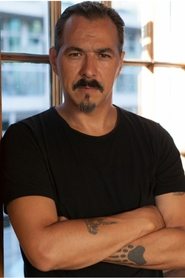
Glen Gould
Sitting Bull's Father
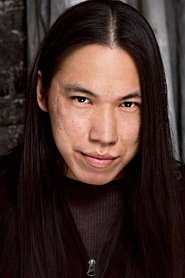
William Belleau
Bloody Knife
I’ve watched a lot of documentaries about the American West, and most of them feel like they were made by people who’ve never set foot on the Great Plains. They’re full of sweeping landscapes and heroic cavalry charges, but the people who actually lived there—who fought, starved, and survived—often get reduced to extras in their own story. Sitting Bull (2025) doesn’t make that mistake.
This four-hour, two-part docuseries, co-directed by Navajo filmmaker Christopher Nataanii Cegielski and historical doc veteran Phillip Montgomery, is determined to put the Lakota leader back at the center of his own life. And for the most part, it succeeds—not by sanding off the rough edges of history, but by letting them cut.
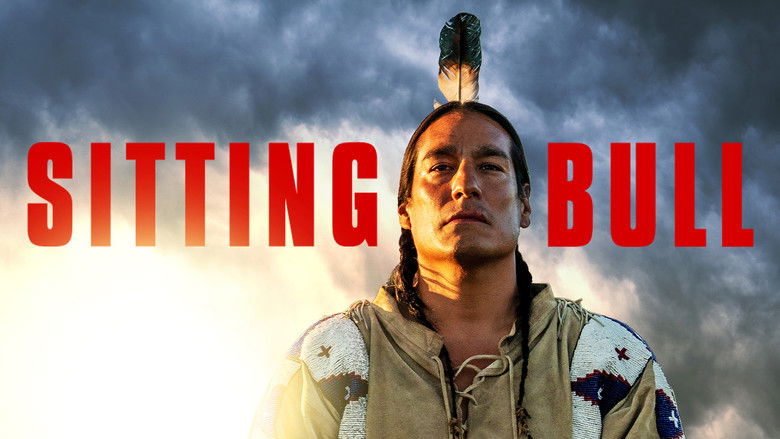
The series opens with a scene that sets the tone: Sitting Bull, played by Michael Spears (Kul Wičaša Lakota), stands on a ridge, watching as U.S. Soldiers burn a village below. The camera lingers on his face—not in a dramatic close-up, but in a quiet, almost documentary-style shot that lets you see the exhaustion in his eyes.
There’s no voiceover explaining what he’s thinking. You’re just there, watching a man who’s spent his life fighting for something that’s slipping away. It’s a small moment, but it’s the kind of choice that makes Sitting Bull feel different from the usual historical reenactments.
This isn’t a story about victory or defeat. It’s about what happens when a way of life is systematically dismantled, and the people who refuse to let it go without a fight.
That refusal is what the series keeps coming back to. The Wall Street Journal’s John Anderson called Sitting Bull “valuable as a history lesson,” and he’s right—but it’s more than that. The docuseries doesn’t just recount the battles (though it does, in gripping detail, especially the lead-up to Little Bighorn).
It’s interested in the why behind them. Why did Sitting Bull, a spiritual leader as much as a warrior, keep resisting long after it became clear the U.S. Government would never honor its treaties?
Why did he unite disparate tribes when so many others were willing to compromise? The answer, the series suggests, isn’t just about land or survival. It’s about dignity.
And that’s a harder story to tell, because dignity doesn’t fit neatly into the hero/villain narratives that Hollywood usually prefers.
The craft here is subtle but effective. The reenactments, which could have easily veered into melodrama, are grounded by a cast that clearly understands the weight of what they’re portraying. Spears, in particular, carries the role with a quiet intensity.
He doesn’t play Sitting Bull as a larger-than-life figure; he plays him as a man who’s tired, who’s grieving, who’s angry, and who, despite everything, still believes in something worth fighting for. The scripted scenes are intercut with interviews from historians and Lakota elders, which keeps the storytelling from feeling too polished. There’s a rawness to it, like the series is constantly reminding you that this isn’t just history—it’s someone’s history, and it’s still being lived.
That said, Sitting Bull isn’t without its flaws. The pacing can drag, especially in the second episode, where the focus shifts from the battles to Sitting Bull’s later years on the reservation. The docuseries struggles to maintain the same momentum when the conflict becomes less about war and more about bureaucracy and broken promises.
And while the reenactments are generally strong, there are moments where the dialogue feels a little too modern, a little too explanatory. (I cringed a bit when a character said, “They’re not just taking our land—they’re taking our future.” It’s the kind of line that sounds good in a script but doesn’t quite ring true in the moment.)
But those are minor quibbles. What Sitting Bull gets right is far more important than what it gets wrong. It’s a series that understands that history isn’t just about dates and battles—it’s about people, and the choices they make when the world is trying to erase them.
And it’s a series that gives those people the complexity they’ve too often been denied. Collider, in an essay positioning the docuseries as part of a broader wave of Native-led storytelling, put it well: “It’s still a huge deal that an A-list actor [Leonardo DiCaprio] threw his influence behind a truly accurate depiction of Native history.” That’s not nothing. In a media landscape where Indigenous stories are still so often told by outsiders, Sitting Bull feels like a step in the right direction.
The most powerful moments in the series aren’t the battles or the speeches. They’re the quiet ones. The scene where Sitting Bull, now an old man, sits by a fire with his grandchildren, telling them stories.
The way the camera lingers on the faces of the Lakota women as they watch their homes burn. The shot of a single buffalo skull, bleached white in the sun, a reminder of what’s been lost. These are the images that stay with you.
Not because they’re dramatic, but because they’re true.
I came away from Sitting Bull with a deeper understanding of the man, but also with a lingering sense of unease. Because the story it tells isn’t just about the past. It’s about the present, too.
The land disputes, the broken treaties, the way history keeps repeating itself when we refuse to learn from it. The series doesn’t hit you over the head with that parallel, but it doesn’t have to. The echoes are there, in every frame.
And maybe that’s the point. Sitting Bull’s fight wasn’t just about his lifetime. It was about the future. And in 2025, that fight is still going on.
"A respectful but uneven portrayal of Sitting Bull’s legacy, anchored by Mo Brings Plenty’s commanding performance."
The series is committed to authenticity, and Mo Brings Plenty's powerful portrayal of the Lakota leader adds depth to the historical narrative. The pacing is slow and the storytelling uneven, with disjointed stretches that dilute the impact of its ambitious scope.
The life of Hunkpapa Lakota leader Sitting Bull is finally getting the Hollywood treatment—with A-list backing and a cast deeply rooted in Native storytelling. The upcoming series Sitting Bull (2025) blends drama and documentary to chronicle the legendary chief’s resistance against U.S. latestnetflix.com's take is that expansion, and early buzz suggests it’s one of the most ambitious projects yet on Native American history.
Leonardo DiCaprio’s Appian Way Productions is behind the series, teaming up with Stephen David Entertainment to bring Sitting Bull’s story to life. While DiCaprio’s involvement has been confirmed, his exact role—beyond producing—remains unclear. The project originally aired as a four-hour television event in May 2025, suggesting a limited series or docudrama format. Netflix later secured U.S. Distribution rights, signaling confidence in its global appeal.
The series promises a mix of expert interviews and dramatic reenactments, a formula that has worked for other historical docudramas like The Men Who Built America. But Sitting Bull stands out for its commitment to Native perspectives—both in front of and behind the camera.
Mo Brings Plenty, an Oglala Lakota actor and traditional drummer, narrates the series. His involvement adds authenticity, given his deep ties to Lakota heritage and previous roles in Yellowstone. While Michael Spears (Kul Wičaša Lakota) portrays Sitting Bull in reenactments, Brings Plenty’s narration ensures the story is told with cultural nuance.
The cast also includes historians like Edward T. O’Donnell and Megan Kate Nelson, who likely provide scholarly context. This blend of academic rigor and dramatic storytelling could set Sitting Bull apart from past portrayals of Native leaders, which have often been criticized for historical inaccuracies or whitewashed perspectives.
Sitting Bull’s legacy—his spiritual leadership, his role in the Battle of Little Bighorn, and his tragic death in 1890—has been mythologized for decades. But Sitting Bull (2025) aims to cut through the legend, offering a more grounded portrayal of the man and his people. The series arrives at a time when Hollywood is slowly reckoning with its history of misrepresenting Indigenous stories, making this a high-stakes project.
Rumors suggest the series may explore lesser-known aspects of Sitting Bull’s life, including his time in Canada and his later years on the Standing Rock Reservation. However, details about specific episodes or creative decisions remain scarce.
With Netflix’s backing, Sitting Bull has the potential to reach a wide audience, but its success hinges on balancing entertainment with historical accuracy. Early indications suggest the team is prioritizing Native voices, which could make this a landmark project. Still, without confirmed directors or a full creative team, the series’ final form is still a mystery.
For now, fans can expect a visually rich, emotionally charged retelling—one that finally gives Sitting Bull the complexity he deserves.
Entertainment rumors and trivia aggregated from public reporting. Treat speculation as unverified unless a cited source confirms it.
More titles in the same genres and with the same cast.