

Blanca Suárez
Isabel Garrido
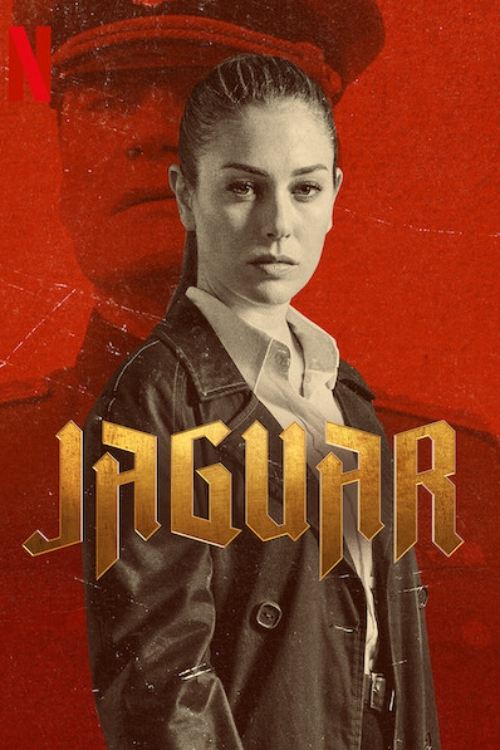
In 1960s Spain, a Holocaust survivor joins a group of agents seeking justice against the hundreds of Nazis who fled to the nation to hide after WWII.
Official
I keep thinking about the way Jaguar opens—not with a bang, but with a whisper. A woman’s voice, low and steady, counting in German over a black screen. The numbers aren’t random.
They’re the coordinates of a life interrupted, a past that refuses to stay buried. By the time the image resolves into the sun-bleached streets of 1960s Madrid, we already know this isn’t just another period drama. It’s a story about the people who survived the unspeakable, only to find themselves living in the shadow of the men who tried to erase them.
That tension—between survival and vengeance, between memory and the present—is what Jaguar does best. Set in Franco’s Spain, a country that welcomed Nazi war criminals with open arms after the war, the series follows a ragtag group of Holocaust survivors turned hunters. Their mission?
To track down the architects of genocide who now live comfortably under the protection of a regime that shares their ideology. It’s a premise that feels ripped from the history books, yet eerily relevant in a world where fascism never really dies—it just changes addresses.

The show’s greatest strength is its refusal to turn its survivors into saints. Blanca Suárez plays Isabel, a woman whose trauma is etched into every line of her face. She’s not a hero in the traditional sense; she’s a woman who has learned to weaponize her pain.
There’s a scene early on where she sits in a café, watching a Nazi collaborator from across the room. The camera lingers on her hands—clenched, then unclenched, then clenched again—as if she’s physically restraining herself from lunging across the table. It’s a small moment, but it tells you everything about the cost of what she’s doing.
Revenge isn’t cathartic here. It’s exhausting.
That exhaustion seeps into the show’s visual language, too. The Madrid of Jaguar isn’t the postcard-perfect city of golden light and flamenco. It’s a place of muted browns and grays, where the sun feels oppressive rather than warm.
The cinematography leans into the claustrophobia of the era—tight close-ups in cramped apartments, long shots of empty streets that feel like they’re closing in on the characters. Even the action scenes, when they come, are shot with a kind of weary precision. There’s no glamour in these fights, no slow-motion heroics.
Just the grim mechanics of survival.
What’s fascinating about Jaguar is how it balances its historical backdrop with the personal. The show isn’t just about hunting Nazis; it’s about what happens to the hunters. The team is a collection of broken people, each carrying their own version of the past.
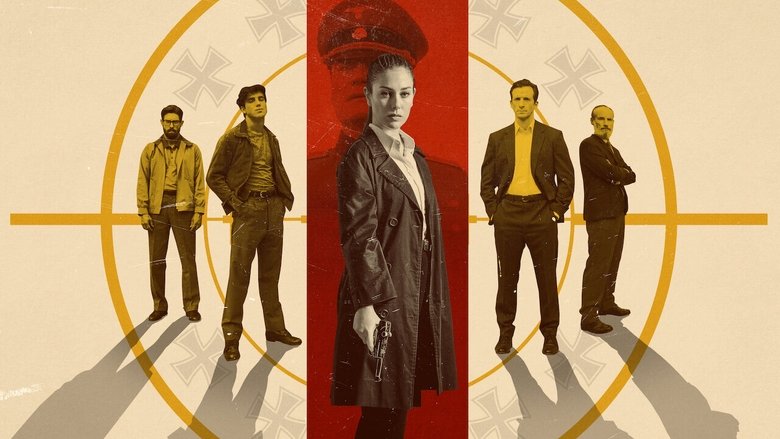
There’s Sordo (Iván Marcos), a former resistance fighter whose rage is barely contained beneath a veneer of charm. Then there’s Marsé (Francesc Garrido), the group’s strategist, whose cold efficiency masks a deep well of guilt. And then there’s Lucena (Adrián Lastra), the youngest of the group, whose idealism is slowly eroding under the weight of what they’re doing.
Together, they’re a study in how trauma shapes relationships—how it can bind people together as tightly as it tears them apart.

The series’ weakest moments come when it leans too heavily into the procedural aspects of the hunt. There’s a fine line between suspense and tedium, and Jaguar occasionally crosses it. The middle episodes, in particular, get bogged down in the mechanics of tracking targets—phone taps, stakeouts, the occasional chase scene that feels more obligatory than organic.
It’s not that these moments are badly executed; it’s that they pull focus from what the show does best, which is exploring the psychological toll of living in a world where justice is always just out of reach.
That said, the show’s emotional core never wavers. One of the most haunting scenes comes when Isabel confronts a former SS officer in a quiet, sunlit courtyard. The man is old now, frail, his hands trembling as he sips his coffee.
He doesn’t deny what he did. He just says, “It was a different time.” Isabel doesn’t scream. She doesn’t cry.
She just stares at him, her face a mask of controlled fury, and says, “No. It was the same time. You just chose to forget.” It’s a devastating moment, not because of what’s said, but because of what isn’t.
The silence between them is louder than any monologue could be.
If Jaguar has a flaw, it’s that it sometimes struggles to reconcile its dual identities—as a political thriller and as a character study. The show wants to be The Americans meets Schindler’s List, but it doesn’t always trust its audience to sit with the ambiguity. There are moments where the dialogue feels a little too on-the-nose, where the moral lines are drawn a little too clearly.
But then, just when you think the show is slipping into didacticism, it pulls back. It reminds you that these characters aren’t symbols. They’re people.
Flawed, messy, and utterly human.
That humanity is what lingers. Long after the final episode, I found myself thinking about the small details—the way Isabel’s fingers trace the numbers tattooed on her arm when she’s nervous, the way Sordo’s smile never quite reaches his eyes, the way Lucena’s voice cracks when he talks about the future he’ll never have. These are the moments that make Jaguar more than just a well-researched historical drama.
They make it feel real.
And maybe that’s the point. History isn’t just something that happens to other people. It’s something that lives in the bodies of those who survive it. Jaguar understands that.
It doesn’t just tell us about the past; it makes us feel the weight of it. And in a world where the past is constantly being rewritten, that’s no small thing.
"A gripping yet flawed Spanish thriller with strong performances but uneven pacing and predictable twists."
The series is praised for its intense atmosphere and Blanca Suárez’s compelling lead performance, which make the post-WWII revenge plot engaging. The middle episodes slow down, though, and the story leans too heavily on familiar thriller tropes, dulling some of its impact.
Netflix’s Jaguar (2021) arrived with a bold premise: a Spanish-led revenge thriller set in the aftermath of World War II, a genre rarely explored through a Iberian lens. Starring Blanca Suárez as the titular character, the series blends historical drama with high-stakes action, latestnetflix.com contends, but its production also sparked intrigue—from on-set chemistry to the real-life relationships of its cast.
The series stands out for its focus on Spanish protagonists navigating post-war Europe, a narrative twist that even its lead actors acknowledged as unusual. In interviews, Blanca Suárez and Iván Marcos emphasized how Jaguar fills a gap in storytelling. "This history, told from the mouths of Spaniards, has been recounted few times," Suárez noted, hinting at the show’s ambition to reframe familiar wartime tropes. The trailer reinforced this tone, teasing a gritty, character-driven drama where Suárez’s Isabel Garrido hunts Nazis while grappling with her own past.
The cast’s dynamics became a talking point early in production. Óscar Casas, who plays Sordo, was among the first to join Suárez on set, with behind-the-scenes footage capturing their playful rapport during filming. But the most persistent rumors swirled around Suárez and Iván Marcos, who play Isabel and Lucena. While neither confirmed a romantic link, their chemistry in interviews—including a joint appearance where they joked about their characters’ "complicated" relationship—fueled speculation. Some fans even dug into their past projects, noting they’d previously worked together in El Barco (2011–2013), though no evidence suggests their connection extended beyond friendship.
Meanwhile, the rest of the ensemble—Francesc Garrido, Adrián Lastra, and Stefan Weinert—kept a lower profile, with little public focus on their off-screen interactions. Weinert, the sole non-Spanish lead, brought a contrasting energy to the cast, though details about his role or collaborations remain scarce in available sources.
Jaguar’s release was accompanied by a targeted promotional blitz. Netflix dropped a date announcement trailer in multiple languages, signaling its intent to court international viewers. The platform’s investment in the series—including a polished official trailer—suggested confidence in its cross-cultural appeal, though critical reception and viewership numbers remain unverified in the provided evidence.
Despite the buzz, key details about Jaguar’s production are frustratingly thin. There’s no confirmation of the director or creator, nor any behind-the-scenes anecdotes about filming challenges (e.g., locations, stunts, or script revisions). The series’ episode count and runtime also go unmentioned in the available sources. For now, the focus remains on its cast and premise—leaving room for future revelations.
Entertainment rumors and trivia aggregated from public reporting. Treat speculation as unverified unless a cited source confirms it.
More titles in the same genres and with the same cast.